Articles

  • Article 1 in this issue

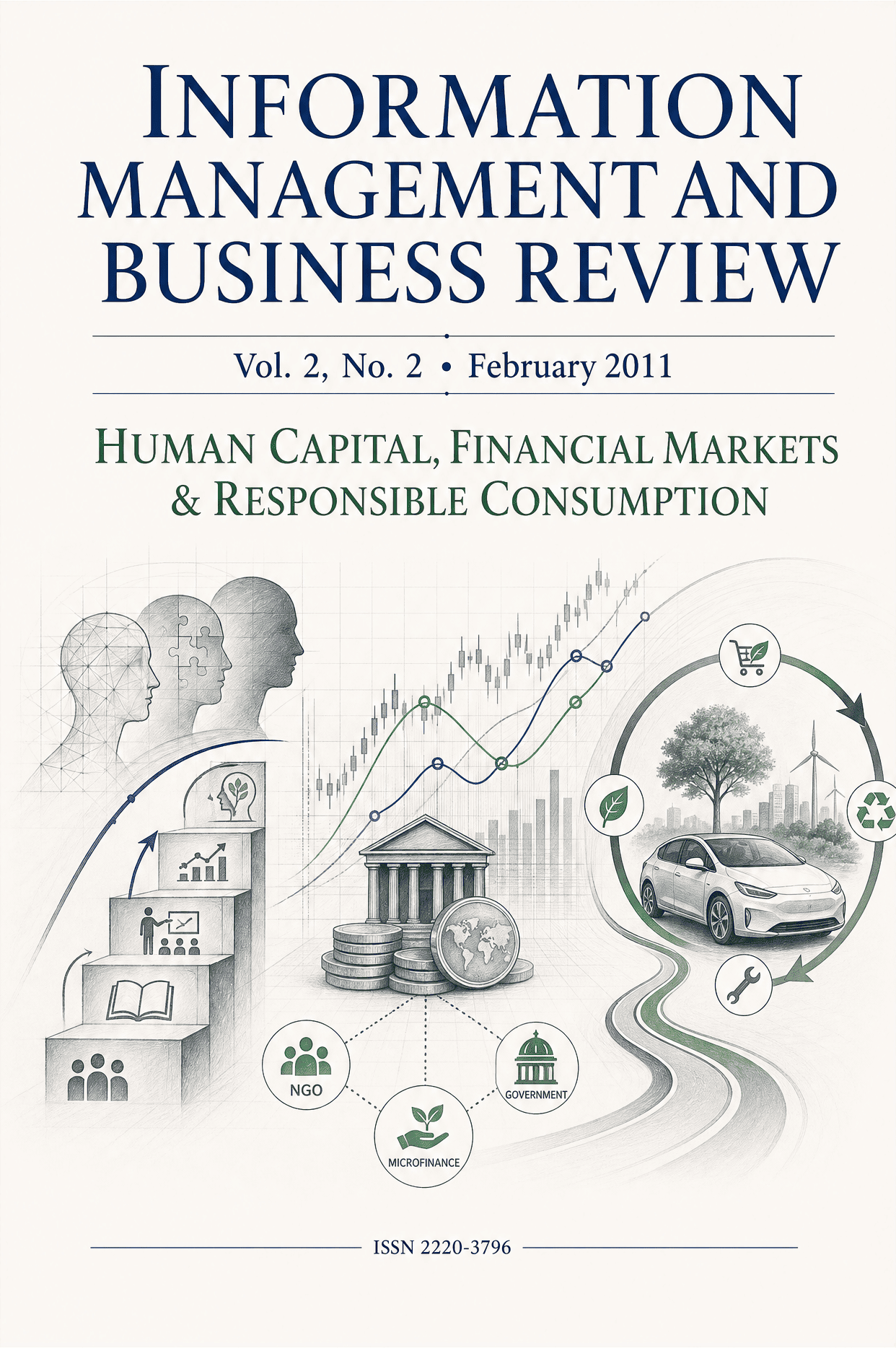
    Transforming Human Resources into Human Capital

    • Author: Sabarudin Zakaria, Wan Fadzilah Wan Yusoff

    Human resource refers to the stock of productive skills and technical knowledge embodied in labor. It is tangible in nature. Many early economic theories refer to it simply as labor, one of the three factors of production, and consider it to be a fungible resource -- homogeneous and easily interchangeable. The goal of human resource management is to help an organization to meet strategic goals by attracting, and retaining employees and also to manage them effectively so that they deliver productive outputs. The key word here perhaps is "fit", i.e. a HRM approach seeks to ensure a fit between the management of an organization’s employees, and the overall strategic direction of the company. Human capital instead, refers to the intangible aspect of human resources. It enhances the value of employees by striking a win-win goal for employers and employees. It focuses on the intrinsic value of each employee, where any expenditure on employees is regarded as an investment rather than an expense. The varying talents and motivations of employees are given cognizance so that incentives and working arrangements can be created to enhance each employee's contributions to organizational performance. This paper distinguishes human capital from human resources and how human resource may be transformed into human capital.

    Pages 48-54

    PDF - Transforming Human Resources into Human Capital (opens in a new tab)
  • Article 2 in this issue

    Banking Sector Reforms: Policy Implications and Fresh Outlook

    • Author: R. K. Uppal

    Various reform measures introduced in India have indeed strengthened the Indian banking system in preparation for the fresh global challenges ahead. The present paper reviews the banking sector reforms policy, crucial issues and agenda for the future. On the basis of certain parameters, like productivity, profitability and NPAs’ management, the paper concludes that foreign banks and new private sector banks are much better in performance as compared to our nationalized banks in the post-banking sector reforms period. The paper ends with the future agenda for the Indian banking industry, particularly for public sector banks to make them efficient and strong, to compete with the global banks.

    Pages 55-64

    PDF - Banking Sector Reforms: Policy Implications and Fresh Outlook (opens in a new tab)
  • Article 3 in this issue

    Analysis of Long-Term Relationship between Spot and Futures prices Using Johansen’s Test ofCointegration

    • Author: Sathya Swaroop Debasish

    The main objective of the study is to examine the long-term relationship between spot prices and futures prices A. The study has used daily prices (closing, opening, high and low) in both spot market and futures market for the 40 sample individual stocks drawn from six leading sectors namely, Automobiles, Banking, Cement, Gas, Oil & Refineries, Information Technology and Pharmaceutical. The period of study is from 1st January 1997 to 31st May 2009. The study begins by testing the stationarity of the spot price series and futures price series using two econometric methods namely, Philips Perron (PP) test and Augmented Dickey-Fuller (ADF) test. The long term relationship between spot prices and futures prices is statistically tested using Johansen’s test of Cointegration employing likelihood Ratio (L.R.), under the hypothesis that there exists a single cointegration equation between spot and future prices. It is found that both spot prices and futures prices for the selected companies are not stationary in the level form, but there is evidence of stationarity in the first difference form. The study finds a single long-term relationship for each of the selected companies across the six sectors. Among the selected companies in each sector, those evidencing strongest relation in respective sector are Tata Motors, Punjab National Bank, Gujrat Ambuja Cements, Bongaigaon Refineries, I-Flex and GLAXO Pharma.

    Pages 65-80

    PDF - Analysis of Long-Term Relationship between Spot and Futures prices Using Johansen’s Test ofCointegration (opens in a new tab)
  • Article 4 in this issue

    Micro Financing of NGOs and Government: Collaborative Impact on Poverty Eradication

    • Author: Rukhsana Kalim, Taseer Salahuddin

    Poverty reduction has been declared as the most important millennium development goal not only by the world level organizations and institutions, but also by the government of Pakistan. Micro-credit is considered as a prime tool to fight back poverty. After the success of Grameen Bank of Bangladesh multiple other banks and micro finance institutions (MFI’s) like Banko Soladerio of Latin America, Indonesia’s BRI-UD, BAAC in Thailand, BRAC in Bangladesh and VBSP in Vietnam have been working on almost the similar pattern. In Pakistan different NGOs like AKRSP, Orangi pilot project, Kashf foundation and others have started working for the past few years basically to eradicate poverty and for women empowerment. The government institutions are also seriously making an effort to eradicate poverty through micro financing schemes. Government of Pakistan has selected the RSP (rural support program) model for micro-financing. The success of both government institutions and NGOs is not very outstanding to meet the basic objective of poverty eradication. The aim of this paper is to see the possibility of collaboration between the NGOs and the government to achieve the desired common goal. It is hypothesized that if government and NGOs work together and collaborate each other, the effectiveness of micro financing schemes could be strengthened.

    Pages 81-91

    PDF - Micro Financing of NGOs and Government: Collaborative Impact on Poverty Eradication (opens in a new tab)
  • Article 5 in this issue

    Environment Friendly Car: A study of Consumer Awareness with special reference to Maharashtra State

    • Author: Nitin Joshi, D. P. Mishra

    The aim of the study is to understand the behaviour of the customer in the state of Maharashtra which is one of the most developed states of India. The study is being carried out to understand the customer awareness on environment friendly car (EFC). The objective of the study is to understand the awareness levels and create awareness of the EFC so that the efforts of the manufacturing the green car will be achieved. SPSS version 17.0 has been used for analysis of the data. 500 respondents have been asked to fill in a questionnaire. The study has been done keeping in mind age group and the geographical area of the respondents. With reference to the age group, it is observed that there is no significant difference in the awareness levels but with reference to the geography, it is observed that there is a significant difference in the awareness levels with reference to the EFC.

    Pages 92-98

    PDF - Environment Friendly Car: A study of Consumer Awareness with special reference to Maharashtra State (opens in a new tab)