Articles

  • Article 1 in this issue

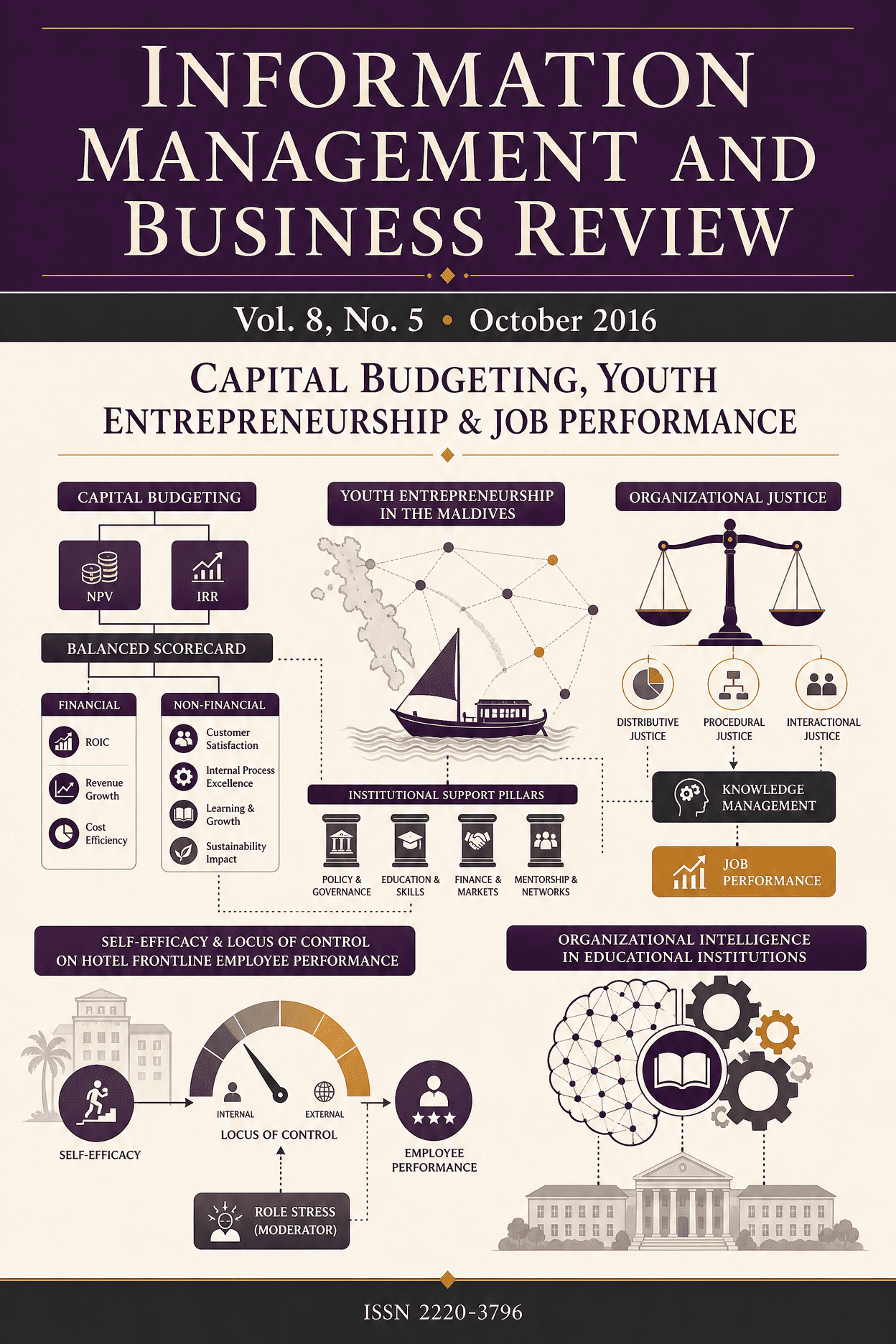
    Project Evaluation Trend in Thailand Based on Critical Factors Index

    • Author: Kereboon Champathed, Chuvej Chansa-ngavej

    This paper aims to investigate the recent trend of the use of project evaluation techniques based on opinions of financial managers in Thai firms. The research uses a questionnaire built on a Sense and Respond (S&R) method called Critical Factors Index (CFI). It examines the trend using such CFI terms as importance, experiences, expectations, gaps, deviations and direction of development. The results show several critical areas for improvement needed including customer perspective and the traditional use of payback technique for project evaluation in the firm. The results also show that the needed improvement is more critical in small firms than in medium and large firms. The results further show that the improvement needed is more critical for merchandizing firms than for manufacturing and service firms.

    Pages 6-13

    PDF - Project Evaluation Trend in Thailand Based on Critical Factors Index (opens in a new tab)
  • Article 2 in this issue

    Examination of Factors Affecting Youths’ Entrepreneurial Intention: A Cross-Sectional Study

    • Author: Muhammad Azrin Nazri, Haleemath Aroosha, Nor Asiah Omar

    This study aims to examine the predictive effect of enterprise education, perceived social norms, entrepreneurial motivations, perceived structural support and innovativeness on entrepreneurial intention. A total of 150 useable responses were collected among young people living in the capital of Maldives, Male’. A cross-sectional quantitative survey was carried out by using a structured questionnaire. A relevant statistical analytical such as regression analysis was used to test the hypotheses set forth in this study. The descriptive results showed that male respondent is slightly more than female respondent which is consistent with the 2014 census of Maldives showing male population in the country is slightly higher than female. The majority of the respondents participated in this survey are from the age group of 18-22 years old. The main finding of the study showed enterprise education, perceived social norms, entrepreneurial motivations and innovativeness have a positive and significant relationship towards entrepreneurial intention. However, perceived structural support has no significant relationship towards entrepreneurial intention. In this study it was also found that enterprise education was the most significant predictor of entrepreneurial intention followed by entrepreneurial motivation, innovativeness and perceived social norms. This finding makes a considerable contribution to the existing literature on factors influencing entrepreneurial intentions among youth in Maldives. The implication and limitations of the study are also discussed.

    Pages 14-24

    PDF - Examination of Factors Affecting Youths’ Entrepreneurial Intention: A Cross-Sectional Study (opens in a new tab)
  • Article 3 in this issue

    Factorial Validation of a Corporate Social Responsibility Perception Scale for Micro, Small, and Medium Enterprises

    • Author: Martha Ríos Manríquez, Celina López Mateo, Julián Ferrer Guerra

    The aim of this study is obtaining a valid and reliable scale to evaluate the Corporate Social Responsibility perception level (pCSR) of micro, small, and medium-sized Mexican enterprises. A literature review revealed 58 items among 11 dimensions: Ethics, performance, business model changes, quality of working life, the environment, community outreach, marketing, philanthropy, competitiveness, and the interests of stakeholders. A total of 296 companies located in Mexico were considered for the study. Principal axis factoring with varimax rotation was performed with the Exploratory Factorial Analysis Technique (EFA) to give an interpretation to the pCSR in the Mexican context. The factors found are the environment and social commitment, performance, ethics, change in business model, restrictions, and competitiveness. The outcomes show that the scale is valid and reliable for use in evaluating pCSR in micro, small, and medium-sized enterprises. This scale is a tool that allows us to evaluate the social responsibility of micro, small, and medium-sized enterprises, we conclude that considering the characteristics of Latin America, we have provided an original scale to measure pCSR.

    Pages 25-38

    PDF - Factorial Validation of a Corporate Social Responsibility Perception Scale for Micro, Small, and Medium Enterprises (opens in a new tab)
  • Article 4 in this issue

    Organizational Intelligence and Employee Performance: The Mediating Role of Distributive Justice

    • Author: Muhammad Qasim Shabbir, Waleed Khalid, Muhammad Haider Ali

    A well thriving education system, initiate and promotes innovation along research, is a key to the performance, productivity and sustainability in the august world class universities, colleges and schools. Globalization and digital revolution are creating new strategic competition and advancement as, a result innovative knowledge and learning’s are driving our economic system. Both public and private organizations are forced to adopt these innovative and technical reforms in order to survive in a competitive environment, which can be possible through spiraling education system by research and innovative techniques. This study intends to investigate the mediating effects of distributive justice on relationship between organizational intelligence and employee performance in education sector. Based on a sample of 113 employees and using structural equation modeling approach, the organizational intelligence is found to have positive effects on distributive justice. The findings of the study suggest that the effects of organizational intelligence on employee performance are fully mediated by distributive justice. This study provides a strapping foundation for all educational institutes to analyze whether they are implementing strategic management practices or not. Systematic and assertive implementation of these practices will not only uplift the quality and standards of educational institutions but also essential for better performance of every industry.

    Pages 39-47

    PDF - Organizational Intelligence and Employee Performance: The Mediating Role of Distributive Justice (opens in a new tab)
  • Article 5 in this issue

    Designing a Customer Retention Framework for Telecommunication Sector

    • Author: Ahmad Sohail Khan, Saima Majeed, Rizwan Shabbir

    Telecommunication sector has grown over last decade while transforming behavioral intentions. New entrants are exploring these behavioral intentions to attract more customers. The aim of this study is to investigate the mediating effect of customer satisfaction in telecom industry on service quality, brand image and customer retention relationship. Furthermore, it identifies the key determinants of customer retention related to telecom service providers. A fully structured questionnaire survey was conducted to collect data from 310 mobile users. Non-probability sampling technique was adopted for data collection. Regression analysis and Sobel test technique were practiced to analyze the data. The result showed that customer satisfaction mediates the relationship between service quality, brand image and customer retention. Moreover, this study found that service quality, brand image and customer satisfaction are the strongest predictors of customer retention in telecom industry of Pakistan. Therefore, to gain customer loyalty, organizations should focus current-users and target-users by providing sterling service quality.

    Pages 48-60

    PDF - Designing a Customer Retention Framework for Telecommunication Sector (opens in a new tab)
  • Article 6 in this issue

    Role Overload, Self- Efficacy, Locus of Control and Job Performance among Employees of a Printing Company in Malaysia

    • Author: Muhamad Khalil Omar, Norashikin Hussein, Norazamimah Azli

    Job performance becomes the most commonly discussed issue in the recent years even though many research have been conducted. As the employee is the most important asset for an organization, various factors influencing the employee performance need to be ascertained. For companies that offer services to customers, their employees’ job performance could impact the loyalty of the customers and longevity of the business. However, constant dealing with high and various consumer demands, employees of printing company could easily be stressful hence requiring them to control their emotions. Therefore this study investigated the effects of role overload, self-efficacy, and locus of control towards employee job performance. A total of 67 employees of a small printing company located in Klang Valley, Malaysia had participated in the survey of this descriptive and correlational study. The results indicated that there was a strong positive relationship between self-efficacy and job performance, the meanwhile locus of control had a moderate positive relationship with job performance. This study contributes to the body of knowledge by validating the positive association of both self-efficacy and locus of control with employee job performance. The practitioners could also make reference to this study in order to properly manage the performance of their employees.

    Pages 61-69

    PDF - Role Overload, Self- Efficacy, Locus of Control and Job Performance among Employees of a Printing Company in Malaysia (opens in a new tab)