Articles

  • Article 1 in this issue

    Where Credit is due: on the Puerto Rican Debt Crisis

    • Author: Eric Joshi, Amogh Joshi

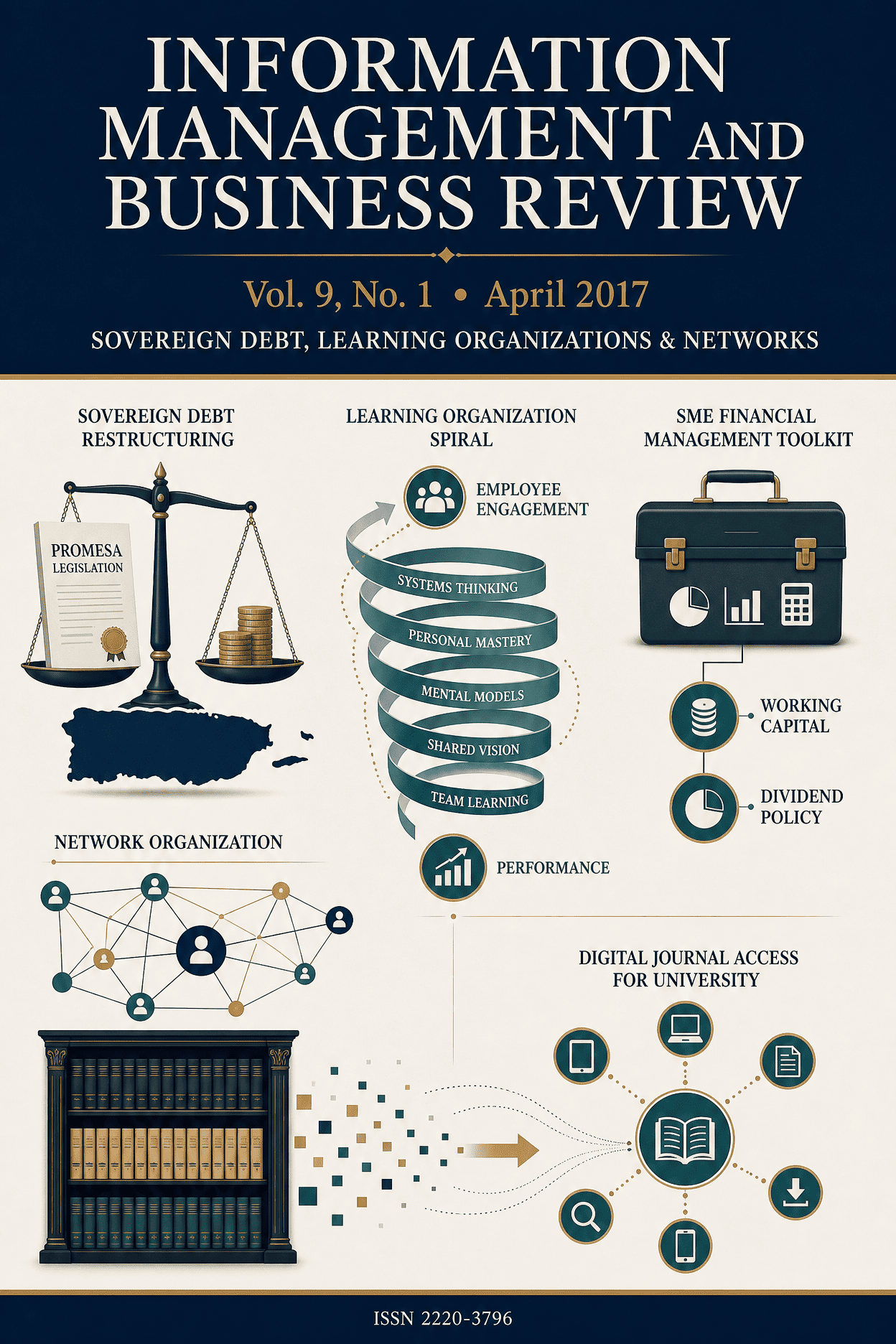
    This paper provides a comprehensive breakdown of the ongoing economic crisis in the Commonwealth of Puerto Rico. It explores the backdrop of the crisis by analyzing Puerto Rico’s relationship with the U.S., macroeconomic indicators and pertinent legislations. It’s entirely unique contribution is the analysis of the newly introduced act- PROMESA, which enables Puerto Rico to restructure its debt. We have provided an explanation of the important sections of this legislation which govern the debt negotiation process. The PROMESA act has been extended to apply to other unincorporated territories of the United States as well should they run into arrears, which broadens the scope of this paper. We have extended the findings of pre-existing body of work on sovereign debt restructuring hurdles and explained how PROMESA addresses them. We have also used previous works to suggest measures to expedite Puerto Rico’s debt restructuring process with creditors. This paper could also serve as a handbook for creditors looking to navigate through the post-PROMESA debt restructuring process.

    Pages 6-16

    PDF - Where Credit is due: on the Puerto Rican Debt Crisis (opens in a new tab)
  • Article 2 in this issue

    Learning Organization and Work Engagement: An Empirical Evidence of a Higher Learning Institution in Malaysia

    • Author: Norashikin Hussein, Nurain Anis Abdul Razak, Muhamad Khalil Omar

    Rapidly changing business environment requires organization to gain competitive advantage in order to survive. As people is known to be the most valuable assets to an organization, having employees that are actively engaged in their work can positively leads to higher performance and subsequently contribute to the success of the organization. One of the factors that would lead to work engagement among employees is through the learning organization concept which provides continuous learning and improvement, directly linked to an employee daily work and development. Despite its importance, seldom has it been reported in the literature that this paradigm has been examined. Therefore, this study attempts to determine: (i) the level of work engagement among employees; and (ii) the relationship between learning organization dimension and work engagement. Data collected from 150 employees of an institution of higher education revealed that work engagement among employees is at high level. Only four learning organization dimensions namely, empowerment, embedded system, environmental connection and strategic leadership were found to have positive and significant relationships with work engagement. The implications and consequences of the study findings for higher learning institutions are further discussed.

    Pages 17-22

    PDF - Learning Organization and Work Engagement: An Empirical Evidence of a Higher Learning Institution in Malaysia (opens in a new tab)
  • Article 3 in this issue

    Impact of Financial Management Practices on SMEs Profitability with Moderating Role of Agency Cost

    • Author: Saqib Muneer, Rao Abrar Ahmad, Azhar Ali

    The importance of Small and medium enterprises (SMEs) towards economic development and growth is considerable. Some SMEs are facing difficulties to their development due to the lack of financial resources and management experience. The objective of this study is to check the relationships of financial management practices on profitability of small and medium enterprises and also to check the impact of agency cost on this relationship. This study consists of data analysis of two hundred SMEs from Faisalabad Pakistan. The study used primary data predominantly. SPSS 23 is used for descriptive analysis and Structural Equation Model (SEM) through Partial Least Square (PLS) 3 for hypothesis testing. The findings of this study indicate the presence of positive relationship between financial management practices and SMEs profitability but agency cost as a moderator has no effect on this relationship. The study strongly recommends higher adherence to financial management practices. Policy makers, developments partners, owners, and managers of SMEs may use these findings for sustainability of their business in Pakistan.

    Pages 23-30

    PDF - Impact of Financial Management Practices on SMEs Profitability with Moderating Role of Agency Cost (opens in a new tab)
  • Article 4 in this issue

    The Network Level Needed in Determining Organizational Structure

    • Author: Altin Kavadarli

    As the external operations of organizationsbecome more complex with increasing globalization and as structures encounter difficulties in multi-tasking and increased information flow management, there is a need for more flexible and faster way of organizing. In order to promote efficiency and flexibility, organizations’ restructuring efforts result from need for coordination and work that increasingly occurs through informal networks of relationships rather than through formal structures. As the rapid adoption of social media and mobile computing are transforming how organizations in all industries relate to their environment, organizationalnetworks can be found inside every business and shape how employees share, communicate and collaborate at the workplace. New structures are emerging that blend different types of networks and hierarchies. The nature and complexity of the business determines the best the way its organizational structure is organized and this paper presents a theoretical model to help determine ideal organizational structures for different needs in order to deal with the pace and ambiguity of the business environment.

    Pages 31-38

    PDF - The Network Level Needed in Determining Organizational Structure (opens in a new tab)
  • Article 5 in this issue

    Awareness and Use of Serials in an African University Library: Faculty and Students’ Perspective

    • Author: Erica Nutsupkui, Christopher M. Owusu-Ansah

    The purpose of this study was to examine the use of print serials by students and faculty members of a satellite campus of the University of Education, Winneba. Specifically, this study sought to determine the level of awareness and use of serials among faculty and graduate students, and how this affect their perception of the value of print serials in teaching and learning. The study made use of survey research methods through the use of questionnaires. The population of the study consisted of 165 faculty members and 97 graduate students, with an eventual return rate of 66% each, respectively. The findings of the study revealed that both faculty and graduate students were, relatively, aware of the print serial collection in the library. However, despite this awareness, they used print serials, relatively, less frequently. Again, the study established that both faculty and students have significant positive perceptions on the usefulness of print serials in their teaching, learning and research roles. We recommend to librarians to create awareness of print serial collections while updating the collection, and enhance the positive perception of print serials by demonstrating, through outcome measures, how the use of print serials can be beneficial to the academic and research community.

    Pages 39-48

    PDF - Awareness and Use of Serials in an African University Library: Faculty and Students’ Perspective (opens in a new tab)