Abstract
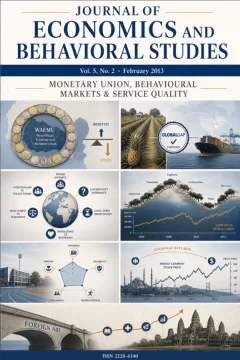
This study seeks to determine the effect of compliance with GlobalGAP standards and it implications for access to export market and incomes for smallholder pineapple farmers in the Central region of Ghana. The study was conducted in two pineapple growing districts; Mfantsiman Municipality and Gomoa East district. Primary data were collected through interviews using structured questionnaires. Simple random sampling was used to select 63 pineapple farmers (i.e., 30 Global GAP certified and 33 non-certified farmers from pineapple producer groups in the two districts. Analysis of the marketing channels reveal that market women were the major buyers of pineapple commanding 69.7% of noncertified farmers produce and 30% of the produce of the certified (i.e., compliant) farmers. Although 20% of the certified farmers sold their produce to exporters against 12.1% for non-certified farmers, it cannot be concluded that farmers’ access to the export market has been enhanced by complying with the Global GAP standard. However, all buyers preferred produce from certified farmers to non-certified farmers. On the economic performance of GlobalGAP certified and non-certified pineapple farmers, the empirical results reveal that the Global GAP certified pineapple farmers obtained GHS 15,027.57 for growing one hectare of pineapple while non-certified pineapple farmers made a net average income of GHS 6,256.36. These results imply that the Global GAP certified pineapple farmers obtained 2.4 times more net average income than non-certified pineapple growers. The results of this study have implications for pineapple farmers and policy makers in developing countries.
Keywords
- GlobalGAP Standard Search this journal for GlobalGAP Standard (opens in a new tab)
- Pineapple Farmers Search this journal for Pineapple Farmers (opens in a new tab)
- Export Market Search this journal for Export Market (opens in a new tab)
- Incomes Search this journal for Incomes (opens in a new tab)
- Buyers Search this journal for Buyers (opens in a new tab)
- Ghana Search this journal for Ghana (opens in a new tab)
References
- African Development Fund (ADF). (2005). Ghana Export Marketing and Quality Awareness Project (EMQAP), Appraisal Report. Agricultural and Rural Development Department (OCAR).
- Aloui, O. & Kenny, L. (2005). The Cost of Compliance with SPS standards for Moroccan Exports: A case Study. The International Bank for Reconstruction and Development /the World Bank.
- Asfaw, S., Mithöfer, D. & Waibel, H. (2008). Food-safety standards: A catalyst for the winners – a barrier for the losers? The case of GlobalGAP in horticultural export from Kenya. Fresh perspective, Agrfood standards, and pro-poor growth in Africa.
- Aschenaki, B. (2004). Transport Costs in Ethiopia: An Impediment to Exports. Background Study for the World Bank’s FY04 Country Economic Memorandum for Ethiopia. Washington, DC. [ http://siteresources. worldbank.org/INTETHIOPIA/Resources/PREM/Ethiopia-Transport_CostFinal.pdf].
- Bahiigwa, G. (2006). Access of Eastern African Farmers to Domestic and International Markets: Opportunities and Constraints. Invited paper prepared for presentation at the International Association of Agricultural Economists Conference, August 12-18, 2006, Gold Coast, Australia. 28.
- Bolwig, S. & Odeke, M. (2007). Household food security effects of certified organic export production in tropical Africa. Danish Institute for International Studies, Copenhagen.
- Bolwig, S., Gibbon, P. & Jones, S. (2009). The Economics of Smallholder Organic Contract Farming in Tropical Africa. World Development, 37(6), 1094-1104.
- Borot-de-Battisti, A., MacGregor, J. & Graffham, A. (2009). Standard bearers: Horticultural exports and private standards in Africa . International Institute for Environment and Development, London.
- Bayramoglu, K., Gundogmus, E. & Tatlidil, F. F. (2010). The impact of EurepGAP requirements on farm income from greenhouse tomatoes in Turkey. African Journal of Agricultural Research , 5(5), 348355.
- Charlotte, Y. & Fairman, R. (2003). Factors affecting food safety compliance within small and mediumsized enterprises: Implications for regulatory and enforcement strategies. Centre for Risk Management, King’s College London, London WC2 2LS, UK.
- Danielou, M. & Ravry, C. (2005). The Rise of Ghana’s Pineapple Industry: From Successful Takeoff to Sustainable Expansion. Africa Region Working Paper 93, World Bank Washington DC.
- Diao, X. & Hazell, P. (2003). Africa: Exploring Market Opportunities for African Smallholders. 2020 Africa Conference Brief 6. International Food Policy Research Institute, Washington, DC.[ http://www.ifpri.org/pubs/ib/ib22.pdf].
- D’Souza, G., Cyphers, D. & Phipps, T. (1993). Factors Affecting the Adoption of Sustainable Agricultural Practices. Agricultural and Resource Economics Review , 22(2), 159-165.
- Food and Agriculture Sector Development Policy II. (2007). Ministry of Food and Agriculture, Ghana.
- Fort, R. & Ruben, R. (2008). The impact of fair trade on banana producers in Northern Peru, in Ruben, R. (ed.) The impact of Fair Trade. Academic Publishers, Wageningen, Chapter 2.
- Fulponi, L. (2006). Private voluntary standards in the food system: The perspective of major food retailers in OECD countries. Food Policy, 31(1), 1-13.
- Ghana Statistical Service. (2008). Ghana Living Standards Survey. Fifth Round (GLSS5),CD‐Rom, September 2008.
- Gibbon, P., Lin, Y. & Jones, S. (2009). Revenue effects of participation in smallholder organic cocoa production in tropical Africa , 06. Danish Institute for International Studies (DIIS). Copenhagen.
- GlobalGAP. (2009). http://www.globalgap.org
- GlobalGAP. (2011). http://www.globalgap.org/cms/frontcontent.php?idart=2564.Accessed 15- 08-2011.
- Graffham, A. (2006). EU legal requirements for imports of fruits and vegetables (a suppliers guide), Fresh Insights no. 1, DFID/IIED/NRI, www.agrifoodstandards.org. Accessed on 23- 11-2011.
- Graffham, A. & MacGregor, J. (2007). Impact of EurepGAP on small-scale vegetable growers in Zambia, Fresh Insights, 5.
- Henson, S. & Reardon, T. (2005). Private agri-food standards: Implications for food policy and the agrifood system. Food Policy , 30(3), 241-253.
- Hobbs, J. E. (2010). Public and Private Standards for Food Safety and Quality: International Trade Implications. Estey Centre Journal of International Law and Trade Policy, 11(1), 136-152.
- IFPRI. (2005). The future of small farms. Proceedings of a research workshop. Washington, DC: International Food Policy Research Institute.
- International Certification and Auditing Company Limited (CTR). (2007). Turkey. http://ctr.com.tr
- Jaffee, S. (2003). From Challenge to Opportunity: Transforming Kenya’s Fresh Vegetable Trade in the Context of Emerging Food Safety and other Standards in Europe, World Bank, Agriculture and Rural Development Discussion Paper No. 2. Washington, D.C.
- Jaffee, S., Henson, S. & Rios, L. D. (2011). Making the grade: Smallholder Farmers, Emerging Standards, and Development Assistance Programs in Africa: A Research Program Synthesis. Economic and sector work Report No. 62324-AFR, World Bank.
- Killick, T., Kydd, J. & Poulton, C. (2000). Agricultural Liberalization, Commercialization and the Market Access Problem in the Rural Poor and the Wider Economy: The Problem of Market Access. International Fund for Agricultural Development, Rome.
- Kleemann, L. (2011). Organic Pineapple Farming in Ghana - A Good Choice for Smallholders? Working Paper No. 1671 Kiel Institute for the World Economy.
- Kuwornu, J. K. M., Kuiper, W. E. & Pennings, J. M. E. (2009). Agency Problem and Hedging in Agri-Food Chains: Model and Application. Journal of Marketing Channels, 16, 265-289.
- Laforce, V. C. (2010). Between the requirements of regulations and standards in food safety: challenges and opportunities for developing countries’ exports of tropical fruits to the European Union. Paper prepared for the Conference on Regulation in the Age of Crisis, Third Biennal Conference of the European Consortium of Political Research’s Standing Group on Regulatory Governance, June 17-19 2010, UCD Dublin.
- Ministry of Food and Agriculture, Ghana. (2010). Medium Term Agricultural Sector Investment Plan (METASIP) (2010) 2011-2015. Market Oriented Agricultural Programme. (MOAP). Progress report January to December 2009.
- Minot, N. & Ngigi, M. (2004). Are Horticultural Exports a Replicable Success Story? Evidence from Kenya and Cote D Ivoire LPTD/MTID discussion paper, IFPRI; Washington, D.C. IFPRI.
- Millennium Project Task Force on Hunger. (2004). Halving Hunger by 2015: A Framework for Action. Interim Report. Millennium Project. New York.
- Murithi, B., Mbunu, J. &Ngigi, M. (2008). Constraints and Determinants of Compliance with EureGap Standards: A Case of Smallholder French Bean Exporters in Kirinyaga District.
- National Department of Agriculture Directorate: Marketing. (2002). The Integrated Food Security Strategy for South Africa. Pretoria.
- Natural Resources Institute. (2010). Ghana Export Horticulture Cluster Strategic Profile Study. Study prepared for the World Bank Sustainable Development Network (WB‐SDN) Africa Region, Agriculture and Rural Development (AFTAR), The Republic of Ghana Ministry of Food and Agriculture, and European Union All ACP Agricultural Commodities Programme (EU‐AAACP). Draft of January 27, 2010.
- Organization for Economic Co-Operation and Development (OECD). (2006a). Private standards and the Shaping of the Agro-food System, Paris.
- Organization for Economic Co-Operation and Development (OECD). (2006b). Private Standard Schemes And Developing Country Access To Global Value Chains: Challenges And Opportunities Emerging From Four Case Studies Working Party On Agricultural Policies And Markets AGR/CA/APM(2006)20 , 27-Sep-2006.
- Okello, J. J., Narod, C. & Roy, D. (2009). Why market institutions disfavor smallholder farmers’ compliance with international food safety standards: Evidence from Kenya, Zambia and Ethiopia. Contributed Paper prepared for presentation at the International Association of Agricultural Economists Conference, Beijing, China, August 16-22, 2009.
- Orden, D., Lofgren, H. & Gabre-Madhin, E. (2004). Trading Up: How International Trade and Efficient Domestic Markets Can Contribute to African Development. Brief prepared for the conference on Assuring Food and Nutrition Security in Africa by 2020: Prioritizing Actions, Strengthening Actors, and Facilitating Partnerships, April 1-3, 2004, Kampala,Uganda.4pp.
- Pay, E. (2009). The market for organic and fair‐trade mangoes and pineapples. Study prepared in the framework of FAO project GCP/RAF/404/GER Increasing incomes and food security of small farmers in West and Central Africa through exports of organic and fair‐trade tropical products. Food and Agriculture Organization of the United Nations (FAO), Trade and Markets Division, Rome.
- Raynolds, L. T. & Ngcwangu, S. U. (2010). Fair Trade Rooibos tea: Connecting South African producers and American consumer markets. Geoforum, 41(1), 74-83.
- Revised Ghana Food Safety Action Plan. (2007). Republic of Ghana Ministry of Food and Agriculture Food safety Task Force, World Bank, Africa Agriculture and Rural Development (AFTAR), final draft, November.
- Richard, C., Yudin, M. C. & Keith, R. S. (2008). European Food Safety Certification – The GlobalGAP Standard and its Accredited Certification Program, FSHN 0801, The Institute of Food and Agricultural Sciences (IFAS), University of Florida.
- Sefa-Dedeh, S. (2005). Ghana Private-Public Partnership Food Industry Development Program Final Report for USAID Associate Cooperative Agreement No. 641-A-00-03-0003.
- Sexsmith, K. & Potts, J. (2009). Voluntary sustainability standards and economic rents: The economic impacts of voluntary sustainability standards along the coffee, fisheries and forestry value chain, IISD: International Institute for Sustainable Development, Winnipeg, Manitoba.
- Van-Roekel, J., Willems, S. & Boselie, D. M. (2002). Agri-Supply Chain Management: To Stimulate Cross Border Trade in Developing Countries and Emerging Economies. World Bank Paper Cross Border Agri Supply Chain Management, 28.
- Wechter, K. & Grethe, H. G. (2006). The adoption of the Eurepgap standards by mango exporters in Piura, Peru, Australia. University of Berlin Germany, Berlin.
Downloads
No downloads have been recorded for this article yet. Figures appear here once readers begin downloading the full text.
How to Cite
Share this article
License
Copyright (c) 2013 John K. M. Kuwornu, Shaibu Mustapha (Author)

This work is licensed under a Creative Commons Attribution 4.0 International License.
Author (s) should affirm that the material has not been published previously. It has not been submitted and it is not under consideration by any other journal. At the same time author (s) need to execute a publication permission agreement to assume the responsibility of the submitted content and any omissions and errors therein. After submission of revised paper in the light of suggestions of the reviewers, the editorial team edits and formats manuscripts to bring uniformity and standardization in published material.
This work will be licensed under Creative Commons Attribution 4.0 International (CC BY 4.0) and under condition of the license, users are free to read, copy, remix, transform, redistribute, download, print, search or link to the full texts of articles and even build upon their work as long as they credit the author for the original work. Moreover, as per journal policy author (s) hold and retain copyrights without any restrictions.
Keywords
- GlobalGAP Standard Search this journal for GlobalGAP Standard (opens in a new tab)
- Pineapple Farmers Search this journal for Pineapple Farmers (opens in a new tab)
- Export Market Search this journal for Export Market (opens in a new tab)
- Incomes Search this journal for Incomes (opens in a new tab)
- Buyers Search this journal for Buyers (opens in a new tab)
- Ghana Search this journal for Ghana (opens in a new tab)
Section
Published in
 Vol. 5 No. 2 (2013)
Monetary Union, Behavioural Markets & Service Quality
View issue contents
Published
Submissions
Have research to publish? Journal of Economics and Behavioral Studies welcomes submissions.
Make a Submission