Abstract
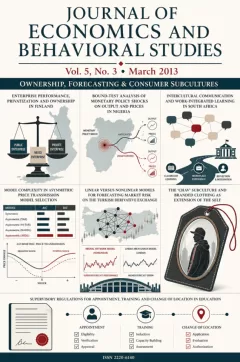
This paper explores the chav phenomenon as a consumer subculture, with special reference to branding and consumer behaviour. The study is important because of the presence of chavs in many consumer markets, and their significant role in the consumption of numerous products. The aim of the primary research was to compare the branded clothing choices of two groups, namely chavs and nonchavs. A qualitative method was used, namely a survey of thirty 14 to 23 year olds (fifteen each of chavs and non-chavs), followed by in-depth interviews with four of the respondents. The issues studied were the relationships between the choice of branded clothing and the respondents’ social experiences, or backgrounds, as well as whether these backgrounds acted as motivations for the respondents’ consumer behaviour. The findings indicate a relationship between the wearing of branded clothing by chavs and their social backgrounds. Their consumption behaviour may be explained by the wearing of branded clothing as an extension of the self. The findings also provide an indication of differences between chav’s and non-chav’s perceptions of branding and consumer behaviour.
Keywords
- Chav Search this journal for Chav (opens in a new tab)
- Subculture Search this journal for Subculture (opens in a new tab)
- Branded Clothing Search this journal for Branded Clothing (opens in a new tab)
- Consumption Search this journal for Consumption (opens in a new tab)
- Designer Brands Search this journal for Designer Brands (opens in a new tab)
References
- Armitage, V. J. (2012). The In betweeners: Young people making sense of youth anti-social behaviour. Doctoral thesis, Durham University, Durham, U.K.
- Armstrong, J. (2005). Design choice: Strongbow. Marketing, 17 August, 7.
- Arvidsson, A. (2001). From counterculture to Consumer Culture: Vespa and the Italian youth market, 1958-78. Journal of Consumer Culture, 1(1), 47-71.
- Ball, A. D. & Tasaki, L. H. (1992). The Role and Measurement of Attachment in Consumer Behaviour. Journal of Consumer Psychology , 1(2), 155-172.
- Barns, E. (2005). Are advertisers wise to chase the chav pound? Campaign (UK), 13(18).
- Belk, R. W., Bahn, K. D. & Mayer, R. N. (1982). Developmental Recognition of Consumption Symbolism. Journal of Consumer Research , 9, 4-17.
- Belk, R. W. (1988). Possessions and the Extended Self. Journal of Consumer Research , 15, 139-168.
- Belk, R. W. (2004). Men and their Machines. Advances in Consumer Research , 31, 273-278.
- Bennett, J. (2013). Chav spotting in Britain: the representation of social class as private choice. Social Semiotics , 23(1), 146-162.
- Campbell, C. (2005). The Craft consumer: Culture, craft and consumption in a postmodern society. Journal of Consumer Culture, 5(1), 23-42.
- Carter, B. (2004). 3posters to tap in to chav culture. Marketing, 27 October, 1.
- Chavscum. (2004). Chavscum, The new ruling class. [Online].Available at http://www.chavscum.co.uk [Accessed 16 May 2005].
- Cohen, J. B. (1989). An Over-extended Self? Journal of Consumer Research , 16, 125-128.
- Conner, S. & Huggins, R. (2010). The technology and the artifacts of social control – Monitoring criminal and anti-social behaviour through and in bedia cultures. In James J. Chriss (ed.) Social control, legal and Medical (Sociology of Crime Law and Deviance, 15, 109-128.
- Cope, S. (2005). Student makes chav a class thing. Yorkshire Post , Sunday, 17 June. [Online]. Retrieved from www.yorkshirepost.co.uk/ViewArticle.aspx?SectionID=55&ArticleID =1055094(Accessed 17 June 2007).
- Economou, S. (2007). Negative Brand Equity Impact on Prestige Brands. Proceedings of Corporate and Marketing Communications Conference, Middlesex University Business School, London, 16-17 April.
- Fournier, S. (1998). Consumers and Their Brands: Developing relationship theory in Consumer Research. Journal of Consumer Research , 34, 343-373.
- Grubb, E. L. & Hupp, G. (1968). Perception of Self Generalised Stereotypes and Brand Selection. Journal of Marketing Research , 5, 58-63.
- Heaps, P. & Mather, J. (2006). AT LAST! Retail warehouse market round-up. Journal of Retail and Leisure Property , 5(4), 338-340.
- Hearn, A. (2008). Meat, Mask, Burden: Probing the contours of the branded self’. Journal of Consumer Culture , 8(2), 197-217.
- Hollingworth, S. & Williams, K. (2009). Constructions of the working-class ‘Other’ among urban, white, middle-class youth: ‘chavs’, subculture and the valuing of education. Journal of Youth Studies , 12(5), 467-482.
- Holt, C. J. (2002). Why do brands cause trouble? A dialectical theory of consumer culture and branding. Journal of Consumer Research , 29, 70-90.
- Inconspicuous Consumption. (2005). The Economist , 377(8458), 66-67.
- Le Grand, E. (2010). Class, Place and Identity in a Satellite Town. Doctoral thesis, Acta Universitatis Stock holmiensis, Stockholm University, Sweden.
- Le Grand, E. (2011). Tainted markers of taste: chavs, working class culture and local style. Proceedings of Kultur sociologisk Konferens, Campus Vaxjo, University of Boras, Sweden, 18–19 November.
- Le Grand, E. (2012a). The symbolic power of class: Individualisation and young working-class identities. Proceedings of2ndISA Forum of Sociology, Buenos Aires, Argentina, 1–4 August.
- Le Grand, E. (2012b). Moral-aesthetic regulation and class formation: The case of ‘chavs’ in the UK. Proceedings of2nd ISA Forum of Sociology, Buenos Aires, Argentina, 1–4 August.
- Levy, S. J. (1959). Symbols for Sale. Harvard Business Review, 37(4), 117-124.
- Lusher, A. (2005). If the names Prada you’re not coming in. Telegraph [Online]. Retrieved from www.telegraph.co.uk/news/main.jhtml?xml=/news/2005/11/06/nprada06.xml (Accessed 16 October 2007)
- Malhotra, N. K. (1981). A Scale to measure Self-concepts, Person concepts and Product concepts. Journal of Marketing Research , 18, 456-464.
- Marrin, M. (2005). Tony should take a hint from the hoodies. Sunday Times, 15 May. [Online]. Retrieved from http://www.minettemarrin.com/minettemarrin/2005/05/tony_should_tak.html(Accessed16 October 2007).
- Morris, J. K. (2010). Castle: Youth culture in Swansea. Teaching Geography , 35(2), 52-54.
- Oleson, M. (2004). Exploring the relationship between money attitudes and Maslow’s hierarchy of needs. International Journal of Consumer Studies , 28(1), 83-92.
- Oxford English Dictionary. (2005). Oxford University Press.[online] Retrieved from http://www.oup.com/elt/catalogue/teachersites/oald7/wotm/wotm_archive/chav?cc=gb[Access ed 1 May 2005].
- Pain, R. (2003).Youth, age and the representation of fear. Capital and Class , 80,151-171.
- Parker, A. & Lyle, S. (2005). Chavs and Metrosexuals: new men, masculinities and popular culture. Sociology Review , 15(1), 2-5.
- Parry, C. (2004). Fashion labels mixing with the wrong crowd. Marketing Week , 4, 22-23.
- Piacentini, M. & Mailer, G. (2004). Symbolic Consumption in Teenagers Clothing Choices. Journal of Consumer Behaviour , 3(3), 251-262.
- Quinn, L. (2010). Reflecting upon the linguistic limitations of marketing managerial practice. Journal of Customer Behaviour , 9(3), 243-251.
- Raisborough, J., Frith, H. & Klein, O. (2012). Media and Class-making: What Lessons Are Learnt When a Celebrity Chav Dies? Sociology, Published online before print October 17.
- Richins, M. L. (1994).Valuing Things: Public and Private Meanings of Possessions. Journal of Consumer Research , 21, 504- 521.
- Ritson, M. (2005). Being chic for chavs is not the end for Burberry. Marketing (UK), 26January,17.
- Sayre, S. & Horne, D. (1996). I Shop, Therefore I Am: The role of Possessions for Self Definition. Advances in Consumer Research , 23, 323-328.
- Schouten, J. W. & McAlexander, J. H. (1995). Subcultures of Consumption: An Ethnography of the New Bikers. Journal of Consumer Research , 22, 43-61.
- Schaefer, A. D., Hermans, C. M. & Parker, R. S. (2004). A cross-cultural exploration of materialism in adolescents. International Journal of Consumer Studies , 28(4), 399-411.
- Sirgy, M. (1982). Self-concept in consumer behavior. A critical review. Journal of Consumer Research , 9, 287-300.
- Solomon, M., Bamossy, G. & Askegaard, S. (2002). Consumer Behaviour: A European Perspective. Harlow: Pearson Education.
- Stafford, J. E. (1966). Effects of Group influences on Consumer Brand Preferences. Journal of Marketing Research, 3, 68-75.
- Tan-Tsu-Wee, T. & Chua-Han-Ming, M. (2003). Leveraging on Symbolic Values and Meanings in Branding. Brand Management , 10(3), 208-218.
- Timmins, A. (2012). Chavs – The Demonization of the Working Class. Journal of Contemporary European Studies , 20(1), 116-117.
- Tribe Culture and Brands. (2002). Brand Strategy, October, 36-37.
- Tyler, I. (2008). Chav Mum Chav Scum. Feminist Media Studies , 8(1), 17-34.
- Tyler, I. & Bennett, B. (2010). Celebrity Chav: Fame, Femininity and Social Class. European Journal of Cultural Studies , 13(3), 375-393
- Walker, J. K. (2005). Chav: The emergence of a new identity. [Online].Retrieved from www.chavworld.co.uk/new-identity/ (Accessed 20 January 2010).
- Watt, M. (2006).Teen spirit. Brand Strategy , 200, 44-45.
- Wells, W. D. (1996). Fictional Materialism. Advances in Consumer Research , 23, 120-126.
Downloads
No downloads have been recorded for this article yet. Figures appear here once readers begin downloading the full text.
How to Cite
Share this article
License
Copyright (c) 2013 Roger B. Mason, Gemma Wigley (Author)

This work is licensed under a Creative Commons Attribution 4.0 International License.
Author (s) should affirm that the material has not been published previously. It has not been submitted and it is not under consideration by any other journal. At the same time author (s) need to execute a publication permission agreement to assume the responsibility of the submitted content and any omissions and errors therein. After submission of revised paper in the light of suggestions of the reviewers, the editorial team edits and formats manuscripts to bring uniformity and standardization in published material.
This work will be licensed under Creative Commons Attribution 4.0 International (CC BY 4.0) and under condition of the license, users are free to read, copy, remix, transform, redistribute, download, print, search or link to the full texts of articles and even build upon their work as long as they credit the author for the original work. Moreover, as per journal policy author (s) hold and retain copyrights without any restrictions.
Keywords
- Chav Search this journal for Chav (opens in a new tab)
- Subculture Search this journal for Subculture (opens in a new tab)
- Branded Clothing Search this journal for Branded Clothing (opens in a new tab)
- Consumption Search this journal for Consumption (opens in a new tab)
- Designer Brands Search this journal for Designer Brands (opens in a new tab)
Section
Published
Submissions
Have research to publish? Journal of Economics and Behavioral Studies welcomes submissions.
Make a Submission