Abstract
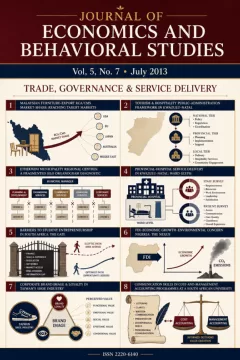
This study seeks to investigate the export competitiveness of Malaysian furniture product through the application of a collection of methods, which includes Revealed Comparative Advantage (RCA), Constant Market Share (CMS) and Shift Share. SITC 821, which represents the furniture product under the Standard International Trade Classification (SITC) for the period between 2000 and 2011, has been taken into consideration. The RCA method reveals that is an escalation in the countries competitive advantage of furniture product. The results from CMS method indicate that export gain of Malaysian furniture product is to a great extent a result of the size of the market as well as its competitive effect. Furthermore, CMS analysis also illustrates there has been significant improvements in the furniture industry throughout the given period which are Period I and II, Period and II and III and Period III and I. Additionally, shift share analysis shows that countries such as Brunei, Algeria, Norway, Lebanon and Korea are the major markets with the greatest potential. However, major challenges, in terms of competition, still exist mainly with Asian countries.
Keywords
- Export Competitiveness Search this journal for Export Competitiveness (opens in a new tab)
- RCA Search this journal for RCA (opens in a new tab)
- CMS Search this journal for CMS (opens in a new tab)
- Shift-share Search this journal for Shift-share (opens in a new tab)
- Market Opportunity Search this journal for Market Opportunity (opens in a new tab)
References
- Abidin, M. Z. & Loke, W. H. (2008). Revealed Comparative Advantage of Malaysian Exports: The Case for Changing Export Composition. Asian Economic Papers , 7(3), 130-147.
- Acharya, R. C. (2008). Analyzing International Trade Patterns: Comparative Advantage for the World's Major Economies. Journal of Comparative International Management , 11(2), 33-53
- Adriana, G. (2009). The Competitiveness of the Romanian Exports during the EU Integration Process. Economic Science Series , 18(1), 310-317.
- Adis, A. & Sidin, S. (2008). Impact of Environmental Factors as Moderator on Export Marketing Performance in Wooden Furniture Industry . Jurnal Kemanusiaan , 11, 24-35.
- Ahmadi-esfahani, F. Z. (2006). Constant market shares analysis: uses, limitations and prospects, 50, 510–526. Australian Journal of Agricultural & Resource Economics , 50(4), 510-526.
- Ahmed, M. I & Mak, Y. M. (1995). Identifying Export Opportunities for Malaysia Using the Shift- Share Technique, Paper Presented at AAM Conference.
- Ahmed, M. I., Gendall, P. J. & Taufa, P. T. (1992). The Shift-Share Technique: Its Use in Identifying Export Opportunities, Paper Presented at the Australian Marketing Educator’s Conference, Edith Cowan University Perth, Australia.
- Amador, J., Cabral, S. & Maria, J. R. (2007). International trade patterns in the last four decades: How does Portugal compare with other cohesion countries? Banco de Portugal, Working Paper 14.
- Ariff, M. & Hill, H. (1985). Export – Oriented Industrialization: The Asian Experience, Sydney
- Balassa, B. (1965). Trade Liberalization and Revealed Comparative Advantage. Manchester School of Economics and Social Studies , 33(2), 99-122.
- Balkytė, A. & Tvaronavičienė, M. (2010). Perception of Competitiveness in the Context of Sustainable Development: Facets Of. Sustainable Competitiveness , 11(2), 341–365.
- Bowen, H. P. & Pelzman, J. (1984). US Export Competitiveness: 1962-77. Applied Economics , 16(3), 461–473
- Cristina, A. (2012). Romania's Specialization in Trade towards Eu-27-A Revealed Comparative Advantage Approach. Economic Science Series , 21(1), 54-60.
- Clark, D. P., Sawyer, W. C. & Sprinkle, R. L. (2005). Revealed comparative advantage indexes for regions of the United States. Global Economy Journal , 5(1), 1-24
- Edmonds, T. (2000). Regional Competitiveness & the Role of the Knowledge Economy, House of Commons Library. Research paper. London: Research Publications Office, 73–55.
- Farhad, M., Syed, M. M. & Saeed, Y. (2012). Export Comparative Advantage Analysis of Iranian Hen Egg by RCA & RSCA and RC Criteria. Modern Economy , 3(5), 553-556.
- Green, R. T. & Larsen, T. L. (1991). Japanese Trade in International Perspective. International Marketing Review , 8(5), 12-26.
- Habibullah, M. S. & Radam, A. (2009). Industry Concentration in Rich and Poor States in Malaysia: Location Quotient and Shift Share Analyses. Journal of Industrial Economics , 6(1), 56-65.
- Haque, A., Sultana, S. & Momen, A. (2013). Export Performance of Malaysian Telecommunication Products: Market Prospects and Challenges, Proceedings of 3rd Asia-Pacific Business Research Conference, 2526 February, Kuala Lumpur Malaysia
- Hassan, M. K. H., Rashid, Z. K. & Hamid, K. A. (2011). East Coast Economic Region from the Perspective of Shift-Share Analysis. International Journal of Business and Society , 12(1), 79-88.
- He, S. (2012). Competition among ASEAN Members in the East Asia Market an Extension to Shift-Share Analysis. Journal of Economic Studies , 39(5), 576-589.
- Jayawickrama, A. & Thangavelu, S. (2010). Trade Linkages between China, India and Singapore: Changing comparative advantage of industrial products. Journal of Economic Studies , 37(3), 248-266.
- Jepma, C. J. (1986). Extensions and Application Possibilities of the Constant Market Shares Analysis. Rijkusiniversiteit, Groningen.
- Jiménez, N. & Martín, E. (2010). A Constant Market Share Analysis of the Euro Area in the Period, 1994-2007 Economic Bulletin
- Khan, N. & Varshney, P. K. (2012). Future prospects of special economic zones in India in industrial sector. International journal of marketing, financial services & management research , 1(12), 140-151
- Leamer, E. E. & Stern, R. M. (1970). Quantitative International Economics. Allen & Bacon, Boston.
- Mayor, M., Lopez, A. & Perez, R. (2007). Forecasting regional employment with Shift-share and ARIMA modeling. Regional Studies , 41(4), 543-551.
- Mirzaei, F., Yazidani, S., Motsafavi, M. & Gharadaghi, A. A. (2004). The Survey on Comparative Advantage of Iran’s Chicken Meat Export in the Middle East. Animal Science Research Institute, The University of Tehran, Karaj, Iran, 1003-1006
- Momaya, K. (2001). International Competitiveness, Hindustan Publishing, New Delhi
- Ng, B. K. & Thiruchelvam, K. (2011). Technological Innovations in Malaysia’s wooden Furniture Industry: Knowledge and Linkages. African Journal of Agricultural Research , 6(16), 3654-3659
- Maheran, N. & Muhammad, N. (2008). Export Competitiveness of Malaysian Electrical and Electronic (E&E) Product: Comparative Study of China, Indonesia and Thailand. International Journal of Business and Management , 3(7), 65-75.
- Peh-Kian, H. (1999). Growth in Singapore’s Exports, 1991- 96: A Shift- Share Analysis. Asian Economics J. , 13 (3), 321- 344.
- Radam, A., Yacob, M. R. & Muslim, H. F. M. (2010). Technical Efficiency of the Malaysian Wooden Furniture Industry: A Stochastic Frontier Production Approach . International Business Research , 3(3), 10-15.
- Richardson, J. D. (1971a). Constant Market Shares Analysis of Export Growth. Journal of International Economics , 1, 227–239.
- Richardson, D. J. & Zhang, C. (1999). Revealing Comparative Advantage: Chaotic or Coherent Patterns across Time and Sector and U.S Trading Partner, Working Paper 7212, National Bureau of Economics Research 1050 Massachusetts Avenue, Cambridge.
- Richardson, J. D. (1971b). Some Sensitivity Tests for a Constant Market Shares Analysis of Export Growth. Review of Economics and Statistics, 53, 300–304.
- Rubin, R. S. (2005). Identifying Small Business Exporting Opportunities Using a Shift-Share Analysis: An Assessment and Application. Journal of Global Marketing , 19(1), 95-109.
- Sabonienė, A. (2011). The Changes of Lithuanian Export Competitiveness in the Context of Economic Crisis. Economics and Management , 16, 302–308.
- Saboniene, A. (2009). Lithuanian Export Competitiveness: Comparison with other Baltic States . Engineering Economics , 62(2), 49-57.
- Salleh, A. L., Bakar, R. B. & Keong, W. K. (2008). How Detrimental is Job Stress? : A Case Study of Executives in the Malaysian Furniture Industry. International Review of Business Research Papers , 4(5), 64-73
- Shafaei, R., Shahriari, H. & Moradi, M. (2009). Investigation of leather industry competitiveness in Iran. Journal of Fashion Marketing and Management , 13(3), 343–357
- Shuquan, H. (2012). Competition among ASEAN members in the East Asia market: An extension to shift-share analysis. Journal of Economic Studies , 39(5), 576–589
- Serin, V. & Civan, A. (2008). Revealed Comparative Advantage and Competitiveness: A Case Study for Turkey towards the EU. Journal of Economic and Social Research , 10(2), 25-41
- Seyoum, B. (2007). Revealed Comparative Advantage and Competitiveness in Services A Study with Special Emphasis on Developing Countries. Journal of Economic Studies , 34(5), 376-388.
- Srivastava, D. K. (2010). Impact of MFA Phase-Out on Indian Textiles and Clothing Exports: A Shift Share Analysis Approach . South Asian Journal of Management , 17(1), 95-98.
- Stevans, L. K., Neelankavil, J. P., Mendoza, R. & Shankar, S. (2012) The Economic Competitiveness of Countries: A Principal Factors Approach. International Journal of Economics and Finance , 4(1), 76-90.
- Tan, K. & Giap, K. (2004). The IPS-NTU ASEAN 9 +1 Economic Competitiveness Ranking Indices. ASEAN Economic Bulletin, 21(2), 234-238.
- Tran, T. A. D., Vo. T. T., H. M., Nguyen, A. D., Pham, T. H. & Trinh, Q. L. (2009). The EU and Emerging Markets Schriftenreihe de Osterreichischen Gesellschaft Fur Europaforchung (ECSA Austria). European Community Studies Association of Austria Publication Series , 12, 235-262.
- Wilson, P., Chern, T. S., Ping, T. S. & Robinson, E. (2005). Assessing Singapore’s export competitiveness through dynamic shift-share analysis. ASEAN Economic Bulletin , 22(2), 160-85.
- Yasin, M., Alavi, J., Koubida, S. & Small, M. H. (2011). An assessment of the competitiveness of the Moroccan tourism industry: Benchmarking implications. Benchmarking: An International Journal , 18(1), 6 – 22
- Zhelev, P. & Tzanov, L. (2012). Bulgaria’s Export Competitiveness before and after EU Accession. EAST-WEST Journal of Economics and Business , 15(1&2), 107-128.
Downloads
No downloads have been recorded for this article yet. Figures appear here once readers begin downloading the full text.
How to Cite
Share this article
License
Copyright (c) 2013 Ahasanul Haque, Farzana Yasmin, Naila Anwar, Zariyah Ibrahim (Author)

This work is licensed under a Creative Commons Attribution 4.0 International License.
Author (s) should affirm that the material has not been published previously. It has not been submitted and it is not under consideration by any other journal. At the same time author (s) need to execute a publication permission agreement to assume the responsibility of the submitted content and any omissions and errors therein. After submission of revised paper in the light of suggestions of the reviewers, the editorial team edits and formats manuscripts to bring uniformity and standardization in published material.
This work will be licensed under Creative Commons Attribution 4.0 International (CC BY 4.0) and under condition of the license, users are free to read, copy, remix, transform, redistribute, download, print, search or link to the full texts of articles and even build upon their work as long as they credit the author for the original work. Moreover, as per journal policy author (s) hold and retain copyrights without any restrictions.
Keywords
- Export Competitiveness Search this journal for Export Competitiveness (opens in a new tab)
- RCA Search this journal for RCA (opens in a new tab)
- CMS Search this journal for CMS (opens in a new tab)
- Shift-share Search this journal for Shift-share (opens in a new tab)
- Market Opportunity Search this journal for Market Opportunity (opens in a new tab)
Section
Published
Submissions
Have research to publish? Journal of Economics and Behavioral Studies welcomes submissions.
Make a Submission