Abstract
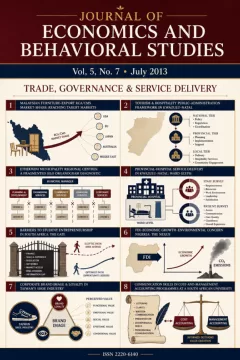
A positive corporate brand image is not only increasing competition but also encourage consumers to repurchase. With loyal customers, companies can reduce the operating cost and acquisition expenses. This initial study was from relevant literature, then set up research structure and hypotheses. Survey was employed, and respondents collected from the customers of ASO in Taiwan. There were 208 usable questionnaires to analyze descriptive statistics, reliability, validity, and SEM model. Based on the research results, corporate brand image significantly affects customer perceived value, customer satisfaction and loyalty; customer perceived value has strong impact on customer satisfaction and loyalty for the sample; and customer satisfaction significantly affects customer loyalty. Therefore, companies should have a positive brand image to customers, and specifically focus on those factors in order to build a long-term and mutually profitability relationships with customers and create loyalty as competitive advantages in the markets. The study focuses on the industry of shoes in Taiwan, and adopts only a quantitative method. Future research could employ a different design to examine the causal relationships posited by the theories, and extension the study to discuss mediation or moderation among dimensions.
Keywords
- Corporate Brand Image Search this journal for Corporate Brand Image (opens in a new tab)
- Perceived Value Search this journal for Perceived Value (opens in a new tab)
- Satisfaction Search this journal for Satisfaction (opens in a new tab)
- Loyalty Search this journal for Loyalty (opens in a new tab)
- SEM Search this journal for SEM (opens in a new tab)
References
- Aaker, D. A. (1996). Measuring Brand Equity Across Products and Markets. California Management Review, 38(3), 102-120.
- ASO. (2013). ASO history. Retrieved from http://www.asogroup.com.tw/index.php
- Bagozzi, R. & Phillips, L. (1982). Representing and testing organizational theories: A holistic construal. Administrative Science Quarterly, 27(3), 459–489.
- Bennett, R. & Rundle-Thiele, S. (2002). A comparison of attitudinal loyalty measurement approaches. Journal of Brand Management, 9(3), 193-207.
- Bentler, P. M. (1992). On the Fit of Models to Covariance and Methodology to the Bulletin. Psychological Bulletin, 112(3), 400-404.
- Berry, L. L. & Parasuraman, A. (1991). Marketing Services: Competing through Quality. New York: The Free Press.
- Bloemer, J. M. M. & Odekerken-Schroder, G. (2002). Store satisfaction and store loyalty explained by customer- and store-related factors. Journal of Consumer Satisfaction, Dissatisfaction and Complaining Behavior, 15, 68-80.
- Bollen, K. A. (1989). Structural equations with latent variables. Newbury Park, CA: Sage.
- Bowen, J. T. & Shoemaker, S. (2003). Loyalty: A strategic commitment. Cornell Hotel & Restaurant Administration Quarterly, 44(5/6), 31-46.
- Breivik, E. & Thorbjornsen, H. (2008). Consumer Brand Relationships: An Investigation of Two Alternative Models. Journal of the Academy of Marketing Science, 36 , 443-472.
- Browne M. W. & Cudeck, R. (1993). Alternative Ways of Assessing Model Fit, in K. A. Bullen, J. S. Long (ed.), Testing Structural Equation Models. Newbury Park, CA: Sage.
- Butz, J. H. E. & Goodstein, L. (1996). Measuring customer value: gaining the strategic advantage. Organizational Dynamics, 24(3), 63-77.
- Chang, T. Z. & Wildt, A. R. (1994). Price, product information, and purchase intention: An empirical study. Journal of the Academy of Marketing Science, 22, 16-27.
- Cronin, J. J., Brady, M. K., Brand, R. R., Hightower, R. Jr. & Shemwell, D. J. (1997). A cross-sectional test of the effect and conceptualization of service value. The Journal of Services Marketing, 11(6), 375-391.
- Davies, G. & Chun, R. (2002). Gaps between the internal and external perceptions of the corporate brand. Corporate Reputation Review , 5, 144–158.
- Davies, G., Chun, R., Da Silva, R. & Roper, S. (2003). Corporate Reputation and Competitiveness. Routledge, UK: London.
- De-Chernatony, L. (1999). Brand Management through narrowing the gap between brand identity and brand reputation. Journal of Marketing Management , 15, 39–56.
- DeMatos, C. A. & Rossi, C. A. (2008). Word-of-Mouth Communications in Marketing: A Meta-Analytic Review of the Antecedents and Moderators. Journal of the Academy of Marketing Science, 36(4), 578-596.
- Dick, A. S. & Basu, K. (1994). Customer Loyalty: Toward an Integrated conceptual Framework. Journal of Academy of Marketing Science , 22(2), 99-113.
- Dimitriades, Z. S. (2006). Customer satisfaction, loyalty and commitment in service organizations: Some evidence from Greece. Management Research News, 29(12), 787-799.
- Eakuru, N. & Mat, N. K. N. (2008). The application of structural equation modeling (SEM) in determining the antecedents of customer loyalty in banks in South Thailand. The Business Review, Cambridge, 10(2), 129-139.
- Engel, J. F. & Blackwell, R. D. (1982). Consumer Behavior. New York: Holt, Rinehart, and Winston.
- Fornell, C. & Larcker, D. F. (1981). Evaluating Structural Equation Models with Unobservable Variables and Measurement Error. Journal of Marketing Research, 18(1), 39-50
- Gerbing, D. W. & Anderson, J. C. (1992). Monte Carlo evaluations of goodness of fit indices for structural equation models. Sociological Methods Research , 21(2), 132-160.
- Grahn, G. L. (1969). NBD model of repeat-purchase loyalty: An empirical investigation. Journal of Marketing Research, 6(1), 72-78.
- Hair, J. F., Black, W. C., Babin, B. J. & Anderson, R. E. (2010). Multivariate data analysis. Pearson, NJ: Pearson Education Inc.
- Holbrook, M. B. (1994). The nature of customer's value: An axiology of service in consumption experience. In R. T. Rust, & R. L. Oliver (Eds.), Service quality: New directions in theory and practice (pp. 21–71). Thousand Oaks, CA: Sage Publications.
- Huang, H. C. (2009). The Influence of Brand Image, Customer Perceived Value on Brand Loyalty: A Comparative Study on Consumers between Market of Taiwan and Japan. Southern Taiwan University of Science and Technology, Master Thesis.
- Hunt, K. H. (1977). Customers Satisfaction/Dissatisfaction--Overview and Future Directions, Conceptualization and Measurement of Customer. Marketing Science Institute, Cambridge, MA.
- Ibrahim, H. & Najjar, F. (2008). Relationship bonding tactics, personality traits, relationship quality and customer loyalty: Behavioral sequence in retail environment. The Icfai University Journal of Services Marketing, 6(4), 1-37.
- Ind, N. (1997). The Corporate Brand. Macmillan Press Ltd, Great Britain.
- Jacoby, J. (1971). A model of multi-brand loyalty. Journal of Advertising Research, 11(3), 25-31.
- Jacoby, J. & Chestnut, R. W. (1978). Brand Loyalty: Measurement and Management. New York: John Wiley.
- Joewono, T. B. & Kubota, H. (2007). User Satisfaction with Paratransit in Competition with Motorization in Indonesia: Anticipation of Future Implications. Transportation, 33(3), 337-355.
- Johnson, M. D., Andreessen, T. W., Lervik, L. & Cha, J. (2001). The evolution and future of national customer satisfaction index models. Journal of Economic Psychology, 22, 217-245.
- Johnson, M. D., Anderson, E. W. & Fornell, C. (1995). Rational and adaptive performance expectations in a customer satisfaction framework. Journal of Consumer Research, 21(4), 695-707.
- Jones, T. (1996). Why satisfied customer defect. Journal of Management in Engineering, 12(6), 11.
- Jones, T. O. & Sasser, J. W. E. (1995). Why satisfied customers defect. Harvard Business Review, 73(6), 88–99.
- Jöreskog, K. G. & Sörbom, D. (1992). LISREL: A Guide to the Program and Applications. 3rd ed. Chicago: Scientific Software International, Inc.
- Keller, K. L. (1993). Conceptualizing, Measuring, and Managing Customer-Based Brand Equity. Journal of Marketing, 57(1), 1-22.
- Kline, R. B. (1998). P rinciples and Practice of Structural Equation Modeling. Guilford Press, New York.
- Kotler, P. (2005). According to Kotler: The World’s Foremost Authority on Marketing Answers the World’s Foremost Authority on Marketing Answers Your Questions. New York: AMACOM.
- Lee, E. J. & Overby, J. W. (2004). Creating value for online shoppers: Implications for satisfaction and loyalty. Journal of Consumer Satisfaction, Dissatisfaction and Complaining Behavior, 17, 54-67.
- Lei, P. & Jolibert, A. (2012). A Three-Model Comparison of the Relationship between Quality, Satisfaction and Loyalty: An Empirical Examination of the Chinese Healthcare System. BMC Health Services Research, 12(1), 436-446.
- MacCallum R. C. & Hong, S. (1997). Power Analysis in Covariance Structure modeling using. Multivariate Behavioral Research, 32(2), 193-210.
- Magid, J. M., Anthony, D. & Dena, S. (2006). Quantifying Brand Image: Empirical Evidence of Trademark Dilution. American Business Law Journal, 43(1), 1-42.
- Moliner, M. A., Sanchez, J., Rodriguez, R. M. & Callarisa, L. (2007). Relationship quality with a travel agency: The influence of the post-purchase perceived value of a tourism package. Tourism and Hospitality Research, 7(3/4), 194-211.
- Monroe, K. B. (1990). Pricing: Making Profitable Decisions (2nd ed.). New York: McGraw-Hill.
- Morgan, R. P. (2000). A Consumer-Orientated framework of brand equity and loyalty. International Journal of Marketing Research, 42(1), 65-78.
- Ogba, I. E. & Tan, Z. (2009). Exploring the impact of brand image on customer loyalty and commitment in China. Journal of Technology Management in China, 4(2), 132-144.
- Oliver, R. L. (1997). Satisfaction: A Behavioral Perspective on the Consumer. New York: McGraw Hill.
- Oliver, R. L. & Swan, J. E. (1989). Equity and Disconfirmation Perception as Influences on Merchant and Product Satisfaction. Journal of Consumer Research, 16(3), 372-383.
- Olsen, L. L. & Johnson, M. D. (2003). Service equity, satisfaction, and loyalty: From transaction-specific to cumulative evaluations. Journal of Service Research, 5(3), 184-195.
- Ostrom, A. & Iacobucci, D. (1995). Consumer trade-offs and the evaluation of services. Journal of Marketing, 59(1), 17-28.
- Park, C. W., Jaworski, B. J. & Maclnnis, D. J. (1986). Strategic brand concept-image management. Journal of Marketing, 50(4), 135–145
- Patterson, P. G. & Spreng, R. A. (1997). Modeling the relationship between perceived value, satisfaction and repurchase intentions in a business-to-business, services context: An empirical examination. International Journal of Service Industry Management , 8(5), 414-434.
- Petrick, J. F. (2002). Development of a multi-dimensional scale for measuring the perceived value of service. Journal of Leaisure Research , 34(2), 119-134.
- Porter, S. S. & Claycomb, C. (1997). The Influence of Brand Recognition on Retail Store Image. Journal of Product & Brand Management, 6(6), 373-387.
- Reichheld, F. F. & Detrick, C. (2003). Loyalty: A prescription for cutting costs. Marketing Management, 12(5), 24-25.
- Reichheld, F. F. & Teal, T. (1996). The Loyalty Effect: The Hidden Force Behind Growth, Profits, and Lasting Value. Boston, Mass: Harvard Business School Press.
- Reichheld, F. F. & Sasser, W. E. J. (1990). Zero defections: Quality comes to services. Harvard Business Review , 68(5), 105-111.
- Roig, J. G. F., Garcia, J. S., Tena, M. A. M. & Monzonis, J. L. (2006). Customer perceived value in banking services. International Journal of Bank Marketing, 24(5), 266-283.
- Romaniuk, J. & Sharp, B. (2003). Measuring brand perceptions: Testing quantity and quality. Journal of Targeting, Measurement and Analysis for Marketing , 11(3), 218-229.
- Roth, M. (1994). Innovations in Defining and Measuring Brand Equity. Advances in Consumer Research, 21, 471-496.
- Rust, R. T., Lemon, K. N. & Zeithaml, V. A. (2004). Return on marketing: Using customer equity to focus marketing strategy. Journal of Marketing, 68(1), 109-127.
- Selnes, F. (1993). An examination of the effect of product performance on brand reputation, satisfaction and loyalty. European Journal of Marketing, 27(9), 19-35.
- Sirdeshmukh, D., Singh, J. & Sabol, B. (2002). Consumer trust, value, and loyalty in relational exchanges. Journal of Marketing, 66, 15-37.
- Steenkamp J. B. E. M. & Van Trijp H. C. M. (1991). The use of LISREL in validating marketing constructs. International Journal of Research in Marketing, 8, 283-299
- Tse, D. K. & Wilton, P. C. (1988). Models of consumer satisfaction formation: an extension. Journal of Marketing Research, 25(2), 204-212.
- Ulaga, W. & Chacour, S. (2001). Measuring customer perceived value in business markets: A prerequisite for marketing strategy development and implementation. Industrial Marketing Management, 30(6), 525.
- Verhoef, P. C. (2003). Understanding the Effect of Customer Relationship Management Efforts on Customer Retention and Customer Share Development. Journal of Marketing, 67(4), 30-45.
- Webster, F. E. (1994). Defining the New Marketing Concept. Marketing Management, 2(4), 22-31.
- Woodruff, R. B. (1997). Customer value: The next source for competitive advantage. Academy of Marketing Science, 25(2), 139-153.
- Wu, C. C. (2011). The impact of hospital brand image on service quality, patient satisfaction and loyalty. African Journal of Business Management, 5(12), 4873-4882.
- Wu, M. L. (2009). Structural equation modeling: Amos operation and application. Wu-Nan Book Inc, Taipei, Taiwan.
- Zeithaml, V. A. (1988). Consumer perceptions of price, quality, and value: A means-end model and synthesis of evidence. Journal of Marketing, 52(3), 2-22.
- Zeithaml, V. A. & Bitner, M. J. (2000). Services Marketing: Integrating Customer Focus across the Firm. New York: McGraw-Hill Inc.
Downloads
No downloads have been recorded for this article yet. Figures appear here once readers begin downloading the full text.
How to Cite
Share this article
License
Copyright (c) 2013 Yu-Te Tu, Mei-Lien Li, Heng-Chi Chih (Author)

This work is licensed under a Creative Commons Attribution 4.0 International License.
Author (s) should affirm that the material has not been published previously. It has not been submitted and it is not under consideration by any other journal. At the same time author (s) need to execute a publication permission agreement to assume the responsibility of the submitted content and any omissions and errors therein. After submission of revised paper in the light of suggestions of the reviewers, the editorial team edits and formats manuscripts to bring uniformity and standardization in published material.
This work will be licensed under Creative Commons Attribution 4.0 International (CC BY 4.0) and under condition of the license, users are free to read, copy, remix, transform, redistribute, download, print, search or link to the full texts of articles and even build upon their work as long as they credit the author for the original work. Moreover, as per journal policy author (s) hold and retain copyrights without any restrictions.
Keywords
- Corporate Brand Image Search this journal for Corporate Brand Image (opens in a new tab)
- Perceived Value Search this journal for Perceived Value (opens in a new tab)
- Satisfaction Search this journal for Satisfaction (opens in a new tab)
- Loyalty Search this journal for Loyalty (opens in a new tab)
- SEM Search this journal for SEM (opens in a new tab)
Section
Published
Submissions
Have research to publish? Journal of Economics and Behavioral Studies welcomes submissions.
Make a Submission