Abstract
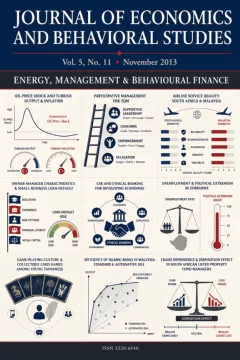
Games-playing has historically been a form of leisure that is social and interactive in nature. As such, notwithstanding the dangers associated with gambling which may also be linked to games-playing, games have been considered a generally worthwhile activity which may have positive behavioral and educational externalities. However, in the age of advanced capitalism, games-playing has become subject to intensive marketing and advertising to promote consumption, particularly among young people who may have the time to play and some disposable income to invest in new games. One question this raises is the extent to which traditional games-playing modes and styles been affected by such marketing. This paper reports on research with a sample of Taiwanese undergraduate students investigating their consumption of games, the extent to which they use games to interact with other people and the changes of behavior with respect to games culture in recent years. A particular focus on the collectible card games segment of the gaming industry lends some focus to the findings described.
Keywords
References
- 4K Media, Homepage. (2013). available at: http://www.yugioh.com.
- David-Marshall, B., van Dreunen, J. & Wang, M. (2009). Trading Card Game Industry White Paper: From the T to the C to the G (New York, 2009), available at: http://ebookbrowse.com/trading-cardgame-industry-white-paper-pdf-d23725955.
- Davis, N. (2012). Do You Believe in Magic … the Gathering? The Verge (September 20th , 2012), available at: http://www.theverge.com/2012/9/20/3326708/magic-the-gathering-players-championship.
- Loo, J. M. Y., Raylu, N. & Oei, T. P. S. (2008). Gambling among the Chinese: A Comprehensive Review. Clinical Psychology Review , 28(7), 1152-66.
- Martin, B. A. S. (2004). Using the Imagination: Consumer Evoking and The matizing of the Fantastic Imagery. Journal of Consumer Research , 31(1), 136-49.
- McArthur, J. A. (2009). Digital Subculture: A Geek Meaning of Style. Journal of Communication Inquiry , 33(1), 58-70.
- Raylu, N. & Oei, T. P. S. (2004). Role of Culture in Gambling and Problem Gambling. Clinical Psychology Review , 23(8), 1087-1114.
- Sale, K. & Zimmerman, E. (2003). Rules of Play: Game Design Fundamentals (Cambridge, MA: The MIT Press).
- Walsh, J. & Techavimol, P. (2009). Following the Korean Model: Management of the Online Computer Games Industry in Thailand. GITAM Journal of Management , 7(3), 1-13.
- Winkler, K. W. (2006). The Business and the Culture of Gaming, in Patrick J. Williams, Sean Q. Hendricks and Keith W. Winkler, Gaming as Culture: Essays on Reality, Identity and Experience in Fantasy Games (Jefferson, NC: McFarland and Company, Inc., 2006), 140-53.
Downloads
No downloads have been recorded for this article yet. Figures appear here once readers begin downloading the full text.
How to Cite
Share this article
License
Copyright (c) 2013 LavanchaweeSujarittanonta, John Walsh (Author)

This work is licensed under a Creative Commons Attribution 4.0 International License.
Author (s) should affirm that the material has not been published previously. It has not been submitted and it is not under consideration by any other journal. At the same time author (s) need to execute a publication permission agreement to assume the responsibility of the submitted content and any omissions and errors therein. After submission of revised paper in the light of suggestions of the reviewers, the editorial team edits and formats manuscripts to bring uniformity and standardization in published material.
This work will be licensed under Creative Commons Attribution 4.0 International (CC BY 4.0) and under condition of the license, users are free to read, copy, remix, transform, redistribute, download, print, search or link to the full texts of articles and even build upon their work as long as they credit the author for the original work. Moreover, as per journal policy author (s) hold and retain copyrights without any restrictions.
Keywords
Section
Published
Submissions
Have research to publish? Journal of Economics and Behavioral Studies welcomes submissions.
Make a Submission