Abstract
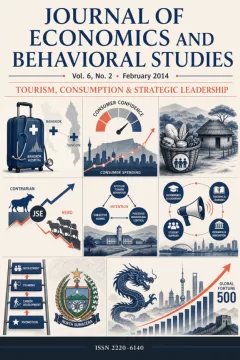
In the last three decades China’s economic development have achieved great many things some of which are 73 or more companies among the Global Fortune 500 (E & Y Report, 2012). This progress accelerated the country second to the US in its ranking. In addition, Chinese companies are expected to represent close to one fifth of all Global 500s by the 2020. The economy consistently grew 10 percent for the past decades and is anticipated to recover from the recent global financial crisis faster than some Western nations (Ju and Mirza, 2012). The economic growth has created debate among two camps; the skeptics are projecting the bust is near, while the cohorts claim to foresee continuity in the general direction. The purpose of this paper is therefore, to examine China’s economic development in light of an assertive strategic leadership that created sustainable economic development and distinguish the challenges of implementing a strategy to create competitive advantage through multiple economic systems; a market lead economy and a robust state developmentalism. The main question is; could it be possible for China to continue on the path of economic development and create a competitive advantage? If so, what are the opportunities and the challenges? Examination of the questions by using Institutional theory, leadership strategy, economic growth and institutional development theories indicated that continuity of the economic development depends on an assertive leadership and liberalization. Also, China should look into its own brand, and create unique or differentiated products, methods and processes that can sustain economic development. The local sector has similar characteristics as western market lead economy; that the managers are motivated by financial incentives that are received when their decision lead to an overall profit.
Keywords
References
- Breznitz, D. & Murphree, M. (2011). Innovation in emerging economies: China's run of the red queen. books.google.com
- Chatterjee, P. (2012). The black Hole of Empire: History of a global practice of power. Princeton University Press.
- Chen, B. & Feng, Y. (1999). Determinants of economic growth in China: Private enterprise, education, and openness. School of Politics and Economics, Claremont Graduate University, Claremont, CA 91711, USA
- Chow, C. G. (1997). Interaction of Economic Institutions and Theory: Challenges of China’s Economic system for Economic Theory. AEA Paper and Proceedings.
- Dobbs, R., Leung, N. & Lund, S. (2007). China’s rising stature in global finance. McKinsey Quarterly. www.mckinsey.com
- Ernest and Young Report. (2012). China in transition: Insights for global companies. China Business Network Fung, E. & Peng, Y. (2012). Forces driving China’s economic growth in 2012. New thoughts, new strategies, new initiatives. KMPG Global China Practice.
- Hall, A. P. & Soskice, D. (2001). An introduction to varieties of capitalism.
- Henisz, W. J. (2000). The Institutional Environment for Economic Growth. Economics and Politics 12(1), 1-13.
- Ju, X. F. & Mirza, S. S. (2012). Chinese Competitiveness and Growth Sustainability. International Journal of Business and Social Science, 3(3).
- Liao, C. (2005). The Governance Structure of Chinese Firms: Innovation, Competitiveness, and Growth in Dual Economy. Springer.
- MacFarlan, M., Edison, H. & Spatafora, N. (2003). World Economic Outlook, chapter 3. www.imf.org/external/pubs/ft/weo/2003/01/pdf/chapter3.pdf
- Montinola, G., Qian, Y. & Weingast, R. B. (1996). Federalism, Chinese Style: The political basis for economic success.
- North, D. C. (1990). Institutions, Institutional change and economic performance. Cambridge University Press. Cambridge.
- Orr, G. & Roth, E. (2013). China’s innovation engine picks up speed. McKinsey Quarterly www.mckinsey.com
- Pan, S. Y. (2011). Education abroad, Human capital development, and National competitiveness: China’s Brain gain strategies. Frontiers of Education in China , 6(1), 106-138.
- Porter, E. M. (1990). The competitive advantage of nations. Harvard Business Review, 3, 73-93.
- Zhang, J., Ebbers, H. & Mulder, R. (2012). Competitiveness of Chinese Industries - A Comparison with the EU. www.ccsenet.org/journal/index.php/res/article/.../10408 .
Downloads
No downloads have been recorded for this article yet. Figures appear here once readers begin downloading the full text.
How to Cite
Share this article
License
Copyright (c) 2014 Kinfu Adisu (Author)

This work is licensed under a Creative Commons Attribution 4.0 International License.
Author (s) should affirm that the material has not been published previously. It has not been submitted and it is not under consideration by any other journal. At the same time author (s) need to execute a publication permission agreement to assume the responsibility of the submitted content and any omissions and errors therein. After submission of revised paper in the light of suggestions of the reviewers, the editorial team edits and formats manuscripts to bring uniformity and standardization in published material.
This work will be licensed under Creative Commons Attribution 4.0 International (CC BY 4.0) and under condition of the license, users are free to read, copy, remix, transform, redistribute, download, print, search or link to the full texts of articles and even build upon their work as long as they credit the author for the original work. Moreover, as per journal policy author (s) hold and retain copyrights without any restrictions.
Keywords
Section
Published
Submissions
Have research to publish? Journal of Economics and Behavioral Studies welcomes submissions.
Make a Submission