Abstract
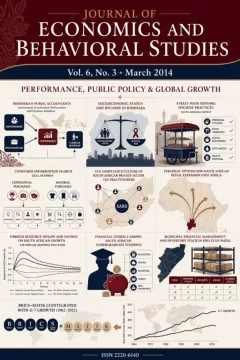
Street food vending has and is becoming globally a convenient and in most cases an essential service. Lifestyle changes and socio economic factors creates very little space for consumers to look at other alternatives one of which would be to prepare one’s own meal. Street food therefore becomes an easy and economic means to acquire prepared food. Safe hygiene practices should become integral to the vendor as the product will be consumed by people of all ages and many may be vulnerable to poor quality food. The street food vendor in turn relies on this service as a means of employment and income generation. The competition between vendors is increased and the pressure to cut corners becomes a reality and one significant corner is appropriate hygiene practices. The practice of appropriate hygiene practices is also as a result of total ignorance of many vendors and the nature of the food that they prepare. The paper explores lessons from various countries in respect of dealing with ensuring good hygiene practices of street food vendors and its usefulness to the South African perspective. One such initiative is the programme launched by the India’s Food Safety and Standards Authority and the National Association of Street Vendors of India. South African street food industry is rapidly increasing in size and proportion. Several studies have been undertaken to look at this operation from various perspectives including hygiene practices and small business. Employment creation has become a national imperative of the country and small business development is seen as a significant component to employment creation. This paper sets out to establish the global practices in street food vending from a hygiene perspective and its relevance to the South African context.
Keywords
References
- Abdalla, M. A., Suliman, S. E. & Bakhiet, A. O. (2009). Food safety knowledge and practices of street food vendors in Atbara City (Naher Elneel State Sudan). African Journal of Biotechnology , 8 , 6967-6971.
- Ackah, M., Gyamfi, E. E., Anim, A. K., Oseil, J., Hansen, J. K. & Agyemang, O. (2011) . Socioeconomic profile, knowledge of hygiene and food safety practices among street food vendors in some parts of AccraGhana. Internet journal of food safety, 13 , 191-197.
- Arambulo, P., Almeida, C., Cubblar, S. & Bellotto, A. (1994) . Street Food Vending in Latin America.
- Campbell, P. T. (2011). Assessing the knowledge, attitudes and practices of street food vendors in the city of Johannesburg regarding food hygiene and safety. School of Public Health, University of the Western Cape.
- Draper, A. (1996). Street foods in developing counties :The potential for micronutrient fortification London School of Hygiene and Tropical Medicine.
- Ekanem, E. O. (1998). The street food trade in Africa: safety and socio-environmental issues . Food Control, 9 , 211-215.
- Estrada-Garci, T., Lopez-Saucedo, C., Zamarripa-Ayala, B., Thompson, M. R., Escobar-Gutierrez, A., ManceraMartinez, A. & Gutierrez-Cogco, L. (2004). Prevalence of Escherichia coli and Salmonella spp. in street-vended food of open markets (tianguis) and general hygienic and trading practices in Mexico City,132 , 1181-1184.
- Gordon-Davis, L. (2011). The Hospitality Industry Handbook on Hygiene and Safety for South African Students and Practioners South Africa, Juta & Company Ltd.
- Jeffery Popke, E. & Ballard, R. (2004). Dislocating modernity: Identity, space and representations of street trade in Durban, South Africa. Geoforum , 35 , 99-110.
- Lucca, A., Da Silva, T. & Ferraz, E. A. (2006). Street-food: The hygiene conditions of hot-dogs sold in São Paulo, Brazil. Food Control, 17 , 312-316.
- Martins, J. H. (2006). Socioeconomic and hygiene features of street food vending in Gauteng. South african journal of clinical nutrition , 19 , 18-25..
- Muzaffar, A. T., Huq, I. & Mallik, B. A. (2009). Entrepreneurs of the Streets: an Analytical Work on the Street Food Vendors of Dhaka City. International Journal of Business and Management , 4(1) , P80.
- NASVI (National association of street vendors of India). (2013). Sustaining food security from the streets Mass training of street food vendors on food safety and hygiene [Online]. India. [Accessed 9 january 2014].
- Nicolas, B., Razack, B. A., Yollande, I. & Aly, S. (2007). Street-Vended Foods Improvement: Contamination Mechanisms and Application of Food Safety Objective Strategy : Critical Review. Pakistan Journal of Nutrition , 6 , 1-10.
- Ohiokpehai, O. (2003). Nutritional aspects of street foods in Botswana. Pakistan Journal of Nutrition, 2 , 76-81.
- Steyn, D., Labadarios, L. & Nel, J. (2011). Factors which influence the consumption of street foods and fast foods in South Africa-a national survey. Nutrition Journal , 10 , 2-10.
- Tambekar, D. H., Kulnari, R. V., Shirsat, S. D. & Bhadange, D. G. (2011). Bacteriological quality of street vended food Panipuri: A case study of Amravati city (MS) India. Bioscience Discovery , 2 , 350-354.
- Von holy, A. & Makhoane, F. M. (2006). Improving street food vending in South Africa: Achievements and lessons learned. International journal of food microbiology, 111 , 89-92.
Downloads
No downloads have been recorded for this article yet. Figures appear here once readers begin downloading the full text.
How to Cite
Share this article
License
Copyright (c) 2014 R. Kok, R. Balkaran (Author)

This work is licensed under a Creative Commons Attribution 4.0 International License.
Author (s) should affirm that the material has not been published previously. It has not been submitted and it is not under consideration by any other journal. At the same time author (s) need to execute a publication permission agreement to assume the responsibility of the submitted content and any omissions and errors therein. After submission of revised paper in the light of suggestions of the reviewers, the editorial team edits and formats manuscripts to bring uniformity and standardization in published material.
This work will be licensed under Creative Commons Attribution 4.0 International (CC BY 4.0) and under condition of the license, users are free to read, copy, remix, transform, redistribute, download, print, search or link to the full texts of articles and even build upon their work as long as they credit the author for the original work. Moreover, as per journal policy author (s) hold and retain copyrights without any restrictions.
Keywords
Section
Published
Submissions
Have research to publish? Journal of Economics and Behavioral Studies welcomes submissions.
Make a Submission