Abstract
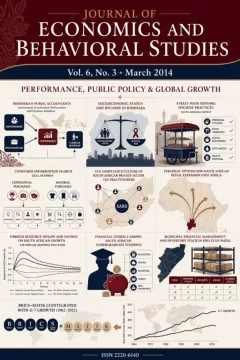
This paper reports on the perceived effectiveness of municipal financial management (MFM), on the performance of inventory stock management, by South African local government. The study aimed to evaluate and discuss various factors affecting the effectiveness of MFM on the performance of inventory stock management, in a local municipal government of South Africa, with specific reference to the Kwa-Zulu Natal (KZN) Province. The MFM Act was used as a theoretical framework for the study, and a quantitative research method was applied. The questionnaire was formulated based on information obtained from the literature, and was distributed to only one KZN local government department. The sample consisted of 57 respondents, selected using a census sampling method. The results indicate that there is significant relationships between experience and performance of inventory stock management (p=.003a,b*), experience and effectiveness/efficiency of MFM (p=.000a,b*),as well as experience and the economic viability of MFM (p=.000b,c*).Interestingly, the respondents also indicated that, although there is good inventory stock management, there is a weak relationship between the effectiveness/efficiency, economic viability, and transparency of MFM. This study recommends that further research should aim to advance financial management skills in South African local government, in order to build financial management capacity to deal with inventory stock management issues. This should enable communication with other related structures and improve the understanding of each other’s efforts in the organization.
Keywords
- Municipal Financial Management (MFM) Search this journal for Municipal Financial Management (MFM) (opens in a new tab)
- Effectiveness Search this journal for Effectiveness (opens in a new tab)
- Economically Search this journal for Economically (opens in a new tab)
- Transparency Search this journal for Transparency (opens in a new tab)
- Inventory Stock Management Search this journal for Inventory Stock Management (opens in a new tab)
References
- Abushamsieh, K., Lopez Hernandez, A. M. & Ortiz, R. D. (2013). The transparency of government financial information systems in Arab countries: Evidence from Palestine: Journal of accounting, business & management , 20(2), 99.
- Adamauskas, S. & Krusinskas, R. (2012). Behavioural finance efficiency under the influence of country's economic cycle. Engineering economics , 23(4), 333.
- Agenor, P. R. & Yilmaz, D. (2011). The tyranny of rules: fiscal discipline, productive spending, and growth in a perfect foresight model. Journal of economic policy reform , 14(1), 69–99.
- Aikins, S. K. (2011). An examination of government internal audits' role in improving financial performance: Public finance & management , 11(4), 333.
- Alam, S. M. (2008). Economical development in the country. Economic review , 39(3), 28.
- Alekneviciene, N. M. (2005). Assessing the financial health of city municipal corporations: a comparative study. Indian Streams research journal , 3(9), 2-7.
- Arbe, B. (2013). Factors affecting effective management of the procurement function at Nakuru North sub-county. International journal of business & management , 1(7), 263.
- Attila, G. & Cristina, G. A. (2010). Budgetary classifications' role in public financial management: Annals of the University of Oradea, economic science series , 19(1), 363.
- Audit to build public confidence report. (2011). Available WWW: http://www.agsa.co.za/Portals/1/Audit%20guidelines/R3%20Reporting%20guide%20fi nal.pdf (Accessed 22 August 2013).
- Basaran, B. (2013). Effects of operational and structural conditions on inventory management in large manufacturing enterprises. Istanbul university journal of the school of business administration , 42(1), 41.
- Bonson, E., Torres, L., Royo, S. & Floresc, F. (2012). Local e-government 2.0: Social media and corporate transparency in municipalities. Government information quarterly , 29(2), 123.
- Bovis, C. H. (2010). Efficiency and effectiveness in public sector management: The regulation of public markets and public-private partnerships and its impact on contemporary theories of public administration. European procurement & public private partnership law review , 8(2), 187-189.
- Buckuniene, R. (2002). Analyzing local government financial performance: Evidence from Brazilian municipalities. RAC – revista de administraçaocontemporanea , 17(6), 705-711.
- Burja, C. & Burja, V. (2010). Analysis model for inventory management. Annals of the University of Petrosani Economics , 10(1), 43.
- Eze, N. M. & Harrison, O. O. (2013). Financial management in local government: The Nigeria experience. International journal of financial research , 4(4), 146.
- Fausto, D. (2010). Public expenditure in Italian public finance theory. European journal of the history of economic thought , 17(4), 909-923.
- Graves, N. & Dollery, B. (2009). Local government reform in South Africa: An analysis of financial management legislative compliance by municipalities. Public Administration & Development , 29(5), 387-392.
- Grimmelikhuijsen, S. G. & Welch, E. W. (2012). Developing and testing a theoretical framework for computer-mediated transparency of local governments. Public administration review , 72(4), 564564.
- Groneck, M. (2011). The golden rule of public finance and the composition of government expenditures: a growth and welfare analysis. Journal of economic policy reform , 14(4), 273-274.
- Herath, S. (2012). Size of government and economic growth: a nonlinear analysis: Methodology: Ekonomskianali / economic annals , 57(194), 7.
- Huefner, R. J. (2011). Internal control weaknesses in local government. CPA journal , 87(7), 26.
- Jovanovic, P. & Benkovic, S. (2012). Improvements in organizing public procurement at the local selfgovernment level in Serbia. Management , 64(5), 25-27.
- Kamnikar, J. A., Kamnikar, E. G. & Burrowes, A. (2011). Government financial management in New Zealand: A model for improving accountability to the citizenry. Journal of government financial management , 60(3), 41.
- Kumar, M. & Ganguli, S. (2009). Modelling inventory management improvement: Criticalities and recommendations. ICFAI journal of supply chain management , 6(1), 36.
- Levisauskaite, J. & Ruskys, L. (2003). The public finance control system of the republic of Lithuania and its development. Public administration , 4(16), 7-11.
- Liou, K. T. (2013). The financial crisis and the challenge of government regulation. Public performance & management review , 37(2), 210-211.
- Luby, M. J. (2013). The impact of the great recession on the financial management practices of state and local governments: part I. Journal of public budgeting, accounting & financial management , 25(1), 160.
- Mackevicius, J. & Raulinaitiene, L. (2007). The public finance control system of the republic of Lithuania and its development. Public administration , 4(16), 6-7.
- Matkin, D. S. T. (2010). Before there was Enron, there was Orange County: A study of local government financial-oversight committees. Public budgeting & finance , 30(3), 27.
- Meidunas, K. & Puzinauskas, M. (2003). E-Governance in public financial management: An overview, IIMB management review. Indian institute of management Bangalore , 18(4), 410.
- Minea, A. &Villieu, P. (2009). Borrowing to finance public investment? The ‘golden rule of public finance’ reconsidered in an endogenous growth setting. Fiscal Studies , 30(1), 103–133.
- Mwakibinga, F. A. & Buvik, A. (2013). An empirical analysis of coercive means of enforcing compliance in public procurement. Journal of Public Procurement , 13(2), 245-247.
- Preuss, L. (2007). Buying into our future: sustainability initiatives in local government procurement. Business strategy & the environment (John Wiley & Sons, Inc) , 16(5), 354.
- Roman, A. V. (2013). Public policy and financial management through e-procurement: a practice oriented normative model for maximizing transformative impacts. Journal of public procurement , 13(3), 338.
- Seminega, W. (2012). Internal control systems for public procurement in Rwanda: Rwanda public procurement (online). Available WWW: http://rppa.gov.rw/(Accessed 24 January2014).
- Siali, F., Liu, Y. & Kie, C. J. (2013). Inventory management and logistics cost reduction: A case of a Malaysia herbal medicine company. Technology & investment , 4(3), 211.
- Smith, W. (2013). How to improve inventory-management efficiency. Controller's report , 7(6).
- Tikk, J. & Almann, A. (2011). Developments in public sector financial management in Estonia: Business & economic horizons , 5(2), 47.
- Umakanta, M. & Chaitanya, K. T. (2012). An EOQ model for time dependent weibull deterioration with linear demand and shortages. Scientific journal of logistics , 8(2), 124.
Downloads
No downloads have been recorded for this article yet. Figures appear here once readers begin downloading the full text.
How to Cite
Share this article
License
Copyright (c) 2014 Zwelihle Wiseman NZUZA, Lawrence Mpele LEKHANYA (Author)

This work is licensed under a Creative Commons Attribution 4.0 International License.
Author (s) should affirm that the material has not been published previously. It has not been submitted and it is not under consideration by any other journal. At the same time author (s) need to execute a publication permission agreement to assume the responsibility of the submitted content and any omissions and errors therein. After submission of revised paper in the light of suggestions of the reviewers, the editorial team edits and formats manuscripts to bring uniformity and standardization in published material.
This work will be licensed under Creative Commons Attribution 4.0 International (CC BY 4.0) and under condition of the license, users are free to read, copy, remix, transform, redistribute, download, print, search or link to the full texts of articles and even build upon their work as long as they credit the author for the original work. Moreover, as per journal policy author (s) hold and retain copyrights without any restrictions.
Keywords
- Municipal Financial Management (MFM) Search this journal for Municipal Financial Management (MFM) (opens in a new tab)
- Effectiveness Search this journal for Effectiveness (opens in a new tab)
- Economically Search this journal for Economically (opens in a new tab)
- Transparency Search this journal for Transparency (opens in a new tab)
- Inventory Stock Management Search this journal for Inventory Stock Management (opens in a new tab)
Section
Published
Submissions
Have research to publish? Journal of Economics and Behavioral Studies welcomes submissions.
Make a Submission