Abstract
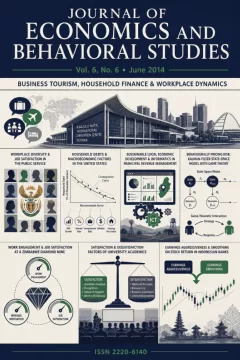
The world-wide shift in demographics, changing immigration patterns and social change are all factors that affect the work environment. (Brevis & Vrba, 2014: 194). The demands of globalization, technological innovation, economic imperatives, ecological sensitivity and the need for sustainable development are the challenges that business organizations worldwide face in order to survive. From the human perspective the challenges are about socio-political transformation and especially about managing and celebrating diversity (Magretta, 1999). The diversity aspect of the topic is an important part of the economic landscape in post-apartheid South Africa where phrases like “economic freedom” are voiced from labor unions and political figures alike. These calls from the likes of Julius Malema, the then leader of the African National Congress Youth League, Zwelinzima Vavi, the General Secretary of the Congress of South African Trade Unions and Matthews Phosa, Treasurer-General of the African National Congress are often the focus of news reports (ANCYL march – Day 2, 2011; Phosa calls for economic freedom, 2012; Vavi, 2012). Almost half the organizations reported that the biggest challenge facing organizations over the next ten years is obtaining human capital and optimizing their human capital investments (HR Magazine. 55, no.11 (November 2010): 80) in Bohlander & Snell (2013: 21). Bohlander & Snell (2013: 21) further answer the question of why is this so? Changes in the demographic makeup of employees, such as their ages, education levels, and ethnicities, are part of the reason why. In this current study, a population study of 50 public servants in a selected public sector industry was used. Data was collected through the administration of the organizational diversity questionnaire and job satisfaction questionnaire. Individuals in the population sample were instructed to complete a questionnaire as a measuring instrument. The copies of ODQ and JSQ were distributed among public servants at a selected public service department.
Keywords
- Globalization Search this journal for Globalization (opens in a new tab)
- Organizational Diversity Questionnaires (ODQ) and Job Satisfaction Questionnaire (JSQ) Search this journal for Organizational Diversity Questionnaires (ODQ) and Job Satisfaction Questionnaire (JSQ) (opens in a new tab)
- Workplace Diversity Search this journal for Workplace Diversity (opens in a new tab)
- Job Satisfaction Search this journal for Job Satisfaction (opens in a new tab)
References
- Allen, N. J. (2003). Organizational Commitment in the Military: A discussion of theory and practice. Military Psychology , 15(3), 237 – 253 .
- ANCYL March - Day 2, 2011. News24. [2012] Available at: http://www.news24.com/multimedia/southafrica/ancyl-march-day-2-20111028 [Accessed 28 October 2012].
- Bandura, A. (1977). Self-efficacy: Toward a unifying theory of behavioral change. Psychological Review , 84, 191-215.
- Bassett, G. (1994). The case against job satisfaction [Electronic version]. Business Source Premier , 37(3), 6168.
- Bekker, S. & Leide, A. (2003). Is Multiculturalism a Workable Policy in South Africa? International Journal on Multicultural Societies , 5(2), 119 -134.
- Bernstein, D. A. & Nash, P. W. (2008). Essentials of psychology (4th Ed.). Boston: Cengage Learning. Retrieved from http://books.google.com/books?id=4Do-bFrt9tUC.
- Berry, L. M. (1997). Psychology at work. San Francisco, CA: McGraw-Hill Companies, Inc.
- Brevis, T. & Vrba, M. (2014). Contemporary Management Principles. Cape Town. Juta & company.
- Bohlander, G. & Snell, S. (2013). Principles of Human Resource Management (16th ED). Arizona. SouthWestern Cengage Learning.
- Cavaleros, C., Vooren, V. V. & Delene, D. (2002). The effectiveness of diversity awareness training program. South African Journal of Industrial Psychology , 28(3), 50-61.
- Cherrington, D. J. (1994). Organizational behavior (2nd Ed.). Boston: Allyn and Bacon, Inc.
- Ellickson, M. C. & Logsdon, K. (2002). Determinants of job satisfaction of municipal government employees [Electronic version]. Public Personnel Management , 31(3), 343-358 .
- Choi, S. (2013). Demographic diversity of managers and employee job satisfaction empirical analysis of the federal case. Review of Public Personnel Administration , 33(3), 275-298.
- Dardar, A. H. A., Jusoh, A. & Rasli, A. (2012). The Impact of Job Training, job satisfaction and Alternative Job Opportunities on Job Turnover in Libyan Oil Companies, Procedia - Social and Behavioral Sciences, 2012.
- Feather, N. T. & Rauter, K. A. (2004). Organizational citizenship behaviors in relation to job status, job insecurity, organizational commitment and Identification, job satisfaction and work values. Journal of Occupational and Organizational Psychology , 77(1), 81-94.
- Graham, M. W. & Messner, P. E. (1998). Principals and job satisfaction. The International Journal of Educational Management , 12(5), 196-202.
- Grobler, P. A., Warnich, S., Carrel, M. R., Elbert, N. F. & Hartfield, L. (2002). Human Resource Management in South Africa . (2nd Ed.) Manitoba: Thomson Learnings.
- Hackman, J. R. & Oldham, G. R. (1976). Motivation through the design of work: Test of a theory. Organizational Behavior and Human Performance , 16, 250-279.
- Hamidizadeh, M, R., Sommayeh, B. & Mehdi, L. M. (2012). Empowerment and Contextual Performance with Job Utility's Model. Interdisciplinary Journal of Contemporary Research in Business , 3(9), 1199
- Hegarty, W. H. (1995). Development and Psychometric Properties of Organizational Diversity Inventory (ODI) Educational and Psychological Measurement, 12/01/1995.
- Herzberg, F. (1968). One more time: How do you motivate employees? Harvard Business Review, 52-62.
- Horwitz, F. M., Browning, V., Jain, H. & Steenkamp, A. J. (2002). Human resource practices and discrimination in South Africa: overcoming the apartheid legacy. International Journal of Human Resource Management , 13, 1105 – 1118.
- Human, L. (2005a). Diversity Management for business success. Pretoria: Van Schaik Publishers.
- Human. L. (2005b). Diversity: an aspect of the business case and leadership competence. Management Today , 3, 12–15.
- Hunt, J. & Lascaris, R. (1998). The South African Dream. Goodwood: Zebra Press
- Johns, G. (1996). Can Job Scope Be Too High? Academy of Management Journal , 101(4), 578 – 591.
- Judge, T. A. & Church, A. H. (2000). Job satisfaction: Research and practice. In C. L. Cooper & E. A. Locke (Eds.), Industrial and organizational psychology: Linking theory with practice (pp. 166-198). Oxford, UK: Blackwell.
- Judge, T. A. & Klinger, R. (2007) Job satisfaction: Subjective well-being at work. In M. Eid, & R. Larsen (Eds.), The science of subjective well-being (pp. 393-413). New York, NY: Guilford Publications.
- Kerber, K. W. & Campbell, J. P. (1987). Job satisfaction: Identifying the important parts among computer sales and service personnel. Journal of Business and Psychology , 1(4), 337-352.
- Kreitner, R. & Kinichi, A. (2001). Organizational Behavior.8th ed. Chicago: Richard. D. Irwin.Inc.
- Koustelios, A. D. (2001). Personal characteristics and job satisfaction of Greek teachers. The International Journal of Educational Management , 15(7), 354-358.
- Landy, F. J. (1978). An opponent process theory of job satisfaction. Journal of Applied Psychology , 63(5), 533547.
- Lacey, M. Y. (1994). Rewards can cost nothing? Yes they can…really [Electronic version]. The Journal for Quality and Participation , 17(3), 6-9.
- Luthans, F. (1989). Organizational behavior (5th Ed.). New York: McGraw-Hill.
- Locke, E. A. (1995). Commentary: The micro-analysis of job satisfaction: Comments on Taber and Alliger. Journal of Organizational Behavior , 16(2), 123-126.
- Locke, E. A. (1976). The nature and causes of job satisfaction. In M. D. Dunnette (Ed.), Handbook of industrial and organizational psychology (pp. 1297-1349). Chicago, IL: Rand McNally.
- Locke, E. A. (1969). What is job satisfaction? Organizational Behavior and Human Performance , 4, 309-336.
- Madison, D. (2000). Can your job make you sick? Retrieved November 3, 2004, from: http://www.keepmedia.Psychology.Today.
- Magretta, J. (1999). Managing in the new economy. Boston: Harvard Business School.
- Maslow, A. H. (1943). A theory of human motivation. Psychological Review , 50, 370-396.
- Mason, E. S. (1992). An investigation into the possible existence of gender-based differences in job satisfaction: Ph. D dissertation. University of Toronto. Canada, Retrieved August 7, 2008, from Dissertation and Theses: Full text database. (Publication No: ATT NN73949)
- Mbigi, L. (1998). In search of the rainbow vision – The Challenge of Diversity Management in South African Organizations. People Dynamics, July 1998, 35–39.
- Mc Namara C. (n.d.). Retrieved October 24, 2004, from: http://www.mapnp.org/library/prsn_wll/job_stfy.htm.
- Mueller, C. W. & Kim, S. W. (2008). The contented female worker: Still a paradox? In K. A. Hegtvedt & J. ClayWarner (Eds.), Justice: Advances in group processes volume 25 (pp. 117-150). Bingley, UK: Emerald Group Publishing Limited. Retrieved from http://books.google.com/books?id=rynLSn6zYRkC.
- Nel, S., Van Dyk, P., Schultz, B. & Werner, A. (2004). Human Resource Management (3rd ed). South Africa: Oxford University Press.
- Oshagbemi, T. (2000). Gender differences in the job satisfaction of university students [Electronic version]. Women in Management Review , 15(7), 331-343.
- Perks, S. & Smith, E. E. (2008). Employees’ perceptions regarding whistle blowing in the workplace: A South African perspective. SA Journal of Human Resource Management , 2(1).
- Pergamit, M. R. & Veum, J. R. (1999). What is a promotion [Electronic version]? Industrial & Labor Relations Review , 52(4), 21.
- Peterson, D. K., Puia, G. M. & Suess, F. R. (2003). Yo Tengo La Camiseta (I have the shirt on): An exploration of job satisfaction and commitment among workers in Mexico [Electronic version]. Journal of Leadership and Organizational Studies , 10(2), 73-88.
- Phosa calls for economic freedom, (2012). News24. [Online] Available at: http://www.news24.com/southafrica/politics/phosa-calls-for-economic-freedom20120302 [Accessed 2 March 2012]. Poll identifies Top Challenges for HR During the next 10 years, ’HR Magazine.55, no. 11(November 2010):80
- Posthuma, R. A. (2007). Age stereotypes in the workplace: common stereotypes, moderators, and future research directions. Journal of Management , 35, 158–188.
- Ramsey, R. D. (1997). Employee morale: Does it matter anymore? Supervision , 58(9), 6-8.
- Robbins, S. P. (1993). Organizational Behavior (Global and Southern African Perspectives). 7nth ed. South Africa: Pearson Education Inc.
- Robbins, S. P., Odendaal, A. & Roodt, G. (2003). Organizational behavior (9th Ed.). Cape Town: Prentice-Hall International.
- Robie, C., Ryan, A. M., Schmieder, R. A., Parra, L. F. & Smith, P. C. (1998). The relation between job level and job satisfaction. Group and Organization Management Thousand Oaks , 23(4), 470-495.
- Saner, T. Ã. & Åžerife, Z. (2012). The Age and Job Satisfaction Relationship in Higher Education. Procedia - Social and Behavioral Sciences, 2012.
- RSA (Republic of South Africa). (1998). Employment Equity Act, No.55 of 1998. Government Gazette, No.20626. Government Printer, Pretoria.
- RSA (Republic of South Africa). (1995). Labor Relations Act No 66 of 1995. Government Printer, Pretoria.
- Sekaran, U. (2003). Research Methods for Business: A skill-Building Approach (3rd Ed.). New York: John Wiley & Sons, Inc.
- Schreuder, A. M. G. & Theron, A. L. (1997). Careers: An Organizational Perspective. Cape Town: Juta.
- Sclafane, S. (1999). MGA managers in sync with employees on job satisfaction issues, survey finds. National Underwriter , 103(22), 4-24.
- Smucker, M. K., Whisenant, W. A. & Pedersen, P. M. (2003). An investigation of job satisfaction and female sports journalists. International Sports Journal , 49(7/8), 401-407.
- Stone, A. G. & Patterson, K. (2005). The History of Leadership Focus, School of leadership studies Regent University.
- Syptak, J. M., Marsland, D. W. & Ulmer, D. (1999). Job satisfaction: Putting theory into practice. Family Practice Management. Retrieved from http://www.aafp.org/fpm/991000fm/26.html.
- Van Niekerk, A. A. (2004). The impact of cultural diversity in the workplace. Journal of Business and Psychology , 18(3).
- Vavi, Z., (2012). Mail & Guardian. [Online] Available at: http://www.mg.co.za/article/2012-03-07-cosatuprotest-a-mirror-of-class-inequalities [Accessed 7 March 2012].
- Vroom, V. H. (1964). Work and motivation. New York, NY: Wiley.
- Wech, B. A. (2002). Trust context: Effect on organizational citizenship behavior, Supervisory fairness and job satisfaction beyond the influence of leader-member Exchange. Business and Society , 41(3), 353-360.
- Weiss, D. J., Dawis, R. V., England, G. W. & Lofquist, L. H. (1967). Manual for the Minnesota Satisfaction Questionnaire. Minnesota Studies in Vocational Rehabilitation. No.22. Minneapolis: University of Minnesota.
- Woodard, C. (2003).Reduce staff turnover, increase profit. Club Industry , 9(5), 21-27. www.stassa.co.za (Accessed 13/02/2014)
- Young, B. S., Worchel, S. & Woehr, W. D. J. (1998). Organizational commitment among public service employees [Electronic version]. Personnel Journal , 27(3).
Downloads
No downloads have been recorded for this article yet. Figures appear here once readers begin downloading the full text.
How to Cite
Share this article
License
Copyright (c) 2014 Wiza Munyeka (Author)

This work is licensed under a Creative Commons Attribution 4.0 International License.
Author (s) should affirm that the material has not been published previously. It has not been submitted and it is not under consideration by any other journal. At the same time author (s) need to execute a publication permission agreement to assume the responsibility of the submitted content and any omissions and errors therein. After submission of revised paper in the light of suggestions of the reviewers, the editorial team edits and formats manuscripts to bring uniformity and standardization in published material.
This work will be licensed under Creative Commons Attribution 4.0 International (CC BY 4.0) and under condition of the license, users are free to read, copy, remix, transform, redistribute, download, print, search or link to the full texts of articles and even build upon their work as long as they credit the author for the original work. Moreover, as per journal policy author (s) hold and retain copyrights without any restrictions.
Keywords
- Globalization Search this journal for Globalization (opens in a new tab)
- Organizational Diversity Questionnaires (ODQ) and Job Satisfaction Questionnaire (JSQ) Search this journal for Organizational Diversity Questionnaires (ODQ) and Job Satisfaction Questionnaire (JSQ) (opens in a new tab)
- Workplace Diversity Search this journal for Workplace Diversity (opens in a new tab)
- Job Satisfaction Search this journal for Job Satisfaction (opens in a new tab)
Section
Published in
 Vol. 6 No. 6 (2014)
Business Tourism, Household Finance & Workplace Dynamics
View issue contents
Published
Submissions
Have research to publish? Journal of Economics and Behavioral Studies welcomes submissions.
Make a Submission