Abstract
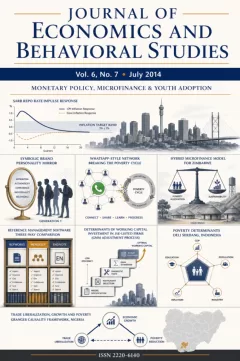
Although research clearly demonstrates that consistent technology usage is correlated to socioeconomic development, the Vicious Cycle of Technology Affordability and Non-adoption impedes the uptake of ICTs in many developing countries. In South Africa, however, one Smartphone messaging application, WhatsApp, appears to have broken this vicious cycle. This paper argues that, given that promoting the uptake of ICTs is a developmental imperative for emerging economies, studying the adoption and diffusion patterns of WhatsApp provides invaluable insights into ICT usage within the context of a developing country. This study modelled the factors influencing the adoption of WhatsApp among South African youths. Some 192 students participated in the study by means of a self-completion questionnaire developed from the Technology Acceptance Model. Structural equation modelling tested the proposed theoretical model. Results suggest that a combination of cost efficiency, simplicity, userfriendly features, and the ability to run on multiple platforms influences and promotes users’ attitudes and behavioural intentions to adopt WhatsApp.
Keywords
- Adoption Search this journal for Adoption (opens in a new tab)
- SEM Search this journal for SEM (opens in a new tab)
- South Africa Search this journal for South Africa (opens in a new tab)
- Smartphone's Search this journal for Smartphone's (opens in a new tab)
- TAM Search this journal for TAM (opens in a new tab)
- Technology Leapfrogging Search this journal for Technology Leapfrogging (opens in a new tab)
- V-CAN Search this journal for V-CAN (opens in a new tab)
- WhatsApp Search this journal for WhatsApp (opens in a new tab)
References
- Alrafi, A. (1989). Technology Acceptance Model. Engineering, 22, 1-12.
- Barrett, P. (2007). Structural equation modelling: Adjudging model fit. Personality and Individual Differences, 42, 815-824.
- Blumberg, B., Cooper, D. R. & Schindler, P. S. (2011). Business Research Methods (3rded.). London: McGraw Hill.
- Bradshaw, T. (2011). WhatsApp users get the message[Online]. Retrieved April 20 2012: http://www.ft.com/intl/cms/s/2/30fd99a2-0c60-11e1-88c6- 00144feabdc0.html#axzz1snbRCmxB
- Calder, B. J., Phillips, L. W. & Tybout, A. M. (1981). Designing Research for Application. The Journal of Consumer Research, 8(2), 197-207.
- Chen, L. (2008). A model of consumer acceptance of mobile payment. International Journal of Mobile Communications, 6(1), 32-52.
- Davis, D. (1989). Perceived Usefulness, Perceived Ease of Use, and User Acceptance of Information Technology. MIS Quarterly, 13(3), 319-340.
- Department of Communications. (2014). National Integrated ICT Policy Green Paper. Government Gazette, 44, 37261.
- Donner, J. & Tellez, C. (2008). Mobile banking and economic development: linking adoption, impact, and use. Asian Journal of Communication, 18(4), 318-322.
- Edoho, F. M. (2013). Information and communications technologies in the age of globalization. African Journal of Economic and Management Sciences, 4(1), 9-33.
- Field, A. (2009). Discovering Statistics Using SPSS (3rd ed.). Thousand Oaks, CA: Sage.
- Fong, M. W. L. (2009). Technology Leapfrogging for Developing Countries. Global Information Technology , 5, 3707-3713.
- Hodenfield, H. H. (2013). Smartphones: The 21st Century Narcotic[Online]. Retrieved July 2 2014: http://www.thefix.com/content/nomophobia-cell-phone-addiction-brain-cancer2004?page=all
- Jackson, J. L., Dezee, K., Douglas, K. & Shimeall, W. (2005). Introduction to Structural Equation Modeling (Path Analysis): Society of General Internal Medicine (SGIM) Precourse Handout [Online]. Retrieved: http://www.sgim.org/userfiles/file/AMHandouts/AM05/handouts/PA08.pdf.
- Ma, Q. & Liu, L. (2004). The Technology Acceptance Model: A Meta-Analysis of Empirical Findings. Journal of End User Computing, 16(1), 59-72.
- Malhotra, N. (2010). Marketing Research: An Applied Orientation (6th ed.). Upper Saddle River, NJ: Pearson.
- Masrom, M. (2007). Technology Acceptance and E-Learning. Unpublished paper presented at the 12th International Conference on Education, Sultan Hassanal Bolkiah Institute of Education, 21-24 May.
- Meuter, M. L., Bitner, M. J. A. L, O. & Brown, S. W. (2005). Choosing among alternative service delivery modes: an investigation of customer trial of self-service. Journal of Marketing, 69, 61-83.
- Monette, D. R., Sullivan, T. J. & DeJong, C. R. (2008). Applied Social Research: A tool for the Human Sciences (7th ed.). Belmont, CA: Cengage.
- Ndung'u, M. N., Waema, T. M. & Mitullah, W. V. (2012). Factors influencing usage of new technologies in low-income households in Kenya: the case of Nairobi. info, 14(4), 52-64.
- Nilsen, O. B. (2010). Learning-by-Doing or Technological Leapfrogging: Production Frontiers and Efficiency Measurement in Norwegian Salmon Aquaculture. Aquaculture Economics & Management, 14(2), 97-119.
- Pallant, J. (2010). SPSS Survival Manual: A step by step guide to data analysis using SPSS (4th ed.). Berkshire, UK: McGraw Hill.
- Rogers, E. M. (1995). Diffusion of innovations (4th ed.). New York: Free Press.
- Schilling, M. A. (2003). Technological Leapfrogging: Lessons from the U.S. Video Game Console Industry. California Management Review, 45(3), 6-32.
- Shambare, R. & Mvula, A. (2011). South African students' perceptions of Facebook: Some implications for instructors. African Journal of Business Management, 5(26), 10567-10564.
- Shambare, R., Rugimbana, R. & Zhowa, T. (2012). Are mobile phones the 21st century addiction? African Journal of Business Management, 6(2), 573-577.
- Statista. (2014). Number of monthly active WhatsApp users worldwide from April 2013 to April 2014[Online] . Retrieved: June 30 2014: http://www.statista.com/statistics/260819/number-ofmonthly-active-whatsapp-users/
- Stork, C., Calandro, E. & Gillwald, A. (2013). Internet going mobile: internet access and use in 11 African countries. info, 15(5), 34-51.
- Tanakinjal, G. H. (2006). Short Message Service (SMS) and Banking. (PhD Marketing Colloquium), University of Otago, Otago, New Zealand. [Online] Retrieved: March 3 2013: http://eprints.otago.ac.nz/562/
- The Star. (2011). How South Africa Googled in 2011. [Online]. Retrieved Jan. 23 2013: http://www.iol.co.za/the-star/how-south-africa-googled-in-2011-1.1198832#.U8L0RdKKCM8
- Trenholm, R. (2014). WhatsApp zooms to record 64 billion messages in one day[Online]. Retrieved July 9 2014: http://www.cnet.com/news/whatsapp-zaps-record-64-billion-messages-in-one-day/
- TruTower.com. (2014). Retrived: July 13 2014: http://www.trutower.com/2013/09/16/whatsappmessenger-ranking-in-south-africa/
- Walczuch, R., Lemmink, J. & Streukens, S. (2007). The effect of service employees' technology readiness on technology acceptance. Information & Management, 44, 206-215.
- WhatsApp.com. (2012). WhatsApp - How it works[Online]. Retrieved April 21 2012: http://www.whatsapp.com
- Yi, Y., Tung, L. L. & Wu, Z. (2003). Incorporating technology readiness (TR), into TAM: are individual traits important to understand technology acceptance?Unpublished paper presented at the Diffusion Interest Group in Information Technology (DIGIT) Workshop, Seattle, WA.
Downloads
No downloads have been recorded for this article yet. Figures appear here once readers begin downloading the full text.
How to Cite
Share this article
License
Copyright (c) 2014 Richard Shambare (Author)

This work is licensed under a Creative Commons Attribution 4.0 International License.
Author (s) should affirm that the material has not been published previously. It has not been submitted and it is not under consideration by any other journal. At the same time author (s) need to execute a publication permission agreement to assume the responsibility of the submitted content and any omissions and errors therein. After submission of revised paper in the light of suggestions of the reviewers, the editorial team edits and formats manuscripts to bring uniformity and standardization in published material.
This work will be licensed under Creative Commons Attribution 4.0 International (CC BY 4.0) and under condition of the license, users are free to read, copy, remix, transform, redistribute, download, print, search or link to the full texts of articles and even build upon their work as long as they credit the author for the original work. Moreover, as per journal policy author (s) hold and retain copyrights without any restrictions.
Keywords
- Adoption Search this journal for Adoption (opens in a new tab)
- SEM Search this journal for SEM (opens in a new tab)
- South Africa Search this journal for South Africa (opens in a new tab)
- Smartphone's Search this journal for Smartphone's (opens in a new tab)
- TAM Search this journal for TAM (opens in a new tab)
- Technology Leapfrogging Search this journal for Technology Leapfrogging (opens in a new tab)
- V-CAN Search this journal for V-CAN (opens in a new tab)
- WhatsApp Search this journal for WhatsApp (opens in a new tab)
Section
Published
Submissions
Have research to publish? Journal of Economics and Behavioral Studies welcomes submissions.
Make a Submission