Abstract
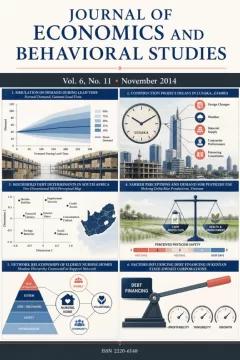
All developed countries have been facing the trend of aging population and view it as an importance social policy which has to plan care and nurse senior citizens. The elderly caring and nursing organizations are obligated to provide more comfortable and suitable environment for a high quality life of elders. Based upon Maslow’s Hierarchy of Needs Theory, there is a hierarchy of five needs within each individual, including physiological needs, safety needs, belongingness and love Needs, self-esteem needs and self-actualization needs. Individuals would acquire emotional support, materiality and service through social network. This study investigates two main issues related to network relationship of elderly nursing home. First, this study demonstrates the network relationship between elderly nursing home and other related groups, including family and friends of elderly resident, exclusive volunteers, neighborhood community centre, religion groups and other welfare associations. Second, this study investigates what the network relationships would influence the satisfaction of five elderly residents’ needs. To better understanding the real connection among groups related to nursing home, this study uses case study with the perceptions of social network to know the network relationship in the nursing home and what it influences their residents’ needs.
Keywords
- Network Relationship Search this journal for Network Relationship (opens in a new tab)
- Social Network Search this journal for Social Network (opens in a new tab)
- Maslow's Hierarchy of Needs Search this journal for Maslow's Hierarchy of Needs (opens in a new tab)
- Elderly Nursing Home Search this journal for Elderly Nursing Home (opens in a new tab)
References
- Antonucci, T. C. (1985). Personal Characteristics, Social Support, and Social Behavior. Handbook of Aging and the Social Sciences (2nd Ed). Edited by Robert H. Binstock and Ethel Shanas . New York: Van Nostrand Reinhold.
- Cohen, S. (2004). Social relationships and health. American Psychologist , 59, 676–684.
- Due, P., Holstein, B., Lund, R., Modvig, J. & Avlund, K. (1999). Social Relations: Network, Support and Relational Strain. Social Science & Medicine , 48, 661-673.
- Eltayeb, W., Ericsson, K., Theorell, T. & Ljunggren, G. (2012). Quality of Life in the Older Population in Sudan-Illustrated by Maslow’s Hierarchical Levels, Experienced Loneliness, and the Importance of Social Support. Journal of Gerontology & Geriatric Research , 1(5), 1-7.
- Fiori, K. L., Smith, J. & Antonucci, T. C. (2007). Social Network Types among Older Adults: A Multidimensional Approach. Journal of Gerontology: Psychological Sciences , 62B (6), 322-30.
- Freeman, L. (2006). The Development of Social Network Analysis. Vancouver: Empirical Press.
- Garton, L., Haythornthwaite, C. & Wellman, B. (1997). Studying Online Social Networks, Journal of Computer-Medicated Communication , 2(2).
- Granovetter, M. (1973). The Strength of Weak Ties. American Journal of Sociology , 78(6), 1360-1380.
- Hardcastle, D. A., Wenocur S. & Powers, P. R. (1997). Community Practice: Theories and Skills for Social Workers. Oxford University Press, New York.
- Johnson, J. E. (1997). Social Support and Physical Health in the Rural Elderly. Applied Nursing Research , 9 (2), 61-66.
- Maslow, A. H. (1943). A theory of human motivation. Psychological Review , 50(4), 370-96.
- Maslow, A. H. (1954). Motivation and personality. New York: Harper and Row.
- Maslow, A. H. (1962). Towards a Psychology of Being. Princeton: D. Van Nostrand Company.
- Moraes, T. P. R. & Dantas, R. A. S. (2007). Evaluation of Social Support among Surgical Cardiac Patients: Support for Nursing Care Planning. Rev Latino-am Enfermagem , 15(2), 323-329.
- Mui, A. C. (1996). Depression among elderly Chinese immigrants: An exploratory study. Social Work , 41, 633–645.
- North, D.G. (1990) . Institutions, Institutional Change and Economic Performance. Cambridge University Press.
- Pai, N. W. (1994). Network Analysis of the Elderly Health & Welfare Service Organization in Taipei City, National Yang-Ming University, Institution of Health and Welfare Policy.
- Scott, J. (1991). Social Network Analysis: A Handbook. Sage Publications, London.
- Sharon, S. E. & Howard, L. (2012). Social network type and health-related behaviors: Evidence from an American national survey. Social Science & Medicine , 75, 901-904.
- Umberson, D., Crosnoe, R. & Reczek, C. (2010). Social relationships and health behavior across the life course. The Annual Review of Sociology , 36, 139-157.
- Umberson, D. & Montez, J. K. (2010). Social relationships and health: A flashpoint for health policy. Journal of Health and Social Behavior , 51, S54–S66.
- United Nations (UN). (2008). World Population Ageing: 1950-2050 , accessed online at www.un.org/esa/population/ publications/worldageing19502050.
- Van Bilsen, P. M. A., Hamers, J. P. H., Groot, W. & Spreeuwenberg, C. (2005). Demand of elderly people for residential care: an exploratory study. Bilingual Research Journal , 29, 711–721.
- Yamazaki, M. (2006). What is a needs-oriented welfare service in a care home for aged people? Apply psychology to understand and intervene. Japanese Journal of Geriatrics, 43(1), 58-61.
- Yoo, J. A. & Zippay, A. (2012). Social networks among elderly Korean immigrants in the U.S. Journal of Aging Studies, 26(3), 368-376 .
Downloads
No downloads have been recorded for this article yet. Figures appear here once readers begin downloading the full text.
How to Cite
Share this article
License
Copyright (c) 2014 Chun-Yao Tseng, Sue-Ming Hsu, Su-Chin Lin (Author)

This work is licensed under a Creative Commons Attribution 4.0 International License.
Author (s) should affirm that the material has not been published previously. It has not been submitted and it is not under consideration by any other journal. At the same time author (s) need to execute a publication permission agreement to assume the responsibility of the submitted content and any omissions and errors therein. After submission of revised paper in the light of suggestions of the reviewers, the editorial team edits and formats manuscripts to bring uniformity and standardization in published material.
This work will be licensed under Creative Commons Attribution 4.0 International (CC BY 4.0) and under condition of the license, users are free to read, copy, remix, transform, redistribute, download, print, search or link to the full texts of articles and even build upon their work as long as they credit the author for the original work. Moreover, as per journal policy author (s) hold and retain copyrights without any restrictions.
Keywords
- Network Relationship Search this journal for Network Relationship (opens in a new tab)
- Social Network Search this journal for Social Network (opens in a new tab)
- Maslow's Hierarchy of Needs Search this journal for Maslow's Hierarchy of Needs (opens in a new tab)
- Elderly Nursing Home Search this journal for Elderly Nursing Home (opens in a new tab)
Section
Published
Submissions
Have research to publish? Journal of Economics and Behavioral Studies welcomes submissions.
Make a Submission