Abstract
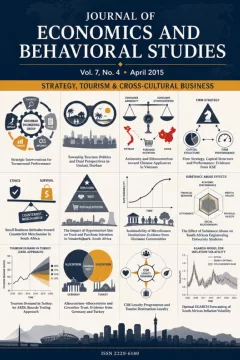
The paper analyses how tourism development at Umlazi which is one of the second biggest Townships in the Southern hemisphere has been hampered by politics and socio economic dynamics that stifle the empowerment of both tourism entrepreneurs and local communities respectively. The impacts of tourism have been given much attention by scholars to examine the perceptions and attitudes of local residents towards Township tourism in South Africa. However, there is little research that focuses on how much political and economic dynamics of the past and present dispensations have adversely impacted on the tourism economic development of small emerging entrepreneurs and local residents of the Townships. This study attempts to make a little contribution to South African Township tourism by examining political and economic dimensions that hinder small businesses and local residents of uMlazi to thrive and get empowered through tourism. Township tourism in South Africa has slightly improved and grown in popularity since 1994 and is considered by the government and other social agents to be an appropriate opportunity for small businesses and the stimulation of local economic development. However, the paper argues that tourism fails to act as a panacea of economic development in the township of Umlazi, since there is lack of business opportunities, intervention and support of local government, private sector and racial groups that are endowed with more than enough financial resources. Data were collected by means of interviews that allowed the interviewer to pose some open-ended questions so that the interviewee could express his or her own opinion freely for the extraction of more information. Based on 30 respondents surveyed, the findings show that there are numerous obstacles that are directly linked to political and economic dynamics. These obstacles include lack of political intervention and financial support for tourism entrepreneurs and local residents of UMlazi Township. On the whole respondents viewed Township tourism negatively. They were generally of the idea that township tourism can only be of benefit to residents once it is often visited by racial groups who are better off financially after their fears about safety and security have been allayed.
Keywords
- Townships Search this journal for Townships (opens in a new tab)
- Financial Support Search this journal for Financial Support (opens in a new tab)
- Tourism Search this journal for Tourism (opens in a new tab)
- Economic Development Search this journal for Economic Development (opens in a new tab)
- Small Businesses Search this journal for Small Businesses (opens in a new tab)
References
- Alden, W. L. (2011). The law is to blame: The vulnerable status of common property rights in sub-Saharan Africa. Development and change , 42(3), 733 to 757.
- Ashworth, G. J. (2004). Tourism and the heritage of atrocity: Management the heritage of South African apartheid for entertainment. In Singh, T (Ed.), New Horizons in Tourism: Strange Experiences and Stranger Practices. CABI, Wallingford.
- Bonn, M. A., Joseph-Mathews, S. M., Dai, M., Hayes, S. & Cave, J. (2007). Heritage/ cultural attraction and atmospherics: Creating the right environment for the heritage/ cultural sector. Journal of Travel Research , 45, 245-66.
- Booyens, I. (2010). Rethinking township tourism. Towards responsible tourism development in South African townships. Development Southern Africa , 27(2), 273-287, DOI: 10.1080/03768351003740795.
- Briedenhann, J. & Ramchander, P. (2006). Township tourism: Blessing or blight? The case of Soweto in South Africa. In E. Smith & M. Robinson (Eds.) Cultural tourism in a changing world: Politics, participation and re presentation (pp. 104-123). Clevedon: Chanel View.
- Chachage, C. & Mbunda, R. (2009). The state of the then NAFCO, NARCO and absentee landlords farms/ ranches in Tanzania (Unpublished Report) Dar es Salaam: Land Rights Research and Resources Institute (LARRI/ HAKIARDHI).
- Diamonds, L. & Plattner, M. F. (2010). Democratization in Africa. Progress and etreat. Baltimore, MD: The Johns Hopkins University Press.
- Gasper, k., Mija, F., Mnisis, S., Mphusu, K. & Pidduck, B. (2005).The Status of Tourism Development in Soweto: An Evaluative Study of Aspects of the Supply Side of Tourism. University of Johannesburg, Johannesburg.
- Gauteng Tourism Authority (GTA). (2001). Soweto Tourism 2000- Developing Tourism in Soweto. Johannesburg: Gauteng Tourism Authority
- Honey, M. (2008). Ecotourism and sustainable development: Who owns paradise? (2nd ed.) Washington, DC: Island Press.
- Jurgens, U., Donaldson, R., Rules, S. & Bahr, J. (2013). Townships in South African cities: literature review and research perspectives. Habitat International , 39, 256-261
- Nelson, F. (2011). Blessing or curse? The political economy of tourism development in Tanzania. Journal of Sustainable Tourism , 20(3), 359-375.
- Nemasetoni, I. & Rogerson, C. M. (2007). Township tourism in Africa: Emerging tour operators in Gauteng. In Rogerson, CM & Visser, G (Eds), Urban Tourism in the Developing World: The South African Experience. Transaction, New Brunswick.
- Ngxiza, S. (2012). Sustainable economic development in previously deprived localities: the case of Khayelitsha in Cape Town. Urban Forum , 23(2), 171- 187.
- Page, S. J. (2003). Tourism management: Managing for change. London: Butterworth-Heinemann
- Pirie, G. (2007). Urban tourism in Cape Town. In Rogerson, CM &Visser, G (Eds), Urban Tourism in the Developing World: The South African Experiences. Transaction, New Brunswick.
- Ramchander, P. (2007). Towards the responsible management of the socio-cultural impact of township tourism. In P.M. Burns & M. Novelli (Eds.), Tourism and politics: global frameworks and local realities (pp. 149-165). Oxford: Elsvier.
- Rogerson, C. M. (2004). Urban tourism and small tourism enterprise development in Johannesburg: A case of township tourism. Geo Journal , 60, 244 58.
- Rogerson, C. M. (2008). Shared growth in urban tourism: evidence from Soweto, South Africa. Urban Forum , 19(4), 391-401.
- Rogerson, C. M. & Visser, G. (2007). Urban tourism in developing world: The South African experience. New Brunswick: Transaction.
- Rogerson, C. M. (2013). Urban tourism, economic regeneration and inclusion: evidence from South Africa. Local Economy , 38(2) 177-203.
- Rolfes, M. (2010). Poverty tourism: theoretical reflections and empirical findings regarding an extraordinary form of tourism. Geo Journal , 75(5), 421- 442.
- Rolfes, M., Steibrink, M. & Uhl, C. (2009). Townships as attraction: an empirical study of township tourism in Cape Town. Report by the University of Potsdam, Germany.
- Saayman, M., Rossouw, R. & Krugel, W. (2012). The impact of tourism on poverty in South Africa. Development Southern Africa , 29(3), 422-452).
- Scheyvens, R. (2002). Tourism for Development: Empowering Communities. Pearson Education, Harlow.
- Sakolnakorn, T. P. N. (2013). Sustainable Tourism Development and Management in the Phuket province, Thailand. Asian Social Science , 9(7) 76-684.
- Spenceley, A. (2008). Responsible Tourism: Critical Issues for Conservation and Development. Earthwatch, London.
- UNWTO (United Nations World Tourism Organisation). (2006). Tourism and Least Developed Countries: A Sustainable Opportunity to Reduce Poverty. UNWTO, Madrid.
- Van Staden, J. W. & Marais, L. (2005). The tourism potential of Beaufort West: A study based on visitor demand. Development Southern Africa , 22(2) 233-56.
- Visser, G. & Kotze, N. (2006). The Free State tourism economy: Current dynamics, immediate challenges and future prospects. South African Geographical Journal , 88(1), 77- 102.
- Visser, G. & Rogerson, C. M. (2004). Researching the South African tourism and development nexus. Geo Journal , 60, 201-15.
- Watanasawas, K. (2011). Authenticity under the management of nostalgic tourism: A case study of 100 years old Samchuk market, Suphanburi province. Journal of the Thai Khadi Research Institute , 8(2), 21-40.
Downloads
No downloads have been recorded for this article yet. Figures appear here once readers begin downloading the full text.
How to Cite
Share this article
License
Copyright (c) 2015 Nsizwazikhona Simon Chili (Author)

This work is licensed under a Creative Commons Attribution 4.0 International License.
Author (s) should affirm that the material has not been published previously. It has not been submitted and it is not under consideration by any other journal. At the same time author (s) need to execute a publication permission agreement to assume the responsibility of the submitted content and any omissions and errors therein. After submission of revised paper in the light of suggestions of the reviewers, the editorial team edits and formats manuscripts to bring uniformity and standardization in published material.
This work will be licensed under Creative Commons Attribution 4.0 International (CC BY 4.0) and under condition of the license, users are free to read, copy, remix, transform, redistribute, download, print, search or link to the full texts of articles and even build upon their work as long as they credit the author for the original work. Moreover, as per journal policy author (s) hold and retain copyrights without any restrictions.
Keywords
- Townships Search this journal for Townships (opens in a new tab)
- Financial Support Search this journal for Financial Support (opens in a new tab)
- Tourism Search this journal for Tourism (opens in a new tab)
- Economic Development Search this journal for Economic Development (opens in a new tab)
- Small Businesses Search this journal for Small Businesses (opens in a new tab)
Section
Published
Submissions
Have research to publish? Journal of Economics and Behavioral Studies welcomes submissions.
Make a Submission