Abstract
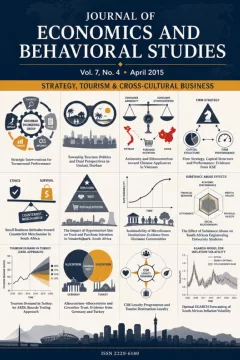
While a remarkable increase in research focusing customer purchase intentions in the retailing industry is noticeable, there is a dearth of studies that have investigated the influence of hypermarket size on customer perceived hypermarket reputation, trust in hypermarket and customer willingness to purchase in the African retailing context. This study used a sample 151 consumers in the Vanderbijlpark town in South Africa to examine these relationships. The results indicate that the proposed five hypotheses are positively supported in a significant way. A discussion of the academic and managerial implications of the results is provided and future research directions are suggested.
Keywords
- Hypermarket Size Search this journal for Hypermarket Size (opens in a new tab)
- Customer Trust Search this journal for Customer Trust (opens in a new tab)
- Customer Perceived Hypermarket Reputation Search this journal for Customer Perceived Hypermarket Reputation (opens in a new tab)
- Customer Willingness to Purchase Search this journal for Customer Willingness to Purchase (opens in a new tab)
- South Africa Search this journal for South Africa (opens in a new tab)
References
- Alexander, N. & Silva, M. L. (2002). Emerging markets and the internationalisation of retailing: the Brazilian Experience. International Journal of Retail & Distribution Management, 30(6), 300-314.
- Barros, C. P. (2006). Efficiency measurement among hypermarkets and supermarkets and the identification of the efficiency drivers. International Journal of Retail & Distribution Management, 34(2), 135-154.
- Bell, S. J., Mengüç, B. & Widing, R. E. (2010). Salesperson learning, organizational learning, and retail store performance. Journal of the Academy of Marketing Science , 38, 187–201
- Berger, M. M. D. (1998). Willingness to pay versus willingness to buy: what define value in healthcare? Value Health, 1(4), 201-203.
- Beristain, J. J. & Zorrilla, P. (2011). The relationship between store image and store brand equity: a conceptual framework and evidence from hypermarkets. Journal of Retailing and Consumer Services, 18, 562574.
- Caruana, A. & Ewing, M. T. (2010). How corporate reputation, quality, and value influence online loyalty. Journal of Business Research , 36, 187–199.
- Chen, S. & Li, J. (2009). Factors influencing the consumers’ willingness to buy in e-commerce. E-business & Information System Security, 9, 1-8.
- Chin, W. W. & Newsted, P. R. (1999). Structural equation modeling analysis with small samples using partial least squares. In Rick Hoyle (Ed). Statistical Strategies for Small Sample Research. Thousand Oaks, CA: Sage. pp. 307-341.
- Chin, W. W. (1998). Issues and opinion on structural equation modelling. MIS Quarterly , 22(1), 7–16
- Chinomona, R. & Surujlal, J. (2012). The influence of student internship work experience on their selfimprovement and professionalism in Sport Management. African Journal for Physical, Health Education, Recreation and Dance (AJPHERD) , 18, 4(2), 885-899.
- Coelho, P. S. & Henseler, J. (2012). Creating customer loyalty through service customization. European Journal of Marketing, 46(3/4), 331-356.
- Corritore, C. L., Kracher, B. & Wiedenbeck, S. (2003). On-line trust: concepts, evolving themes, a model. International Journal of Human-Computer Studies, 58, 737-758.
- Daskalopoulou, I. & Petrou, A. (2005). Service quality and store performance: some evidence from Greece. Management Service Quality, 15(1), 24-40.
- Farhangmehr, M., Marques, S. & Silva, J. (2000). Consumer and retailer perceptions of hypermarkets and traditional retail stores in Portugal. Journal of Retailing and Consumer services, 7, 197-206.
- Farhangmehr, M., Marques, S. & Silva, J. (2001). Hypermarkets versus traditional retail stores – customers’ and retails’ perspectives in Braga: a case study. Journal of Retailing and Consumer services, 8, 189198.
- Guenzi, P., Johnson, M. D. & Castaldo, S. (2009). A comprehensive model of customer trust in two retail stores. Journal of Service Management , 20(3), 290-316.
- Guy, C. (1995). Retail store development at the margin. Journal of Retailing & Consumer Services, 2(1), 25-32.
- Hansen, H., Samuelsen, B. M. & Silseth, P. R. (2008). Customer perceived value in B-to-B service relationships investigating the importance of corporate reputation. Industrial Marketing Management, 37, 206-217.
- Helm, S. (2007). One reputation or many? Comparing stakeholders’ perceptions of corporate reputation. International Journal of Corporate Communications, 12(3), 238-254.
- Hino, H. (2010). Antecedents of supermarket formats’ adoption and usage: a study in the context of nonwestern customers. Journal of Retailing and Consumer Services, 17, 61-72.
- Jarvenpaa, S. L., Tractinsky, N. & Vitale, M. (2000). Consumer trust in an Internet store. Information Technology and Management, 1, 45–71
- Jinfeng, W. & Zhilong, T. (2009). The impact of selected store image dimensions on retailer equity: evidence from 10 Chinese hypermarkets. Journal of Retailing and Consumer Service, 16, 486-494.
- Josang, A., Ismail, R. & Boyd, C. (2007). A survey of trust and reputation systems for online service provision. Decision Support Systems, 43, 618-644.
- Juhl, H. J., Kristensen, K. & Ostergaard, P. (2002). Customer satisfaction in European food retailing. Journal of Retailing & Consumer Services, 9, 327-334.
- Keh, H. T. & Xie, Y. (2009). Corporate reputation and customer behavioural intentions: the role of trust, identification and commitment. Industrial Marketing Management, 38, 732-742.
- Klemz, B. R. & Boshoff, C. (2001). Environmental and emotional influences on willingness to buy in small and large retailers. European Journal of Marketing, 35(1/2), 70-91.
- Lee, W. I., Chang, C. Y. & Lui, Y. L. (2010). Exploring customers’ store loyalty using the means-end chain approach. Journal of Retailing and Consumer Services, 17, 395-405.
- Lee, J. & Roh, J. J. (2012). Revisiting corporate reputation and firm performance link. International Journal of Benchmarking, 19(4/5), 649-664.
- Lee, K. & Shavitt, S. (2006). The use of cures depends on goals: Store reputation affects product judgments when social identity goals are salient. Journal of Consumer Psychology , 16(3), 260–271.
- Li, G., Li, G. & Kambele, Z. (2012). Luxury fashion brand consumers in China: perceived value, fashion lifestyle and willingness to pay. Journal of Business Research, 65, 1516-1522.
- Liao, S. H., Chen, C. M. & Wu, C. H. (2008). Mining customer knowledge for product line and brand extension in retailing. Expert System with Applications, 34, 1763-1776.
- Ligas, M. & Chaudhuri, A. (2012). The moderating roles of shopper experience and store type on the relationship between perceived merchandise value and willingness to pay a higher price. Journal of Retailing and Consumer Services, 19, 249-258.
- Magi, A. & Julander, C. R. (1996). Perceived service quality and customer satisfaction in a store performance framework. Journal of Retailing and Consumer Services, 3(1), 33-41.
- Martinez-Ruiz, M. P., Jimenez-Zarco, A. I. & Izuierdo-Yusta, A. (2010). Customer satisfaction’s key factors in Spanish grocery stores: evidence from hypermarkets and supermarkets. Journal of Retailing and Consumer Services, 17, 278-285.
- Money, K., Hillenbrand, C., Day, M. & Magnan, G. M. (2010). Exploring reputation of B2B partnerships: extending the study of reputation from the perception of single firms to the perception of inter-firm partnerships. Industrial Marketing Management, 39, 716-768.
- Nachiappan, R. M. & Anantharaman, N. (2006). Evaluation of overall line effectiveness (OLE) in a continuous product line manufacturing system. Journal of Management Technology, 17(7), 987-1008.
- Netemeyer, R. G., Heilman, C. M. & Maxham, J. G. (2012). The impact of a new retail brand in-store boutique and its perceived fit with the parent retail brand on store performance and customer spending. Journal of Retailing, 88(4), 462-475.
- Neven, D., Reardon, T., Chege, J. & Wang, H. (2006). Supermarkets and Consumers in Africa. Journal of International Food & Agribusiness Marketing , 18(1-2), 103-123
- Noyan, F. & Simek, G. G. (2011). Structural determinants of customer satisfaction in loyalty models: Turkish retail supermarkets. Procedia-Social & Behavioral Sciences, 30, 2134-2138.
- Olavarrieta, S., Hidalgo, P., Manzur, E. & Farias. (2012). Determinants of in-store price knowledge for packaged products: an empirical study in a Chilean hypermarket. Journal of Business Research, 65, 1759-1766.
- O’Roarty, B., McGreal, S. & Adair, A. (1998). Clustering retailers by store space requirements: comparable evidence, retail function and rental value. Journal of Property Valuation & Investment, 16(2), 133-143.
- Paswan, A., Pineda, M. D. S. & Ramirez, F. C. S. (2010). Small versus large retail stores in an emerging market – Mexico. Journal of Business Research, 63, 667-672.
- Rebollar, R., Lidon, I., Serrano, A., Martin, J. & Fernandez, M. J. (2012). Influence of chewing gum packaging design on consumer expectation and willingness to buy: an analysis of functional, sensory and experience attributes. Food Quality and Preference, 24, 162-170.
- Ringle, C. M., Wende, S. & Will, A. (2005). Smart PLS 2.0 M3. Available at http://www.smartpls.de. Accessed 23/03/2013
- Roberts, P. W. & McEvily, S. (2005). Product-line expansion and resource cannibalization. Journal of Economic Behaviour & Organisation, 57, 49-70.
- Roggeveen, A., Bharadwaj, N. & Hoyer, W. (2007). How call centre location impacts expectations of service from reputable versus lesser known firms. Journal of Retailing , 83(4), 403–410.
- Sand, S., Oppewal, H. & Beverland, M. (2009). The effects of in-store themed events on consumer store choice decisions. Journal of Retailing and Consumer Service, 16, 386-395.
- Schoenbachler, D. D. & Gordon, G. L. (2002). Trust and customer wiliness to provide information. Journal of Interactive Marketing, 16(3), 2-16.
- Stancu, I. & Meghisan, G. M. (2012). Marketing study regarding the consumer’s behaviour towards the Auchan hypermarkets from Romania. Procedia Economics and Finance, 3, 502-508.
- Suh, T. & Houston, M. B. (2010). Distinguishing supplier reputation from trust in buyer-supplier relationships. Industrial Marketing Management, 39, 744-751.
- Sweeney, J. C. & Soutar, G. N. (2001). Consumer perceived value: the development of a multiple item scale. Journal of Retailing, 77, 203-220.
- Tenenhaus, M., Vinzi, V. E., Chatelin, Y. M. & Lauro, C. (2005). PLS Path Modeling. Computational Statistics & Data Analysis , 48(1), 159–205.
- Urban, G. L. (2003). The Trust Imperative. MIT Sloan Working Paper No. 4302-03. Available at <SSRN: http://ssrn.com/abstract=400421> or http://dx.doi.org/10.2139/ssrn.400421> accessed: 05/13/2013.
- Veloutsou, C. & Motinho, L. (2009). Brand relationships through bran reputation and brand tribalism. Journal of Business Research, 62, 314-322.
- Woodside, A. G. & Trappey, R. J. (2001). Learning why some customers shop at less convenient stores. Journal of Business Research, 54, 151-159.
- Wetzels, M., Odekerken-Schröder, G. & Van Oppen, C. (2009). Using PLS path modelling for assessing hierarchical construct models: guidelines and empirical illustration. Management Information Systems Quarterly , 33(1), 177-195.
- Wong, A. & Dean, A. (2009). Enhancing value for Chinese shoppers: the contribution of store and customer characteristics. Journal of Retailing and Consumer Service, 16, 123-134.
- Yoon, S., Oh, S., Song, S., Kim, K. K. & Kim, Y. (2014). Higher quality or lower price? How value-increasing promotions affect retailer reputation via perceived value. Journal of Business Research, 67, 2088– 2096.
Downloads
No downloads have been recorded for this article yet. Figures appear here once readers begin downloading the full text.
How to Cite
Share this article
License
Copyright (c) 2015 Richard Chinomona, Osayuwamen Omoruyi (Author)

This work is licensed under a Creative Commons Attribution 4.0 International License.
Author (s) should affirm that the material has not been published previously. It has not been submitted and it is not under consideration by any other journal. At the same time author (s) need to execute a publication permission agreement to assume the responsibility of the submitted content and any omissions and errors therein. After submission of revised paper in the light of suggestions of the reviewers, the editorial team edits and formats manuscripts to bring uniformity and standardization in published material.
This work will be licensed under Creative Commons Attribution 4.0 International (CC BY 4.0) and under condition of the license, users are free to read, copy, remix, transform, redistribute, download, print, search or link to the full texts of articles and even build upon their work as long as they credit the author for the original work. Moreover, as per journal policy author (s) hold and retain copyrights without any restrictions.
Keywords
- Hypermarket Size Search this journal for Hypermarket Size (opens in a new tab)
- Customer Trust Search this journal for Customer Trust (opens in a new tab)
- Customer Perceived Hypermarket Reputation Search this journal for Customer Perceived Hypermarket Reputation (opens in a new tab)
- Customer Willingness to Purchase Search this journal for Customer Willingness to Purchase (opens in a new tab)
- South Africa Search this journal for South Africa (opens in a new tab)
Section
Published
Submissions
Have research to publish? Journal of Economics and Behavioral Studies welcomes submissions.
Make a Submission