Abstract
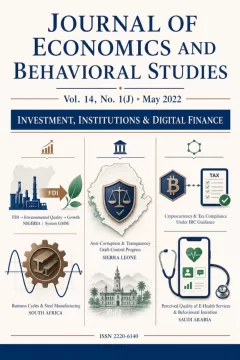
Corruption continues to affect the vast majority of Sierra Leoneans and is regarded as the greatest culprit of poverty, inequality and social cohesion. This publication shed light on corruption trends, control measures, causes, development implications and remedies for combating corruption in Sierra Leone. The data for this article was sourced from secondary/desk review. The secondary data sources were mainly from published articles, government reports, Acts, policies, workshops and conference proceedings, newspaper commentary, Transparency International Annual Reports, Truth and Reconciliation Commission Reports, and NGOs among others. Key words like corruption in Sierra Leone, causes of corruption, negative effects of corruption and bribery, and control measures of corruption were used to search for relevant information. Specifically, the study revealed that corruption was more prevalent from 2003 to 2018 but declined from 2018 to 2021. Most corruption cases in Sierra Leone arise from the abuse of public offices for private gains. Furthermore, systemic analysis of literature showed that corruption arises as a result of low salary wages, political ambition and other sociological factors. From 2019 to 2021, Sierra Leone has made remarkable progress and is been rated below Africa’s corruption average. This might be attributed to the various reforms and the pre-conviction corrupt asset recovery strategy adopted and the massive public outreach and awareness-raising drive adopted by the commission. It is recommended that the Anti-Corruption Commission of Sierra Leone be adequately empowered to go after any individual engaged in corrupt practices regardless of social status, ethnicity, political connection and wealth. It further recommended that the Anti-Corruption Commissioner appointment should not be political but by integrity and sound track record of citizens.
Keywords
- Corruption Search this journal for Corruption (opens in a new tab)
- Sierra Leone Search this journal for Sierra Leone (opens in a new tab)
- Government Search this journal for Government (opens in a new tab)
- Civil Servant Search this journal for Civil Servant (opens in a new tab)
- Corruption Perception Index Search this journal for Corruption Perception Index (opens in a new tab)
- Graft Control Search this journal for Graft Control (opens in a new tab)
References
- Adjiboloso, S. (2005). Economic Underdevelopment in Africa: The Validity of the Corruption Argument, Review of Human Factor Studies, 11(1), 96.
- Andvig, J. C. (2008). Corruption in Sub-Saharan Africa and its sources of evidence. NUPI Working Paper Norwegian Institute of International Affairs (NUPI), Oslo, Norway. Available online at: https://www.files.ethz.ch/isn/92263/744-Andvig.pdf [Accessed February 2022].
- Audit Service Sierra Leone. (ASSL) (2014). Performance Audit on the Management of Government’s Residential Quarters, May 2016 at: http://www.auditservice.gov.sl/report/assl-performance-auditreport-management-ofgovt-residential-quarters-2016.pdf
- Bitong, L. (2005). SIERRA LEONE: Corruption may be illegal, but no one’s giving it up yet. Liliane Bitong Ambassa/ IRIN. 16 December 2005 (IRIN).
- Blinker, L. (2006). Country Environment Profile (CEP) Sierra Leone. GOSL and EU report. September 2006 Report.
- Marie Chêne, M. (2010). Overview of corruption and anti-corruption in Sierra Leone. Transparency International. 22 September 2010 Number: 256. Available online at: https://www.u4.no/publications/overview-of-corruption-and-anti-corruption-in-sierra-leone.pdf. (Accessed January 2022).
- Duri, J. (2021). Review of corruption and anti-corruption in sub-Saharan Africa. Transparency International. Available online at: https://knowledgehub.transparency.org/assets/uploads/kproducts/SubSaharan-Africa_Overviewof-corruption-and-anticorruption-2020.pdf [Accessed February 2022].
- Federico, V. (2007). The Curse of Natural Resources and Human Development. L-SAW: Lehigh Student Award Winners. Archived from the original on 22 October 2018
- FRA. (2015). Global Forest Resources Assessment 2015 (FAO), Country Report, Sierra Leone, Rome Italy, 4.
- Hirsch, J. (2001). Sierra Leone: Diamonds and the Struggle for Democracy, Lynne Rienner Publishers, Boulder, CO.
- Hope, K. R. (2017). Corruption in Africa: The Health Sector and Policy Recommendations for Managing the Risks. In: Corruption and Governance in Africa. Palgrave Macmillan, Cham. https://doi.org/10.1007/978-3-319-50191-8_1
- Hors, Irène. (2000). Fighting Corruption in Developing Countries and Emerging Economies: The Role of the Private Sector, study by the OECD Development Centre, to be published. OECD Observer No 220, April 2000.
- Jackson, E. A. (2015). Competitiveness in Higher Education Practices in Sierra Leone: A model for Sustainable Growth. Economic Insights – Trends and Challenges, 4(4), 15-25.
- Jalloh, E. B. (Global Communication Sierra Leone, 2 January 2022). Linking Sierra Leoneans around the World. Global Communications Sierra Leone Ltd Freetown. 2 January 2022.
- Javed, B. (DW News 17-12-2020). Sierra Leone's tech-aided war on corruption. Available at: https://www.dw.com/en/sierra-leones-tech-aided-war-on-corruption/a-55897439. [Accessed February 2022]
- Kaifala, F. B. (2022). Fighting corruption is the biggest emergency issue for Sierra Leone. Head AntiCorruption Commission Sierra Leone. 3 Gloucester Street Freetown Sierra Leone, West Africa, 25th January 2022. Ref: Acc/Pr/22/002 Press Release
- Kawusu, A. (2012). Political corruption and economics in Sierra Leone, Sierra Leone Telegraph, Sierra Leone News, 3 January 2012.
- Kpundeh, S. J. (2000). Controlling Corruption in Sierra Leone: an Assessment of Past Efforts and Suggestions for the Future. In: Hope, K. R. & Chikulo, B. C. (Eds) Corruption and Development in Africa. Palgrave Macmillan, London. https://doi.org/10.1057/9780333982440_1
- Kpundeh, S. (1997). Politics and Corruption in Africa: A Case Study of Sierra Leone, University Press of America, Lanham, MD.
- Kpundeh, S. J. (1993). Prospects in Contemporary Sierra Leone, Corruption and Reform, 7(3), 237–47.
- Kpundeh, S. J. (1994). Limiting Administrative Corruption in Sierra Leone, Journal of Modern African Studies, 32(1), 139–57.
- Mansaray, A. (2018). Corruption in Sierra Leone is everyone’s business. Sierra Leone Telegraph: 15 July 2018; Available at; https://www.thesierraleonetelegraph.com/corruption-in-sierra-leone-iseveryones-business/
- Olken, B. A. (2012). Corruption in Developing Countries, MIT Rohini Pande, Harvard University, February 2012.
- Paracka, D. J. (2002). The Athens of West Africa: International Education at Fourah Bay College, 1814-2002. Southeastern Regional Seminar in African Studies (SERSAS) Conference, 22 - 23rd March 2002.
- Potter, G. W. & Thompson, B. (1997). Governmental Corruption in Africa: Sierra Leone as a Case Study. Justice Studies. Faculty and Staff Research. Paper 4. http://encompass.eku.edu/cjps_fsresearch/4
- Reno, W. (1995). Corruption and State Politics in Sierra Leone. Cambridge. Cambridge University Press; African Studies Series, 83.
- Robert, E. (Tuesday, April 14, 2020). In Sierra Leone, Corruption Isn’t Gone, but It is Falling under Bio. World Politics Review. Available online at: https://www.worldpoliticsreview.com/articles/28679/insierra-leone-corruption-isn-t-gone-but-it-is-falling-under-bio [Accessed January 2022].
- Robinson, M. (1998). Corruption and development: An introduction, The European Journal of Development Research , 10(1), 1-14. DOI: 10.1080/09578819808426699
- Rodgers, E. J. A. (2006). Conflict diamonds: Certification and corruption: a case study of Sierra Leone, Journal of Financial Crime , 13(3), 267-276. https://doi.org/10.1108/13590790610678350
- SAM, E. A. M. (2018). Sierra Leone’s fight against corruption need not be corrupt; Sierra Leone Telegraph: 7 August 2018; https://www.thesierraleonetelegraph.com/sierra-leones-fight-against-corruptionneed-not-be-corrupt/
- Sandi, P. (2019). (Anti-Corruption Mission Sierra Leone Press Release 12th July 2019). Sierra Leone ranked 3rd in the Global Corruption Afro-Barometer Report. Available at https://www.anticorruption.gov.sl/blog/anti-corruption-commission-sl-news-room-1/post/sierraleone-ranks-3rd-in-the-global-corruption-afro-barometer-report-195 [Accessed February 2022]
- Samura, B. K. (Comment August 11, 2016). The Negative Effects of Corruption on Developing Nations: A Perspective on Sierra Leone’s Effort to. Available online at: https://www.carl-sl.org/pres/thenegative-effects-of-corruption-on-developing-nations-a-perspective-on-sierra-leones-effort-to/ [Accessed January 2022]
- Sierra Leone Civil War. (2018). Available at https://en.wikipedia.org/wiki/Sierra_Leone_Civil_War#cite_refKeen23_29-0
- Thomas, A. R. (2017). Corruption is crippling Sierra Leone’s education sector: Campaign for Human Rights and Development International (CHRDI). Sierra Leone Telegraph: 26 July 2017. Available online at: https://www.thesierraleonetelegraph.com/corruption-is-crippling-sierra-leones-education-sector/ [Accessed February 2022].
- Thompson, B. (1997). The Constitutional History and Law of Sierra Leone (1961–1995), (Maryland: The University Press of America, 1997)
- Trosclair, E. (2017). 10 Facts about Poverty in Sierra Leone, BORGEN Magazine; on June 20, 2017.
- Truth and Reconciliation Commission, (TRC). (2003). Final report of Sierra Leone.
- UNDP. (2020). The Next Frontier: Human Development and the Anthropocene. Briefing note for countries on the 2020 Human Development Report Sierra Leone. Human Development Report 2020
- UNDP, United Nations Development Program. (2018). Accessed 20 October 2018. Available at http://www.sl.undp.org/content/sierraleone/en/home/countryinfo.html#Introduction
- Wei, J. S. (2003). Corruption in Developing Countries; The IMF and the Brookings, March 12, 2003 World Bank. (2009). Country brief. Retrieved 17 October 2018 from http://web.worldbank.org/Wbsite/external/countries/
- World Bank. (2020). International Development Association Project Appraisal Document on A Proposed Grant in The Amount of Sdr36.5 Million (Us$50.0 Million Equivalent) To The Republic Of Sierra Leone For A Free Education Project June 5, 2020.
Downloads
No downloads have been recorded for this article yet. Figures appear here once readers begin downloading the full text.
How to Cite
Share this article
License
Copyright (c) 2022 Moses Fayiah (Author)

This work is licensed under a Creative Commons Attribution 4.0 International License.
Author (s) should affirm that the material has not been published previously. It has not been submitted and it is not under consideration by any other journal. At the same time author (s) need to execute a publication permission agreement to assume the responsibility of the submitted content and any omissions and errors therein. After submission of revised paper in the light of suggestions of the reviewers, the editorial team edits and formats manuscripts to bring uniformity and standardization in published material.
This work will be licensed under Creative Commons Attribution 4.0 International (CC BY 4.0) and under condition of the license, users are free to read, copy, remix, transform, redistribute, download, print, search or link to the full texts of articles and even build upon their work as long as they credit the author for the original work. Moreover, as per journal policy author (s) hold and retain copyrights without any restrictions.
Keywords
- Corruption Search this journal for Corruption (opens in a new tab)
- Sierra Leone Search this journal for Sierra Leone (opens in a new tab)
- Government Search this journal for Government (opens in a new tab)
- Civil Servant Search this journal for Civil Servant (opens in a new tab)
- Corruption Perception Index Search this journal for Corruption Perception Index (opens in a new tab)
- Graft Control Search this journal for Graft Control (opens in a new tab)
Section
Published
Submissions
Have research to publish? Journal of Economics and Behavioral Studies welcomes submissions.
Make a Submission