Articles

  • Article 1 in this issue

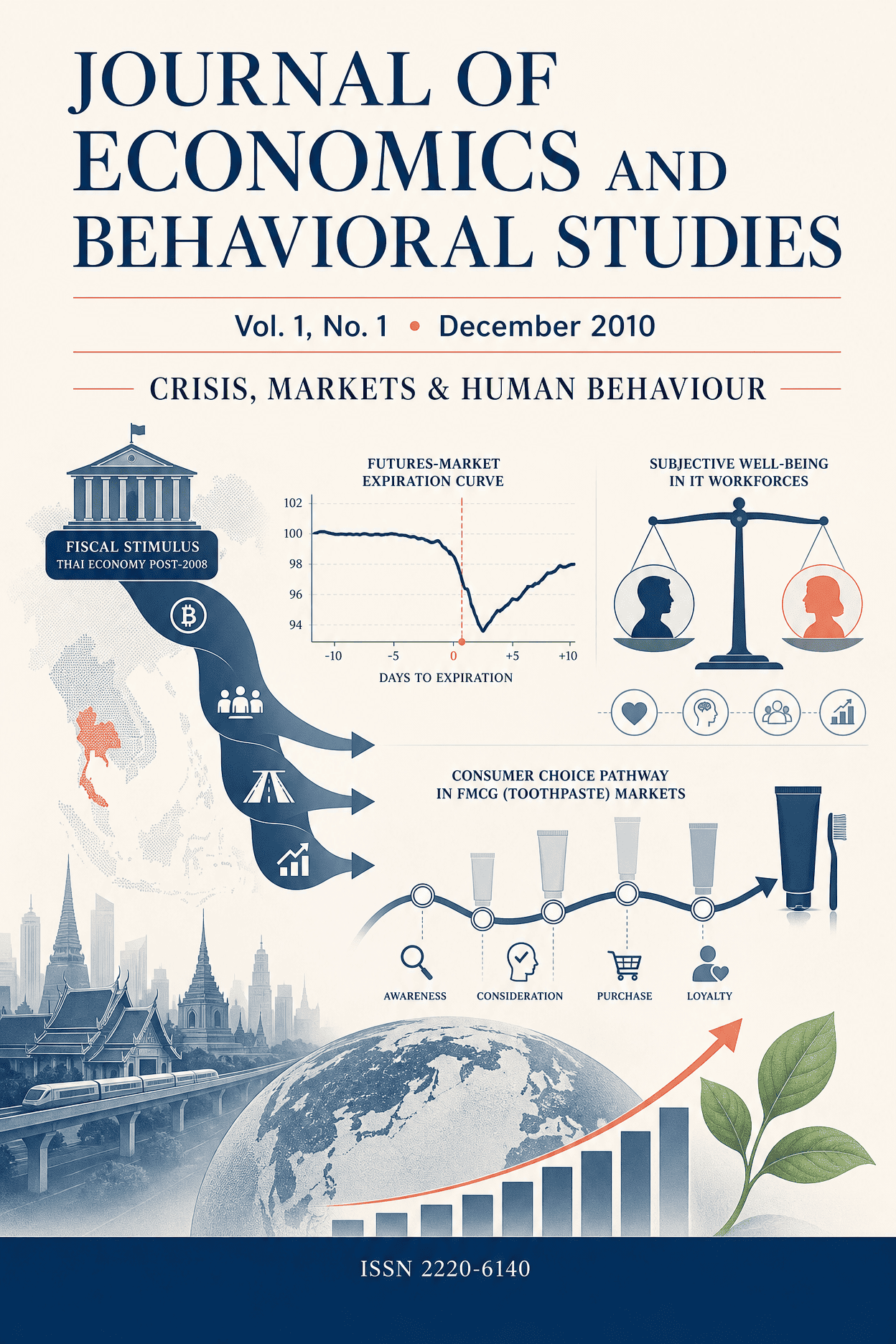
    Thai Khem Kaeng: An inadequate response by the Thai State to the impact of the 2008 economic crisis

    • Author: John Walsh

    The economic crisis erupting from inadequate regulation of reckless banking practices in 2008 was correctly met by Keynesian-style stimulus packages in governments around the world. These measures were successful when they were sufficiently large, properly focused, and implemented promptly. Where these conditions were not met, as in the case of Thailand, the results were unimpressive and the problems not dealt with properly. However, the Thai version of the second part of the stimulus package, Thai Khem Kaeng, had in fact quite a different purpose and appears to have been intended to boost the popularity of the government at the cost of making unsustainable and uncosted deficits for the future. The lack of coherence at the economic planning centre of government and its questionable methods suggest that Thailand has continued the longstanding policy of making economic decisions for non-economic reasons.

    Pages 1-8

    PDF - Thai Khem Kaeng: An inadequate response by the Thai State to the impact of the 2008 economic crisis (opens in a new tab)
  • Article 2 in this issue

    Investigating Expiration Day Effects in Stock Index Futures in India

    • Author: Sathya Swaroop Debasish

    This study attempts to examine whether potential expiration effects exist on the NSE Nifty index by comparing the trading volume and return process at expiration with a comparison group. The period of analysis covers index futures expirations from June 2001 to May 2009. The trading volume and return process on expiration days and during expiration weeks were compared with a set of comparison days and comparison weeks. The current study used the pooled t -test and Wilcoxon rank sum test to investigate whether mean returns, price ranges, and adjusted trading volumes (i.e. time-independent trading volumes) were significantly different at expiration. The procedure as used by Stoll and Whaley (1987) was used to examine if price reversals existed during expiration days and comparison days.The evidence indicates that the trading volume on expiration days and in expiration weeks was significantly larger than on comparison days and during comparison weeks. Further, the results suggest that there were no price distortions on the expiration day or during the expiration week for the complete sample period and the second sub-period. For the first sub-period, however, evidence suggesting that expiration days and weeks experienced higher volatility than normal does exist. No evidence of significantly different mean returns, volatility, or price reversals at expiration was found. This could be due to the longer settlement period in India. However, when the complete sample period was divided into two sub-periods it was found that expiration day (weeks) during the first sub period may have experienced price distortions. The results of this study are crucial to investors, stock exchange officials, and regulators.

    Pages 9-19

    PDF - Investigating Expiration Day Effects in Stock Index Futures in India (opens in a new tab)
  • Article 3 in this issue

    Subjective Well-Being by Gender

    • Author: Upasna Joshi

    International competition and globalization of business and organizations, rapid technological change and higher customer demands for products and services with increasing emphasis on environmental issues change working life. Under these pressures in order to survive and make a positive result, companies must develop both their organization and people simultaneously with their products and technologies for improving the performance, work ability, commitment and well-being of employees. Therefore study of subjective well-being among male and female employees in IT industry is of paramount importance. Such study may affect the performance and over all well-being of not only employees but also of the organization as a whole. The study is descriptive in nature whereby an attempt is made to compare the level of subjective well-being among male and female employees in IT industry with the help of two questionnaires (Satisfaction with Life Scale and Positive Affectivity and Negative Affectivity Scale) and utilizing the survey technique. Subjective well-being is statistically analyzed by means, standard deviations, and t-ratio. The study shows that gender is not a determinant of subjective well-being, and both males and females perceive subjective well-being or evaluate their lives in a similar way. The level of life satisfaction among male and female IT employees is not comparable and there existed significant gender difference in the level of life satisfaction. The level of positive affectivity and negative affectivity among male and female IT employees was comparable and there exists no significant gender difference in the level of positive affectivity.

    Pages 20-26

    PDF - Subjective Well-Being by Gender (opens in a new tab)
  • Article 4 in this issue

    Toothpaste Brands – A Study of consumer behavior in Bangalore city

    • Author: G. Vani, M. Ganesh Babu, N. Panchanatham

    ‘Consumer is king’ –the statement carries profound truth in it. Today the success of any firm depends upon the satisfaction of consumers. For satisfying the consumers the firm should know about the behavior of the consumers. In these circumstances understanding consumer is a very difficult task because of the changing technology, innovation, and changes in life style. Researchers conducted many research in this area, and they given only few suggestion, but there is no final conclusion. As per the ideas given by the researchers, there are two factors influencing the consumers such as intrinsic and extrinsic factors. It is difficult to classify consumers by conventional demographic factors and unless their thought process and buying behavior are fully understood, decisions on product designs and packaging, branding and distribution channels are likely to be misplaced. With the inevitability of change looming large over the horizon, Indian companies must learn from their western counterparts; not only to identify the sources, timing and direction of the changes likely to affect India, but also the new competencies and perspective that will enable them to respond to these changes, comprehensively and effectively. This study mainly focus on understanding the external factors like demographic, social, cultural ,price, quality ,product attributes etc for buying toothpaste. The market share of any product is highly determined by the purchasing behavior of the consumers. Following study is conducted by the researcher to find out the behavior of the consumers, to analyze the preference of consumers, & consumer awareness. Descriptive research design was adopted and the data is collected through primary and secondary sources. The method adopted for conducting survey is questionnaire; Simple random sampling technique was adopted for selecting the consumers.

    Pages 27-39

    PDF - Toothpaste Brands – A Study of consumer behavior in Bangalore city (opens in a new tab)
  • Article 5 in this issue

    Job satisfaction of female office clerks in government, multinational, and local private business concerns of Bangladesh

    • Author: Afrina Rahaman, Nafisa Rashid, Nargis Akhter

    In this study the researchers attempt to make a comparative study among the female office clerks of government, multinational and local private business organizations in Bangladesh regarding their job satisfaction. The study consisted of 255 sample female office clerks of government; multinational and local private business concerns in Bangladesh and convenient method of sampling was used to collect data for this study. Factor analysis, regression analysis were used for analyzing the data. The employers of government, multinational and local private business organizations can take help from this study to know about the job satisfaction of female office clerks of their organizations. The study also opens the scope to make a comparative study on various issues to female office clerks in Bangladesh.

    Pages 40-48

    PDF - Job satisfaction of female office clerks in government, multinational, and local private business concerns of Bangladesh (opens in a new tab)