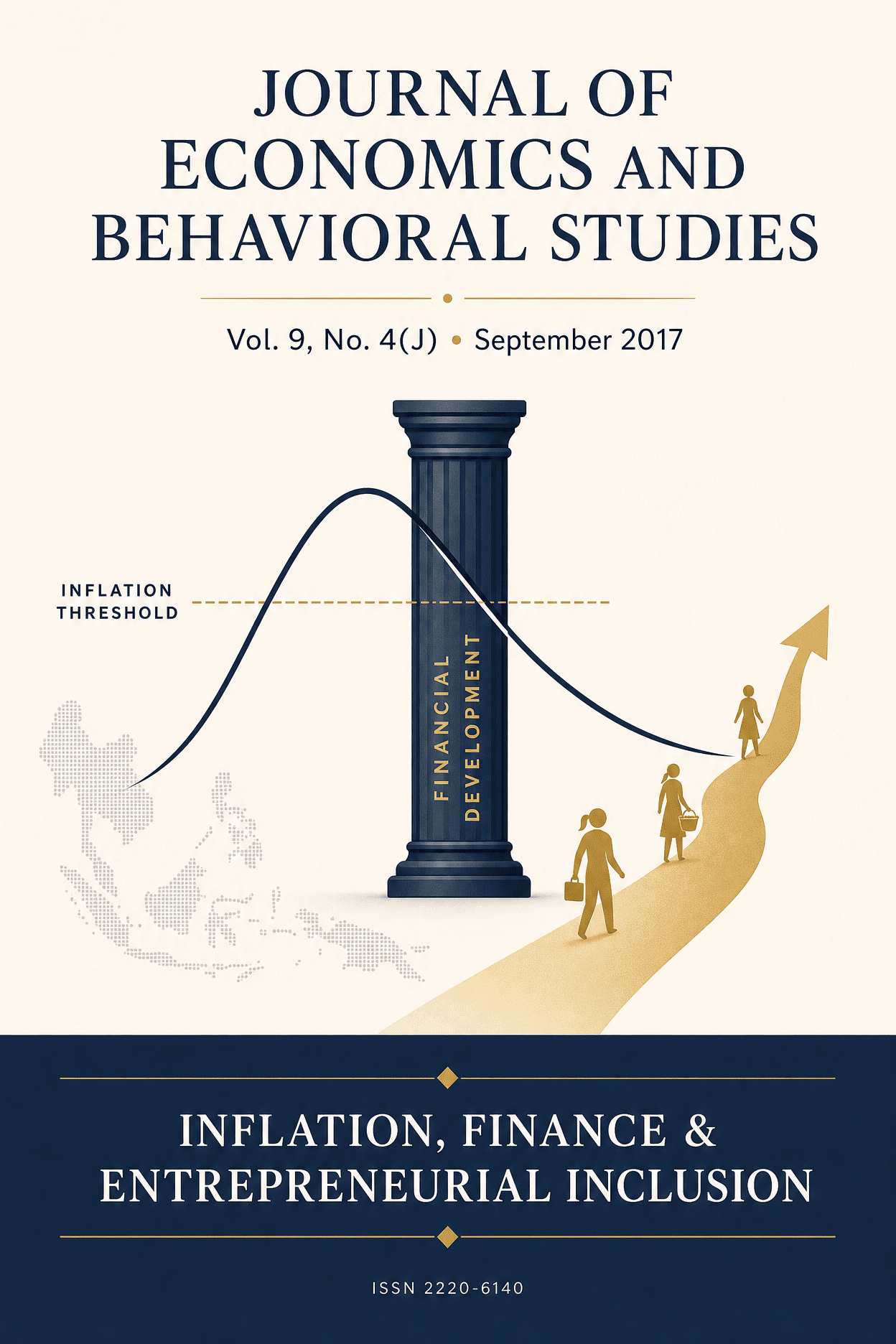
Articles 1–10 of 21

  • Article 1 in this issue

    Unlocking the Potential of Women Entrepreneurs in the Tourism and Hospitality Industry in the Eastern Cape Province, South Africa

    • Author: Vikelwa Judith Nomnga

    At the height of political turmoil and the so-called economic downgrade to ‘junk’ status by rating agencies in South Africa, the tourism and hospitality industry, through women entrepreneurship, seems to be an alternative exit the government can use to foster economic growth and curb unemployment. The paper adopts an extensive documentary review analysis to determine the challenges and opportunities for women entrepreneurs in the tourism industry in South Africa. The paper observes that women entrepreneurs in the Eastern Cape Province face a myriad of challenges emanating from low levels of education, lack of financial resources, poor information dissemination, gender inequity, limited support from stakeholders, limited technical skills and reluctance to shift from status quo. The paper concludes that, to unlock the potential of tourism and hospitality industry, women entrepreneurs need to embrace education and get trained on how to use modern technologies-which is fundamental in coping with the trends in the globalized environment. The paper recommends and empowers women to be at the forefront and become active entrepreneurs in tourism opportunities whereby stakeholder funding is the key to achieve economic growth.

    Pages 6-13

    PDF - Unlocking the Potential of Women Entrepreneurs in the Tourism and Hospitality Industry in the Eastern Cape Province, South Africa (opens in a new tab)
  • Article 2 in this issue

    Inflation Thresholds-Financial Development Nexus in South-Eastern Asian Emerging Markets

    • Author: Kunofiwa Tsaurai

    This paper investigated the maximum inflation threshold levels beyond which financial development declines in the South-Eastern Asian emerging markets using static panel threshold regression framework proposed by Bick (2010) with data ranging from 1994 to 2014. The negative impact of inflation on financial development is a settled matter in both theoretical and empirical literature. However, this study was prompted by recent literature (Boyd et al., 2001; Abbey, 2012; Kim and Lin, 2010) which argued that the relationship between inflation and financial development is not linear and is characterised by inflation thresholds. Moreover, no previous study that the author is aware of used the approach suggested by Bick (2010) to determine inflation threshold levels and financial development. Among previous inflation-finance studies, the current study is the first one according to the author’s best knowledge to use banking sector, stock market and bond sector development variables as previous studies were narrow focused in their definition of financial development. The study observed that lower levels of inflation is good for financial development whilst higher levels of inflation slows down the rate at which banking sector, stock and bond markets develop. These results agree with the theory underpinning inflation-financial development nexus. South-Eastern Asian emerging economies are therefore urged to implement macroeconomic policies that ensure inflation rates are kept at lower levels that do not stifle financial development.

    Pages 14-24

    PDF - Inflation Thresholds-Financial Development Nexus in South-Eastern Asian Emerging Markets (opens in a new tab)
  • Article 3 in this issue

    Effect of Agency Costs on Executive Compensation in South African Commercial Banks

    • Author: Odunayo Magret Olarewaju, Stephen Oseko Migiro, Mabutho Sibanda

    This study examines the roles of agency cost (monitoring and bonding cost) on compensation of managers with a view from the managerial-power approach to agency cost. We modelled managers’ compensation and agency cost of banks to emphasise the potential influence of agency cost on managers’ compensation. A Panel Generalised Least Square model was estimated on four largely-controlled commercial banks in South Africa over the period 2010-2015. The result shows that shareholders’ fund, management share option, monitoring and bonding cost were strongly significant in explaining the managers’ compensation in the banks. Therefore, in the South African banking sector, compensation of managers should be based on their managerial power and not only on the principle of optimal-contracting. It is recommended, among others, that monitoring and bonding costs in the South African banks should be re-emphasised and strictly committed to. This should be so because there are direct effects of these costs on managers’ compensation which might be the reason for the persistent agency problem in the banks.

    Pages 25-37

    PDF - Effect of Agency Costs on Executive Compensation in South African Commercial Banks (opens in a new tab)
  • Article 4 in this issue

    Electronic Banking Services in Nigeria: Some Determinants and Opportunities for Households’ Financial Inclusion

    • Author: Isaac B. Oluwatayo

    Economic transactions in many of the countries in Africa are still largely cash-based and many of these transactions are costly, inefficient, time consuming and sometimes risky because of the security situation in most countries in the continent. In fact, finality of payment is not always guaranteed because of potential counterfeits and the lack of financial discipline when cheques or other paper-based means of payment are used. The introduction of electronic banking services into the Nigerian banking sector has brought some respite considering the number of people now using electronic platforms such as the Automated Teller Machines (ATM), mobile phones, internet and bank websites instead of the conventional over the counter method used by most people. The result presented in here is based on secondary data consisting of 6002 respondents collected by The Financial Inclusion Insights Program, InterMedia. A descriptive analysis of data showed that the North-central (35%) and South-west (33%) geopolitical zones of the country had the highest as over one-third of the residents harnessed internet as the platform for their banking services. Meanwhile on the determinants of using electronic banking services, the result of the tobit model employed revealed age, gender, education status, and ownership of mobile phones as positive enablers and poverty status, distance to banking services and marital status as hiccups to using electronic banking services. The study therefore recommends welfare enhancement through provision of infrastructural facilities to ease access banking services, Also capacity building of respondents through education should be intensified since most of the people using these electronic platforms are those with a minimum of secondary education.

    Pages 38-48

    PDF - Electronic Banking Services in Nigeria: Some Determinants and Opportunities for Households’ Financial Inclusion (opens in a new tab)
  • Article 5 in this issue

    Re-testing Wagner’s Law: Structural breaks and disaggregated data for South Africa

    • Author: Mthokozisi Mlilo, Matamela Netshikulwe

    Direction of causality between government expenditure and output growth is pertinent for a developing country since a sizeable volume of economic resources is in the hands of the public sector. This paper investigates the Wagner's law in South Africa over the post-apartheid era, 1994-2015. This paper is unique to present studies since it uses disaggregated government expenditure and controls for structural breaks. The Granger non-causality test of Toda & Yamamoto, a superior technique compared to conventional Granger causality testing, is employed and this paper finds no support for Wagner's law. However, there is causality running from total government and education expenditures to output. This finding is in line with the Keynesian framework. It is recommended in the paper that the government should take an active role in promoting output growth through increases in education expenditures in particular.

    Pages 49-61

    PDF - Re-testing Wagner’s Law: Structural breaks and disaggregated data for South Africa (opens in a new tab)
  • Article 6 in this issue

    Effects of Brain Drain on the South African Health Sector; Analysis of the Dynamics of its Push Factors

    • Author: Victor H. Mlambo, Toyin Cotties Adetiba

    While there has been a plethora of studies that addresses migration in Africa, many have yet to successfully unpack the effects of brain drain on the South African health sector. Using textual analysis of the available literature relevant to the topic under consideration; this work seeks to identify the major structural and socio-economic push factors that drive the migration of health professionals in South Africa, relying on Revestain’s laws of migration and Lee’s push/pull theory of migration. The study also looks at explaining other factors that contribute to the migration of health professionals in South Africa. We argue that for South Africa to retain health professionals, the government needs to increase the training of health workers, improve their working conditions and security, upgrade infrastructure and ensure availability of resources as well as develop a more open immigration policy prioritizing skilled immigration.

    Pages 62-72

    PDF - Effects of Brain Drain on the South African Health Sector; Analysis of the Dynamics of its Push Factors (opens in a new tab)
  • Article 7 in this issue

    Trade Liberalization, Consumption, and Real Exchange Rate in Seven ASEAN+6 Countries

    • Author: Sigit Setiawan

    Trade liberalization has been mushrooming in the globalization era. The trade liberalization policy adoption by one country will be followed shortly by another. Although trade liberalization policy is strongly advocated by international organizations, a few prominent economists argue there is no ‘one fits for all’ policy. Thus, the policy effect altogether with other relevant aspects still needs to be explored in case by case basis, including ASEAN+6 regions. This paper is intended to analyze the relationship of trade liberalization and consumption on the real exchange rate in seven ASEAN+6 countries – the most dynamic region during period 2000 – 2011, a period covering subprime mortgage crisis. With data panel approach, the paper investigates the relationship of trade liberalization and consumption on real exchange rate while taking into account level of country’s income and crisis effect. The resulted model finds significant relationship in the overall and individual effect of tariff and terms of trade change as proxies of trade liberalization, consumption, level of country’s income, and subprime mortgage crisis on real exchange rate.

    Pages 73-86

    PDF - Trade Liberalization, Consumption, and Real Exchange Rate in Seven ASEAN+6 Countries (opens in a new tab)
  • Article 8 in this issue

    Determinants of Venture Capital Supply in Sub-Saharan Africa

    • Author: Olabanji Oni

    The purpose of this paper is to determine the variables that influence venture capital supply in Sub-Sahara Africa. The study developed econometric models and examined a 10-year period (2006 to 2015) pertaining to eight (8) Sub-Sahara African countries namely: Botswana, Ivory Coast, Ghana, Kenya, Mauritius, Nigeria, South Africa and Uganda. The empirical model includes six determinants (initial public offering, market capitalisation, unemployment rate, foreign direct investment inflow, inflation rate and trade openness). Secondary data was utilised for the study. The primary sources of data were the World Bank Development indicators and Preqin data base. All the statistical analyses in the study were performed using E-views version 8. Panel data models of pooled, fixed and random effects were employed. The results suggest that there is a significant positive relationship between initial public offering, market capitalisation and venture capital supply. Second, there is no significant relationship between unemployment rate, foreign direct investment inflows, trade openness and venture capital supply. Based on the empirical findings, this study recommends that Sub-Sahara African governments should attempt to develop their economies by improving infrastructure and corporate governance. There is also a need for African countries to develop the equity market.

    Pages 87-97

    PDF - Determinants of Venture Capital Supply in Sub-Saharan Africa (opens in a new tab)
  • Article 9 in this issue

    Profiling Smallholder Farmers Goals and Aspirations for Enhanced Agricultural Development: a Case of Smallholder Maize Farmers

    • Author: Fakunle Olufemi Oyedokun, Zhou Leocadia

    The intervention of government in the development of smallholder agriculture is still grappling and has not yielded the desired results, despite the huge investment from government. This has been a source of concern to government and policy makers. This paper sought to analyze the socio-demographic features of the smallholder maize farmers; profile the goals and aspirations of these farmers; and lastly, to analyze the technical efficiency of maize farmers. Qamata and Tyefu in the Transkei and Ciskei homelands, respectively were purposively chosen for the study. Descriptive statistics; Principal component analysis (PCA) and stochastic frontier analysis (SFA) were used in the analysis. The result shows, that majority (66%) of the farmers were males with an average range of 61 years old. On the other hand, the PCA indicated that there is a variation between predicted goals and aspiration among maize farmers. The SFA result showed that farmers were efficient. The mean technical efficiency estimates up to 100%, an indication that farmers are more efficient in the usage of factors of production at their disposal in the study area. This implies that smallholder maize farming is lucrative due to its profit-making potentials. Moreover, this is a clear indication that more income and wealth is generated thereby implying that it is strategic and pivotal in improving farmers’ livelihoods

    Pages 98-106

    PDF - Profiling Smallholder Farmers Goals and Aspirations for Enhanced Agricultural Development: a Case of Smallholder Maize Farmers (opens in a new tab)
  • Article 10 in this issue

    The Influence of Actual and Ideal Self-Congruity on Consumers’ Purchase Intentions

    • Author: Jenasha Tooray, Devina Oodith

    During the course of consumer behaviour research an augmented focus pertaining to consumer brand selection and the reason/s why consumers purchase a particular brand became evident. Research postulates that consumers tend to purchase brands that have personality attributes that closely correspond to their actual self-concept and enhance their self-image, thereby bringing them closer to their ideal selfconcept. Self-congruity is of paramount importance to marketing for the reason that most of the products consumers purchase are influenced by the images consumers have about themselves. According to Sirgy in 1982, self-congruity defines the procedure in which consumers match their own self-concept with the imageries of a particular brand (as cited in Sohn & Yuan, 2011). In this era of hyper competition in the marketplace, it is imperative that marketers establish and preserve an enduring, mutually beneficial relationship between their brands and their target markets in order for their companies’ growth and survival. This article aims to assess the influence that actual and ideal self-congruity have on consumers’ purchase intentions with reference to the clothing and mobile phone brands that are purchased by consumers. This study was undertaken in EThekwini (Durban), South Africa and was conducted within a Public Tertiary Institution comprising of postgraduate and undergraduate students from three colleges. The institution comprised of thirteen Schools which participated in this study. A sample of 385 respondents was drawn using simple random sampling with a 100% response rate from respondents. Since students represent a lucrative market segment for marketing managers to penetrate, a survey was undertaken in order to unearth whether there exists a congruous relationship between the self-concept of students and the personality attributes of the brands they purchase; and to determine the impact that this relationship has regarding students’ brand preference, customer-brand satisfaction and brand loyalty on students’ purchase intentions. Data for the sample was collected using a self-developed, precoded questionnaire whose psychometric properties were statistically determined. Data was analyzed using descriptive and inferential statistics. The results indicate that actual and ideal self-congruity does influence purchase intentions significantly and there exists a positive relationship among students’ actual and ideal self-congruity, brand preference, customer-brand satisfaction and brand loyalty. Consumers tend to base brand choices for clothing and mobile phones very closely to their perceptions of their actual and ideal self-concepts thus this becomes important for marketers to monitor and target in order to better influence future purchase intentions of these consumers. Based on the results of the study recommendations have been made to better understand consumers and their actual and ideal selves more critically with a view to servicing them more efficiently. The results, thus enable marketing managers to improve brand loyalty, brand preference and customer-brand satisfaction among consumers; and gain insight into consumers’ actual and ideal self-congruity.

    Pages 107-121

    PDF - The Influence of Actual and Ideal Self-Congruity on Consumers’ Purchase Intentions (opens in a new tab)