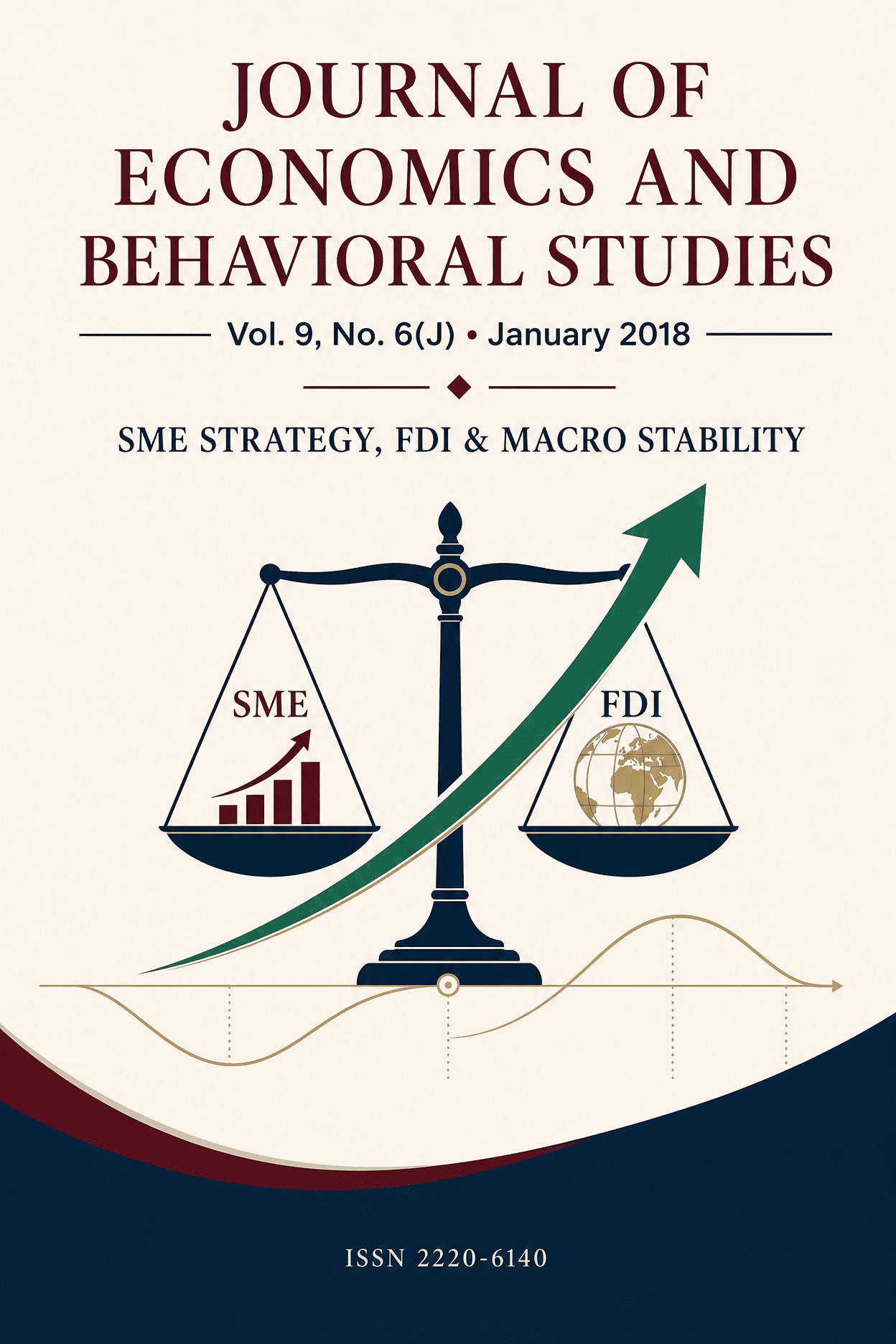
Articles 1–10 of 22

  • Article 1 in this issue

    Brand Naming Behavior Defining SMMEs in eThekwini

    • Author: Lindiwe N. Kunene, Maxwell Phiri

    Branding is an integral part to the success of any and every business. Appropriate brand strategies contribute to brand equity of the organization leading to increased turnover and profits of positive turnover for organizations. Application of properly planned brand naming processes could save SMMEs and reduce the high failure rate experienced by this sector, in South Africa currently. Branding helps businesses to define who they are and guides their overall strategy. Branding strategies begin with the brand naming process. There are scientifically proven models that govern this process which have been used by successful businesses, globally. This study sought to find the current brand naming processes as implemented by SMMEs in the eThekwini Municipality area in Durban, South Africa. This was the first step in developing a model for brand naming for SMMEs in eThekwini. The study therefore used descriptive-exploratory ethos to conduct the research, guided by the epistemological, ontological and axiological assumptions. Demographic dimensions, ownership of the brand naming process, traits in the naming process and brand naming strategies considered were used to reach conclusions that define these entities in eThekwini. Research outcomes found that a lack of resources and knowledge were the main impediments distorting appropriate brand naming processes.

    Pages 6-16

    PDF - Brand Naming Behavior Defining SMMEs in eThekwini (opens in a new tab)
  • Article 2 in this issue

    Socioeconomic Analysis and Technical Efficiency among Smallholder Sorghum Farmers in GaMasemola Township of Limpopo Province, South Africa

    • Author: Moswane Precious Botiabane, L. Zhou, I.B. Oluwatayo, Fakunle Olufemi Oyedokun, Akeem Adewale Oyelana

    Sorghum farming group in South Africa is divided into the smallholder and business ranchers attributable to the distinctions in cultivar sizes, utility creation and production strategies. Sorghum is utilized primarily for sustenance and refreshments in Ga-Masemola (GM) town. Smallholder sorghum farmers in the town utilize some portion of their wage for recreation, goat and cows' compost are utilized as manures to enhance soil fruitfulness and increment sorghum yield, they rely upon precipitation water for water system and they have no entrance to expansion administrations. The study distinguish and depict the socioeconomic characteristics of smallholder sorghum farmers in Ga-Masemola town; it look at the causes of technical efficiency among smallholder sorghum ranchers in the town; and it recognize and portray difficulties confronted by smallholder sorghum farmers in the town. Essential information was gathered utilizing organized surveys and an example size of 48 smallholder sorghumfarmers in the town was chosen. Cobb Douglas model was utilized to analyse the information or data gotten.The socioeconomic characteristics of smallholder sorghumfarmers were:farming experience, age, sexual orientation, instructive level and family unit measure. The study indicates that the determinants of technical efficiency among smallholder sorghumfarmers in Ga-Masemola town that were observed to be huge are the measure of land dedicated and the amount of seeds utilized. Farmers are confronting difficulties, for example, sicknesses, low capital, pests, separation to the homestead, absence of water and atmosphere (i.e. climate) changes.The study suggested and recommended that smallholder sorghumfarmers in Ga-Masemola (GM) town require arable land to expand their production; they additionally require agricultureextension officers for training and spreading or disseminating information aboutinputs allocation. Besides, the smallholderfarmersshould be encouraged to utilize enhanced seeds varieties in order to expand their technical efficiency.

    Pages 17-25

    PDF - Socioeconomic Analysis and Technical Efficiency among Smallholder Sorghum Farmers in GaMasemola Township of Limpopo Province, South Africa (opens in a new tab)
  • Article 3 in this issue

    Individual Differences Versus Consumer Readiness Variables Predictive Power Over Internet Banking Adoption in South Africa

    • Author: Aguidissou O. C., Richard Shambare, Rugimbana R

    Self-service banking technology is gaining recognition globally in spite of its numerous challenges. Debit cards, ATMs and other Self Service Technologies (SSTs) are well received in South African market; however, customers seem cynical about Internet Banking (IB). IB consumer’s adoption patterns frameworks are tested within this paper based on a framework providing for the South African market with the best explanatory power. Thus, investigating consumer readiness (CR) and individual differences (IDs) variables as common groupings usually cited in the literature consumer variables predictive efficacy, provide better understanding of the consumers towards SSTs in South Africa.CR comprises role clarity, ability and motivation (extrinsic and intrinsic), while IDs includes inertia, technology anxiety, need of interaction, previous experience and demographics. This study purposes to identify among IDs and CR variables, which one with greater predictive power on IB adoption in South Africa.Considering this gap within the body of knowledge, in relation with IB adoption behaviour among the South African consumer is therefore the present article primary objective. Consumer’s individual differences (technology anxiety and education variables specifically) as exogenous variables, through a large sample size (n=1516), descriptive quantitative analysis, were found in context of South African market with greatest predictive power for IB adoption by comparison over consumer readiness. In South Africa particularly for marketers, these findings therefore are a set of relevant keys that can be useful in promoting IB adoption.

    Pages 26-38

    PDF - Individual Differences Versus Consumer Readiness Variables Predictive Power Over Internet Banking Adoption in South Africa (opens in a new tab)
  • Article 4 in this issue

    Investigating Okun’s Law in Nigeria through the Dynamic Model

    • Author: Patrick Olufemi ADEYEYE, Anthonia T.ODELEYE, Olufemi Adewale ALUKO

    Unemployment is a persistent challenge for countries, especially the developing ones. Nigeria as a developing country faces a herculean task reducing the increasing spate of joblessness amongst her citizens. Okun’s law explains the relationship between unemployment and economic growth in an economy. This study therefore investigates Okun’s law in Nigeria between 1985 and 2015 through the dynamic model. The generalized method of moments estimation result reveals that that present and past output growth are negatively related to unemployment rate. However, only past output growth has a significant effect on unemployment rate. It also shows that past unemployment rate is significantly and positively associated with present unemployment rate. The Toda-Yamamoto Granger non-causality test finds that there is no causality between unemployment and economic growth. This study presents evidence to partially support Okun’s law of inverse relationship between unemployment and output growth and suggests that promoting economic growth can be a policy tool for reducing unemployment rate in Nigeria.

    Pages 39-46

    PDF - Investigating Okun’s Law in Nigeria through the Dynamic Model (opens in a new tab)
  • Article 5 in this issue

    Re-Examining the Nexus between Exchange and Interest Rates in Nigeria

    • Author: David Mautin Oke, Koye Gerry Bokana, Olatunji Abdul Shobande

    Nigeria has experienced somersault of foreign exchange policies by the Central Bank. One policy concern in recent times is to have an appropriate target of the exchange and interest rates. Therefore, this paper seeks to provide a foundation for the targeting of an appropriate exchange and interest rates for the country. Using the Johansen Cointegration and Vector Error Correction Mechanism approaches, it specifically examines the relationships among Nigeria’s weak exchange rate, its local rate of interest and world interest rate. Contrary to many studies, a control measure involving inclusion of inflation, money supply and national output in the model is done. The analysis showed an equilibrium association between exchange rate and interest rate-cum-other variables and steady rectification of deviance from long-run stability over a sequence of incomplete short-run modifications. Increase in domestic and world interest rate, inflation, money supply and GDPat equilibrium would strengthen the exchange rate. Besides, further findings showed some bidirectional causal associations among the variables. By long-run implication, the targeting of an appropriate exchange rate in Nigeria requires a tightened monetary policy that is not inflation and growth biased. However, increase in world interest rate, money supply and inflation rate must be moderate in order not to worsen the exchange rate as suggested by the short-run result.

    Pages 47-56

    PDF - Re-Examining the Nexus between Exchange and Interest Rates in Nigeria (opens in a new tab)
  • Article 6 in this issue

    Formulation and validation of an Enabling Developmental Environment Scale (EDES) for local economic development (LED)

    • Author: Daniel Francois Meyer, Elsabé Keyser

    Local government is one of the main role players in local economic development (LED) and need to assist in the creation of an enabling developmental environment for local businesses to prosper. Partnerships are required between local government, businesses and communities for regions to develop, yet in many cases government at this level fails to create this developmental enabling environment. This research has as its focus on the formulation and validation of an Enabling Developmental Environment Scale (EDES). This scale will allow local government to be evaluated, assessed and compared regarding the creation of such a developmental environment. The pilot study involved152 participants from the Vaal Triangle region, South Africa. Reliability and construct validity of the instrument weretested by using the Cronbach’s Alpha Coefficient and Varimax Factor Analysis. It is evident from the results that thescale is a valid and reliable tool for researchers to evaluate and assess the level of an enabling environment as created by local government in a specific region.

    Pages 57-66

    PDF - Formulation and validation of an Enabling Developmental Environment Scale (EDES) for local economic development (LED) (opens in a new tab)
  • Article 7 in this issue

    The Potential Role of PPPs in Developing a Sustainable SME Sector in Developing Countries: A South African Experience1

    • Author: Patrick Mabuza

    The introduction of Public-private Partnerships (PPPs) in infrastructure provision has changed the way in which governments around the world now view infrastructure provision. However, the introduction of PPPs to deliver infrastructure has not benefited the broader public. Although SMEs are important for employment creation, inequality and poverty reduction, the participation of SMEs (small and medium enterprises) in PPP projects is very low in developing countries. This is because PPP models in developing countries are developed based on those used in developed economies, and such models ignore the socioeconomic realities facing developing countries. The objective of this study is therefore to demonstrate that PPP projects in developing countries present an opportunity for growing the SME sector and create the needed jobs and contribute to poverty alleviation. The study has found that PPP projects have the potential to develop a sustainable SME sector, as it has found that SMEs do participate in PPP projects; however, their participation is curtailed by a number of challenges such as: lack of access to finance, limited human resources, low technological capabilities, and lack of access to markets. It also found that linking SMEs to PPP projects may address some of these challenges to a certain extent, especially if SMEs provide services to PPP projects during both the implementation and the operational phases of PPP projects. It also found that PPPs have not yet been identified by the South African government as one of the initiatives that can facilitate SME development. Most focus on PPP projects is only on ensuring that they include ownership by previously disadvantaged South Africans. The study recommends that a policy be developed that will incentivise PPP firms to use SMEs in their projects and penalise those PPP firms that fail to comply with the policy imperatives. It went on and found that the different South African government institutional initiatives or frameworks to support SMEs seem to be adequate; however, what is needed is a cohesive approach that links all these initiatives together and ensures that they support one another.

    Pages 67-89

    PDF - The Potential Role of PPPs in Developing a Sustainable SME Sector in Developing Countries: A South African Experience1 (opens in a new tab)
  • Article 8 in this issue

    Business Attributes and Marketing Communication Strategies of SMEs in South Africa

    • Author: Morongwa Ramasobana, Olawale Fatoki

    The purpose of this study was to investigate business attributes and marketing communication practices of SMEs in South Africa. This study adopted the quantitative research design with a descriptive research method. Data was collected through the use of self-administered questionnaires in a survey. Descriptive statistics, ANOVA and regression analysis were used to analyse data. The results revealed that some marketing communication tools indicate that there is no significant difference in the marketing communication tools adopted by SMEs on the basis of business attributes. In addition, some marketing communication tools indicated that there is a significant difference in the marketing communication tools adopted by SMEs on the basis of business attributes. This study recommended that SMEs’ owners should consider their business factors when selecting the marketing communication strategies and equip themselves with the knowledge of marketing communication.

    Pages 90-97

    PDF - Business Attributes and Marketing Communication Strategies of SMEs in South Africa (opens in a new tab)
  • Article 9 in this issue

    Strategic Planning and Performance of Nigerian SMEs: The Moderating Role of Entrepreneurial Characteristics

    • Author: Makinde Olubisi G., AsikhiaOlalekan U.

    Studies that considered the moderating effect of entrepreneurial characteristics on the relationship between strategic planning and performance of SMEs are few. This research is aimed at investigating the relationship between strategic planning and SME performance while also considering the moderating effect of entrepreneurial characteristics on the relationship between these two variables. The study employed the use of survey research design using the owners/managers of 4,535 SMEs registered with SMEDAN as the target population. Correlation analysis was used to establish the extent of the relationship between strategic planning and performance of SMEs while hierarchical regression analysis was used to establish the moderating effect of entrepreneur characteristics on the relationship. Findings showed that there exist statistically significant positive relationship between strategic planning and performance of SMEs in Lagos State, the study also indicated that entrepreneurial characteristics significantly moderates the relationship between strategic planning and performance of SMEs. The study concluded that entrepreneurial characteristics being exhibited influenced the performance of the business. Policy implications and recommendations were made.

    Pages 98-108

    PDF - Strategic Planning and Performance of Nigerian SMEs: The Moderating Role of Entrepreneurial Characteristics (opens in a new tab)
  • Article 10 in this issue

    Finance Function Performance Measurement-A Data Envelopment Analysis Approach

    • Author: Stephen Migiro, Patricia Shewell

    The practice of measuring performance of the finance function as a business support unit is not widespread. This study assessed the importance of measuring finance function performance, by ascertaining whether such measurement facilitates identification of the relative efficiency of business finance functions, and by establishing its impact, if any, on overall company performance. Focussing on a sample of companies in the South African Freight Forwarding industry, a performance metric was developed and implemented to measure finance function performance. Relative finance function efficiency was then evaluated using inputorientated data envelopment analysis (DEA) to identify ‘best in class’ performance and to benchmark participants’ performance. Further, value chain DEA (VC-DEA) was applied to evaluate finance function efficiency simultaneously with overall company efficiency. Results show that implementation of the performance metric together with DEA facilitated the benchmarking of the finance functions of the sample group and the establishment of improvement targets for the finance functions determined as inefficient. In addition, a link between overall company performance and finance function performance in terms of inputs was confirmed; however, this link was not conclusively established as regards finance function performance in terms of outputs. The contribution of the study includes confirmation that implementation of the performance metric together with DEA facilitates the critical evaluation of finance function performance, thus establishing the importance of measuring the performance of the finance functions. In addition, incorporating the use of DEA in a performance framework for the finance function as a business support unit has extended the range of applications of DEA.

    Pages 109-121

    PDF - Finance Function Performance Measurement-A Data Envelopment Analysis Approach (opens in a new tab)