Abstract
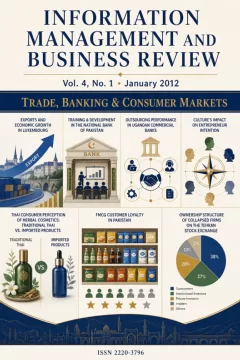
This research investigated the factors that influence perception of Thai consumers on facial herbal cosmetic products in Thailand. In- depth interview the perception of Thai consumers was utilized in data collection, while content analysis was employed in data analysis. The facial herbal cosmetics products are moisturizer, whitening lotions, creams, powder, toner, make up cleansing, mask, cleansing oil, soap bar, anti-aging lotions and creams. This study revealed that most of the interviewees were female with age between 26-30 years, casual worker ,bachelor degree being the highest education and salary from 10,000 -15,000 baht ($285-430) per month. The marketing mix (4Ps: product, price, place and promotion) were the key factors influencing Thai consumers’ perception on facial herbal cosmetic products. The result found that Thai consumers were satisfied with physical appearance of products; texture, odor, penetration- characteristic and viscosity. Thai consumers trust in the safety of the Thai and imported products. The imported products have new manufacturing technologies of production compare with the Thai products but imported products are more expensive than Thai products. Thai consumers were satisfied with packaging design and pump bottle shape of imported products. Thai consumers found it was convenience to purchasing both herbal products from department store. The direct sale is popular only for Thai products. The imported products had more interesting marketing promotion than the Thai products. The marketing promotions are new product premium, promotion campaign eg. Cash discount, gift premium, fortune, tarot horoscope, makes up and massage workshop. Thai consumers were satisfied with advertisement of both herbal products; brochure, leaflet, beauty information from general magazine, fashion magazine, general book, television and radio. The economic situation, such as inflation situation, is the majority factor of purchasing decision. The average cosmetic budget per each purchase is 1,800 baht (about $50) at the rate of eight purchases per year.
Keywords
References
- Alreck, P. & Settle, R. (1999). Strategies for building consumer brand preference. Journal of Product Brand Management , 8,130-144.
- Antignac, E., Nohynek, G., Thomas, R. & Clouzeau, J. (2011). Safety of botanical ingredients in personal care products/cosmetics. Food and Chemical Toxicology, 49,324-341.
- Bhattacharya, P. (2006). India’s cosmetic ready for big leap. Global Cosmetic Industry, 174, 42-48. Cosmetic Products Market-Thailand. (2009). Retrieved April14, 2009 from http://www.buyusa.gov/asianow/thcosmetic.html.
- Guthrie, M. & Kim, H. (2009). The relationship between consumer involvement and brand perceptions of female cosmetic consumers. Journal of Brand Management , 1, 114-133.
- Hwan, S. (2004). Intergrating Technology, Marketing and Management Innovation. Research Technology Management (RTM) , 47, 27-31.
- Jalalkamali, M. & Nikbin, A. (2010). The effects of motivation on purchase decision. Interdisciplinary Journal of Contemporary Research in business , 3, 234-245.
- Marcoux, D. (1999). Cosmetics, skin care and appearance in Teenagers. Proceeding of coetaneous Medicine and surgery Canada , 18, 244-249.
- Michael, J. & Julie, V. (2002). Differences in purchase behavior between France and the USA: the cosmetic industry. Journal of Fashion Marketing and Management , 6, 396-407.
- Ministry of finance (2009). Retrieved April14, 2009 from http://www2.mof.go.th/www2index.php.
- Nancy, J. (2005). Marketers’ New Edge is all-Natural. Global Industry , 173, 50-56.
- Rajagopal, S. (2007). Buying decisions towards organic products: an analysis of customer value and brand drivers. International Journal of Emerging Markets , 2, 236-246.
- Rowey, J. & Spiezia, M. (2006). Spiezia Organics: SME Marketing. The Marketing Review , 6, 253-264.
Downloads
No downloads have been recorded for this article yet. Figures appear here once readers begin downloading the full text.
How to Cite
Share this article
License
Copyright (c) 2012 Rojanadilok Thanisorn, Nanagara Byaporn, Bunchapattanasakda Chanchai (Author)

This work is licensed under a Creative Commons Attribution 4.0 International License.
Author (s) should affirm that the material has not been published previously. It has not been submitted and it is not under consideration by any other journal. At the same time author (s) need to execute a publication permission agreement to assume the responsibility of the submitted content and any omissions and errors therein. After submission of revised paper in the light of suggestions of the reviewers, the editorial team edits and formats manuscripts to bring uniformity and standardization in published material.
This work will be licensed under Creative Commons Attribution 4.0 International (CC BY 4.0) and under condition of the license, users are free to read, copy, remix, transform, redistribute, download, print, search or link to the full texts of articles and even build upon their work as long as they credit the author for the original work. Moreover, as per journal policy author (s) hold and retain copyrights without any restrictions.
Keywords
Section
Published
Submissions
Have research to publish? Information Management and Business Review welcomes submissions.
Make a Submission