Abstract
Due to the rising acceptance of virtual events, more empirical studies are needed to determine factors influencing attendees’ satisfaction. It is crucial to comprehend the essential factors determining the quality of virtual events as the virtual world continues to define the future of event experiences. Given these considerations, event planners may create and deploy virtual experiences meeting the diverse needs and preferences of the attendees. Hence, the main purpose of this paper is to examine the influence of virtual event quality dimensions on the level of event satisfaction among the attendees. A cross-sectional study was undertaken by administering a survey instrument to collect response data from participants in virtual events. There were 124 valid responses obtained for data analysis. Descriptive and inferential analyses were performed using IBM SPSS version 28. The study findings revealed that there was a statistically significant relationship between the quality of virtual event factors and event satisfaction among the attendees. The results of regression analysis indicated that vividness (p=0.016), functionality (p=0.003), entertainment (p=0.029), fulfillment (p=0.037), privacy (p=0.037), and social presence (p=0.001) were found to be significant predictors of event satisfaction. In conclusion, this study highlights the importance of considering several factors of event quality, particularly in planning and implementing virtual events. Event organizers can enhance attendees’ satisfaction through the use of more immersive and substantial virtual experiences, by focusing on attributes such as vividness, functionality, entertainment, fulfillment, privacy and social presence.
Keywords
- Event Satisfaction Search this journal for Event Satisfaction (opens in a new tab)
- Virtual Event Quality Search this journal for Virtual Event Quality (opens in a new tab)
- Virtual Events Search this journal for Virtual Events (opens in a new tab)
- Attendees Search this journal for Attendees (opens in a new tab)
References
- Almekhled, B., & Petrie, H. (2024). The Role of Privacy and Security Concerns and Trust in Online Teaching: Experiences of Higher Education Students in the Kingdom of Saudi Arabia. Proceedings of the 16th International Conference on Computer Supported Education, 66–77. https://doi.org/10.5220/0012616200003693
- Biocca, F., Harms, C., & Burgoon, J. K. (2003). Toward a More Robust Theory and Measure of Social Presence: Review and Suggested Criteria. Presence: Teleoperators and Virtual Environments, 12(5), 456–480. https://doi.org/10.1162/105474603322761270
- Campos, A. C., Mendes, J., Valle, P. O. do, & Scott, N. (2018). Co-creation of tourist experiences: a literature review. Current Issues in Tourism, 21(4), 369–400. https://doi.org/10.1080/13683500.2015.1081158
- Capasa, L., Zulauf, K., & Wagner, R. (2022). Virtual Reality Experience of Mega Sports Events: A Technology Acceptance Study. Journal of Theoretical and Applied Electronic Commerce Research, 17(2), 686–703. https://doi.org/10.3390/jtaer17020036
- Chen, J. (Jackie), & Jung, S. (Shawn). (2024). Event Technology and Attendee Experience: A Systematic Review and Research Agenda.
- Cohen, J. (2013). Statistical Power Analysis for the Behavioral Sciences. Routledge. https://doi.org/10.4324/9780203771587
- Fauville, G., Luo, M., Queiroz, A. C. M., Bailenson, J. N., & Hancock, J. (2021). Zoom Exhaustion & Fatigue Scale. Computers in Human Behavior Reports, 4, 100119. https://doi.org/10.1016/j.chbr.2021.100119
- Flowers, A. A., & Gregson, K. (2012). Theoretical and Practical Aspects of Conducting Meetings and Events in Virtual Worlds. International Journal of Strategic Information Technology and Applications, 3(4), 48–64. https://doi.org/10.4018/jsita.2012100104
- Gal-Or, E., Gal-Or, R., & Penmetsa, N. (2018). The Role of User Privacy Concerns in Shaping Competition Among Platforms. Information Systems Research, 29(3), 698–722. https://doi.org/10.1287/isre.2017.0730
- Hamari, J., Koivisto, J., & Sarsa, H. (2014). Does Gamification Work? -- A Literature Review of Empirical Studies on Gamification. 2014 47th Hawaii International Conference on System Sciences, 3025–3034. https://doi.org/10.1109/HICSS.2014.377
- Hammady, R., Ma, M., AL-Kalha, Z., & Strathearn, C. (2021). A framework for constructing and evaluating the role of MR as a holographic virtual guide in museums. Virtual Reality, 25(4), 895–918. https://doi.org/10.1007/s10055-020-00497-9
- Hu, Y., Hu, C., Fu, S., Fang, M., & Xu, W. (2017). Predicting Key Events in the Popularity Evolution of Online Information. PLOS ONE, 12(1), e0168749. https://doi.org/10.1371/journal.pone.0168749
- Hung, P.-K., Liang, R.-H., Ma, S.-Y., & Kong, B.-W. (2024). Exploring the Experience of Traveling to Familiar Places in VR: An Empirical Study Using Google Earth VR. International Journal of Human-Computer Interaction, 40(2), 255–277. https://doi.org/10.1080/10447318.2022.2114141
- Jung, S., Lee, S. (Ally), & Leitch, S. (2024). Examining the effect of gamification mobile app on conference engagement: an integration of S-O-R framework and UGT. International Journal of Event and Festival Management, 15(3), 339–357. https://doi.org/10.1108/IJEFM-08-2023-0070
- Jung, T., tom Dieck, M. C., Lee, H., & Chung, N. (2016). Effects of Virtual Reality and Augmented Reality on Visitor Experiences in Museum. In Information and Communication Technologies in Tourism 2016 (pp. 621–635). Springer International Publishing. https://doi.org/10.1007/978-3-319-28231-2_45
- Kim, D., & Ko, Y. J. (2019). The impact of virtual reality (VR) technology on sports spectators’ flow experience and satisfaction. Computers in Human Behavior, 93, 346–356. https://doi.org/10.1016/j.chb.2018.12.040
- Kim, J.-H., Kim, M., Park, M., & Yoo, J. (2021). How interactivity and vividness influence consumer virtual reality shopping experience: the mediating role of telepresence. Journal of Research in Interactive Marketing, 15(3), 502–525. https://doi.org/10.1108/JRIM-07-2020-0148
- Kim, S.-E., Kim, H. (Lina), Jung, S., & Uysal, M. (2023). The Determinants of Continuance Intention toward Activity-Based Events Using a Virtual Experience Platform (VEP). Leisure Sciences, 1–26. https://doi.org/10.1080/01490400.2023.2172116
- Kim, S.-E., Kim, H. (Lina), & Kim, J.-Y. (2024). Measuring Virtual Event Quality (VEQual): Scale Development and Validation. Journal of Hospitality & Tourism Research. https://doi.org/10.1177/10963480231220263
- KIRANT YOZCU, O., KURGUN, H., & BA?IRAN, D. (2023). Factors that Influence Attendance, Satisfaction, and Loyalty for Virtual Events. Advances in Hospitality and Tourism Research (AHTR), 11(1), 97–119. https://doi.org/10.30519/ahtr.1068444
- Li, G., Lin, S., & Tian, Y. (2024). Immersive Museums in the Digital Age: Exploring the Impact of Virtual Reality on Visitor Satisfaction and Loyalty. Journal of the Knowledge Economy. https://doi.org/10.1007/s13132-024-01782-7
- Liberatore, M. J., & Wagner, W. P. (2021). Virtual, mixed, and augmented reality: a systematic review for immersive systems research. Virtual Reality, 25(3), 773–799. https://doi.org/10.1007/s10055-020-00492-0
- Liu, T., Zhong, Y., & Chen, K. (2017). Interdisciplinary study on popularity prediction of socially classified hot online events in China. Telematics and Informatics, 34(3), 755–764. https://doi.org/10.1016/j.tele.2016.05.022
- Melly, D., McLoughlin, E., & Maguire, K. (2023). Emerging Venue Considerations for Event Management: The Case of Ireland. Tourism and Hospitality, 4(1), 187–201. https://doi.org/10.3390/tourhosp4010011
- Melo, M., Coelho, H., Gonçalves, G., Losada, N., Jorge, F., Teixeira, M. S., & Bessa, M. (2022). Immersive multisensory virtual reality technologies for virtual tourism. Multimedia Systems, 28(3), 1027–1037. https://doi.org/10.1007/s00530-022-00898-7
- Mohd Tariq, M. N., Shahar, H. K., Baharudin, M. R., Ismail, S. N. S., Manaf, R. A., Salmiah, M. S., Ahmad, J., & Muthiah, S. G. (2021). A cluster-randomized trial study on the effectiveness of health education-based intervention (HEBI) in improving flood disaster preparedness among the community in Selangor, Malaysia: a study protocol. BMC Public Health, 21(1), 1735. https://doi.org/10.1186/s12889-021-11719-3
- Neuhofer, B., Magnus, B., & Celuch, K. (2021). The impact of artificial intelligence on event experiences: a scenario technique approach. Electronic Markets, 31(3), 601–617. https://doi.org/10.1007/s12525-020-00433-4
- Oh, C. S., Bailenson, J. N., & Welch, G. F. (2018). A Systematic Review of Social Presence: Definition, Antecedents, and Implications. Frontiers in Robotics and AI, 5. https://doi.org/10.3389/frobt.2018.00114
- Oshimi, D., Taks, M., & Agha, N. (2023). Social impact of events: advancing insights on social impact scales. European Sport Management Quarterly, 23(6), 1843–1862. https://doi.org/10.1080/16184742.2022.2076891
- R, P., Sanjaya, K., Rathika, S., Hussein Alawadi, A., Makhzuna, K., Venkatesh, S., & Rajalakshmi, B. (2023). Human-Computer Interaction: Enhancing User Experience in Interactive Systems. E3S Web of Conferences, 399, 04037. https://doi.org/10.1051/e3sconf/202339904037
- Ramli, N., Januri, N. F. A., & Ghani, W. S. W. A. (2018). The Influence of Event Performance Quality on Attendees’ Satisfaction. International Journal of Academic Research in Business and Social Sciences, 8(7). https://doi.org/10.6007/IJARBSS/v8-i7/4394
- Sekaran, U., & Bougie, R. (2016). Research Methods for Business: A Skill Building Approach. John Wiley & Sons.
- Song, X., Fu, M., Fang, J., Cai, Z., Tan, C.-W., Lim, E. T. K., & Chong, A. Y. L. (2024). Turning the wheels of engagement: Evidence from entertainment live streaming. Journal of the Academy of Marketing Science. https://doi.org/10.1007/s11747-024-01020-1
- Talantis, S., Shin, Y. H., & Severt, K. (2020). Conference mobile application: Participant acceptance and the correlation with overall event satisfaction utilizing the technology acceptance model (TAM). Journal of Convention & Event Tourism, 21(2), 100–122. https://doi.org/10.1080/15470148.2020.1719949
- Wreford, O., Williams, N. L., & Ferdinand, N. (2019). Together Alone: An Exploration of the Virtual Event Experience. Event Management, 23(4), 721–732. https://doi.org/10.3727/152599519X15506259855625
- Xu, X. (2020). Examining the role of emotion in online consumer reviews of various attributes in the surprise box shopping model. Decision Support Systems, 136, 113344. https://doi.org/10.1016/j.dss.2020.113344
- Zhang, L., Shao, Z., Pan, Z., & Feng, Y. (2019). Zhang, Lin; Shao, Zhen; Pan, ZheExamining Individuals’ Utilization of SPOC: Extending the Task-Technology Fit Model with Online and Offline Perspective. PACIS 2019 Proceedings. 202.
Downloads
No downloads have been recorded for this article yet. Figures appear here once readers begin downloading the full text.
How to Cite
Share this article
License
Copyright (c) 2024 Azzura Nordin, Siti Noorsuriani Maon, Mohd Redhuan Dzulkipli, Annurizal Anuar (Author)

This work is licensed under a Creative Commons Attribution 4.0 International License.
Author (s) should affirm that the material has not been published previously. It has not been submitted and it is not under consideration by any other journal. At the same time author (s) need to execute a publication permission agreement to assume the responsibility of the submitted content and any omissions and errors therein. After submission of revised paper in the light of suggestions of the reviewers, the editorial team edits and formats manuscripts to bring uniformity and standardization in published material.
This work will be licensed under Creative Commons Attribution 4.0 International (CC BY 4.0) and under condition of the license, users are free to read, copy, remix, transform, redistribute, download, print, search or link to the full texts of articles and even build upon their work as long as they credit the author for the original work. Moreover, as per journal policy author (s) hold and retain copyrights without any restrictions.
Keywords
- Event Satisfaction Search this journal for Event Satisfaction (opens in a new tab)
- Virtual Event Quality Search this journal for Virtual Event Quality (opens in a new tab)
- Virtual Events Search this journal for Virtual Events (opens in a new tab)
- Attendees Search this journal for Attendees (opens in a new tab)
Section
Published in
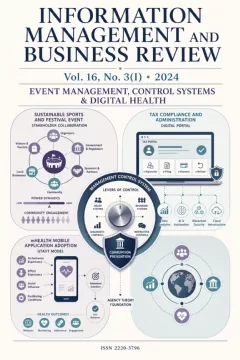 Vol. 16 No. 3(I) (2024)
Event Management, Control Systems & Digital Health
View issue contents
Published
Submissions
Have research to publish? Information Management and Business Review welcomes submissions.
Make a Submission