Abstract
Artificial Intelligence (AI) is a branch of contemporary science and information technology that aims to replicate human-like intelligence in machines. Its application has increasingly become a significant component in modern education, transforming the way knowledge is accessed and delivered. Educators are now required to recognize AI technology as a pivotal tool in both current and future educational environments. In light of this, the present study investigates the predictors of behavioral intention, namely, performance expectancy, effort expectancy, social influence, and facilitating conditions, towards the use of AI technology among lecturers in Polytechnics and Community Colleges (POLYCC) in Malaysia. This research is grounded in the Unified Theory of Acceptance and Use of Technology (UTAUT) framework. Employing a simple random sampling method to ensure equal representation, data were collected from 142 academic staff members in POLYCC through an online questionnaire. The data were analyzed using SPSS to test the proposed research model and hypotheses. Findings revealed that performance expectancy, effort expectancy, and facilitating conditions significantly and positively influence lecturers’ behavioral intention to use AI. In contrast, social influence did not have a significant effect. Additionally, the study identified experience as a moderating variable, which significantly strengthened the relationships between effort expectancy, social influence, and facilitating conditions with behavioral intention. These results highlight the importance of considering educators’ experience levels when designing strategies for AI adoption in teaching and learning environments.
Keywords
- Artificial Intelligence Search this journal for Artificial Intelligence (opens in a new tab)
- Behavioral Intention Search this journal for Behavioral Intention (opens in a new tab)
- UTAUT Theory Search this journal for UTAUT Theory (opens in a new tab)
- TVET Search this journal for TVET (opens in a new tab)
References
- Abu Zahri, Z. S., Chanthiran, P. V., Yunus, M. M., & M. Rafiq, K. R. (2023). ChatGPT: Investigating Academic Staff’s Awareness and Utilization in Teaching and Learning Strategies. International Journal of Academic Research in Business and Social Sciences, 13(12). https://doi.org/10.6007/IJARBSS/v13-i12/20249
- Alhwaiti, M. (2023). Acceptance of Artificial Intelligence Application in the Post-COVID-19 Era and Its Impact on Faculty Members’ Occupational Well-being and Teaching Self-Efficacy: A Path Analysis Using the UTAUT 2 Model. Applied Artificial Intelligence, 37(1). https://doi.org/10.1080/08839514.2023.2175110
- Alkhwaldi, A. F. (2023). Understanding learners’ intention toward Metaverse in higher education institutions from a developing country perspective: UTAUT and ISS integrated model. Kybernetes. https://doi.org/10.1108/K-03- 2023/0459
- An, X., Chai, C. S., Li, Y., Zhou, Y., Shen, X., Zheng, C., & Chen, M. (2023). Modeling English teachers’ behavioral intention to use artificial intelligence in middle schools. Education and Information Technologies, 28(5), 5187–5208. https://doi.org/10.1007/s10639-022-11286-z
- Anthony, B., Kamaludin, A., & Romli, A. (2023). Predicting Academic Staff Behaviour Intention and Actual Use of Blended Learning in Higher Education: Model Development and Validation. Technology, Knowledge and Learning, 28(3), 1223–1269. https://doi.org/10.1007/s10758-021-09579-2
- Ayaz, A., & Yanarta?, M. (2020). An analysis of the unified theory of acceptance and use of technology theory (UTAUT): Acceptance of electronic document management system (EDMS). Computers in Human Behavior Reports, 2. https://doi.org/10.1016/j.chbr.2020.100032
- Benvenuti, M., Pan & Cherry-Llewellyn, K., & Smith, R. (2022). Defining key competencies for AI integration in vocational education. International Journal of Educational Technology in Vocational Training, 8(2), 45–62.
- Bhat, M. A., Tiwari, C. K., Bhaskar, P., & Khan, S. T. (2024). Examining ChatGPT adoption among educators in higher educational institutions using the extended UTAUT model. Journal of Information, Communication and Ethics in Society. https://doi.org/10.1108/JICES-03-2024-0033
- Bryant, J., Heitz, C., Sanghvi, S., & Wagle, D. (2020). How artificial intelligence will impact K-12 teachers.
- Chatterjee, S., & Bhattacharjee, K. K. (2020). Adoption of artificial intelligence in higher education: a quantitative analysis using structural equation modelling. Education and Information Technologies, 25(5), 3443–3463. https://doi.org/10.1007/s10639-020- 10159/7
- Hair, J. F., Black, W. C., Babin, B. J., & Anderson, R. E. (2010). Multivariate data analysis (7th ed.). Pearson Education.
- Hayes, A. F. (2013). Introduction to mediation, moderation, and conditional process analysis: A regression-based approach (1st ed.). Guilford Press.
- Hinton, P. R., Brownlow, C., McMurray, I., &?Cozens, B. (2004). SPSS explained: Using SPSS to analyse questionnaires: Reliability. Routledge.
- Holmström, J. (2022). From AI to digital transformation: The AI readiness framework. Business Horizons, 65(3), 329–339. https://doi.org/10.1016/j.bushor.2021.03.006
- Hwang, T. J., Rabheru, K., Peisah, C., Reichman, W., & Ikeda, M. (2020). Loneliness and social isolation during the COVID-19 pandemic. In International Psychogeriatrics, 32(10), 1217–1220. Cambridge University Press. https://doi.org/10.1017/S1041610220000988
- Izkair, A.?S., & Lakulu, M.?M. (2021). Experience moderator effect on the variables that influence intention to use mobile learning. Bulletin of Electrical Engineering and Informatics, 10(5), 2875–2883. https://doi.org/10.11591/eei.v10i5.3109
- Jain, R., Garg, N., & Khera, S. N. (2022). Adoption of AI-Enabled Tools in Social Development Organizations in India: An Extension of the UTAUT Model. Frontiers in Psychology, 13. https://doi.org/10.3389/fpsyg.2022.893691
- Jalil, H. A., Rajakumar, M., & Zaremohzzabieh, Z. (2022). Teachers’ Acceptance of Technologies for 4IR Adoption: Implementation of the UTAUT Model. International Journal of Learning, Teaching and Educational Research, 21(1), 18–32. https://doi.org/10.26803/ijlter.21.1.2
- Jaradat, M. I.?R., Faqih, M., Nusairat, N., & Riad, M. I. S. (2020). Exploring cloud computing adoption in higher educational environments: An extension of the UTAUT model with trust. Education and Information Technologies. Advance online publication. https://doi.org/10.1007/s10639-020-10283-6
- Kim, T., & Han, S. (2020). A study on elementary and secondary teachers’ perceptions of AI education. Gyeongin National University of Education Education Research Institute.
- Kwak, Y., Seo, Y. H., & Ahn, J. W. (2022). Nursing students’ intent to use AI-based healthcare technology: Path analysis using the unified theory of acceptance and use of technology. Nurse Education Today, 119. https://doi.org/10.1016/j.nedt.2022.105541
- Liu, C. H., Chen, Y. T., Kittikowit, S., Hongsuchon, T., & Chen, Y. J. (2022). Using Unified Theory of Acceptance and Use of Technology to Evaluate the Impact of a Mobile Payment App on the Shopping Intention and Usage Behavior of Middle-Aged Customers. Frontiers in Psychology, 13. https://doi.org/10.3389/fpsyg.2022.830842
- Luan, H., Géczy, P., Lai, H., Gobert, J., Yang, S. J., Ogata, H., Baltes, J., Guerra, R. S., Li, P., & Tsai, C.-C. (2020). Challenges and future directions of big data and artificial intelligence in education. Frontiers in Psychology, 11, 580820
- MOSTI (2021). National Artificial Intelligence Roadmap 2021–2025. https://www.mosti.gov.my
- O’dea, X., & O’Dea, M. (2023). Is Artificial Intelligence the Next Big Thing in Learning and Teaching in Higher Education? A Conceptual Paper. Journal of University Teaching and Learning Practice, 20(5). https://doi.org/10.53761/1.20.5.05
- Pantelimon, F. V., Bologa, R., Toma, A., & Posedaru, B. S. (2021). The evolution of AI-driven educational systems during the COVID-19 pandemic. Sustainability (Switzerland), 13(23). https://doi.org/10.3390/su132313501
- Park, W., & Kwon, H. (2023). Implementing artificial intelligence education for middle school technology education in the Republic of Korea. International Journal of Technology and Design Education. https://doi.org/10.1007/s10798- 023-09812-2
- Pelletier, Kathe., Robert, Jenay., Muscanell, Nicole., McCormack, M. H., Reeves, Jamie., Arbino, Nichole., Grajek, Susan., & EDUCAUSE (Association). (2023). 2023 EDUCAUSE Horizon Report: Teaching and Learning Edition.
- Raffaghelli, J. E., Rodríguez, M. E., Guerrero-Roldán, A. E., & Bañeres, D. (2022). Applying the UTAUT model to explain the students’ acceptance of an early warning system in Higher Education. Computers and Education, 182. https://doi.org/10.1016/j.compedu.2022.104468
- Ragheb, M. A., Tantawi, P., Farouk, N., & Hatata, A. (2022). Investigating the acceptance of applying chatbot (Artificial intelligence) technology among higher education students in Egypt. In International Journal of Higher Education Management (IJHEM) (Vol. 8). CBER. www.cberuk.com
- Sabraz Nawaz, S., Fathima Sanjeetha, M. B., Al Murshidi, G., Mohamed Riyath, M. I., Mat Yamin, F. B., & Mohamed, R. (2024). Acceptance of ChatGPT by undergraduates in Sri Lanka: a hybrid approach of SEM-ANN. Interactive Technology and Smart Education. https://doi.org/10.1108/ITSE-11-2023-0227
- Salkind, N. J. (2018). Exploring research.
- Srivastava, S., & Singh Bhati, N. (2020, December 30). The Use of UTAUT Model for Understanding Academicians’ Perception towards Online Faculty Development Programs (FDP). Proceedings of IEEE International Conference on Advanced Trends in Multidisciplinary Research and Innovation, ICATMRI 2020. https://doi.org/10.1109/ICATMRI51801.2020.9398475
- Sukmawati, A. (2024). “Digital Leadership Impact on Teacher Innovation in Higher Vocational Education.” International Journal of Learning, Teaching & Educational Research.
- Sundram, V. P. K., Chandran, G., & Bhatti, M. A. (2016). Supply chain practices and performance: The indirect effects of supply chain integration. Benchmarking: An International Journal, 23(6), 1445–1471. https://doi.org/10.1108/BIJ-03-2015-0023
- 36. Venkatesh, V., Morris, M. G., Davis, G. B., & Davis, F. D. (2003). User acceptance of information technology: Toward a unified view. MIS Quarterly, 27(3), 425–478. https://doi.org/10.2307/3003654048.
- Venkatesh, V., Brown, S. A., Maruping, L. M., & Bala, H. (2008). Predicting Different Conceptualizations of System Use: The Competing Roles of Behavioral Intention, Facilitating Conditions, and Behavioral Expectation. In Source: MIS Quarterly (Vol. 32, Issue 3).
- Warshaw, P. R., & Davis, F. D. (1985). Disentangling behavioral intention and behavioral expectation. Journal of Experimental Social Psychology, 21(3), 213–228. https://doi.org/10.1016/0022-1031(85)90017-4
- Willcocks, L. P. (2021). Why do AI projects fail? ResearchGate. Retrieved from https://www.researchgate.net/publication/353586567_Why_do_AI_projects_fail
- Yi, M., & Choi, H. (2023). What drives the acceptance of AI technology? The role of expectations and experiences [Preprint]. arXiv. https://arxiv.org/abs/2306.13670
- Zhou, M., Dzingirai, C., Hove, K., Chitata, T., & Mugandani, R. (2022). Adoption, use and enhancement of virtual learning during COVID-19. Education and Information Technologies, 27(7), 8939–8959. https://doi.org/10.1007/s10639-022-10985-x
Downloads
No downloads have been recorded for this article yet. Figures appear here once readers begin downloading the full text.
How to Cite
Share this article
License
Copyright (c) 2025 Nadzirah Muhammad Merejok, Sri Fatiany Abdul Kader Jailani, Syukrina Alini Mat Ali, Noor'ain Mohamad Yunus (Author)

This work is licensed under a Creative Commons Attribution 4.0 International License.
Author (s) should affirm that the material has not been published previously. It has not been submitted and it is not under consideration by any other journal. At the same time author (s) need to execute a publication permission agreement to assume the responsibility of the submitted content and any omissions and errors therein. After submission of revised paper in the light of suggestions of the reviewers, the editorial team edits and formats manuscripts to bring uniformity and standardization in published material.
This work will be licensed under Creative Commons Attribution 4.0 International (CC BY 4.0) and under condition of the license, users are free to read, copy, remix, transform, redistribute, download, print, search or link to the full texts of articles and even build upon their work as long as they credit the author for the original work. Moreover, as per journal policy author (s) hold and retain copyrights without any restrictions.
Keywords
- Artificial Intelligence Search this journal for Artificial Intelligence (opens in a new tab)
- Behavioral Intention Search this journal for Behavioral Intention (opens in a new tab)
- UTAUT Theory Search this journal for UTAUT Theory (opens in a new tab)
- TVET Search this journal for TVET (opens in a new tab)
Section
Published in
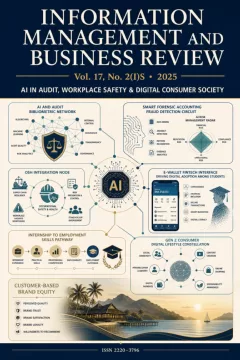 Vol. 17 No. 2(I)S (2025)
AI in Audit, Workplace Safety & Digital Consumer Society
View issue contents
Published
Submissions
Have research to publish? Information Management and Business Review welcomes submissions.
Make a Submission