Abstract
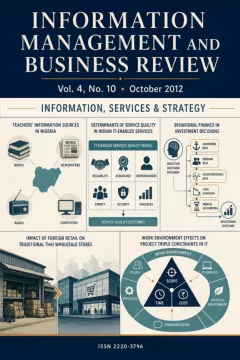
Project management’s fundamental concern is to effectively manage its triple constraints throughout the life cycle of a project to maximize productivity. At the same timework environment is considered a key feature, which influences the framework of project management. The present study assesses the impact of the work environment on the triple constraints (Scope, Time and Cost) of projects in the IT industry. The theoretical framework comprises Remuneration, Job Satisfaction, Job Security, and Working Hours as components of work environment and triple constraints as the dependent variable. Three hundred Project Managers across a number of IT firms have been approached, out of which 279 have responded to the questionnaire. The measurement tool has been developed by the researcher except for one construct, which has been adopted, followed by a pilot study. Inferential statistics have been applied to test the data. The study concludes that all project managers view a flexible and conducive work environment as bearing a strong relationship with the triple constraint of project management.
Keywords
- Project Management Search this journal for Project Management (opens in a new tab)
- Work Environment Search this journal for Work Environment (opens in a new tab)
- Triple Constraints Search this journal for Triple Constraints (opens in a new tab)
- Job Satisfaction Search this journal for Job Satisfaction (opens in a new tab)
- Pakistan Search this journal for Pakistan (opens in a new tab)
References
- Aiyegbusi, J. T. (2000). Communication of effective classroom instruction. Journal of Business and General Studies , 1(1), 31-35 .
- Ajayi, I. A. (2011). Work environment as correlate of academic staff job performance in southwest Nigerian universities. European Journal of Educational Studies , 3(1).
- Akinyele, S. T. (2007). A Critical Assessment of Environmental Impact on Workers Productivity in Nigeria. Res. J. Bus. Manage. , 1(1), 50-61.
- Ariyo, S. K. (2000). A socio-linguistic study of the English medium of instruction in Nigerian educational system. Journal of Business and General Studies , 1(1), 105-112.
- Brewer, J. & Dittman, K. (2010). Methods of IT Project Management, (1st Ed.), Upper Saddle River, NJ.
- Caprara, G. V., Barbaranelli, C., Steca, P. & Malone, P. S. (2006). Teachers’ self-efficacy beliefs as determinants of job satisfaction and students’ academic achievement: A study at the school level. Journal of School Psychology , 44(6), 473-490.
- Cleland, D. I. & Ireland, L. R. (2007). Project Management: Strategic Design and Implementation, (5th ed.) McGraw-Hill, New York.
- Cooke-Davies, T. (2002). The real success factors on projects. International Journal of Project Management , 20, 185-190.
- Durotolu, A. O. (2000). Administrative environment as a factor of academic staff performance in College of Education in Kwara State, Nigeria. Unpublished Ph.D. thesis, University of Ibadan, Ibadan, Nigeria.
- Gummer, B. (2001). Peer relationships in organizations: Mutual assistance, employees with disabilities, and distributive justice. Administration in Social Work , 25, 85–103.
- Haider, A. (2004). Software Productivity: The impact of Soft Factors, Proceedings of International Conference on Software Engineering and Applications, Organized by IEEE & Foundation University, December 31, 2004, Islamabad, Pakistan.
- Han, W. M. & Huang, S. J. (2007). An empirical analysis of risk components and performance on software projects. The Journal of systems and software , 80, 42-50.
- Hartman, F. T. (2000). Don’t Park Your Brain Outside. Newtown Square, PA: Project Management Institute.
- Hartenian, L., Schellenger, M. & Frederickson, P. (2001). Creation and assessment of an integrated business course: One college’s experience. J. Educ. Bus. , 76(3), 149-159.
- Holton, E. F., Bates, R. A. & Rouna, E. A. (2000). Development of a generalized learning transfer system inventory. Human Resource Development Quarterly, 11(4), 333-360.
- IITEC Pakistan. (2012). Retrieved from http://www.iitec.com.pk/Downloads/IITEC%20Presentation.pdf Ingram, G. (2000). The way to enlightened project management, Project Manager Today
- Insel, P. M. & Moos, R. H. (1975). Work Environment Scale. Palo Alto, CA: Consulting Psychologists Press.
- James, O. J. & James, O. P. (2004). The Meaning of Organizations: The Role of Cognition and Values. Organizational Climate and Culture , 5(2), 40-84.
- Kpangban, E. & Onwuegbu, O. C. (1995). Principles and methods of teaching: a practical guide to effective teaching (2nd ed.). Agbor: Pon Publishers Limited.
- Nkom, A. A. (2000). Instructional communication for effective teaching in university education. Kaduna: B1 Shaanu Publishing.
- Oni, J. O. (2000). Downward pressure on staff salaries and deteriorating working conditions on campus. A Status Report; Division of Business and Finance, University of Nemphilis.
- Opperman, C. S. (2002). Tropical Business Issues. Partner Price Water House Coopers.
- Oshagbemi, T. (2000). Gender Differences in the Job Satisfaction of University Teachers. Women in Management Review , 15, 331-343.
- Project Management Institute (PMI). (2004). Four Campus Boulevard, Newton Square, PA 19073-3299 USA, ( www.pmi.org).
- Project Management Institute. (2004). A guide to the project management body of knowledge (PMBOK®) (Third ed.). Newtown Square, PA: Project Management Institute.
- Reichers, A. E. (2006). A Review and Reconceptualisation of Organizational Commitment. Academy of Management Review , 10(3), 465-476.
- Rubenstein, D. (2007). Standish Group Report: There is Less Development Chaos Today. Software Development Times on the Web.
- Schneider, I. I. (2008). Motivation and Organizational Climate. Journal of Personnel Psychology, 29(3), 371392.
- Schwalbe, K. (2007). Information Technology Management, (5th ed.) Thomson.
- Scotter, J. R. V. (2000). Relationships of Task Performance and Contextual Performance With Turnover, Job Satisfaction, and Affective Commitment . Human Resource Management Review, 10(I), 76-95.
- Shenhar, T. A., Dvir, D., Lipovetsky, S. & Lechler, T. (2002). Refining the search for project success factors: a multivariate, typological approach. R & D Management, 32(2), 111–26.
- Spector, P. (1992). Summated rating scale construction. Thousand Oaks, CA: Sage.
- Warmbrod, J. R. (2001). Conducting, interpreting, and reporting quantitative research. Research Pre-Session, New Orleans, Louisiana.
- Taylor, M. D. (2004). A Guide to the Project Management Body of Knowledge, Third Edition (Project Management Institute: Newton Square, PA.
- Turner, J. R. & Muller, R. (2006). Choosing Appropriate Project Managers: Matching their leadership style to the type of project. Project Management Institute, Newton Square, PA, USA.
- Woolfolk, H. A. & Davis, H. A. (2006). Teacher self-efficacy and its influence on the achievement of adolescents. In F. Pajares & T. Urdan (Eds.), Self-efficacy of adolescents (117− 137). Greenwich, Connecticut: Information Age Publishing.
- Wright, P. M., Garner, T. M., Moynihan, L. M., Gerhart, B., Delery, J. E. (2001). Measurement error in research on human resources and firm performance: additional data and suggestions for further research Personnel Psychology, 54, 875-901.
Downloads
No downloads have been recorded for this article yet. Figures appear here once readers begin downloading the full text.
How to Cite
Share this article
License
Copyright (c) 2012 Syed Ali Raza Hamid, Hateem Adnan Ghafoor, Tamkeen Zehra Shah (Author)

This work is licensed under a Creative Commons Attribution 4.0 International License.
Author (s) should affirm that the material has not been published previously. It has not been submitted and it is not under consideration by any other journal. At the same time author (s) need to execute a publication permission agreement to assume the responsibility of the submitted content and any omissions and errors therein. After submission of revised paper in the light of suggestions of the reviewers, the editorial team edits and formats manuscripts to bring uniformity and standardization in published material.
This work will be licensed under Creative Commons Attribution 4.0 International (CC BY 4.0) and under condition of the license, users are free to read, copy, remix, transform, redistribute, download, print, search or link to the full texts of articles and even build upon their work as long as they credit the author for the original work. Moreover, as per journal policy author (s) hold and retain copyrights without any restrictions.
Keywords
- Project Management Search this journal for Project Management (opens in a new tab)
- Work Environment Search this journal for Work Environment (opens in a new tab)
- Triple Constraints Search this journal for Triple Constraints (opens in a new tab)
- Job Satisfaction Search this journal for Job Satisfaction (opens in a new tab)
- Pakistan Search this journal for Pakistan (opens in a new tab)
Section
Published
Submissions
Have research to publish? Information Management and Business Review welcomes submissions.
Make a Submission