Abstract
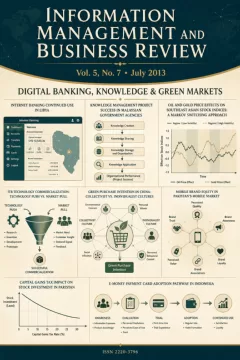
Technology-based innovation can comes either from market needs (market pull) then obtained the discovery of new innovation technology to help meet the needs of the community or from new invention which was later adapted by the community (technology push) that become useful new needs. The purpose of this paper is to determine the implications that what works better between technology push or market pull in technological innovation carried out by researchers in creating new technologies. In this paper, the study used the example of one of the universities in Indonesia, the ITB because it has a research institute that more active than any other university in Indonesia. Sample taken from the new product invention that have been successfully commercialized or not. To know whether successfully commercialized inventions are more likely depart from the market pull or technology push. We got the result of this research from technology innovation product that has been patented, from dept interviews by the researchers in ITB, and from focus group discussion among the junior researchers. The result of technology innovation product that only has been patented and the technology innovation product that already is commercialized and used by many people will be different. We will see the beginning of the idea appearance and the commercialization of their product innovation in the market from the researchers.
Keywords
- Market Pull Search this journal for Market Pull (opens in a new tab)
- Technology Push Search this journal for Technology Push (opens in a new tab)
- University Patent Search this journal for University Patent (opens in a new tab)
- Technology Innovation and Commercialization Search this journal for Technology Innovation and Commercialization (opens in a new tab)
References
- Blair, D. M. & Hitchen, D. M. W. N. (1998). Campus Companies - UK and Ireland, Brookfield, USA: Ashgate Publication.
- Boehme, J. (1986). Innovationsfo¨ rderung durch Kooperationen: Zwischenbetriebliche Zusammenarbeit als Instrument des Innovationsmanagements in kleinen und mittleren Unternehmen bei Einfu¨ hrung der Mikroelektronik in Produkte und Verfahren. Erich Schmidt Verlag, Berlin.
- Brockhoff, K. (1969). Probleme und Methoden technologischer Vorhersagen. Zeitschrift fu¨ r Betriebswirtschaft, 39(2), 1–24.
- Brem, A. & Voigt, K. (2009). Integration of market pull and technology push in the corporate front end and innovation management—Insights from the German software industry. Technovation , 29, 351– 367
- Bullinger, H. J. (1994). Einfu¨ hrung in das Technologiemanagement. Modelle, Methoden, Praxisbeispiele. Teubner, Stuttgart.
- Burgelman, R. A. & Sayles, L. R. (2004). Transforming invention into innovation: the conceptualization stage. In: Christensen, C.M., Wheelwright, S.C. (Eds.), Strategic Management of Technology and Innovation. McGraw-Hill, Boston, 682–690.
- Drucker, P. F. (1973). Management: Tasks, Responsibilities, Practices, HarperCollins, New York.
- Etzkowitz, H. (2002). MIT and the Rise of Entrepreneurial Science, London: Routledge.
- Etzkowitz, H. (2003). Research Groups as 'quasi-firms': the Invention of the Entrepreneurial University. Research Policy , 32(1), 109-121.
- Hauschildt, J. (2004). Innovations management. Vahlen, Mu¨ nchen.
- Ismail, K. (2007). Commercialization of University Patents: A case study. PhD Thesis University of Stratchlyde.
- Ismail, K., Cooper, S., Omar, W. Z. & Majid, A. (2010). University Spin-off Formations: How decision making process has been made? Journal of Business and Social Science, 1(2).
- Ismail, K., Omar, W. Z. & Majid, A. (2011). Commercialization of University Patents: A Case Study. Journal of Marketing Development and Competitiveness , 5(5).
- Salavou, H. & Lioukas, S. (2003). Radical product innovations in SMEs: the dominance of entrepreneurial orientation. Creativity and Innovation Management , 12(2), 94–108.
- Schoen, D. A. (1967). Technology and Change: the New Heraclitus. Delacorte Press, New York.
- Shane, S. & Khurana, R. (2003). Bringing Individuals Back in: The Effect of Career Experiences on New Firm Foundings. Industrial and Corporate Change , 12(3), 519-543.
- Shane, S. (2004). Academic Entrepreneurship: University Spin-offs and Wealth Creation, Cheltenham: Edward Elgar.
- Walsh, S. T., Kirchhoff, B. A. & Newbert, S. (2002). Differentiating market strategies for disruptive technologies. IEEE Transactions on Engineering Management , 49(4), 341–351.
Downloads
No downloads have been recorded for this article yet. Figures appear here once readers begin downloading the full text.
How to Cite
Share this article
License
Copyright (c) 2013 Indriany Ameka, Wawan Dhewanto (Author)

This work is licensed under a Creative Commons Attribution 4.0 International License.
Author (s) should affirm that the material has not been published previously. It has not been submitted and it is not under consideration by any other journal. At the same time author (s) need to execute a publication permission agreement to assume the responsibility of the submitted content and any omissions and errors therein. After submission of revised paper in the light of suggestions of the reviewers, the editorial team edits and formats manuscripts to bring uniformity and standardization in published material.
This work will be licensed under Creative Commons Attribution 4.0 International (CC BY 4.0) and under condition of the license, users are free to read, copy, remix, transform, redistribute, download, print, search or link to the full texts of articles and even build upon their work as long as they credit the author for the original work. Moreover, as per journal policy author (s) hold and retain copyrights without any restrictions.
Keywords
- Market Pull Search this journal for Market Pull (opens in a new tab)
- Technology Push Search this journal for Technology Push (opens in a new tab)
- University Patent Search this journal for University Patent (opens in a new tab)
- Technology Innovation and Commercialization Search this journal for Technology Innovation and Commercialization (opens in a new tab)
Section
Published
Submissions
Have research to publish? Information Management and Business Review welcomes submissions.
Make a Submission