Abstract
This study aims to examine the effect of social media influencers on fashion counterfeit purchase intention among the young generation. Social Media Influencer (SMI) has been a dominant marketing trend and businesses heavily invest in SMIs to carry out promotional activities. However, the dimensions of SMI have not been examined widely on fashion counterfeit purchase intention among the young generation. A total of six dimensions of SMI namely, inspiring, technical skills, enjoyability, similarity, informativeness and credibility were used for this study. Data was collected from 389 young generations via online techniques. The findings show that technical skills and informativeness significantly influence counterfeit purchase intention among the young generation. The findings of the study are useful for policymakers to control social media influencers.
Keywords
- Social Media Influencer (SMI) Search this journal for Social Media Influencer (SMI) (opens in a new tab)
- Inspiring Search this journal for Inspiring (opens in a new tab)
- Technical Skills Search this journal for Technical Skills (opens in a new tab)
- Enjoyability Search this journal for Enjoyability (opens in a new tab)
- Similarity Search this journal for Similarity (opens in a new tab)
- Informativeness Search this journal for Informativeness (opens in a new tab)
- Credibility Search this journal for Credibility (opens in a new tab)
- Counterfeit Purchase Intention Search this journal for Counterfeit Purchase Intention (opens in a new tab)
References
- Abraham, J., Takwin, B., & Suleeman, J. (2018). Counterfeit self: A confirmatory factor analysis among Indonesians. Kasetsart Journal of Social Sciences. https://doi.org/10.1016/j.kjss.2017.07.011
- Alhouti, S., Wright, S. A., & Baker, T. L. (2021). Customers need to relate: The conditional warm glow effect of CSR on negative customer experiences. Journal of Business Research. https://doi.org/10.1016/j.jbusres.2020.11.047
- Amenuvor, F. E., Owusu-Antwi, K., Bae, S.-C., Shin, S. K. S., & Basilisco, R. (2019). Green Purchase Behavior: the Predictive Roles of Consumer Self-Determination, Perceived Customer Effectiveness 0and Perceived Price. International Journal of Scientific Research and Management. https://doi.org/10.18535/ijsrm/v7i10.em05
- Andersch, H., Arnold, C., Seemann, A. K., & Lindenmeier, J. (2019). Understanding ethical purchasing behavior: Validation of an enhanced stage model of ethical behavior. Journal of Retailing and Consumer Services. https://doi.org/10.1016/j.jretconser.2019.02.004
- Arli, D., & Tjiptono, F. (2017). God and green: Investigating the impact of religiousness on green marketing. International Journal of Nonprofit and Voluntary Sector Marketing. https://doi.org/10.1002/nvsm.1578
- Arli, D., Tjiptono, F., & Porto, R. (2015). The impact of moral equity, relativism and attitude on individuals’ digital piracy behavior in a developing country. Marketing Intelligence and Planning. https://doi.org/10.1108/MIP-09-2013-0149
- Arvanitis, A. (2017). Autonomy and morality: A Self-Determination Theory discussion of ethics. New Ideas in Psychology. https://doi.org/10.1016/j.newideapsych.2017.06.001
- Bernama. (2018, March 22). Illicit trade costing Malaysia almost RM8 billion a year. Https://Www.Nst.Com.My/Business/2018/03/348143/Illicit-Trade-Costing-Malaysia-Almost-Rm8-Billion-Year.
- Bhatia, V. (2018). Examining consumers’ attitude towards purchase of counterfeit fashion products. Journal of Indian Business Research. https://doi.org/10.1108/JIBR-10-2017-0177
- Bian, X., Wang, K. Y., Smith, A., & Yannopoulou, N. (2016). New insights into unethical counterfeit consumption. Journal of Business Research, 69(10), 4249–4258. https://doi.org/10.1016/j.jbusres.2016.02.038
- Bombaerts, G., & Spahn, A. (2021). Simplify! Using self-determination theory to prioritize the redesign of ethics and history of technology course. European Journal of Engineering Education. https://doi.org/10.1080/03043797.2019.1702924
- Boon Chui, C., & Zahin bin Mohd Yusof, M. (2017). The Counterfeit Goods Conundrum: An Analysis of Demand Situation among Malaysian Consumers. In Journal of International Business, Economics and Entrepreneurship.
- Bupalan, K., Rahim, S. A., Ahmi, A., & Rahman, N. A. A. (2019). Consumers’ repurchase intention towards counterfeit products. International Journal of Supply Chain Management, 8(3), 973–981.
- Chen, J., Teng, L., Liu, S., & Zhu, H. (2015). Anticipating regret and consumers’ preferences for counterfeit luxury products. Journal of Business Research. https://doi.org/10.1016/j.jbusres.2014.09.012
- Cheng San, A. N., & Yee, C. J. (2012). Behavioral Loyalty and Attitudinal Loyalty: Malaysian’s Intention on Counterfeit Clothing and Footwear. Journal of Public Administration and Governance. https://doi.org/10.5296/jpag.v2i1.1350
- Chiu, W., & Leng, H. K. (2016). Consumers’ intention to purchase counterfeit sporting goods in Singapore and Taiwan. Asia Pacific Journal of Marketing and Logistics. https://doi.org/10.1108/APJML-02-2015-0031
- Chui, C. B., & Yusuf, M. Z. M. (2017). The counterfeit goods conundrum: An analysis of demand situation among Malaysian consumers. Journal of International Business, Economics and Entrepreneurship.
- Curren, R., & Ryan, R. M. (2020). Moral self-determination: The nature, existence, and formation of moral motivation. Journal of Moral Education. https://doi.org/10.1080/03057240.2020.1793744
- Dave, W., N, S. G., Tim, M., & Patricia, S. (2013). Self-determination theory and consumer behavioral change: Evidence from a household energy-saving behavior study. Journal of Environmental Psychology.
- de Klerk, H. M., Kearns, M., & Redwood, M. (2019). Controversial fashion, ethical concerns and environmentally significant behavior: The case of the leather industry. International Journal of Retail and Distribution Management. https://doi.org/10.1108/IJRDM-05-2017-0106
- Eisend, M., & Schuchert-Güler, P. (2006). Explaining counterfeit purchases: A review and preview. Academy of Marketing Science Review.
- Fishbein, M., & Ajzen, I. (1975). Chapter 1. Belief, Attitude, Intention, and Behavior: An Introduction to Theory and Research. In Reading, MA: Addison-Wesley. https://doi.org/10.1017/CBO9781107415324.004
- Fuller, C. M., Simmering, M. J., Atinc, G., Atinc, Y., & Babin, B. J. (2016). Common methods variance detection in business research. Journal of Business Research. https://doi.org/10.1016/j.jbusres.2015.12.008
- Gao, W., Liu, Y., Liu, Z., & Li, J. (2018). How does presence influence purchase intention in online shopping markets? An explanation based on self-determination theory. Behavior and Information Technology. https://doi.org/10.1080/0144929X.2018.1484514
- Gilal, F. G., Zhang, J., Gilal, N. G., & Gilal, R. G. (2019). Linking self-determined needs and word of mouth to consumer e-waste disposal behavior: A test of basic psychological needs theory. Journal of Consumer Behaviour. https://doi.org/10.1002/cb.1744
- Hair, J., Black, W., Babin, B., & Anderson, R. (2014). Multivariate data analysis: Pearson New International Edition (7th Edition). In Edinburgh Gate Harlow, Pearson Education Limited.
- Hair, J. F., Risher, J. J., Sarstedt, M., & Ringle, C. M. (2019). When to use and how to report the results of PLS-SEM. In European Business Review. https://doi.org/10.1108/EBR-11-2018-0203
- Harun, A., Mahmud, M., Othman, B., Ali, R., & Ismael, D. (2020). Understanding experienced consumers towards repeat purchase of counterfeit products: The mediating effect of attitude. Management Science Letters, 10(1), 13–28. https://doi.org/10.5267/j.msl.2019.8.019
- Hashim, N. M. H. N., Shah, N. U., & Omar, N. A. (2018). Does counterfeit product quality lead to involvement and purchase intentions? The moderating effects of brand image and social interaction. International Journal of Economics and Management, 12(2), 607–620.
- Hirschmann, R. (2020). Share of the population older than 65 years in Malaysia from 2014 to 2020. Statista.
- Huang, C. H., Lings, I., Beatson, A., & Chou, C. Y. (2018). Promoting consumer environmental friendly purchase behavior: a synthesized model from three short-term longitudinal studies in Australia. Journal of Environmental Planning and Management. https://doi.org/10.1080/09640568.2017.1381590
- Hussain, A., Kofinas, A., & Win, S. (2017). Intention to Purchase Counterfeit Luxury Products: A Comparative Study Between Pakistani and the UK Consumers. In Journal of International Consumer Marketing. https://doi.org/10.1080/08961530.2017.1361881
- Jiang, Y., Miao, M., Jalees, T., & Zaman, S. I. (2019). Analysis of the moral mechanism to purchase counterfeit luxury goods: evidence from China. Asia Pacific Journal of Marketing and Logistics, 31(3), 647–669. https://doi.org/10.1108/APJML-05-2018-0190
- Jiang, Y., Xiao, L., Jalees, T., Naqvi, M. H., & Zaman, S. I. (2018). Moral and Ethical Antecedents of Attitude Toward Counterfeit Luxury Products: Evidence from Pakistan. Emerging Markets Finance and Trade. https://doi.org/10.1080/1540496X.2018.1480365
- Kanat-Maymon, Y., Benjamin, M., Stavsky, A., Shoshani, A., & Roth, G. (2015). The role of basic need fulfillment in academic dishonesty: A self-determination theory perspective. Contemporary Educational Psychology. https://doi.org/10.1016/j.cedpsych.2015.08.002
- Kaufmann, H. R., Loureiro, S. M. C., & Manarioti, A. (2016). Exploring behavioral branding, brand love and brand co-creation. Journal of Product and Brand Management. https://doi.org/10.1108/JPBM-06-2015-0919
- Khan, S., & Fazili, A. I. (2019). Does the Need for Social Status among Price Conscious Consumers Induce the Consumption of Counterfeit Luxury Brands? Journal of Business and Management.
- Ki, C. W. ‘Chloe,’ Cuevas, L. M., Chong, S. M., & Lim, H. (2020). Influencer marketing: Social media influencers as human brands attaching to followers and yielding positive marketing results by fulfilling needs. Journal of Retailing and Consumer Services. https://doi.org/10.1016/j.jretconser.2020.102133
- Kim, E., & Drumwright, M. (2016). Engaging consumers and building relationships in social media: How social relatedness influences intrinsic vs. extrinsic consumer motivation. Computers in Human Behavior. https://doi.org/10.1016/j.chb.2016.06.025
- Koen, J., van Vianen, A. E. M., van Hooft, E. A. J., & Klehe, U. C. (2016). How experienced autonomy can improve job seekers’ motivation, job search, and chance of finding reemployment? Journal of Vocational Behavior. https://doi.org/10.1016/j.jvb.2016.07.003
- Koklic, M. K. (2011). Non-deceptive counterfeiting purchase behavior: Antecedents of attitudes and purchase intentions. Journal of Applied Business Research. https://doi.org/10.19030/jabr.v27i2.4145
- Kozar, J. M., & Marcketti, S. B. (2011). Examining ethics and materialism with purchase of counterfeits. Social Responsibility Journal. https://doi.org/10.1108/17471111111154536
- Kushwah, S., Dhir, A., Sagar, M., & Gupta, B. (2019). Determinants of organic food consumption. A systematic literature review on motives and barriers. In Appetite. https://doi.org/10.1016/j.appet.2019.104402
- Lee, S., & Pounders, K. R. (2019). Intrinsic versus extrinsic goals: The role of self-construal in understanding consumer response to goal framing in social marketing. Journal of Business Research. https://doi.org/10.1016/j.jbusres.2018.04.039
- Li, T., & Seaton, B. (2015). Emerging Consumer Orientation, Ethical Perceptions, and Purchase Intention in the Counterfeit Smartphone Market in China. Journal of International Consumer Marketing. https://doi.org/10.1080/08961530.2014.967903
- Liao, C. H., & Hsieh, I. Y. (2013). Determinants of Consumer’s Willingness to Purchase Gray-Market Smartphones. Journal of Business Ethics, 114(3), 409–424. https://doi.org/10.1007/s10551-012-1358-7
- Liao, G. Y., Pham, T. T. L., Cheng, T. C. E., & Teng, C. I. (2020). Impacts of real-world need satisfaction on online gamer loyalty: Perspective of self-affirmation theory. Computers in Human Behavior. https://doi.org/10.1016/j.chb.2019.09.016
- Lin, A. J., Li, E. Y., & Lee, S. Y. (2018). Dysfunctional customer behavior in cross-border e-commerce: A Justice-affect-behavior model. Journal of Electronic Commerce Research.
- Lynch, P., & Dibben, M. (2016). Exploring motivations for adventure recreation events: a New Zealand study. Annals of Leisure Research. https://doi.org/10.1080/11745398.2015.1031804
- Macho, S., & Ledermann, T. (2011). Estimating, Testing, and Comparing Specific Effects in Structural Equation Models: The Phantom Model Approach. Psychological Methods. https://doi.org/10.1037/a0021763
- Marcketti, S. B., & Shelley, M. C. (2009). Consumer concern, knowledge and attitude towards counterfeit apparel products. International Journal of Consumer Studies. https://doi.org/10.1111/j.1470-6431.2009.00748.x
- Mohammed, A. H., Blebil, A., Dujaili, J., & Hassan, B. A. R. (2021). Perception and attitude of adults toward cosmetic products amid COVID-19 pandemic in Malaysia. Journal of Cosmetic Dermatology. https://doi.org/10.1111/jocd.14147
- Morse, B. L., & Repsha, C. L. (2021). Pretty Poisonous: How Counterfeit Cosmetics Can Be Toxic to Student Skin. NASN School Nurse (Print). https://doi.org/10.1177/1942602X20921524
- Ong Lai Teik, D., Chiang Tong Seng, T., & Pung Xin-Yi, A. (2015). To Buy or To Lie: Determinants of Purchase Intention of Counterfeit Fashion in Malaysia. International Conference on Marketing and Business Development Journal.
- Penz, E., Schlegelmilch, B. B., & Stottinger, B. (2009). Voluntary purchase of counterfeit products: Empirical evidence from four countries. Journal of International Consumer Marketing. https://doi.org/10.1080/08961530802125456
- Perera, H. N. (2013). A novel approach to estimating and testing specific mediation effects in educational research: explication and application of Macho and Ledermann’s (2011) phantom model approach. International Journal of Quantitative Research in Education. https://doi.org/10.1504/ijqre.2013.055640
- Phau, I., Sequeira, M., & Dix, S. (2009). Consumers’ willingness to knowingly purchase counterfeit products. Direct Marketing. https://doi.org/10.1108/17505930911000865
- Phau, I., Teah, M., & Lee, A. (2009). Targeting buyers of counterfeits of luxury brands: A study on attitudes of Singaporean consumers. Journal of Targeting, Measurement and Analysis for Marketing. https://doi.org/10.1057/jt.2008.25
- Quoquab, F., Pahlevan, S., Mohammad, J., & Thurasamy, R. (2017). Factors affecting consumers’ intention to purchase counterfeit product: Empirical study in the Malaysian market. Asia Pacific Journal of Marketing and Logistics. https://doi.org/10.1108/APJML-09-2016-0169
- Rodgers, W. M., Markland, D., Selzler, A. M., Murray, T. C., & Wilson, P. M. (2014). Distinguishing perceived competence and self-efficacy: An example from exercise. Research Quarterly for Exercise and Sport. https://doi.org/10.1080/02701367.2014.961050
- Ryan, R. M., & Deci, E. L. (2000). Intrinsic and Extrinsic Motivations: Classic Definitions and New Directions. Contemporary Educational Psychology. https://doi.org/10.1006/ceps.1999.1020
- Samaddar, K., & Menon, P. (2020). Non-deceptive counterfeit products: a morphological analysis of literature and future research agenda. Journal of Strategic Marketing, 00(00), 1–24. https://doi.org/10.1080/0965254X.2020.1772348
- Schösler, H., de Boer, J., & Boersema, J. J. (2014). Fostering more sustainable food choices: Can Self-Determination Theory Help? Food Quality and Preference. https://doi.org/10.1016/j.foodqual.2014.01.008
- Shahid, S., & Paul, J. (2021). Intrinsic motivation of luxury consumers in an emerging market. Journal of Retailing and Consumer Services. https://doi.org/10.1016/j.jretconser.2021.102531
- Sheppard, B. H., Hartwick, J., & Warshaw, P. R. (1988). The Theory of Reasoned Action: A Meta-Analysis of Past Research with Recommendations for Modifications and Future Research. Journal of Consumer Research. https://doi.org/10.1086/209170
- Shulga, L. V., & Busser, J. A. (2020). Customer acceptance of four types of hospitality value propositions. International Journal of Hospitality Management. https://doi.org/10.1016/j.ijhm.2019.102388
- Song, L., Meng, Y., Chang, H., Li, W., & Tan (Frank), K. (2021). How counterfeit dominance affects luxury fashion brand owners’ perceptions: A cross-cultural examination. Journal of Business Research. https://doi.org/10.1016/j.jbusres.2021.02.046
- Sun, Y., & Liang, C. (2020). Factors Determining Consumers’ Purchase Intentions Towards Dried Fruits. International Journal of Fruit Science. https://doi.org/10.1080/15538362.2020.1774477
- Teik, D. O. L., Kamaruddin, A. K. A. bin, Bulathsinhalage, C. N., & Seneviratne, L. A. (2013). The purchase intention of Malaysian undergraduate students in regards to counterfeit luxury goods and its relationship with materialistic and ethical values. Entrepreneurship Vision 2020: Innovation, Development Sustainability, and Economic Growth - Proceedings of the 20th International Business Information Management Association Conference, IBIMA 2013.
- Trinh, V.-D., & Phau, I. (2012). The Overlooked Component in the Consumption of Counterfeit Luxury Brands Studies: Materialism - A Literature Review. Contemporary Management Research. https://doi.org/10.7903/cmr.11156
- Wakeman, S. W., Moore, C., & Gino, F. (2019). A counterfeit competence: After the threat, cheating boosts one’s self-image. Journal of Experimental Social Psychology. https://doi.org/10.1016/j.jesp.2019.01.009
- Webster, R. J., Morrone, N., & Saucier, D. A. (2021). The effects of belief in pure good and belief in pure evil on consumer ethics. Personality and Individual Differences. https://doi.org/10.1016/j.paid.2021.110768
- White, C. (2015). The impact of motivation on customer satisfaction formation: a self-determination perspective. European Journal of Marketing. https://doi.org/10.1108/EJM-08-2014-0501
- Zou, L. W., & Chan, R. Y. K. (2019). Why and when do consumers perform green behaviors? An examination of regulatory focus and ethical ideology. Journal of Business Research. https://doi.org/10.1016/j.jbusres.2018.04.006
Downloads
No downloads have been recorded for this article yet. Figures appear here once readers begin downloading the full text.
How to Cite
Share this article
License
Copyright (c) 2023 Tamil Selvi Renganathan, Goi Mei Teh (Author)

This work is licensed under a Creative Commons Attribution 4.0 International License.
Author (s) should affirm that the material has not been published previously. It has not been submitted and it is not under consideration by any other journal. At the same time author (s) need to execute a publication permission agreement to assume the responsibility of the submitted content and any omissions and errors therein. After submission of revised paper in the light of suggestions of the reviewers, the editorial team edits and formats manuscripts to bring uniformity and standardization in published material.
This work will be licensed under Creative Commons Attribution 4.0 International (CC BY 4.0) and under condition of the license, users are free to read, copy, remix, transform, redistribute, download, print, search or link to the full texts of articles and even build upon their work as long as they credit the author for the original work. Moreover, as per journal policy author (s) hold and retain copyrights without any restrictions.
Keywords
- Social Media Influencer (SMI) Search this journal for Social Media Influencer (SMI) (opens in a new tab)
- Inspiring Search this journal for Inspiring (opens in a new tab)
- Technical Skills Search this journal for Technical Skills (opens in a new tab)
- Enjoyability Search this journal for Enjoyability (opens in a new tab)
- Similarity Search this journal for Similarity (opens in a new tab)
- Informativeness Search this journal for Informativeness (opens in a new tab)
- Credibility Search this journal for Credibility (opens in a new tab)
- Counterfeit Purchase Intention Search this journal for Counterfeit Purchase Intention (opens in a new tab)
Section
Published in
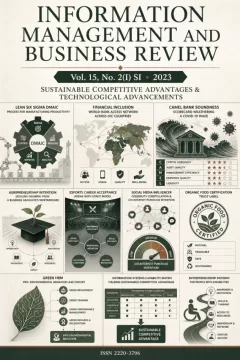 Vol. 15 No. 2(I)SI (2023)
Sustainable Competitive Advantages & Technological Advancements
View issue contents
Published
Submissions
Have research to publish? Information Management and Business Review welcomes submissions.
Make a Submission