Articles 1–10 of 21

  • Article 1 in this issue

    Lean Six-Sigma Approach for Sub-Contract Licensing and its Process Improvement across the Manufacturing Supply Chain using GUT Priority Matrix

    • Author: Veera Pandiyan Kaliani Sundram, Farha Ghapar, Mohd Firdaus Osman, Chew Li Lian, Azlina Muhammad

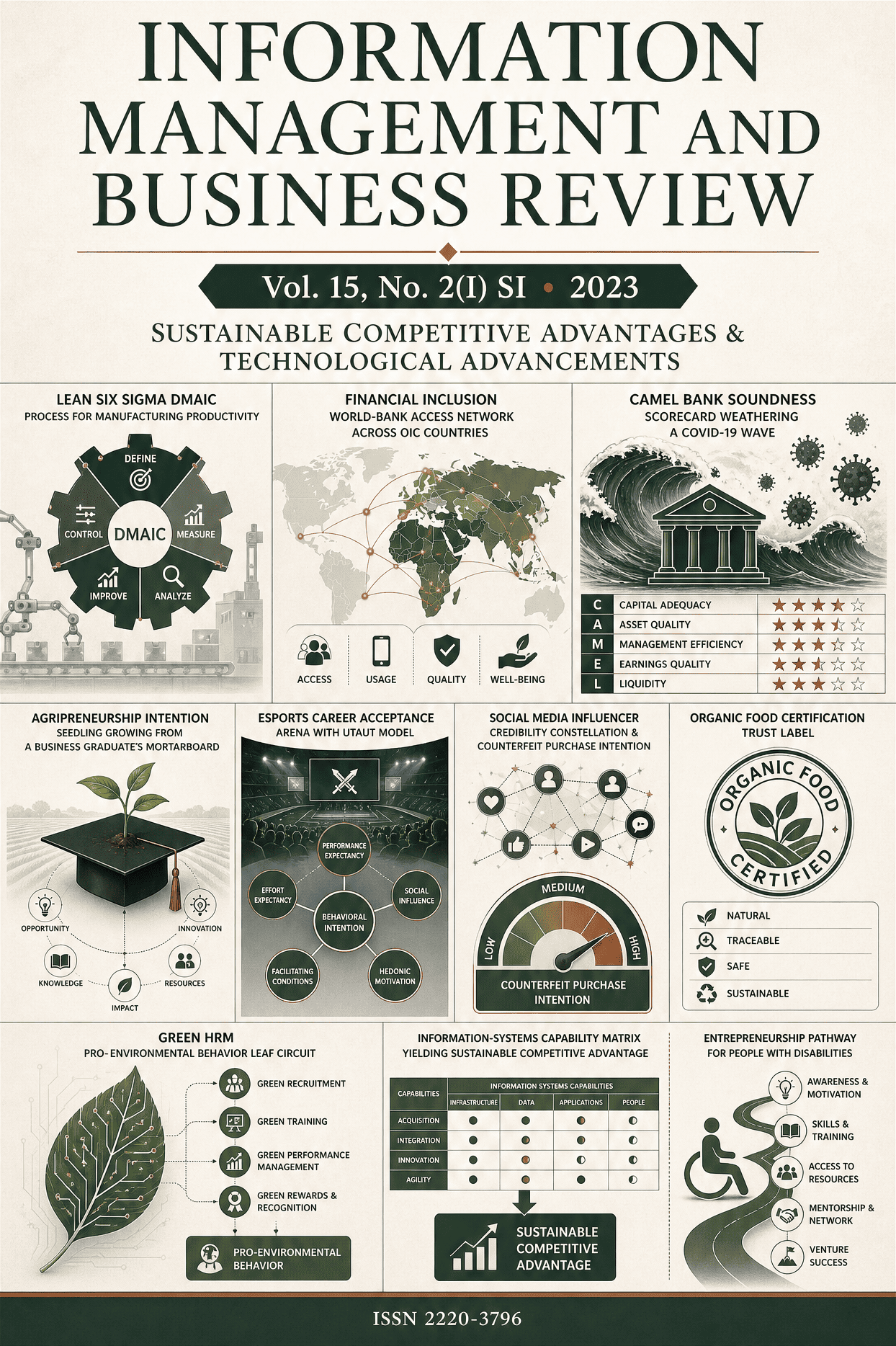
    This study aims to examine how Lean Six Sigma as a quality management tool could enhance productivity in a manufacturing organization, ZITRON. In addition, this study also aims to show how DMAIC (defined, measured, analyzed, improved and controlled) is operationalized for overall process improvement in ZITRON manufacturing. Lean management takes care of waste across all processes and focuses on speed and time within a firm while Six Sigma is a strategy that focuses on eliminating defects, reducing costs and also reduces process variability. As such, this study utilizes the Lean Six-Sigma approach as a tool to ensure more efficiency is achieved in terms of source, make, delivery and process efficiency. Methodologically, there are five phases in the Lean Six Sigma strategies which are defined, measured, analyze, improve and controlled (DMAIC). The findings show that Lean Six Sigma can help to eliminate waste, and cost-reduction, and help eliminate variations in processes within the manufacturing. However, SIX SIGMA tools have been used to solve the problem which is a delay in processes in manufacturing. Based on this research paper, focuses on the manufacturing problem which is a delay in processes. By using Six Sigma, the problem that existed in manufacturing has been solved through process improvement. This work is originally following a self-method in which the data is collected by using observation techniques to identify the existing problem and solution-seeking within the manufacturing.

    Pages 1-8

    PDF - Lean Six-Sigma Approach for Sub-Contract Licensing and its Process Improvement across the Manufacturing Supply Chain using GUT Priority Matrix (opens in a new tab)
  • Article 2 in this issue

    Determinants of Financial Inclusion in OIC Countries

    • Author: Nur Diniey Ezzati Zainorin, Syuhada Jalaludin, Nor Farradila Abdul Aziz, Balachandran Balasingam

    The OIC countries have endorsed financial inclusion as part of their initiatives to uphold the interests of the Muslim world. However, they experience the greatest levels of financial system exclusion, as they are found to have a lower percentage of access to formal bank accounts. Therefore, this study aims to investigate the determinants of financial inclusion in OIC nations. Macroeconomic factors (GDP and the money supply) and bank variables (non-performing loans and the number of internet users) covering the year 2011 to 2020 from 40 OIC nations are included in this paper. Using panel data, the results indicate that both bank variables are positively significant in determining financial inclusion for OIC countries. No significant relationship is found between studied macroeconomic factors and financial inclusion.

    Pages 9-16

    PDF - Determinants of Financial Inclusion in OIC Countries (opens in a new tab)
  • Article 3 in this issue

    The Economic Theory Assumption and Utility Maximization Model: The Perspective of Zakat Compliance Behavior

    • Author: Mohd Rahim Khamis, Mohd Faizal bin Kamarudin

    The dearth of studies on the economic theory and model from the perspective of zakat compliance behavior is hardly found in the literature and empirical evidence as well. Numerous studies have been explained through utility maximization and compliance behavior especially in the context of taxation based on the economic theory assumption. Discussion on compliance behavior has two basic theories that are associated with compliance; firstly, the psychological and sociological theory, and secondly, the economic theory that is always used to discuss compliance behavior in taxation. Due to that, this study aims to discuss the relevant economic theory and model from the perspective of zakat compliance behavior. In reviewing the relevant literature, this article provides a discussion on economic theory and model as a basis for explaining zakat compliance which includes a number of aspects like the economic aspect, psychological and sociological aspects as well as the Islamic aspect as previously suggested by some studies. Additionally, it demonstrates that economic theory and model also can be used to discuss Zakat compliance behavior and not purposely in the taxation system. Based on the discussion, this study will hopefully shed some light that even though the theory and model mainly discuss conventional perspectives such as the taxation system but it’s also can be adapted to discuss on Islamic perspective with some modification.

    Pages 17-34

    PDF - The Economic Theory Assumption and Utility Maximization Model: The Perspective of Zakat Compliance Behavior (opens in a new tab)
  • Article 4 in this issue

    Agripreneurial Intention among Young Business Graduates

    • Author: Noorita Mohammad, Nani Ilyana Shafie, Intan Syafinaz Mat Shafie, Basri Badyallina, Mardhiah Mohammad

    The low level of public involvement in the agricultural sector in many developed and developing countries have led to a magnitude of the food security crisis. Malaysia has a large proportion of young people and has a high rate of youth unemployment. One answer is to encourage recent graduates to start businesses in the agriculture sector. This article presents data that examined the intention of the young graduate to venture into the agricultural sector, using attitude, social norms, and perceived behavioral control to solve the current food security crisis. Data was collected from young graduates who have taken business and entrepreneurship courses at the university. A self-administrated online questionnaire was designed and distributed to these young people. This study contributes to the insight into the young generation of graduates’ intention to venture into the agricultural sector as well as provides suggestions or recommendations for future studies.

    Pages 35-43

    PDF - Agripreneurial Intention among Young Business Graduates (opens in a new tab)
  • Article 5 in this issue

    Recent Development on Information System Capabilities and Sustainable Competitive Advantages: A Research Model, Review and Directions for Future Research

    • Author: Abdul Ismail Hj Mohd Jawi, Malvern Abdullah, Chung Siew Mee @ Ellen Chung

    In today's competitive environment, maintaining a competitive advantage to achieve high performance is a significant challenge for businesses. To succeed, organizations must not only develop competencies in their focus areas but also be able to adapt, change, and realign those competencies in a dynamic and competitive corporate environment. As a result, information system (IS) capabilities are growing in significance as a strategic element that supports the development of competitive advantages and organizational survival. By examining the gap from the prior research, this study intends to answer questions about the link between information system (IS) related capabilities and the sustainable competitive advantages of an organization. The dimensions of information system capabilities (Personnel capability, Administrative capability, Infrastructure capability, and Information management capability) are factors that could explain a firm's sustainable competitive advantage and the theory of dynamic capability is used as the guiding theory, as guidance, and to support the conceptual framework. This will clarify how firms may use their resources and capabilities to boost the effectiveness and utilization of information systems (IS) in daily operations, processes, and people's performance.

    Pages 44-56

    PDF - Recent Development on Information System Capabilities and Sustainable Competitive Advantages: A Research Model, Review and Directions for Future Research (opens in a new tab)
  • Article 6 in this issue

    Development, Validity and Reliability of a Questionnaire on Psychological Factors of Organic Food Consumption among Malaysian Adults

    • Author: Nur Aqilah Amalina Jaafar, Norhasmah Sulaiman, Mohd Redzwan Sabran, Shamsul Azahari Zainal Badari

    People believe organic food is safer and healthier since it limits the use of synthetic chemicals as agricultural inputs, which has increased global demand for it. However, it has been reported that Malaysians' actual consumption of organic food is low, despite their great intention to do so. Much previous research has proposed trust in organic food labeling and certification as a potential cause of the intention-behavior gap. However, empirical data to support this view is still lacking. This study aims to develop and validate a questionnaire to assess Malaysians' intention and actual consumption of organic food, along with its factors, using the Theory of Planned Behavior (TPB) with trust as an additional construct. Before the study, the questionnaire was pre-tested for face validity by five expert panels. This cross-sectional study gathered 119 usable self-administered questionnaires completed by Malaysian adults aged 18 to 64. The construct validity was evaluated using exploratory factor analysis (EFA) with principal component analysis (PCA), and varimax rotation. There was a three-factor solution for the attitude construct namely health, food safety, and environmental concern, while only one-factor solution for subjective norm, perceived behavioral control, trust, intention, and actual consumption of organic food. Each construct had a minimum Cronbach's alpha of .70. The questionnaire is a valid and reliable instrument that can be used in larger study settings to further understand the psychological factors of organic food consumption among Malaysian adults to promote more sustainable food consumption in this nation.

    Pages 57-69

    PDF - Development, Validity and Reliability of a Questionnaire on Psychological Factors of Organic Food Consumption among Malaysian Adults (opens in a new tab)
  • Article 7 in this issue

    The Determinants among Muslim Contributors to Adopt Shariah Funds Decision: Evidence of Employees Provident Fund

    • Author: Nurul Afiqah Roslee, Norzanah Mat Nor, Mohammad Firdaus Mohammad Hatta

    Malaysia is one of the world's Islamic financial centres and it is working hard to enhance Shariah governance in the Islamic financial sectors. Shariah Savings introduced on 8th August 2016 is an initiative by the Employee Provident Fund (EPF) allowing investors to determine whether or not their funds should be handled and invested according to Shariah principles. Despite the effort by the Employee Provident Fund (EPF) to promote investment in the Sharia Compliant saving, the Muslim of EPF members' is still low. Hence, increasing EPF Muslim members' investment is a major challenge. Thus, this study aimed to fulfil this gap by examining the Planned Behaviour Theory with additional variables (religiosity, investment knowledge, and risk propensity) mediated by awareness towards investment decisions among EPF Muslim contributors in Malaysia. Questionnaire surveys were utilized in a quantitative research strategy to collect data. Using purposive sampling procedures, data was collected from 295 Muslim members who stick with EPF conventional savings and analyze by using the Partial Least Square Structural Equation Modelling (PLS-SEM).

    Pages 70-80

    PDF - The Determinants among Muslim Contributors to Adopt Shariah Funds Decision: Evidence of Employees Provident Fund (opens in a new tab)
  • Article 8 in this issue

    Factors Influencing Green Product Purchase Behavior among University Putra Malaysia Students

    • Author: Zuroni Md Jusoh, Thaneswary A/P Mahalingam

    The issue of the environment such as increasing sea levels, air pollution, water pollution, and climate change, are affecting people all over. Since early times, human beings have been experiencing environmental degradation due to the development activities due to the rise of civilizations. A green product is designed to have as little environmental impact as possible over its entire life cycle, including after it is no longer being used. This study examines the factors influencing green product purchase behaviour among University Putra Malaysia (UPM) students. A total of 260 respondents were selected from the University of Putra Malaysia by using simple random sampling. The data was collected by using the administered questionnaire. The results of multiple linear regressions showed that the adjusted R2 is 0.438, indicating that the variance of the dependent variable was explained by the knowledge, attitude, social appeal and emotional value. The result also showed only three variables were influencing; emotional value (ß =.333, p ≤ 0.01) was the most influential factor, followed by knowledge (ß =.303, p ≤ 0.01) and attitude (ß =.160, p ≤ 0.01) among UPM students towards the green product purchase behaviour. This study concluded that emotional value, knowledge, and attitude were among the factors influencing green product purchase behaviour. Future research is recommended to conduct this study on other University students in Malaysia with larger samples and also can focus on the other factors which influence the students on green product purchase behaviour.

    Pages 81-90

    PDF - Factors Influencing Green Product Purchase Behavior among University Putra Malaysia Students (opens in a new tab)
  • Article 9 in this issue

    A Conceptual Paper on the Relationship between GHRM and Pro-Environmental Behavior via Employee Empowerment

    • Author: Nurul Fazlin Abdul Rahman, Zuraina Dato’ Mansor

    This conceptual study is based on literature reviews related to green human resource management (GHRM), employee empowerment, and pro-environmental behavior (PEB) at the workplace. Business activities in small and medium enterprises or corporations, including agriculture, will impact the ecosphere. The impact suggests the importance for organizations to focus their concerns on PEBs to reduce the negative environmental impact of their ignorance of green practices. Organizations may use GHRM to efficiently provide and execute environmentally friendly policies since it can track and impact employee environmental behavior. The present study aimed to investigate for future research whether employee empowerment mediates the relationship between the GHRM and PEB at the workplace from the perspective of the AbilityMotivation-Opportunity (AMO) Theory, specifically among agricultural companies in Malaysia. The study continued to explore the concepts, issues, and objectives through several works of literature in numerous areas. This conceptual paper signifies supplementing works of literature as a future reference for academics. The outcome of this study can offer information to agricultural companies on the ways to leverage GHRM and employee empowerment to promote PEB in the workplace.

    Pages 91-97

    PDF - A Conceptual Paper on the Relationship between GHRM and Pro-Environmental Behavior via Employee Empowerment (opens in a new tab)
  • Article 10 in this issue

    Factors Affecting Financial Well-being of Millennials: A Systematic Review

    • Author: Ma. Jesusa Corazon M. Lambert, Zuroni Md Jusoh, Husniyah Abd Rahim, Norzalina Zainudin

    Financial well-being (FWB) refers to a status of an individual equipped with adequate resources to live life comfortably. Millennials, a cohort born in 1980-2000, fared less well financially than other generations. This article attempted to look into the existing body of knowledge to provide a comprehensive understanding of the factors affecting FWB among millennials. Employing a combined PICO and SPIDER tools, fifteen articles have been identified and subsequently, five themes were developed affecting FWB among millennials such as financial behavior and financial literacy, personal traits, social and economic environment, and life stage attributes. Among these identified factors, financial literacy is considered to be the strongest as higher financial literacy translates into better handling of finances, resulting in surplus and therefore better FWB. Financial behavior and financial attitude are also important as they involve skills, motivation, and confidence to apply knowledge and understanding. Personality traits equally remained as strong predictors along with social and economic environment factors as well as social support from firms and institutions which significantly affect financial well-being. This research will enable millennials to improve their financial lives. In the pursuit of improving their financial well-being, individuals make financial decisions to grow their assets and protect their resources and alleviate financial crises. Overall, this paper has demonstrated the factors that substantially determine FWB among millennials. It is recommended that relevant research be done to verify the factors identified in this study.

    Pages 98-108

    PDF - Factors Affecting Financial Well-being of Millennials: A Systematic Review (opens in a new tab)