Abstract
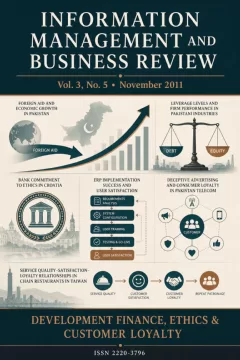
This study is an attempt to interrogate the effects of deceptive advertising on consumer loyalty in telecommunication industry of Pakistan. Four variables, Call Charges (CC), Network Coverage (NC), Network Quality (NQ) and Customer Service (CS) were used to measure deception in Telecom Ads and then its effect on consumer loyalty while the consumer preference is used as the proxy of consumer loyalty. 10,000 random individuals from telecom industry were selected to conclude the results. Testing specification confirmed that the deception overwhelmingly exists in telecom ads and none of the telecom companies were providing exactly the same quality of service in terms of Call Charges, Network Coverage, Network Quality and Customer Service, as they promise in their advertisements, while, the consumers are inclined towards the services where the deceptions are seemingly meager.
Keywords
- Advertising Search this journal for Advertising (opens in a new tab)
- Deceptive Advertising Search this journal for Deceptive Advertising (opens in a new tab)
- Consumer Loyalty Search this journal for Consumer Loyalty (opens in a new tab)
- Telecommunication Search this journal for Telecommunication (opens in a new tab)
References
- Aaker, D. A. (1974). Deceptive advertising, Consumerism: Search for the consumer interest, Free Press: New York.
- Assael, H. (1998) . Consumer behavior and marketing in action, Cincinnati, OH: South-Western.
- Boush, D. M. (1994). Adolescent skepticism toward TV advertising and knowledge of advertiser tactics. Journal of Consumer Research , 21, 165-175.
- Campbell, M. C. (1995). When attention-getting advertising tactics elicit consumer inferences of manipulative intent: the importance of balancing benefits and investments. Journal of Consumer Psychology , 4, 222234.
- Gupta, S. (1988). An Integrated Model of Inter-purchase Time, Brand Choice, and Purchase Quantity. Journal of Marketing Research , 25, 342-355.
- Howard, J. A. (1974). The Dialogue That Might Have Happened, in Advertising and the Public Interest. American Marketing Association, 27-33.
- Jerry, C. O. (1978). Cognitive Effects of Deceptive Advertising. Journal of Marketing Research , 15, 29-38.
- Urban, G. L. (2004). The emerging era of customer advocacy. MIT Sloan Management Review, 45, 77-82.
Downloads
No downloads have been recorded for this article yet. Figures appear here once readers begin downloading the full text.
How to Cite
Share this article
License
Copyright (c) 2011 Syed Akif Hasan, Muhammad Imtiaz Subhani, Ana Mateen (Author)

This work is licensed under a Creative Commons Attribution 4.0 International License.
Author (s) should affirm that the material has not been published previously. It has not been submitted and it is not under consideration by any other journal. At the same time author (s) need to execute a publication permission agreement to assume the responsibility of the submitted content and any omissions and errors therein. After submission of revised paper in the light of suggestions of the reviewers, the editorial team edits and formats manuscripts to bring uniformity and standardization in published material.
This work will be licensed under Creative Commons Attribution 4.0 International (CC BY 4.0) and under condition of the license, users are free to read, copy, remix, transform, redistribute, download, print, search or link to the full texts of articles and even build upon their work as long as they credit the author for the original work. Moreover, as per journal policy author (s) hold and retain copyrights without any restrictions.
Keywords
- Advertising Search this journal for Advertising (opens in a new tab)
- Deceptive Advertising Search this journal for Deceptive Advertising (opens in a new tab)
- Consumer Loyalty Search this journal for Consumer Loyalty (opens in a new tab)
- Telecommunication Search this journal for Telecommunication (opens in a new tab)
Section
Published
Submissions
Have research to publish? Information Management and Business Review welcomes submissions.
Make a Submission