Abstract
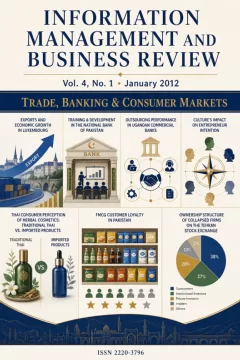
The purpose of this study is to explore the training & development practices in National Bank of Pakistan (NBP). Different levels of officers are providing training & development opportunities in NBP. Data collected from different staff colleges of NBP. Result of this study shows, bank is providing training & development opportunities to its employees, but there is still gap which should be addressed. Training need analysis is not sufficient. Most of the trainers belong to operational background and they are unable to provide the sufficient training to develop the good employees. Bank does not have sufficient T&D plan for the top-level management.
Keywords
References
- Andrew, S. & Erica, S. (2007). The Role of Training in the Development of Human Resource Management in Australian Organizations. Human Resource Development International , 10(3), 263–279.
- Bernice, S., Sweden, U. & Birgitta, L. (2011). Different development programmes – does it make a difference? Leadership in Health Services , 24(1), 29-50.
- Brian, J. H. (2011). Simulation training methods to develop cultural awareness. Journal of industrial and commercial training , 43(4), 199-205.
- Frederick, B. J. A. N. & Stephen, O. O. (2010). Teachers’ perceptions of staff development programmes as it relates to teachers effectiveness: A study of rural primary schools in Kenya. Educational Research and Review , 5(1), 001-009, 12.
- Greg, G. W., William, J. R. & Judy, Y. S. (2009). Management development in China: a policy analysis. International Journal of Training and Development , 13(4), 1360-3736.
- Iqbal, Z. M. & Khan, A. R. (2011). The growing concept and uses of training needs assessment: A review with proposed model. Journal of European Industrial Training, 35(5), 439-466.
- Kate, H., Cherrie, J. Z., Brian, K. C., Yiming, Z. & Sijun, S. (2009). Perceptions of the effectiveness of training and development of ‘grey-collar’ workers in the People’s Republic of China. Human Resource Development International , 12(3), 279–296.
- Karl, P., Alan, C. & Nigel, G. (2010). Formal Development Opportunities and Withdrawal Behaviors by Employees in Small 281–30.
- Keith, B. (2011). The challenges for sustainable skills development in the UK automotive supply sector: Policy and implementation. Management Research Review , 34(1), 133-147.
- Lisa, D., Paul, E. T. & In-Sue, O. (2009). Understanding managerial development: Integrating developmental assignment, Learning orientation, and access to developmental Opportunities in predicting Managerial competencies. Academy of Management Journal , 52(4), 731–743.
- Melissa, A. V. (2010). Using Technology to Deliver Career Development Services: Supporting Today's Students in Higher Education. The National Career Development Association , 59, 87- 93.
- Naris, S. N. & Ukpere, W. I. (2009). The effectiveness of an HR code: Staff development and training at the Polytechnic of Namibia. African Journal of Business Management , 3(12), 879-889.
- Olivia, K. & Leonidas, M. (2010). Training and development in British hospitality, tourism and leisure SMEs”, Managing Leisure ISSN 1360-6719 online # 2010 Taylor & Francis.
- Oluseyi, A. S. (2010). Influence of workers’ training programmes on conflict reduction in industrial organizations in Nigeria. African Journal of Business Management , 4(7), 1240-1246.
- Traci, S. & Katherine, E. (2010). Self-Assessment of Knowledge: A Cognitive Learning or Affective Measure? Academy of Management Learning & Education , 9(2), 169–191.
Downloads
No downloads have been recorded for this article yet. Figures appear here once readers begin downloading the full text.
How to Cite
Share this article
License
Copyright (c) 2012 Abdul Qayyum, Muhammad Tariq Sharif, Awais Ahmad, Murad Shuaib Khan, Kashif-Ur-Rehman (Author)

This work is licensed under a Creative Commons Attribution 4.0 International License.
Author (s) should affirm that the material has not been published previously. It has not been submitted and it is not under consideration by any other journal. At the same time author (s) need to execute a publication permission agreement to assume the responsibility of the submitted content and any omissions and errors therein. After submission of revised paper in the light of suggestions of the reviewers, the editorial team edits and formats manuscripts to bring uniformity and standardization in published material.
This work will be licensed under Creative Commons Attribution 4.0 International (CC BY 4.0) and under condition of the license, users are free to read, copy, remix, transform, redistribute, download, print, search or link to the full texts of articles and even build upon their work as long as they credit the author for the original work. Moreover, as per journal policy author (s) hold and retain copyrights without any restrictions.
Keywords
Section
Published
Submissions
Have research to publish? Information Management and Business Review welcomes submissions.
Make a Submission