Articles

  • Article 1 in this issue

    Local Government: Getting the South African Municipal Finances Right

    • Author: Gezani Mazibuko

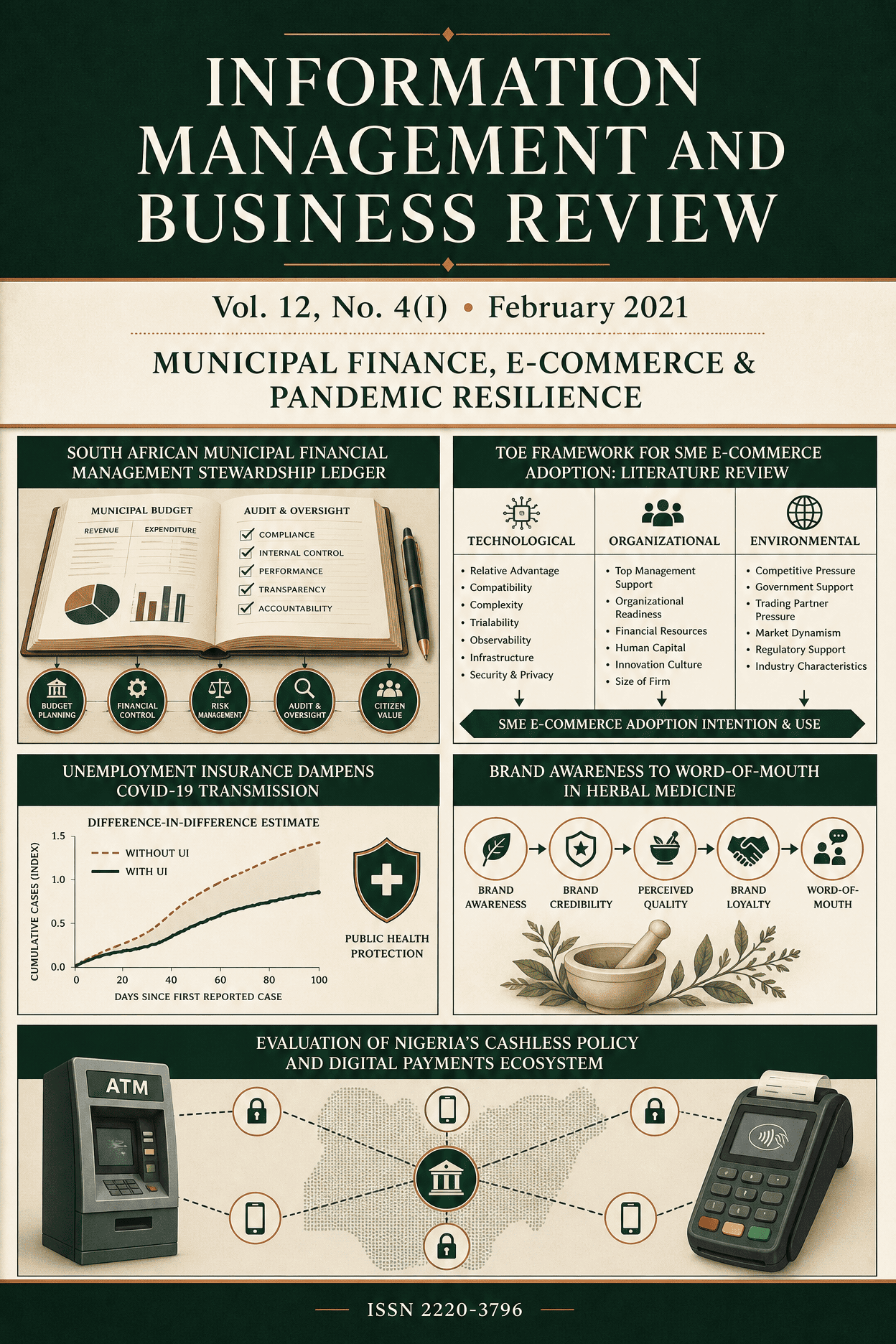
    Local government in South Africa from Musina to Cape Town have faced strategic financial management challenges of budget shortfalls, financial shambles and distress, leading to unmaintained infrastructure, deteriorating services quality, increasing municipal deprivation and intensifying social exclusion which is the unfortunate history of many municipalities. Municipal effective control leads to design, muster and fiscal wealth may accumulate effective approaches that accomplish its duty to be answerable to its inhabitants. Financial control and stewardship are preceded by the interconnected management facets towards augmenting the growing design, catalytic and hands-on route. Financial control is facilitated by effective reporting and auditing is chiefly paramount for accountability in the local government environment. Weak municipal management accountability and oversight institutions prevailing in local government compromise its integrity and a potential loss to the public’s confidence. Local government is confronted, by municipal fiscal administration morass and forgone fiscal reserves. The efficient budget implementation should conform to the will of the legislature’s authorizations. The financial position of municipalities in terms of the business model represents assets, liabilities and equity and displays the financial health at a specific time. The community and major stakeholders use financial statements to determine the financial position of any organization. The financial position and health determine how efficiently a municipality is expanding its resources and investment. This paper seeks to close the gap that other studies have not ventured to. This paper qualitatively and descriptively explores municipal financial management enigma and proposes a turnaround to get local government finances right.

    Pages 1-11

    PDF - Local Government: Getting the South African Municipal Finances Right (opens in a new tab)
  • Article 2 in this issue

    E-Commerce Adoption by Small Medium Enterprises: An Extensive Literature Review

    • Author: Khoirul Aswar, Ermawati

    This study aims to review academic research work carried out in the field of e-commerce adoption. The e-commerce area has been classified into three broad categories, namely technological context, organizational context and environmental context. Finally, this study identifies the important role of SMEs, an overview of e-commerce technology and the adoption of e-commerce. This study collected 52 research studies in the field of e-commerce. This research provides a systematic review of the above studies. This study classifies 3 important factors in e-commerce adoption, namely technology, organization and environmental factors. This study identifies that to increase the success of e-commerce, it is necessary to consider the determinants of e-commerce adoption so that e-commerce players can excel in the competition. This study will make a positive contribution to understanding e-commerce adoption for academics, industry, regulators, and other e-commerce users.

    Pages 12-18

    PDF - E-Commerce Adoption by Small Medium Enterprises: An Extensive Literature Review (opens in a new tab)
  • Article 3 in this issue

    The Buffering Effects of Social Insurance for the Spread of Covid-19

    • Author: Moein Mirani AhangarKolaei, Eser Demir, Tolga Constantinou, Mostafa Toranji, Tadashi Adino, Nasrin Tavassoli, Atefeh Noghani

    Global pandemics are associated with substantial losses of human capital. The best strategy of policymakers in public health before a population-wide vaccination is to reduce the outbreak of the disease and finding ways to alleviate its negative consequences in society. Previous studies show that welfare programs have externalities in unintended areas and for unplanned outcomes including a wide range of health outcomes. In this paper, we show that payments under the Unemployment Insurance (UI) program have the potential to reduce the spread of the novel coronavirus. Applying a difference-in-difference technique on a monthly data of all US counties from January 2020 to January 2021, we document that the social insurance under the umbrella of UI payments can reduce the transmission rate of Covid-19. The results show heterogeneity across subsample with the largest effects among blacks, poor, and low educated regions.

    Pages 19-27

    PDF - The Buffering Effects of Social Insurance for the Spread of Covid-19 (opens in a new tab)
  • Article 4 in this issue

    The Effect of Brand Awareness, Credibility, Quality and Loyalty on Word-of-Mouth in a Competitive Medicine Market

    • Author: Peter Kwasi Oppong

    Brands with a high level of awareness, credibility, quality and loyalty provide a platform for strengthening customers` favourable word-of-mouth, which may contribute to increasing market share in a competitive environment. However, there is few or no research on the effect of awareness, credibility and quality on word-of-mouth through the impact of attitudinal loyalty and behavioural loyalty, particularly in the traditional medicine market. Consequently, this research aims to evaluate the effect of awareness, credibility and quality on word-of-mouth via the impact of the dimensions of loyalty in the traditional medicine market. Survey questionnaires were administered to 265 customers chosen from the traditional medicine market through a systematic sampling strategy. The data collected were statistically analyzed using structural equation modelling through SPSS Amos 20. The study revealed that awareness, credibility and quality positively influence word-of-mouth through the impact of behavioural loyalty. The research further found that awareness and credibility significantly influence positive word-of-mouth through the impact of attitudinal loyalty in the traditional medicine market. Therefore, this paper extends the prior studies by exhibiting the potential role of brand awareness, credibility and quality in strengthening word-of-mouth through the impact of attitudinal loyalty and behavioural loyalty, particularly in the traditional medicine market. This paper also advances managers` knowledge about creating and exploiting brand awareness, credibility, perceived quality, attitudinal loyalty and behavioural loyalty to increase positive word-of-mouth in the traditional medicine market.

    Pages 28-38

    PDF - The Effect of Brand Awareness, Credibility, Quality and Loyalty on Word-of-Mouth in a Competitive Medicine Market (opens in a new tab)
  • Article 5 in this issue

    Evaluation of Cashless Policy in Nigeria: The Pros and Cons

    • Author: Stephen O. Maitanmi, Adetunji O., Joshua, A. A.

    The essence of this paper is to evaluate the practice of cashless policy that was introduced almost a decade ago in Nigeria. It was discovered through literature that the security threats of ATM users and the inappropriate use of POS are at an alarming rate. The paper used a structured questionnaire to collect data and the data were analyzed using descriptive statistics with the use of mean, median, and percentage. The results indicate that the awareness level is almost globally known, however; there are still more technological devices and development that are needed for Nigerians to be considered among the top 20 economies to drive the development and modernization of her payment system in line with the global vision. Based on the findings, some recommendations made were: POS should be approved only for the unbanked areas, panic alert buttons should be included in the ATMs, and comprehensive insurance should be available for ATM cash hijackers.

    Pages 39-46

    PDF - Evaluation of Cashless Policy in Nigeria: The Pros and Cons (opens in a new tab)