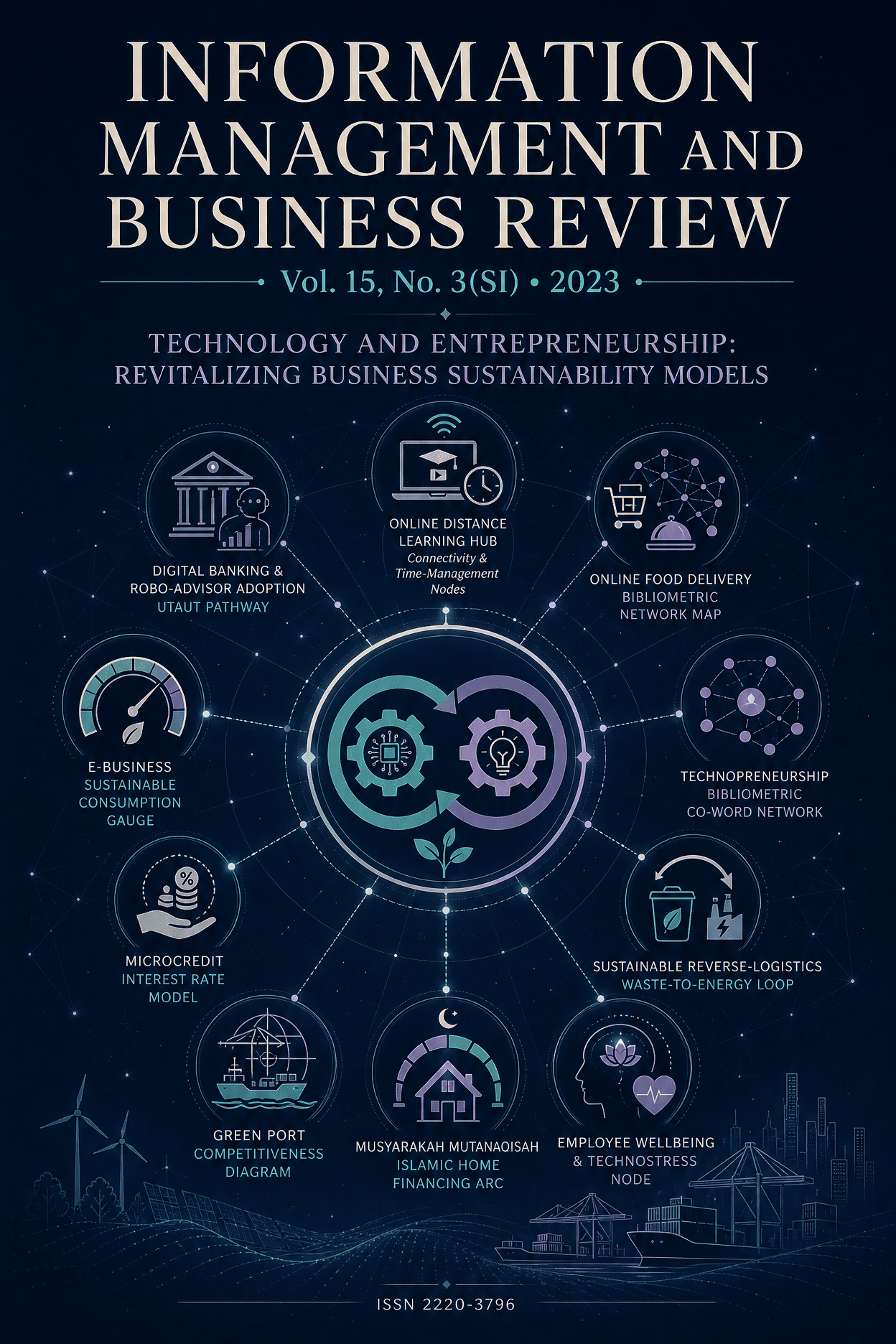
Articles 21–30 of 55

  • Article 21 in this issue

    The Influence of Social Media on Self-Esteem among International Business Students in One of the Public Universities

    • Author: Nor Lelawati Jamaludin, Nur Zania Azurin Abdullah Sani, Mohd Syamim Che Muhamad Hariri, Syed Ashrene Syed Omar

    Over the past few decades, there has been a remarkable expansion of Information Communication Technology (ICT), leading to significant changes in our lives as we advance in years. Internet addiction has become a major global concern, with the number of affected individuals increasing daily. The Internet has become the primary source of knowledge, and the exponential rise in students' engagement with social media is a noteworthy phenomenon. However, it cannot be overlooked that students are spending more time on social media than on their studies, which can hurt their exam performance unless they allocate more time to learning. Therefore, this paper explores the extent to which factors of social media usage and social media addiction influence self-esteem. The target respondents were among the 97 students of Part 5 in the international business program in UiTM. The objective of this study is to investigate factors of low self-esteem among teenagers (IB students) which it narrows down to the following aim; to identify the relationship between the usage of social media and low self-esteem and to measure the relationship between social media addiction and low self-esteem. The finding of this study revealed that social media addiction has positively influenced the teenager’s self-esteem. Consequently, the result of this study is hoped to help future research to do relevant & further study on social media associated with self-esteem. Besides that, it also gives recommendations to teenagers to foster healthier digital habits and strike a balance between online activities and their daily responsibilities.

    Pages 179-186

    PDF - The Influence of Social Media on Self-Esteem among International Business Students in One of the Public Universities (opens in a new tab)
  • Article 22 in this issue

    Preferred Sporting Tourism Events Attributes among Sports Tourists

    • Author: Wan Soraya binti Wan Abdul Ghani, Raziff Jamaluddin, Masrur Mohd Khir

    Sports tourism has emerged as a prominent and dynamic segment within the broader event, travel and tourism industry. Amidst this growth, understanding the attributes influencing sports tourists' attendance at sporting events has become paramount for event organizers, destination marketers, and policymakers. Hence, this study aims to investigate the attributes of sporting tourism events that influence sports tourists' attendance. By analyzing the attributes that hold the most significance for sports tourists when selecting from various sporting tourism events, this research aims to contribute valuable insights into the sports tourism industry. A questionnaire was used as the main instrument in the data collection process. 302 online surveys in Google Form format were distributed among sports tourists using a purposive sampling technique. The data collected were analyzed using SPSS version 28. The result indicated that most respondents preferred scenic views and value for money offered at sporting tourism events. By shedding light on the interplay between sporting tourism events attributes and sports tourists' behavior, this research seeks to make a meaningful contribution to the sustainable growth and development of the sports tourism industry.

    Pages 187-196

    PDF - Preferred Sporting Tourism Events Attributes among Sports Tourists (opens in a new tab)
  • Article 23 in this issue

    Online Food Delivery Sentiment Analysis from the Restaurant Point of View

    • Author: Anuar Sulaiman, Abdul Khabir Rahmat, Irwan Ibrahim, Fadilah Jamaludin

    Online food ordering has brought about a significant transformation in the food delivery landscape of Malaysia, facilitated through digital platforms such as websites and apps. This innovation has streamlined operations for restaurants, delivery personnel, and customers alike. While much research has focused on studying customer behavior, there remains a noticeable gap in understanding the perspectives of restaurants as they embrace these digital platforms to market their food offerings. This study seeks to bridge this gap by employing sentiment analysis. Through the analysis of 149 comments posted on social media groups frequented by restaurants utilizing online food platforms (referred to as vendors) in 2022, this research aims to comprehend the challenges faced by restaurants in this context. The sentiment analysis reveals the existence of seven primary categories of challenges. These encompass concerns related to regulatory policies, issues involving delivery personnel, challenges about the functioning of the online systems, difficulties arising from device usage, and matters concerning customer interactions. By delving into these categories, this research sheds light on the intricate array of challenges that restaurants encounter when participating as vendors on online food platforms. This comprehensive understanding contributes to a holistic comprehension of the hurdles faced by restaurants in adapting to this evolving landscape.

    Pages 197-204

    PDF - Online Food Delivery Sentiment Analysis from the Restaurant Point of View (opens in a new tab)
  • Article 24 in this issue

    Perceptions of Disability among University Students

    • Author: Saadiah Juliana Saadun, Mohd Zulkifli Abdullah, Mohammad Shahril Mohamed Besir, Aziz Jamal, Noor Zaihan Mat Hasan, Nor Azzura Nordin, Jazmin Qistina Imran Nanang

    Perceptions of disability are important constructs that influence not only the well-being of people with disabilities but also the moral compass of society. Negative attitudes toward disability can lead to social exclusion and isolation of people with disabilities, whereas positive attitudes promote social inclusion. The present study was conducted to examine the main predictors of disability perceptions among university students, provided that understanding these factors can help develop effective interventions to improve students’ attitudes toward peers with disabilities and reduce intergroup prejudice. Using 110 responses from university students at a public university, the study found that knowledge and exposure contribute significantly to perceptions among university students. Management of the university plays a critical role in shaping positive perceptions by facilitating meaningful interactions with people with disabilities, promoting disability awareness and education, and creating an environment that values diversity.

    Pages 205-211

    PDF - Perceptions of Disability among University Students (opens in a new tab)
  • Article 25 in this issue

    Exploring Online Food Delivery: An Examination through Bibliometric and Visualization Analysis

    • Author: Anuar Sulaiman, Abdul Khabir Rahmat, Abdul Hakim bin Abdul Razak

    The primary advantage of online food delivery lies in its capacity to provide convenient access to food anytime and anywhere, addressing the needs of today's fast-paced lifestyles. However, within the realm of "Online food delivery systems," a discernible research gap exists. This study aims to address this gap by offering a comprehensive bibliometric overview, shedding light on the current research landscape. Understanding this field's nuances is crucial for refining business strategies and advancing scholarly knowledge. Through a meticulous review of 255 publications spanning 2000 to 2022 and employing techniques such as keyword co-occurrence and co-authorship analysis, the study identifies influential authors, noteworthy journals, and emerging trends. This not only enriches academic discourse but also encourages collaboration and uncovers global research patterns. The insights gleaned from this study serve as a foundational cornerstone, deepening our understanding of the complexities inherent in online food delivery. By elucidating the existing body of knowledge, this research contributes significantly to the broader comprehension of this domain. Its impact resonates beyond academia, resonating with industries, policymakers, and consumers. It facilitates informed decision-making, ignites innovation, and aids in the formulation of effective strategies. In an era characterized by the rapid digital transformation of consumer behaviors, this research assumes a pivotal role in guiding the evolution of food delivery services. It aligns these services with the dynamic preferences and lifestyles of individuals, ensuring their continued relevance and effectiveness.

    Pages 212-221

    PDF - Exploring Online Food Delivery: An Examination through Bibliometric and Visualization Analysis (opens in a new tab)
  • Article 26 in this issue

    The Role of Logispreneurs in Advancing Waste Management in Malaysia: Towards a Sustainable Reverse Logistics and Green Future

    • Author: Azlina Muhammad, Babudass M. Naidu, Veera Pandiyan Kaliani Sundram, Muhammad Zaly Shah Muhammad Hussein, Li Lian Chew, Sisvan Gopalakrishna Pillai, Irwan Ibrahim

    Waste management has emerged as a critical challenge in Malaysia, driven by rapid urbanization, industrialization, and changing consumption patterns. In response to these challenges, logispreneurs, a new breed of entrepreneurs with expertise in logistics and supply chain management, have emerged as key players in transforming waste management practices in the country. This research explores the vital roles and contributions of logispreneurs in the context of waste management in Malaysia, focusing on their efforts to enhance efficiency, sustainability, and environmental responsibility. Through a simple literature analysis, this study highlights the multifaceted roles that logispreneurs play in shaping the waste management landscape. They pioneer integrated waste collection and transportation systems, leveraging advanced technologies and data analytics to optimize routes and reduce carbon footprints. Moreover, logispreneurs lead the way in establishing reverse logistics networks for recyclable materials, fostering excellent recycling rates and diverting substantial waste from landfills. Logispreneurs specialize in managing hazardous waste materials, and ensuring safe transportation and disposal while complying with environmental regulations. They also contribute to public awareness and education campaigns, raising consciousness about sustainable waste management practices nationwide. This study elucidates the pivotal role logispreneurs play in revolutionizing waste management practices in Malaysia. Their logistics expertise and environmental consciousness amalgam present a promising pathway toward a sustainable future. By optimizing supply chain efficiencies, driving innovation, and embracing social and environmental responsibility, logispreneurs are instrumental in building a resilient waste management ecosystem that ensures the preservation of Malaysia's natural resources and safeguards the well-being of its citizens for generations to come.

    Pages 222-228

    PDF - The Role of Logispreneurs in Advancing Waste Management in Malaysia: Towards a Sustainable Reverse Logistics and Green Future (opens in a new tab)
  • Article 27 in this issue

    Factors Affecting Personal Bankruptcy among Malaysians

    • Author: Norliza Che-Yahya, Nor Akila Mohd Kassim, Siti Sarah Alyasa-Gan, Beche Nediam Nori

    Malaysia faces higher bankruptcy cases involving personal bankruptcies among Malaysians despite increasing the threshold of a personal bankruptcy declaration. This research aims to study the factors influencing Malaysian personal bankruptcy, utilizing the macroeconomic aggregates as the determinants, which are inflation rate (IR), unemployment rate (UE), lending interest rate (LR), Gross Domestic Product (GDP) per capita and household final consumption expenditure (HFCE). This study uses a quantitative approach and time series analysis which includes a group of data from 1985 to 2021, i.e., 37 years of observations. The sample series of time frames is sufficient to assess the long-term relationship between the macroeconomic perspectives and personal bankruptcy. The data was analyzed using multiple linear regression analysis. The finding shows a significant negative relationship between Malaysian personal bankruptcy and unemployment rate, lending interest rate and household final consumption expenditure. In contrast, there is an insignificant relationship between Malaysian personal bankruptcy and the inflation rate.

    Pages 229-243

    PDF - Factors Affecting Personal Bankruptcy among Malaysians (opens in a new tab)
  • Article 28 in this issue

    Digital Banking Adoption Intention Model in Malaysia: A Pilot Study

    • Author: Siti Norbaya Mohd Rashid, Shereen Noranee, Azlin Zanariah Bahtar

    Digital banking is a form of self-service for consumers to obtain information and complete banking transactions via electronic banking. The transactions that are carried out will be conducted independently, eliminating the need to visit bank locations physically. Therefore, the objective of this study is to investigate the reflective measurement model of the adoption intention model for digital banking among individuals who already have bank accounts. In the course of this research, a pilot study was carried out in the Klang Valley, and it involved 55 people who had bank accounts. The data collected were then analyzed using Structural Equation Modelling with Partial Least Square (PLS) for the reflective measurement model. A total of 34 items are used to measure the six different dimensions, which are referred to as performance expectancy, effort expectancy, social influence, facilitating condition, hedonic motivation, and price value, respectively. The measurement of adoption intention then consists of 6 items. The finding showed that an assessment of factor loading, composite reliability, average variance extracted, and discriminant validity was carried out to validate the reliability and validity of the measuring items. This study is one of many that have been done to determine the factors that influence a person's desire to embrace a new technology or practice; however, this study looks at the topic from the user's point of view.

    Pages 244-250

    PDF - Digital Banking Adoption Intention Model in Malaysia: A Pilot Study (opens in a new tab)
  • Article 29 in this issue

    Impact of Internet Access and Accessibility Initiatives in Facilitating Students’ M40 and B40 Groups’ Needs during COVID-19 Prevention Measure Period

    • Author: Abdul Kadir Othman, Nur Najjah Abd Rahim, Norzawani Ibrahim, Nik Zirwatul Fatihah Ismail, Nur Amalina Abd Rahim, Tasnimul Islam

    Malaysia was badly hit by the COVID-19 pandemic starting in February 2020 and the first Movement Control Order (MCO) was announced a month later. Since then, almost all social and economic sectors have been affected including the education sector. Universities and schools have been closed and the process of teaching and learning has been conducted via online platforms. The problem emerged when not all students could afford to buy the equipment and subscription to the Internet, especially those who come from B40 and M40 groups. Realizing the urgent need to address the problem, the government agencies and a few corporate bodies including the Selangor State Government, TM, and Digi have come out with immediate solutions by providing special packages for the Internet data plans to B40, and M40 groups and students to ease their financial burden and more importantly to ensure that they are not left behind with regards to education. Nevertheless, the effectiveness of the initiatives has never been assessed. The purpose of this proposal is to review the impact of Internet Access and Accessibility Initiatives in Facilitating Students’ M40 and B40 groups’ needs during the COVID-19 Prevention Measure Period. By exploring the existing scholars from UTAUT model components and the effect of demographic profile towards behavioral intention, this research pursues to fill up the gap in the literature to review the impact of internet access among M40 and B40 groups of students. The proposed research design for this study is a quantitative approach, whereby this research will be conducted by distributing a survey questionnaire to those who have received the special packages for the Internet data plans. It is expected that the input from the respondents can be used to improve the effectiveness of these initiatives and to heighten the awareness among students on the importance of education for their future success.

    Pages 251-258

    PDF - Impact of Internet Access and Accessibility Initiatives in Facilitating Students’ M40 and B40 Groups’ Needs during COVID-19 Prevention Measure Period (opens in a new tab)
  • Article 30 in this issue

    The Integration of Knowledge and Theory of Planned Behavior towards Purchase Intention among Consumers

    • Author: Mohd Redhuan Dzulkipli, Siti Noorsuriani Maon, Annurizal Anuar

    Considering the rising cost of medicine in Malaysia, it is crucial to investigate the behavioral factors that influence the intent of consumers when selecting medicines. Thus, the main objective of this paper is to examine the influence of the Theory of Planned Behavior (TPB) and respondents’ knowledge on their intentions to purchase either generic or brand-name medicines. A cross-sectional survey research design was used in this study, involving consumers in various community areas in Selangor. Using a convenience sampling approach, a total of 444 respondents participated in this study. More than half of the respondents were female (63%) and Malay (73%). In regression analysis, the results showed that knowledge (p <0.001) and perceived behavioral control (p <0.001) were statistically significant for purchase intention toward generic and brand medicine. Though statistically significant, only 19% and 29% (knowledge and perceived behavioral control) of the respondents showed intention to purchase the generic medicine while a higher percentage of the respondents showed agreement to their purchase intention with 27% and 45% of the same variables for the purchase intention to the brand medicine. Knowledge and perceived behavioral control were found to be predictors of respondents’ intentions to purchase either generic or brand-name medicines. Apart from that, the perceived capacity to purchase is one of the factors that determine consumers’ purchase intent. The people’s awareness of the similarity between brand-name medicines needs to be increased, as well an individual’s ability to pay for the medicine should be explored in future research.

    Pages 259-266

    PDF - The Integration of Knowledge and Theory of Planned Behavior towards Purchase Intention among Consumers (opens in a new tab)