Articles 21–30 of 30

  • Article 21 in this issue

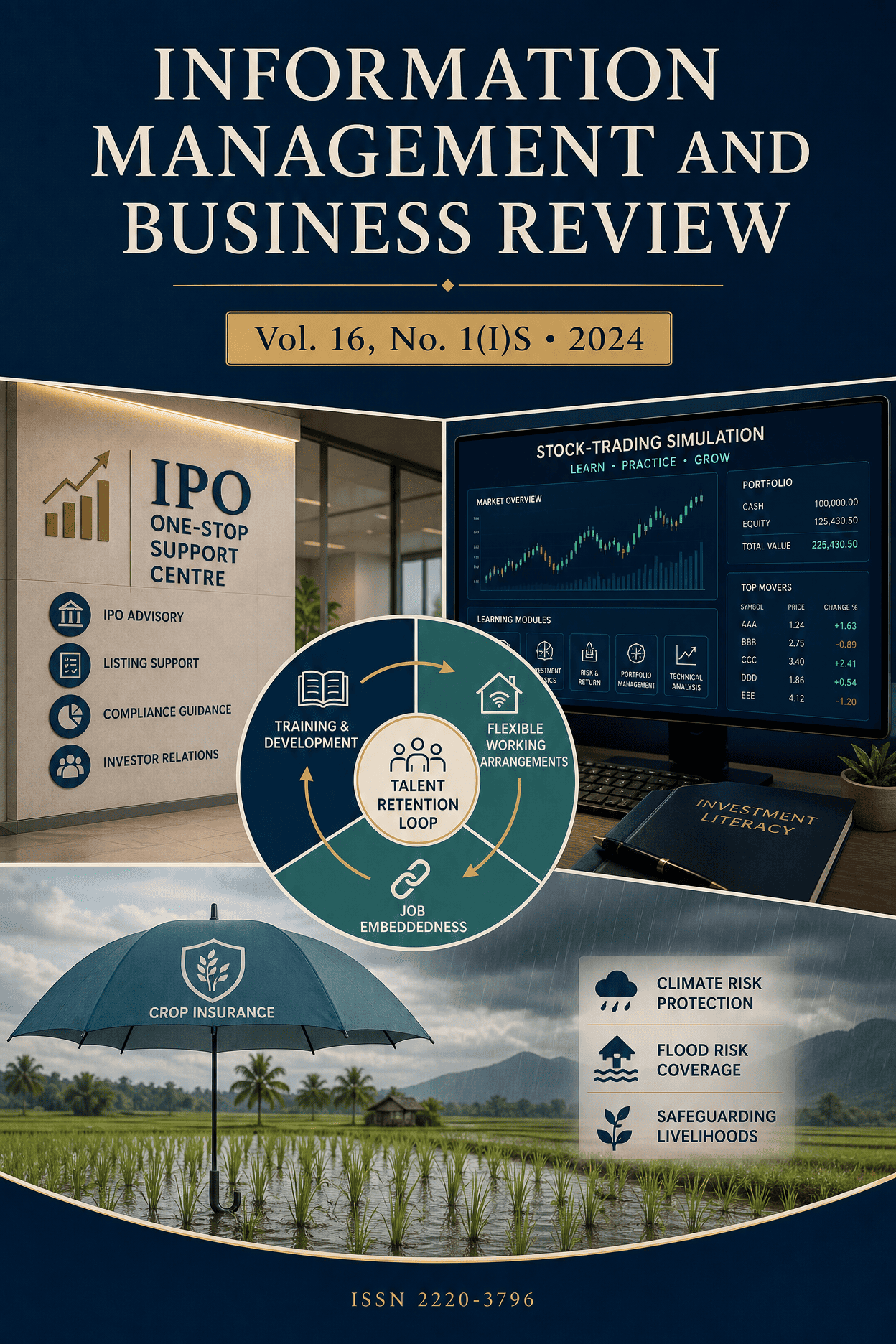
    Determinants of Smallholder Farmers' Awareness of Crop Insurance in K edah, Malaysia

    • Author: Faziatul Amillia Mohamad Basir, Azreen Roslan, Nur Nazurah Binti Zakaria, Noor Qhaireena Binti Mohd Nasron Ooi, Ratna Anggraini

    Agriculture is a major source of income for humans and has become an agro-food commodity. However, this industry is vulnerable to a wide range of dangers, including climate change, natural disasters, illnesses, and pests. Crop insurance is not a new concept in advanced economies since it has been recognized as an efficient instrument for mitigating agricultural risks and encouraging farmers to employ modern technology and innovation. This research investigates the determinants of smallholder farmers' awareness of crop insurance in the agricultural landscape of Kedah, Malaysia. T herefore, this study examines the relationship between knowledge, risk attitude and farm size on the farmers' awareness of crop insurance. The study, based on a sample of 100 farmers, utilizes a non-probability sampling technique to collect data through structured questionnaires. The research employs reliability analysis, correlation analysis, and regression analysis to evaluate the raw data and uncover the factors influencing farmers' awareness of crop insurance. The study conclusion shows a strong correlation between farmers' knowledge levels and farm size as important indicators of crop insurance awareness. The analysis emphasizes how crucial it is to increase farmers' understanding through focused educational programs and customized awareness campaigns that take farm size dynamics into account. Policymakers and agricultural extension services can enable smallholder farmers to make well-informed decisions about using crop insurance as a strategy to manage agricultural risks and guarantee financial stability by making information and resources easily accessible.

    Pages 229-237

    PDF - Determinants of Smallholder Farmers' Awareness of Crop Insurance in K edah, Malaysia (opens in a new tab)
  • Article 22 in this issue

    The Effect of Liquidity M3 and Exchange Rate on Sukuk Market Size in Malaysia in Short-Term and Long-Term

    • Author: Dheya Hamood Saif Al-Fakih, Shahsuzan Zakaria, Md Khairu Amin Ismail

    The increase in the size of the sukuk market has become large with time and takes its place among the important topics that need to be studied and developed. This study focuses on the impact of some financial factors on the size of the sukuk market in Malaysia, as it is a leader in the Islamic financial industry, especially the sukuk sector. This study attempts to reveal the relationship between the factors of exchange rate and liquidity M3 as independent variables, and the size of the sukuk market as a dependent variable. This study uses the model of Autoregressive Distributed Lag (ARDL) as well as the test of cointegration to know the relationship between the variables of the study in both short-term and long-term. By examining monthly time series data starting from 04/2011 till 12/2020. The findings appear that the variables of the study have a cointegration relationship in the long run. In the short run, the exchange rate affects the size of the sukuk market significantly negatively, while liquidity M3 influences the sukuk market size positively insignificant. In the long run, the exchange rate has a positive significant effect on the sukuk market size, while the impact of liquidity M3 on the market size of Sukuk is non-significant.

    Pages 238-249

    PDF - The Effect of Liquidity M3 and Exchange Rate on Sukuk Market Size in Malaysia in Short-Term and Long-Term (opens in a new tab)
  • Article 23 in this issue

    Financial Risk: Case Study Analysis

    • Author: Shahsuzan Zakaria, Mohd Afzanizam Abdul Rashid, Dheya Hamood Saif Al-Fakih

    This study explores the complex context of real-life financial risks. Using a thorough analysis of real case studies to reveal its varied nature and practical implications. Beginning with observations in the Age of Exploration and International Trade, the Financial Crisis of the 17th and 18th Centuries, and the Financial Crises of the 21st Century, this paper highlights the lessons learned for the current organization as well as individual contexts on how financial risk can affect the stability of financial conditions. This article, by deconstructing noteworthy instances of market crashes, corporate scandals, and regulatory failures, could also be used as guidance to emphasize the importance of strong risk management frameworks and tactics in limiting possible threats and improving resilience. Finally, this article serves as an insightful reminder of the importance of case studies in exposing real-world financial risks, providing significant insights for practitioners, researchers, and policymakers navigating the complicated environment of risk management.

    Pages 250-260

    PDF - Financial Risk: Case Study Analysis (opens in a new tab)
  • Article 24 in this issue

    Trust, Social Influence and Perceived Usefulness: Examining Online Purchase Intentions among Gen Z

    • Author: Nurain Achim, Dayana Batrisya Mohamed, Sonia Crystal Miji, Nasir Nur Alliyah Zuraini, Muhammad Iqmal Ridhwan Idil, Abby Jane Luntek Hilmen, Azu Farhana Anuar

    The growing popularity of online shopping collides with user reservations related to trust, social influence, and perceived purchase usefulness, with such concerns acutely observable among Gen Z populations. As digital natives and prolific online users, Gen Z's purchasing patterns offer valuable insights for marketers adjusting their online strategies. This study extends the body of knowledge by examining the determinants of online purchase intentions among Gen Z thereby guiding university administrators, educators, and online retailers in crafting improved online shopping experiences. Utilizing a non-intrusive, naturalistic research setting, the study harnesses an anonymous survey methodology, and data is rigorously analyzed using Statistical Package for Social Science (SPSS). Findings indicate that trust and perceived usefulness are significantly connected to students' online purchasing decisions. This study enhances the theory of online buying habits by emphasizing trust and value in e-commerce. It advises adding trust cues and functional benefits to online portals, the key to influencing Gen Z buyers and boosting market expansion and e-shopper satisfaction.

    Pages 261-271

    PDF - Trust, Social Influence and Perceived Usefulness: Examining Online Purchase Intentions among Gen Z (opens in a new tab)
  • Article 25 in this issue

    The Impact of Workplace Spirituality on Employee Performance

    • Author: Sharifah Fazirah Syed Ahmad, Nur Arfifah binti Abdul Sabian, Nur Raihan Che Nawi

    The contemporary workplace, characterized by its rapid pace and dynamism, acknowledges the profound impact of work spirituality on employee productivity. This research explores the influence of spirituality in the workplace on employee performance through the examination of meaningful work, a sense of community, and organizational trust. Utilizing a quantitative approach with questionnaire distribution among academicians from business and management faculty at a local university in Selangor was conducted. Based on Pearson Correlation analysis, the result reveals a significant positive correlation between meaningful work, a sense of community, organizational trust, and employee performance. All hypotheses were accepted, indicating their positive influence. Moreover, Multiple Regression analysis highlights the substantial impact of workplace spirituality on employee performance. Practically, the study emphasizes aligning efforts for employee development with the recognized factors of workplace spirituality. In conclusion, organizations are urged to acknowledge and integrate spiritual elements in the workplace for a positive impact on employee performance .

    Pages 272-282

    PDF - The Impact of Workplace Spirituality on Employee Performance (opens in a new tab)
  • Article 26 in this issue

    Are Male Muslim Leaders More Effective Than Female Muslim Leaders in Maldives Regardless of Their Religiousness

    • Author: Wasamath Abdul Hakeem, Zahariah Sahudin, Nor Intan Adha Hafit, Ainie Hairianie Aluwi, Badrul Hisham Kamaruddin

    This study explores the moderating role of gender on the relationship between religiosity and effective leadership among leaders of both genders in Maldives. Maldives is a hundred percent Muslim nation, and Islamic Shariah is the law. While women reserve the privilege to hold public office and to practice public functions statistical data indicates a notable underrepresentation of females in leadership positions due to the rigid perception of gender roles embedded in society. Earlier studies conducted in the Maldivian setting suggested that the conservative interpretation of Islam disadvantaged women. Thus, the first objective of this study was to investigate the relationship between religiosity and effective leadership and secondly to identify the moderating role of gender on the relationship between religiosity and effective leadership. To achieve these objectives, a sample of 157 useful data was collected from 250 questionnaires distributed to leaders across various domains in the Maldives. The study employed a purposive sampling method from both genders, aged between 30 to 70 years. Out of the two hypotheses tested, results indicated the acceptance of the first hypothesis, establishing a significant relationship between religiosity and leadership. However, the second hypothesis was not supported where gender moderates the relationship between religiosity and effective leadership. This suggests the importance of religiosity in the effectiveness of leadership. Regardless of gender, adherence to a higher level of religiosity contributes positively to leadership effectiveness. Thus, for leaders in Maldives, if they want to be effective leaders, they must be religious regardless of their gender.

    Pages 283-298

    PDF - Are Male Muslim Leaders More Effective Than Female Muslim Leaders in Maldives Regardless of Their Religiousness (opens in a new tab)
  • Article 27 in this issue

    A Conceptual Model for Factors Influencing Purchase Intention of Cosmetic Products

    • Author: Roszi Naszariah Nasni Naseri, Maizatul Saadiah Mohamad, Maryam Mohd Esa, Zamry Gafar, Roslinawati Ibrahim, Zurairah Jais

    This paper proposes a conceptual model for factors influencing intention to purchase cosmetic products. Globalization is increasing the intensity of rivalry among cosmetic sector participants. In these instances, business practitioners must devise the best strategies to increase market share. One of the elements that can be concentrated on is consumer behavior. Understanding consumer behavior is one of the most important factors to consider when developing strategies. The primary goal of this study is to investigate the factors that influence customers' purchasing intentions for cosmetic products in Malaysia. Theory of Reasoned Action (TRA) served as a basis for the study, with four additional variables added on. As a result, the study explores six independent variables that influence purchase intention for cosmetic products. The results of this research could contribute to the current body of literature and provide industry stakeholders with insights into how the factors examined in this study impact customer purchase intent. This knowledge empowers them to craft more impactful business strategies.

    Pages 299-305

    PDF - A Conceptual Model for Factors Influencing Purchase Intention of Cosmetic Products (opens in a new tab)
  • Article 28 in this issue

    Exploring Rewards Systems and Turnover Intention among Malaysian Private University Academics: The Role of Continuance Commitment as a Mediator

    • Author: Yusuf Farhan Bin Azmal, Irzan Bin Ismail, Mohamad Idham Md Razak

    This research employed an empirical approach in overviewing the relationship between five independent variables namely, remuneration, work-life balance, supervisor support, and employee recognition and the intention of turnover by means of employees' continuance commitment. The study comprises a total of 331 academics from the four private universities that were selected. This study utilized a structured survey to collect data, drawing on publicly available literature to inform the survey's design. Building upon a comprehensive review of existing literature, the survey instrument was tailored to address the specific research objectives of this study, incorporating modifications as deemed necessary. The analysis presented in this chapter offers a detailed examination of both the measurement and structural models employed in the study. The measurement model rigorously assessed the reliability and validity of the measurement instruments, ensuring that indicators met established criteria for accuracy and precision. Subsequent Structural Equation Modeling (SEM) analyses revealed that neither direct nor mediated paths achieved statistical significance, indicating a lack of empirical support for the hypothesized relationships among the variables under investigation. This comprehensive evaluation provides valuable insights into the methodological rigor of the study and highlights avenues for future research exploration.

    Pages 306-315

    PDF - Exploring Rewards Systems and Turnover Intention among Malaysian Private University Academics: The Role of Continuance Commitment as a Mediator (opens in a new tab)
  • Article 29 in this issue

    Trends in Digital and Critical Thinking Skills Research in Millennials Accountant Profession: A Bibliometric Analysis

    • Author: Mahfuzah Ahmad, Nurul Ezhawati Abdul Latif, Faizal Mohamed Yusof, Salina Mad, Maizura Meor Zawawi

    The accounting profession faces numerous challenges in the era of digitalization. With the constant evolution of technology, the skill of critical thinking is becoming increasingly valuable. Accounting professionals are responsible for making critical choices using financial data, predictions, and analytical techniques. The capacity for critical thinking is of utmost importance in the digital age due to the abundance and complexity of data. Therefore, this paper aims to analyze the trends in articles published on digital and critical thinking skills in the millennial accountant profession by using bibliometric analysis and VOS viewer software. The data were collected from the Scopus database from 2014 to February 2024, with 456 published papers with the keywords “Millennial”, “accountant profession”, “digital skills”, and “critical thinking”. The finding shows that higher education remains the predominant author keyword in academic writing over the previous decade, with accounting education ranking second rather than critical thinking abilities. The top ten articles do not directly correspond to the digital and critical thinking abilities of Millennial accountants. This study contributes to the literature on the Millennial accountant profession by providing interdisciplinary approaches incorporating technology-enhanced learning methods, case studies, and real-world simulations to develop holistic skill sets among aspiring accountants.

    Pages 316-328

    PDF - Trends in Digital and Critical Thinking Skills Research in Millennials Accountant Profession: A Bibliometric Analysis (opens in a new tab)
  • Article 30 in this issue

    The Practice of Enterprise Risk Management and Sustainable Performance in Jordan

    • Author: Wafa' Mohammad Abdaljabar, Norhayati Zakuan, Muhamad Zameri Mat Saman, Mariam Setapa

    The primary objective of any organization is to minimize risks and losses while optimizing values, revenues, and returns. Therefore, risk management, which is often referred to as risk identification, likelihood of occurrence, and impact on the business, is essential. Recent corporate catastrophes have brought to light how inadequately corporations handle risks. In reaction to these challenges, organizations have shifted from separate and personalized procedures to a more comprehensive and integrated enterprise risk management (ERM) perspective in their risk management strategies. Therefore, to address these new global sustainable challenges which include hunger, poverty, high unemployment, climate change, and other related issues, businesses should place a strong priority on environmental preservation and social responsibility. Jordan is one of the countries dealing with several issues related to sustainability. The sustainable performance of Jordanian firms deserves further attention. Managers in Jordanian industrial businesses must keep a close eye on how the company's environmental environment is being improved to reduce air pollution, the usage of hazardous materials, and other difficulties. Therefore, companies in Jordan must adopt strategies that will allow them to face this issue to improve their social, environmental, and economic performance. Jordan's manufacturing and service industries should be at the forefront of a comprehensive approach to risk management and board monitoring, given the growing concerns regarding the environment, society, and economy. Since ERM is a relatively new concept, its implementation in Jordanian industrial and service companies is still in its early stages. Moreover, there is a lack of comprehensive research regarding the ERM in Jordan.

    Pages 329-342

    PDF - The Practice of Enterprise Risk Management and Sustainable Performance in Jordan (opens in a new tab)