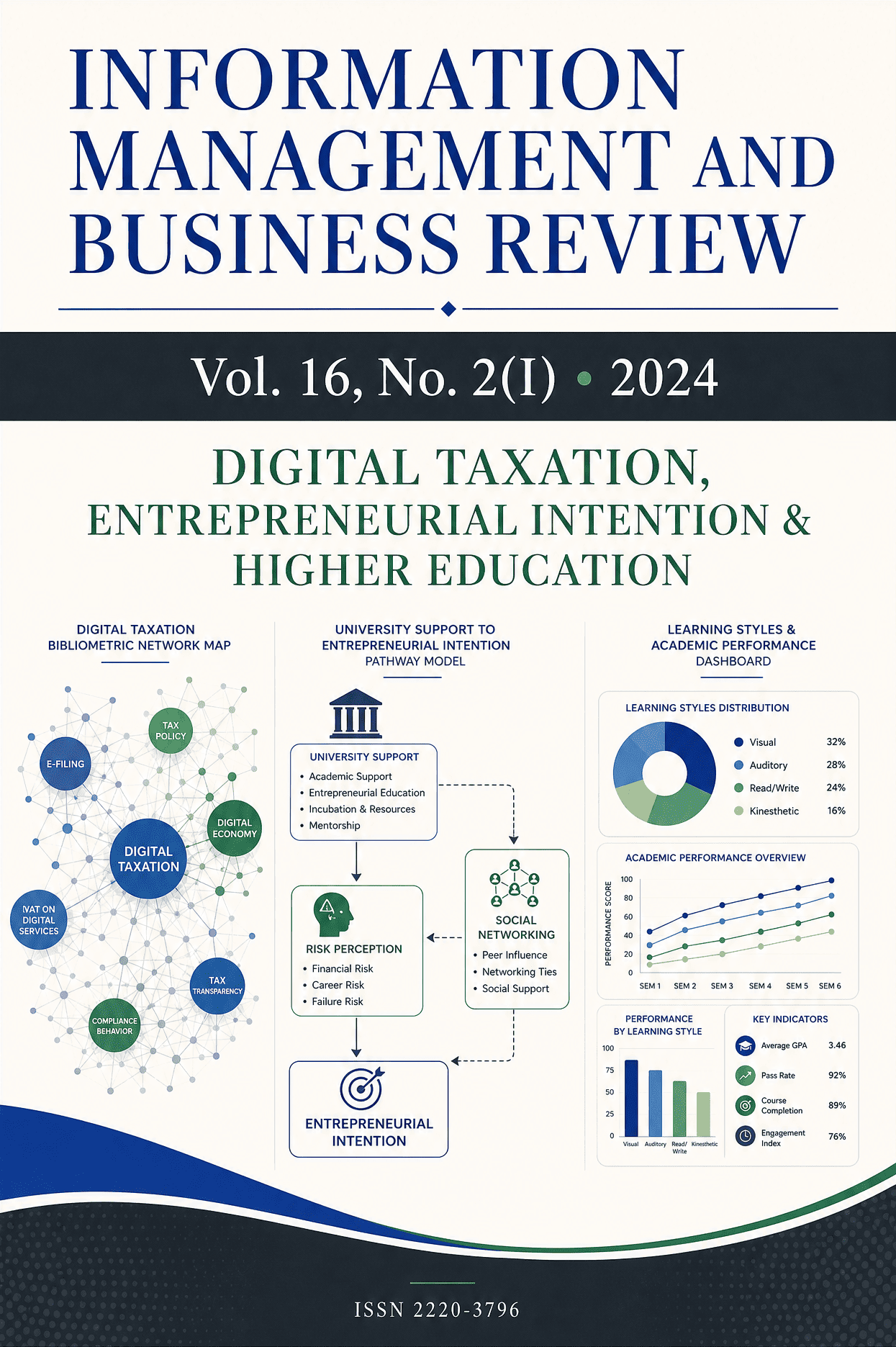
Articles 11–20 of 21

  • Article 11 in this issue

    Analyzing Consumers Online Shopping Behavior Using Different Online Shopping Platforms: A Case Study in Malaysia

    • Author: Siti Hasma Hajar Mat Zin, Siti Haslini binti Zakaria, Rumaizah Binti Che Md Nor, Nor Hidayah binti Hassim, CT Munirah Niesha Binti Mohd Shafee, Suhanah Binti Rosnan, Nur Syafizan binti Mohd Sufter

    Nowadays, online shopping is gaining increasing popularity in Malaysia. The development of online shopping has led some to argue that there are additional elements influencing consumer behavior. As a result, a growing number of researchers are currently studying online consumer behavior to better understand the specific characteristics of online shopping. Therefore, this study is conducted to determine the factors that influence online shopping behavior between different online shopping platforms among Malaysian consumers. This is a quantitative study, and 371 students and staff from Universiti Teknologi MARA (UiTM) were randomly picked to participate. The data was gathered via an online questionnaire using Google Forms. The findings show a positive relationship between the variables, namely web characteristics, external stimulus, affection, and cognition. It indicates that all variables influence online shopping behavior among Malaysian consumers. Furthermore, the findings reveal that consumer behavior patterns for online shopping are not different even when using different online shopping platforms. Therefore, it is very critical to understand consumer online purchasing behavior and its influencing factors to improve online shopping in Malaysia. Malaysian businesses must have an in-depth knowledge of the market for their goods and the demographics of the customers they are targeting before engaging in online commerce.

    Pages 99-110

    PDF - Analyzing Consumers Online Shopping Behavior Using Different Online Shopping Platforms: A Case Study in Malaysia (opens in a new tab)
  • Article 12 in this issue

    Social Networking and Technological Entrepreneurial Intention: Demand-Resource Mechanism

    • Author: Nor Azmawati Husain, Zulkefli Mohamad Hanapiyah, Mastura Roni, Norlela Abas, Ahmad Fadhly Arham, Norshiba Norhisham

    Social networking (SN) has changed the landscape of businesses, especially for entrepreneurs. Hence, this paper is conducted to identify the indirect effect of social networking in association with technological entrepreneurial intention (EI). The study was undertaken purposefully with two objectives. The first objective is determining the relationship between university support, risk, and student entrepreneurial intention. The second objective is related to the mediating role of social networking. This study utilized a quantitative form of research using a questionnaire as a data collection method. The population of this study is 300 technology entrepreneurship students from two different faculties: the Faculty of Plantation and Agrotechnology (FPA) and the College of Computing, Informatics & Mathematics (KPPIM). The response return is 224, which represents a 74.7% response rate. Data analysis utilized structural equation modeling in AMOS software to measure the effect among variables and answer all research questions. University support, risk, and social networking significantly and directly affect entrepreneurial intention among students. The mediating impact of social networking on the relationship between university support and entrepreneurial intention is significant. Social networking significantly and indirectly affects the relationship between risk and entrepreneurial intention. This recently proposed framework can explain the influences of resources (i.e., university support, social networking) and demand (i.e., risk) on the intention to become technological entrepreneurs.

    Pages 111-124

    PDF - Social Networking and Technological Entrepreneurial Intention: Demand-Resource Mechanism (opens in a new tab)
  • Article 13 in this issue

    Evaluating Audit Oversight Board’s Regulatory Impact: Analysis of Sanctions Imposed on Malaysian Audit Firms

    • Author: Nor Aishah Mohd Ali, Zaleha Mahat, Rahayu Mohd Sehat, Siti Hawa Shuid, Norhanizah Johari

    This study analyzes the 12-year trend of cases involving auditor wrongdoing as disclosed on the Audit Oversight Board (AOB) Malaysia's website from 2012 to 2023. Utilizing content analysis, the research examines the nature, frequency, and severity of penalties or sanctions imposed on audit firms for various offenses. Findings indicate a dynamic pattern of regulatory actions, reflecting Malaysia's evolving landscape of audit quality and regulatory oversight. It was revealed that a total of 56 breaches of the Securities Commission Act 1993 involving 30 audit firms were reported and disclosed by the Audit Oversight Board over the period from 2012 to 2023. The findings revealed that most misconduct cases relate to the failure of audit firms to comply with the requirements of International Auditing Standards, International Standard on Quality Control and Malaysian Institute of Accountant By-Laws. There has been a notable decrease in cases involving auditors over the past six years. This could also indicate the dedication of the AOB to monitoring auditors' conduct to prevent their involvement in malpractice. This study contributes to the understanding of audit regulation effectiveness and the behavioral patterns of auditors in response to regulatory scrutiny.

    Pages 125-136

    PDF - Evaluating Audit Oversight Board’s Regulatory Impact: Analysis of Sanctions Imposed on Malaysian Audit Firms (opens in a new tab)
  • Article 14 in this issue

    Assessing the Impact of Public Accounts Committee (PAC) Reports on Government Accountability

    • Author: Nor 'Asyiqin Binti Abu, Ainol Sarina Ahmad Zazili, Enylina Nordin Nordin, Wan Shafizah Hussain, Siti Aisyah Basri

    This study examines the effectiveness of the Public Accounts Committee (PAC) in Malaysia to enrich the understanding of its role in promoting governmental accountability. Through an extensive content analysis of the PAC reports spanning from 2019 to 2022 sourced from the Official Web of Parliament PAC, issues raised by the PAC were categorized into key improvement areas. Findings unveiled 104 flagged issues, with 68 addressed effectively, while 29 remained unresolved despite agreements for action and 7 lacking government response. The government's consideration of 97 out of 104 issues, reflecting a response rate exceeding 90%, underscored the PAC's pivotal role in fostering accountability. This study presents a comprehensive analysis of the prevailing issues identified in PAC reports and their current resolution status. It offers crucial insights for legislators to enhance the efficacy of their oversight procedures. Additionally, it provides empirical data on the impact of legislative oversight on governmental operations. The findings highlight the PAC's capacity to instigate positive reforms within government agencies, thereby enhancing transparency and promoting accountable governance. Future research should explore how the composition of the PAC committees influences issue resolution and government responses, while further investigations are recommended to evaluate the effects of the PAC recommendations on governmental practices.

    Pages 137-150

    PDF - Assessing the Impact of Public Accounts Committee (PAC) Reports on Government Accountability (opens in a new tab)
  • Article 15 in this issue

    Assessing and Modelling Domestic Water Consumption Behavior

    • Author: Raja Adzrin Raja Ahmad, Syamsyul Samsudin, Nurul Azlin Azmi, Nurul Huda Md Yatim

    The UNICEF predicts severe water shortages and water scarcity worldwide. According to a water resources study conducted from 2000 to 2050, Malaysia is susceptible to potential water shortages in specific regions. These projections emphasized the importance of sustainable water management practices and proactive measures to mitigate potential water scarcity. It becomes crucial for Malaysia to implement effective strategies to address this issue. Therefore, this study aims to identify factors that influence sustainable water consumption behavior (SWCB) and establish a model for understanding consumer behavior in consuming water for domestic usage. Using the prominent theory of planned behavior (TPB) and reviewing the prior literature, this paper proposes a model to assess SWCB to understand consumer behavior on the water. This study found that attitudinal predictors significantly influence the SWCB. These predictors influence consumers’ motivation, engagement, and views that may influence water intention and consumption behavior. Then, consumer intention mediates the relationship between attitudinal predictors and SWCB as it will evaluate consumers’ favorable and unfavorable actions. Moreover, the model also found that socio-demographic traits (gender, household size, and income level) influence SWCB. These factors are the critical variables that significantly influence the SWCB. This paper contributes to policy implementation by modelling SWCB to help policymakers and urban planners develop effective policies and strategies to address water management challenges. By considering the drivers and barriers to sustainable behavior, policymakers can design targeted interventions, provide incentives, and implement regulations that promote water conservation at the household level.

    Pages 151-162

    PDF - Assessing and Modelling Domestic Water Consumption Behavior (opens in a new tab)
  • Article 16 in this issue

    Exploring How Sustainability Development Goals (SDGs) Influence Market Returns for Malaysian Listed Firms

    • Author: Mohd Waliuddin Mohd Razali, Siti Masyitah Abdul Rahim, Dg Junaidah Awang Jambol, NurulAsyikin Hassan, Rozaiha Ab Majid

    The significance of SDGs lies in their ability to offer a comprehensive structure for tackling worldwide issues and advancing sustainable development in the realms of economy, society, and the environment. This study aims to investigate the relationship between SDGs and market returns. The final data sample of 74 firms was collected from the firm website and Eikon database from 2021-2022. The research reveals that although SDGs and market returns have no statistically significant relationship, a positive impact indicates potential appeal to investors. Moreover, adhering to SDGs demonstrates social responsibility and can yield regulatory advantages, potentially shaping frameworks and offering investors a sense of assurance in the face of environmental apprehensions. Conducting comparative studies in various geographical and market contexts, as well as longitudinal studies that monitor SDG initiatives and market returns, has the potential to deepen our comprehension of how regional disparities and economic cycles impact the connection between SDGs and market performance. Additionally, examining sector-specific intricacies may reveal industry-specific obstacles and prospects in aligning with SDGs to enhance financial performance.

    Pages 163-174

    PDF - Exploring How Sustainability Development Goals (SDGs) Influence Market Returns for Malaysian Listed Firms (opens in a new tab)
  • Article 17 in this issue

    Youth Satisfaction in Online Shopping: Mapping The Nexus of Influential Factors

    • Author: Azni Syafena Andin Salamat, Anis-Farahwahida Mohd Karim, Adnan Aminuddin, Muhammad Syahmizan Azmi, Nur Khadijah Ishak, Nur Aini Md Desa

    Online shopping has become a new trend and an integral part of daily life, as it involves the process of direct browsing and purchasing products and services over the Internet using a web browser. Young people constitute the bulk of online shopping customers because purchasing has become simpler, comparatively cheaper, and more comfortable. Today, most goods and services can be purchased online, where multiple options may be offered by different sellers or brand since there are no boundaries to this shopping experience. This study aimed to look into the factors that influence 270 youths to use online shopping platforms, as most young people are highly engaged with technology and digital media. This study was conducted in Sungai Petani, the biggest town in Kedah, Malaysia. The quantitative study method was employed for the data collection phase of this study. All gathered data have been analyzed using the Statistical Package for the Social Sciences (SPSS) software. Regression, reliability, and descriptive analyses were utilized to assess, verify, and explain the findings of this study. The Pearson Correlation has indicated that the variety of selections and time-saving features were significant towards youth satisfaction in online shopping. Meanwhile, two independent variables, i.e., convenience and price fairness showed a considerable relationship. This study has found that the timesaving feature was the dominant factor among four variables that have influenced youth satisfaction in online shopping.

    Pages 175-184

    PDF - Youth Satisfaction in Online Shopping: Mapping The Nexus of Influential Factors (opens in a new tab)
  • Article 18 in this issue

    Online Student Engagement and Entrepreneurial Intention: Mediating Role of Individual Entrepreneurial Orientation

    • Author: Wei-Loon Koe, Ramesh Krishnan, Najihah Hanisah Marmaya

    Using new digital technology in education has become a reality everyone must accept with the development of Education 5.0. Moreover, online learning is no longer alien to most university students after the COVID-19 pandemic. Currently, the traditionally practical-focused entrepreneurship course is also available online. However, little extant literature has investigated student engagement in online learning, particularly for entrepreneurship courses. Therefore, this paper aimed to establish a new model to show how student engagement in online learning affected individual entrepreneurial orientation (IEO) and entrepreneurial intention (EI). This paper employed the online student engagement (OSE) model, the concept of IEO and the Theory of Planned Behavior (TPB) in developing the research model. The data were analyzed using partial least squared-structural equation modeling (PLS-SEM). The results indicated that IEO positively affected two elements of OSE, namely emotion and participation. A positive relationship was found between IEO and EI. It further found that IEO mediated the relationships between emotion and EI as well as between participation and EI. Therefore, it concluded that IEO was a crucial determinant of EI and it enhanced the relationship between OSE and EI. This paper produced both literature and practical outcomes. Literary, it produced a new model which explained the relationships among OSE, IEO and EI. Practically, it identified critical factors that higher education institutions could take into consideration in developing student entrepreneurs. It was also critical in supporting Malaysian governmental agendas that focused on developing competitive entrepreneurs, such as the Economic Transformation Program (ETP) and Malaysia Education Blueprint 2015-2025 (Higher Education).

    Pages 185-194

    PDF - Online Student Engagement and Entrepreneurial Intention: Mediating Role of Individual Entrepreneurial Orientation (opens in a new tab)
  • Article 19 in this issue

    Evaluating the Impact of Usability Components on User Satisfaction in Educational Board Games using the MEEGA+ Framework

    • Author: Shahreena Daud, Zarinah Abu Yazid, Norraeffa Md Taib, Mohd Zailani Othman, Idris Osman

    Conventional instructional methods often fail to achieve significant learning outcomes and user satisfaction, making educational board games (EBGs) a dynamic and engaging alternative. This study aims to analyze the impact of usability components (aesthetics, learnability, and operability) on user satisfaction in EBGs using the MEEGA+ framework. A purposive sampling technique was used to select bachelor’s degree students enrolled in the Personal Financial Planning (PFP) subject. A quantitative study was conducted using self-administered questionnaires, and the data were analyzed using SPSS version 29.0. The findings indicated that usability components (aesthetics, learnability, and operability) significantly influenced user satisfaction in EBGs for PFP students. The study suggests incorporating game-based learning into curricula to enhance understanding and satisfaction. It also highlights the importance of usability components in EBGs, providing a theoretical framework for future research in game theory, cognitive, and pedagogical approaches.

    Pages 195-206

    PDF - Evaluating the Impact of Usability Components on User Satisfaction in Educational Board Games using the MEEGA+ Framework (opens in a new tab)
  • Article 20 in this issue

    Teaming Up for Success: A Case for Collaborative Teaching in Malaysian Strategic Management Courses

    • Author: Ahmad Syahmi Ahmad Fadzil, Amir Imran Zainoddin, Nur Rifhan A. Rahim, Nur Amalin Aziz, Kamel Taufiq Abdul Ghani, Loh Chin-Ling

    In higher education, research has repeatedly demonstrated the efficacy of collaborative learning as an educational technique. Higher education can benefit from using collaborative learning as an educational technique since it can raise student engagement, improve learning outcomes, and prepare them for future collaborative work settings. Today's varied and dynamic learning environment may make it impractical for traditional lecture and tutorial formats to fulfill the demands of every student. Thus, this study looks into how well collaborative teaching works for bachelor's degree students in a strategic management course. Based on the interactive questions from the industry panel, the study will specifically look at how collaborative teaching approaches affect students' capacity to apply theoretical concepts to real-world circumstances. Open-ended questions served as the basis for the thematic analysis used in this qualitative study. For a collaborative teaching session on strategic management, an industry panel was invited to give a talk. 308 bachelor's degree candidates enrolled in a 13-class course on strategic management made up the study's sample. Twice a week, before the session (preliminary survey) and during the session (session survey), data were gathered. For data processing, NVIVO version 14 software is utilized. Three categories comprise the results of the study: (1) presession findings; (2) in-session findings; and (3) post-session results. Each group of phases offered a response to the primary goal of the study through the use of a set of questions that were given to students via a gamification platform.

    Pages 207-220

    PDF - Teaming Up for Success: A Case for Collaborative Teaching in Malaysian Strategic Management Courses (opens in a new tab)