Articles 101–108 of 108

  • Article 101 in this issue

    The Service Experience Equity on Repatronage Intention within Public Transportation Services

    • Author: Norhusniyati Husin, Najihah Abdul Rahim, Nik Rozila Nik Mohd Masdek, Joeaiza Juhari, Khaizie Sazimah Ahmad, Siti Rohana Daud

    In a highly competitive market, service providers are often expected to enhance their profitability by delivering superior service quality. This principle is evident among many public transportation providers in Malaysia, who strive to elevate the passenger experience through refined service offerings. The objective of this study is to examine the factors influencing repatronage intentions among public transportation users in Malacca, Malaysia, using the Service Experience Equity (SEE) framework. To demonstrate the causal connections between the variables, a regression analysis has been employed. The findings reveal that service atmosphere and personnel interactions significantly impact users' willingness to continue using these services. The study emphasizes the importance for management to prioritize customer experience by investing in service environment strategies that foster user engagement and discourage customer churn. It further underscores that both the overall service experience and the quality of employee-customer interactions are critical determinants of future patronage. Consequently, it is recommended that transportation service providers leverage these elements to create a competitive edge, thereby encouraging repeat usage and building long-term customer loyalty.

    Pages 1086-1093

    PDF - The Service Experience Equity on Repatronage Intention within Public Transportation Services (opens in a new tab)
  • Article 102 in this issue

    The Effect of Innovation and Renewable Energy on CO2 Emissions For Emerging Asian Countries

    • Author: Chuah Soo Cheng, Juliana Noor Kamaruddin

    This study investigates the impact of innovation and renewable energy consumption on CO2 emissions in seven emerging Asian countries using static panel data methods. The analysis employs Pooled Ordinary Least Squares (OLS), Fixed Effect (FE), and Random Effect (RE) models to estimate the relationships, with the most appropriate model selected based on the Breusch-Pagan LM test and the Hausman test. Our findings reveal that both GDP and urbanization significantly increase CO2 emissions, while GDP squared and renewable energy consumption significantly decrease emissions, supporting the Environmental Kuznets Curve (EKC) hypothesis. Diagnostic tests indicate the presence of heteroskedasticity and first-order autocorrelation, addressed using robust standard errors. The results underscore the dual role of economic growth and technological advancement in shaping environmental outcomes, highlighting the critical importance of sustainable development policies in emerging economies.

    Pages 1094-1103

    PDF - The Effect of Innovation and Renewable Energy on CO2 Emissions For Emerging Asian Countries (opens in a new tab)
  • Article 103 in this issue

    Boardroom Diversity and Whistleblowing Disclosure: Empirical Evidence from Malaysia’s Top 100 Publicly Listed Companies

    • Author: Noraisah Sungip, Syahrul Ahmar Ahmad, Halil Paino

    The disclosure of whistleblowing policies is a critical component of effective corporate governance. High standards of whistleblowing policy disclosure signal a company’s commitment to safeguarding stakeholder interests. This research aims to analyze the relationship between board composition and whistleblowing policy disclosure in the top 100 Malaysian publicly listed companies. Specifically, the study investigates whether board independence, board size, the frequency of board meetings, and board gender diversity affect the level of whistleblowing policy disclosure. The relationships between these board characteristics and whistleblowing policy disclosure are analyzed using an Ordinary Least Squares (OLS) regression model. The findings reveal that board independence and gender diversity are significantly and positively associated with whistleblowing policy disclosure. However, board size and frequency of the board meetings do not exhibit significant relationships with whistleblowing policy disclosure. This study has contributed to the existing literature by extending the principal-principal conflict theory to the context of whistleblowing policy disclosure, offering new insights into the governance mechanisms that drive transparency in corporate reporting.

    Pages 1104-1119

    PDF - Boardroom Diversity and Whistleblowing Disclosure: Empirical Evidence from Malaysia’s Top 100 Publicly Listed Companies (opens in a new tab)
  • Article 104 in this issue

    Flavors of Sarawak: Exploring Authentic Home-Cooked Recipes Through A Mobile Application

    • Author: Nurazian Mior Dahalan, Mohamad Hafiz Khairuddin, Nurul Iffah Illyahanis Binti Muhamad Azharri, Zamlina Abdullah, Azlin Dahlan

    This project delves into the exploration of authentic home-cooked recipes from Sarawak, presented through a mobile application with augmented reality features. The motivation is to showcase the rich and diverse Flavours of Sarawak's culinary traditions, with a primary focus on ensuring a user-friendly and engaging experience for the audience. Rapid Application Development (RAD) methodology was utilized, which consists of four (4) main phases: Requirements Planning, User Design, Construction, and Cutover. The outcome of the study: it was found that the Flavours of Sarawak mobile application received a commendable average SUS score of 80.4, indicating a strong level of usability and user satisfaction. This score surpasses the threshold for an above-average user experience, reinforcing the application’s success in effectively promoting awareness of Sarawak's diverse flavors. The high SUS score also suggests the application’s potential to engage users and convey essential information about Sarawak's culinary heritage in an accessible manner. In terms of future work(s), the inclusion of more food models, particularly those showcasing iconic Sarawak dishes like "Kek Lapis Sarawak," aims to attract more users and foster an increased interest in exploring various facets of Sarawak's culinary traditions.

    Pages 1120-1137

    PDF - Flavors of Sarawak: Exploring Authentic Home-Cooked Recipes Through A Mobile Application (opens in a new tab)
  • Article 105 in this issue

    The Influence of Emotional Instability on Weight Fluctuations

    • Author: Wan Shafizah Hussain, Siti Aisyah Basri, Salina Abdullah, Hanafiah Hasin

    This study examines the relationships between psychological factors, specifically mood fluctuations, short temper, and feelings of negativity, and their impact on weight gain or loss among individuals. The objective is to determine how these emotional states individually and collectively influence weight changes, focusing on understanding their predictive power. A quantitative, cross-sectional design was employed. The analysis involved correlation and multiple regression techniques to explore the relationships between the variables. Results revealed that moodiness has the strongest positive correlation with weight changes and is the most significant predictor, explaining a substantial portion of the variance. Short temper and feelings of negativity also contributed to body weight variations, though to a lesser extent. The model explained the variance in weight outcomes, highlighting the meaningful role of psychological factors in weight management. This study contributes to the growing body of research emphasizing the need to integrate mental health support in weight management programs and policy interventions, recognizing the critical role of mental wellbeing in influencing physical outcomes such as weight fluctuations. The findings have important implications for healthcare providers, policymakers, and wellness programs aiming to address health's psychological and physical aspects.

    Pages 1138-1149

    PDF - The Influence of Emotional Instability on Weight Fluctuations (opens in a new tab)
  • Article 106 in this issue

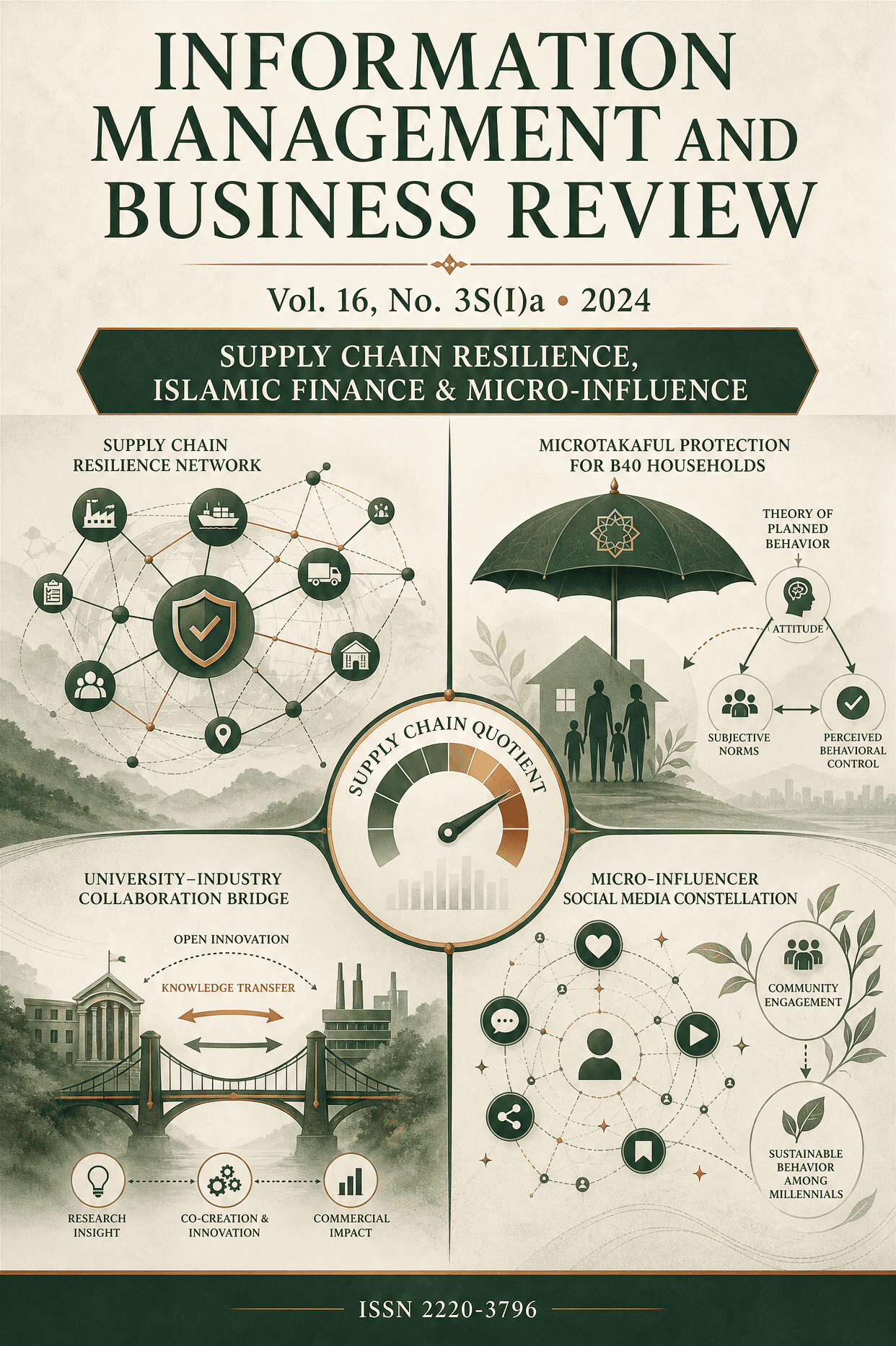
    Innovating Community Engagement: The Role of Micro-Influencers in Promoting Sustainable Behaviors among Malaysian Millennials

    • Author: Latisha Asmaak Shafie, Nor Alifah Rosaidi, Nor Azira Mohd Radzi, Ku Azlina Ku Akil, Razlina Razali, Lew Ya Ling

    Social Influencers as environmental leaders utilize social media platforms to enhance community engagement in advocating sustainability. This study explores the underexplored role of micro-influencers in fostering pro-environmental behaviors among Malaysian youths and innovating community engagement by employing a qualitative approach in conducting semi-structured interviews with five micro-influencers. Our findings indicate the critical role of micro-influencers in raising awareness and actively engaging communities in adopting sustainable practices. The findings reveal three key themes: leadership qualities, proenvironmental behaviors, and persuasive narrative strategies. Through the innovative use of social media, these influencers overcome linguistic and geographical barriers, fostering enhanced community engagement in the pursuit of environmental stewardship. However, the sample size of five micro-influencers may limit the generalizability of the findings, as it may only partially represent the diverse range of micro-influencers. The result of this research can be used as recommendations for organizations, non-governmental organizations and governmental bodies that can leverage the insights from this study to strategically engage micro-influencers in environmental campaigns, recognizing their unique ability to reach and resonate with specific communities, particularly Malaysian youths. This study offers a novel perspective on digital environmental leadership by uncovering the unique role of micro-influencers in fostering community engagement and cultivating a culture of sustainability. It provides original insights into how these emerging leaders not only inspire but also empower communities to take meaningful action toward environmental preservation. The study highlights the underexamined potential of micro-influencers in exceeding traditional barriers to community engagement, offering valuable implications for future strategies in environmental advocacy.

    Pages 1150-1160

    PDF - Innovating Community Engagement: The Role of Micro-Influencers in Promoting Sustainable Behaviors among Malaysian Millennials (opens in a new tab)
  • Article 107 in this issue

    Factors Influencing Data Partiality in Artificial Intelligence

    • Author: Faten Elina Kamaruddin, Nur Hanisah Mohamad Razali, Ahmad Fuzi Md Ajis, Nur Rifhan A Rahim, Siti Noorhaslina Abd Halim, Ainol Mardhiyah Rahmat

    This study proposes a conceptual framework to investigate factors influencing the data partiality in Artificial Intelligence (AI). The popularity of AI is world-renowned machines that can represent human intelligence under the program of computer systems. However, the academic research on data partiality focusing on AI is limited across the bibliographic database sources. This study aims to address the gaps by proposing a developed framework that integrates three factors: the AI algorithm, black data, and user revise terminology highlighted in the past literature. The AI algorithm refers to the issues on the training data as a dataset used in the tools, which stimulates the data partiality as the outcome retrieved by the user. The black data is influencing data partiality on the existence of unknown data. The user revise terminology represented on the keywords used by the user to search for information, which incorrect keywords with not specify will lead to the AI to give all related information as an output without filter. The framework asserts that these three elements directly affect the partiality of data in AI. A quantitative methodology will be used in this study to cover the collection of survey data from the community under the MDEC program called Global Online Workforce (GLOW). The framework contributes a theoretical understanding of A I algorithms, black data, and user-revised terminology that influence data partiality in AI. In future research, the framework can be extended to test the data partiality in AI tools used in information agencies, as these bodies govern the safeguards of the accuracy of the information.

    Pages 1161-1169

    PDF - Factors Influencing Data Partiality in Artificial Intelligence (opens in a new tab)
  • Article 108 in this issue

    The Effect of Price Transparency on Young Travellers’ Choices: An Experimental Study of Resort Packages

    • Author: Nadia Hanin Nazlan

    Product bundling has gained significant traction in the hospitality industry, with an increasing number of businesses offering all-inclusive resort packages to attract consumers. With the increase in online travel purchases, both academics and industry professionals are increasingly interested in understanding the factors influencing consumer travel package choices. This study employs a 2 x 5 mixed-design experiment where participants evaluated both an all-inclusive and a non-inclusive resort, with variations in price presentation. Pricing was presented either transparently or non-transparently, and package savings were displayed in multiple formats. The results reveal a strong consumer preference for all-inclusive resort packages, regardless of the perceived value. Moreover, how pricing information is presented plays a crucial role in shaping consumer purchase decisions. These findings highlight the importance of price presentation strategies in the marketing of travel packages and offer valuable insights for both marketers and practitioners in the hospitality sector.

    Pages 1170-1179

    PDF - The Effect of Price Transparency on Young Travellers’ Choices: An Experimental Study of Resort Packages (opens in a new tab)