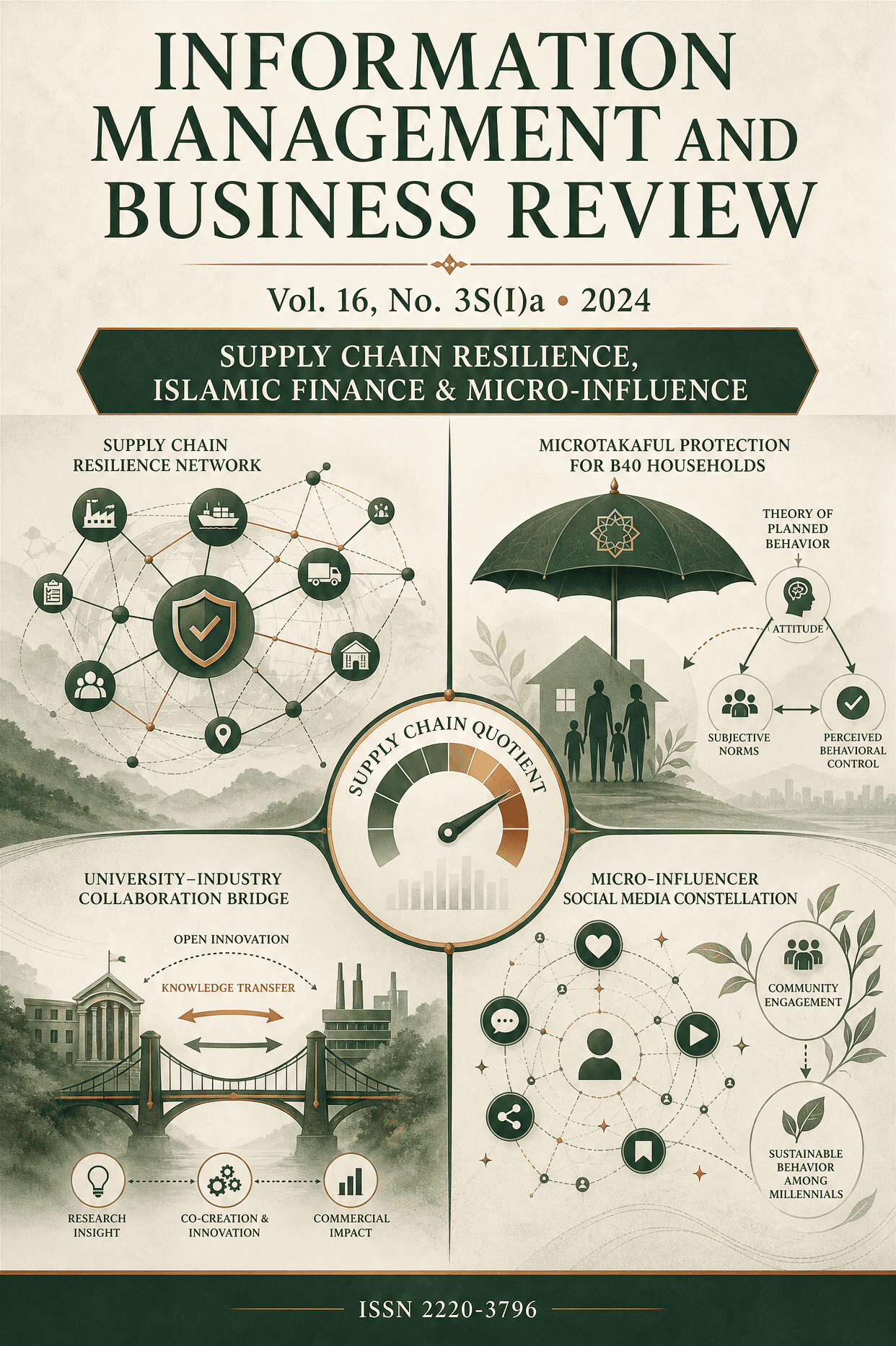
Articles 91–100 of 108

  • Article 91 in this issue

    Factors Influencing the Career Advancement of Malaysian Women Homepreneurs on the TikTok Platform

    • Author: Nor Faradhila Md Nor, Siti Rahayu Ismail, Norasekin Abd Rashid

    Entrepreneurship significantly contributes to economic growth, with recent studies highlighting the rise of female entrepreneurs who challenge traditional business roles by becoming "homepreneurs." The current research focuses on Malaysian women homepreneurs using TikTok, a platform that has transformed from entertainment to a vital business tool, facilitating unique career advancement opportunities. This study aims to explore the impact of digital marketing skills, product quality, customer engagement, and understanding of TikTok's algorithm on the career advancement of Malaysian women homepreneurs. In the quantitative study focusing on the career advancement of Malaysian women homepreneurs using TikTok, the methodology incorporated structured questionnaires to assess the relationships between key variables. The data was collected from 400 participants via Google Forms, leveraging a purposive sampling technique to ensure a representative sample of women homepreneurs active on TikTok. The statistical analysis revealed that while digital marketing skills and customer engagement did not significantly impact career advancement on TikTok, a thorough understanding of the platform's algorithm was strongly associated with career progression. Conversely, the results indicate that product quality was negatively significant in driving career advancement for Malaysian women homepreneurs on TikTok. This study highlights the need for targeted strategies focusing on product excellence and deep comprehension of platform algorithms to effectively leverage TikTok for career development.

    Pages 991-998

    PDF - Factors Influencing the Career Advancement of Malaysian Women Homepreneurs on the TikTok Platform (opens in a new tab)
  • Article 92 in this issue

    Aligning Enterprise Risk Management into Risk Disclosure of the IPO Prospectus

    • Author: Nura Lina binti Md Elias, Shamshimah binti Samsuddin, Muhammad Faisha bin Shahriman

    This concept paper aims to review the potential of aligning Enterprise Risk Management (ERM) elements into risk disclosure of the IPO prospectus. This concept paper explores the potential for aligning ERM elements within the risk disclosure section of IPO prospectuses. The paper emphasizes the regulatory requirement of the risk disclosure in the prospectus. It highlights the importance of risk disclosure in investment decision-making. It contends the best practices of risk disclosure in the IPO prospectus for the benefit of investors and also reinforces the issuing company’s commitment to effective risk management and corporate governance. By incorporating ERM principles, the prospectus not only improves transparency but also strengthens the issuing company’s commitment to effective risk management and corporate governance. The key research objective is to evaluate the integration of ERM into IPO risk disclosures, with particular emphasis on regulatory compliance, investor decision-making, and the enhancement of corporate governance practices. This research endeavors to fill the gap in the literature by enhancing the ERM elements in the existing practices of IPO disclosure.

    Pages 999-1003

    PDF - Aligning Enterprise Risk Management into Risk Disclosure of the IPO Prospectus (opens in a new tab)
  • Article 93 in this issue

    Exploring E-Customer Satisfaction Using e-SERVQUAL Among Online Shoppers

    • Author: Mohammad Zaim Mohd Salleh, Nor Sara Nadia Muhamad Yunus, Nadiah Maisarah Abdul Ghani, Norliza Saiful Bahry, Ainunnazlee Mohd Ali

    When interacting with a company's products and services, customer satisfaction is an overall feeling of contentment that a client is experiencing. Previous studies have shown an increase in revenue when a company prioritizes customer satisfaction with its products or services. Around 70 percent of Malaysians are dynamic online consumers, with most of them shopping via websites. e-SERVQUAL assesses the efficacy and efficiency of a website in facilitating shopping, purchase, and delivery processes. It encompasses the prepurchase and post-purchase phases. The e-SERVQUAL dimensions (privacy, website design, responsiveness, reliability, usability, and information quality) are elements that impact e-customer satisfaction. A total of 100 respondents at Bandar Utama City Centre who shop online participated in the survey. According to the data, males outnumber females among the respondents. The survey comprised three sections: A, B, and C. Section A comprised the demographic information of the respondents, Section B concentrated on the e-SERVQUAL aspects, and Section C addressed e-customer satisfaction. The data was examined utilizing the Statistical Package for the Social Sciences (SPSS). The results indicated that the majority of respondents expressed satisfaction with the quality. However, website design improvements should be made to encourage more online shopping. The recommendation in this study is beneficial to online service providers and future studies on e- SERVQUAL should be extended to another dimension to explore more aspects of determining quality service in an online setting.

    Pages 1004-1012

    PDF - Exploring E-Customer Satisfaction Using e-SERVQUAL Among Online Shoppers (opens in a new tab)
  • Article 94 in this issue

    Foreign Workers and Remittance Outflow in Malaysia

    • Author: Fauziana Bt Fauzi Mat Rawi

    This conceptual paper reviews foreign workers and remittance outflows in Malaysia. Foreign workers in Malaysia, who remit a portion of their earnings back home, play a crucial role in the country's economic development. With approximately 1.5 million foreign workers engaged in various sectors such as manufacturing, plantation, construction, and agriculture, Malaysia relies heavily on foreign labor. Predominantly, these workers come from Indonesia, Nepal, and Bangladesh. Factors such as Malaysia's economic performance, government recruitment policies addressing labor shortages, and cultural and geographical proximity influence why these workers choose Malaysia. Despite concerns that foreign workers might negatively impact short-term labor market outcomes by taking jobs from locals and suppressing wages, the evidence suggests their presence does not significantly harm these outcomes. However, the growing number of foreign workers has led to a notable increase in remittance outflows. Remittance outflows represent a transfer of capital from host countries to the workers' countries of origin. Among the ASEAN-5 countries, Malaysia has recorded the highest remittance outflows, surpassing inflows. While research on remittance flows has expanded, the focus has traditionally been on inflows, with outflows receiving less attention due to their relatively small impact on the macroeconomic indicators of sending countries. Existing literature indicates that remittance outflows can influence the economic growth and inflation of sending countries, including Malaysia, despite varied findings.

    Pages 1013-1026

    PDF - Foreign Workers and Remittance Outflow in Malaysia (opens in a new tab)
  • Article 95 in this issue

    Evaluating the Impact of AI Dependency on Cognitive Ability among Generation Z in Higher Educational Institutions: A Conceptual Framework

    • Author: Suraya Ika Tamrin, Nor Farehan Omar, Khairul Nazlin Kamaruzaman, Azlul Kalilah Zaghlol, Muhammad Ridzuan Abdul Aziz

    This research aims to examine the factors of AI dependency (AID) and to investigate the relationship between AI dependency on cognitive ability (CA) among Generation Z (Gen Z) in higher educational institutions. The factors involved are academic self-efficacy (ASE), academic stress (AS), and performance expectation (PE). In this research, the proposed research design is a quantitative method. A self‐administered questionnaire will be distributed to respondents, a group of students who were born between 1997 to 2012, and the AI user. The questionnaire will be utilizing the Google Form platform for easier data collection. A snowball sampling method will be applied. Then, the data collected will be analyzed through the partial least square (PLS-SEM) technique. The research findings are expected to highlight the significant emphasis on the contributing factors of AI dependency among Gen Z students. Then, the findings will also provide a model to understand better the impact of AI dependency on cognitive ability. Additionally, it is foreseen that the findings will help various parties, including the government, to create better models for helping Gen Z students apply AI in decent ways to help them increase their cognitive ability. It is also considered a long-term strategy to become a nation with numbers of high cognitive ability citizens. Further, a practical framework based on AI dependency on cognitive ability will be developed as a guideline to support the effort of the government or industry practitioners to increase awareness among Gen Z students on how crucial to possess high cognitive ability.

    Pages 1027-1033

    PDF - Evaluating the Impact of AI Dependency on Cognitive Ability among Generation Z in Higher Educational Institutions: A Conceptual Framework (opens in a new tab)
  • Article 96 in this issue

    Customer Satisfaction Towards Food Delivery Services in Selangor

    • Author: Ainol Fizy Ruslan, Shamsul Azren Mohd Shukur, Nur Aizureen binti Anwar, Mohd Fahimi bin Ahmad Faculty

    This study explores the key factors influencing customer satisfaction with food delivery services at UiTM Puncak Alam, Selangor. Despite the rising demand for food delivery services, issues surrounding the quality and accuracy of delivered food remain significant challenges. This study seeks to address these concerns by identifying and analyzing the determinants that shape customer satisfaction with food delivery services in Malaysia, specifically in Puncak Alam. We adopted a quantitative research approach to gain comprehensive insights into these issues. We collected data using judgment sampling, a non-probability sampling technique and used the Statistical Package for Social Sciences (SPSS) to analyze the responses through descriptive statistics and correlational analysis. The study involved a structured survey of 357 respondents, investigating the impact of three key variables—food quality, app ease of use, and food packaging—on customer satisfaction. The findings provide important implications for businesses and institutions looking to enhance the quality of food delivery services and elevate customer satisfaction levels. By identifying these critical factors, the research offers valuable insights that can help food service providers, policymakers, and industry stakeholders refine their strategies. These insights will not only improve the customer experience but also encourage broader adoption of food delivery services within the Malaysian population. Ultimately, the study’s conclusions hold significance for enhancing service quality and fostering customer loyalty in the increasingly competitive food delivery industry.

    Pages 1034-1039

    PDF - Customer Satisfaction Towards Food Delivery Services in Selangor (opens in a new tab)
  • Article 97 in this issue

    The Factors Affecting the Awareness of Young People on Sexual Transmitted Infections (STIS): Knowledge, Attitude and Environment

    • Author: Natasha Dzulkalnine, Nur Aizureen Anwar, Muna Wadhiha Mohd Fauzi, Suhaila Mohamed, Shamsul Azreen Shukur

    The outbreak of sexually transmitted infections (STIs) in the nation is not something new; in fact, the issue has been around for many years and has been steadily becoming worse over that time. The problem becomes more crucial as each year; an increasing number of cases will be reported in Malaysia and throughout the world. In some cases, symptoms of STIs may not even be present. This can mean that a person might get infected by another person who might appear healthy without knowing they have already been infected with STIs; therefore, this article aims to investigate the knowledge, attitudes, and environment as the factors that influence awareness of Sexual Transmitted Infections (STIS) among the 227 of youths. A survey was conducted, and the data was analyzed using regression analysis. The result revealed that knowledge, attitude, and environment had a significant influence on sexually transmitted infections. In addition, the environmental factor reported had the most significant influence. The finding implies that external roles, such as those of the government, schools, and universities, should be provided with more facilities and programs to sustain and improve awareness among the youth group. Furthermore, increasing youth awareness may change individual behavior and attitude toward a good, healthy lifestyle.

    Pages 1040-1047

    PDF - The Factors Affecting the Awareness of Young People on Sexual Transmitted Infections (STIS): Knowledge, Attitude and Environment (opens in a new tab)
  • Article 98 in this issue

    Mindful Transportation: A Conceptual Framework for Enhancing Accessibility for People with Disabilities in Malaysia

    • Author: Joeaiza Juhari, Wan Kalthom Yahya, Najihah Abdul Rahim, Norhusniyati Husin, Siti Rohana Daud

    This conceptual paper explores the integration of mindfulness principles into the development of transportation services for people with disabilities (PWDs) in Malaysia. Transportation plays a critical role in promoting inclusivity and enhancing the quality of life for PWDs, yet accessibility remains a significant challenge due to infrastructural barriers, lack of awareness, and limited empathy from service providers. Drawing on the concepts of mindfulness, which are rooted in awareness, empathy, and responsiveness, this paper proposes a framework that emphasizes inclusivity, respect, and collaboration among key stakeholders. The proposed framework emphasizes the need for a holistic approach that incorporates physical accessibility, staff training, and policy reforms. Inclusivity involves modifying infrastructure to meet universal design standards, while empathy requires transport providers to understand the unique challenges faced by PWDs and offer compassionate, tailored services. Responsiveness, a key element of mindfulness, calls for flexible and adaptive transport services that cater to the real-time needs of PWDs, ensuring that they can access public transportation with ease and dignity. By applying this mindful approach, the transportation system can become more accommodating and respectful toward PWDs, thereby reducing social exclusion and improving their mobility. This paper contributes to the growing body of literature on disability inclusion and provides actionable strategies for policymakers, transport providers, and disability organizations to work together in creating a more accessible public transportation system. Future research should investigate the practical application of this framework and its potential to drive policy changes that benefit PWDs across Malaysia.

    Pages 1048-1060

    PDF - Mindful Transportation: A Conceptual Framework for Enhancing Accessibility for People with Disabilities in Malaysia (opens in a new tab)
  • Article 99 in this issue

    An Exploratory Study on the Effect of Macroeconomic Indicators on the Stock Market Performance among 6-ASEAN Countries

    • Author: Zahirah Hamid Ghul, Zetty Zahureen Yusoff, Norhasimah Shaharuddin, Nurul Haziqah Shamsudin, Nik Rozila Nik Mohd Masdek

    The stock market's performance has been impacted by the global economy's recovery from the COVID-19 pandemic. This study investigates the impact of various factors on stock market performance, with a focus on the global economic recovery from the COVID-19 pandemic. The stock market has experienced positive growth, driven by low interest rates, ample liquidity, and sustained investor optimism, despite concerns over rising inflation and interest rates. This research aims to analyze stock market performance across six ASEAN countries, using a range of data sources, including historical stock prices, financial reports, and macroeconomic indicators. The findings reveal that the real exchange rate exerts the most significant influence on stock market performance. The insights from this study provide valuable information for investors, policymakers, and government bodies, aiding in strategic decision-making and investment planning in these markets.

    Pages 1061-1071

    PDF - An Exploratory Study on the Effect of Macroeconomic Indicators on the Stock Market Performance among 6-ASEAN Countries (opens in a new tab)
  • Article 100 in this issue

    Adoption of Cashless Payment Among Undergraduate Students: A Case Study

    • Author: Mohd Fikri Ishak, Ainun Nadzirah Mahmood, Nurshafiqa Izzati Mohamad Zaini, Nik Raihah Binti Nik Rizal, Nur Imanina Binti Anuar Razif, Nafiza Binti Norazam, Nurin Zafirah Binti Hashim

    The increasing acceptance of cashless payment systems has led to a significant transformation in the global financial transaction landscape in recent years. As technology evolves and consumer preferences shift, digital payment methods are gradually taking the place of traditional cash transactions. This change not only facilitates financial transactions for individuals and businesses but also has significant implications for convenience, security, and financial inclusion. This paper investigates the key factors driving the transition to cashless transactions during this period, along with the benefits and drawbacks associated with society's growing embrace of this innovative approach to managing finances. The primary focus of research in this area revolves around the adoption and use of digital or cashless payment methods. A quantitative methodology was employed, and a questionnaire was administered to 113 participants. The data were analyzed using the Statistical Package for Social Science (SPSS) Version 27. The findings indicated that Performance Expectancy (PE) and Perceived Technology Security (PT) played significant roles in the adoption of cashless payments among undergraduate students while Facilitating Condition (FC) and Social Influence (SI) did not significantly affect their adoption of such payment methods. This study provides valuable insights into assessing individuals' willingness, intentions, or actual behaviors regarding various electronic transaction forms, including mobile wallets, credit/debit cards, online payments, and contactless methods. Additionally, researchers can utilize these variables to explore the factors that influence users' acceptance or rejection of cashless payment systems.

    Pages 1072-1085

    PDF - Adoption of Cashless Payment Among Undergraduate Students: A Case Study (opens in a new tab)