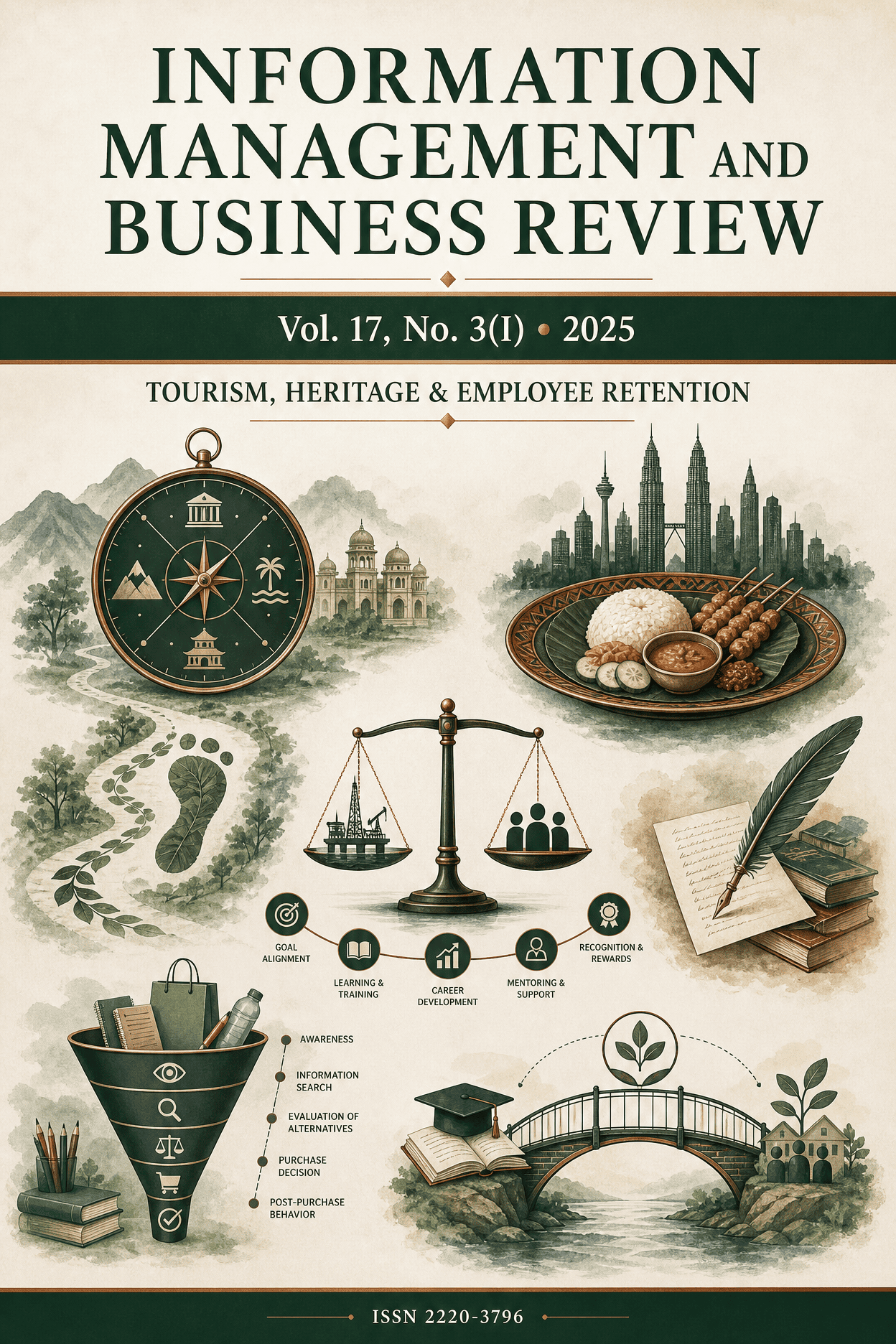
Articles 61–69 of 69

  • Article 61 in this issue

    The Impact of Guest Experience and e-WOM Intention Towards Five-Star-Rated Hotels in Kuala Lumpur

    • Author: Nur Khalishah Dawood, Marcellinus Suda Anak Samuel, Nur Zalikha Othman

    In the digital age, e-WOM shared by experienced hospitality guests is highly valuable, as its perceived authenticity helps reduce potential consumers' uncertainty when selecting accommodation. The purpose of this study is to evaluate the characteristics of guest experience that contribute to electronic word-of-mouth (eWOM) intention at Five-star rated hotels in Kuala Lumpur. It entails examining aspects like entertaining, educational, aesthetic and escapist. Data for this study were gathered through self-administered questionnaires on 130 hotel guests who had experienced staying in Five-star rated hotels in Kuala Lumpur. SPSS was used to analyze the proposed hypotheses. This highlights the importance for key stakeholders in the hotel industry, particularly the Ministry of Tourism, Arts and Culture Malaysia (MOTAC), as well as hotel managers and operators, to prioritize these factors to gain a competitive edge and secure long-term profitability.

    Pages 594-600

    PDF - The Impact of Guest Experience and e-WOM Intention Towards Five-Star-Rated Hotels in Kuala Lumpur (opens in a new tab)
  • Article 62 in this issue

    Sustaining Heritage Through Culinary Tourism: Exploring International Tourists' Ethnic Dining Experiences in Kuala Lumpur, Malaysia

    • Author: Farah Adibah Che Ishak, Nor Amalin Sahiira Mohd Fikeri, Rabiatutadawiah Jamaluddin

    Ethnic restaurants have emerged as popular venues for cultural and culinary exploration, offering authentic ethnic cuisine and distinctive cultural experiences. In Malaysia, these restaurants serve as valuable spaces for tourists to engage with the multicultural landscape, shaped by Malay, Chinese, Indian, and indigenous culinary traditions. This study aims to understand the motivations driving international tourists to dine at Malaysian ethnic restaurants and to explore their dining experiences in the Kuala Lumpur area. A qualitative approach was employed, involving semi-structured interviews with 15 international tourists in key tourist areas. Data were recorded, coded, and analyzed through thematic analysis to gain insight into these tourists’ experiences and perceptions. Findings reveal that tourists are primarily motivated by a desire to explore new flavors, cultural authenticity, economic considerations, and the influence of social and digital recommendations. The study further identifies elements that shape dining experiences, including taste preferences, educational aspects within the restaurant, entertainment, cultural immersion, and post-dining reflections. These sensory and social components create a comprehensive, immersive experience that enhances satisfaction and influences tourists’ intent to revisit and recommend ethnic dining venues. This study provides insights for restaurant owners and tourism stakeholders, underscoring the value of authentic decor, diverse menu options, and culturally resonant symbols that enrich the dining environment. By understanding the factors that drive tourist satisfaction, restaurants can refine their offerings to meet tourists’ expectations, fostering deeper cultural connections and contributing to Malaysia’s identity as a culturally rich tourist destination. The findings support strategies to improve service quality and cultural engagement in ethnic restaurants, strengthening their role in Malaysia’s tourism sector.

    Pages 601-609

    PDF - Sustaining Heritage Through Culinary Tourism: Exploring International Tourists' Ethnic Dining Experiences in Kuala Lumpur, Malaysia (opens in a new tab)
  • Article 63 in this issue

    Conservation and Preservation of Historical Structures in Batu Gajah, Perak

    • Author: Sheikh Ali Azzran Sh Said, Nurul Farahin Ahmad, Hafizuddin Haron

    The preservation and restoration of historic buildings are essential for promoting sustainable development and preserving cultural heritage. This paper delves into a case study of the challenges and endeavors associated with preserving and conserving historical structures in Batu Gajah, Perak, a town renowned for its extensive architectural heritage. The objective of the investigation is to evaluate the current restoration and preservation practices, as well as to identify the deficiencies of the structural components and the appropriate materials for their replacement. A qualitative case study, which encompassed interviews, site surveys, and archival analysis, was implemented to acquire data and insights. The results indicate that Batu Gajah is treasure-rich in historical structures that represent distinct architectural styles and eras. These structures are of significant and symbolic to the cultural, historical, and artistic value, as they serve as a testament to the town's development over time. Nevertheless, dilapidation, deterioration, and urbanization pressures pose a threat to many of these poor and forgotten structures. The results of the investigation highlight the challenges that historically significant structures face in terms of preservation and conservation, including inadequate legislative frameworks, insufficient financial resources, and inadequate public awareness and appreciation. This investigation proposes successful conservation strategies and solutions that have been implemented at other heritage sites, thereby offering valuable insights for Batu Gajah.

    Pages 610-617

    PDF - Conservation and Preservation of Historical Structures in Batu Gajah, Perak (opens in a new tab)
  • Article 64 in this issue

    A Conceptual Framework of the Factors Affecting Customer Attitude towards Islamic Banking in Malaysia

    • Author: Muhammad Ridzuan Abdul Aziz, Muhamad Nadjmi Muhamad Sheth, Nurfahirah Farhana Abdul Rashid, Shafirah Amir, Wanida Nabila Artawan, Zamirul Haiman Zamawi

    Ever since the establishment of the first Islamic bank in the country, Islamic banks in Malaysia have been facing stiff competition against the conventional banks. Despite the dominance of Muslims in the population of the country, not all Muslims have subscribed to Islamic banking products and services. It is important to identify the factors that customer attitude towards Islamic banking in the country. Therefore, this research aims to explore the factors that could affect customer attitudes towards Islamic banking in Malaysia. Hence, this research presents a conceptual framework on the effect of awareness, Shariah compliance, individualism, and image on customer attitude towards Islamic banking. Research hypotheses are proposed based on the theorised relationship among the variables in this research. Significant effects are expected between awareness, Shariah compliance, individualism, image, and customer attitude towards Islamic banking. This research highlights the importance of Islamic banks to influence awareness, Shariah compliance, individualism, image, and customer attitude to enhance customer attitude towards them in the highly competitive banking industry.

    Pages 618-627

    PDF - A Conceptual Framework of the Factors Affecting Customer Attitude towards Islamic Banking in Malaysia (opens in a new tab)
  • Article 65 in this issue

    Balancing Demands and Resources: Exploring the Impact of Workload, Work-Life Balance and Technological Adaptation on Job Satisfaction Among Malaysian Academics

    • Author: Nor Intan Adha Hafit, Azlul Kalilah Zaghlol, Jiang Mingdi, Faiza Omar, Nursaadatun Nisak Ahmad

    Based on the Job Demands--Resources (JD-R) model, this study examines the inter-relationships of workload, work-life balance, technological adaptation, and job satisfaction among academic staff members in Malaysian universities. Within this context, workload is considered a job demand that may impose pressure on individual well-being and reduce satisfaction, whereas work-life balance is regarded as a useful job resource and mediating variable, allowing individuals to balance conflicting work and non-work demands. Technological adaptation as the ability and willingness of academic staff to work with digital tools is conceptualized as a personal resource and a moderator that can strengthen the relationship between work-life balance and job satisfaction. The research design is a quantitative one, where a self-completion online questionnaire would be sent via stratified random sampling to achieve a wide representation in terms of the type of universities and field of study. Regression and moderated mediation will be applied to analyze data. This research helps to advance the theoretical understanding of the JD-R model by investigating the negative influence of high workload on job satisfaction, the mediating role of work-life balance and the enhancing effects of technological adaptation on the relationship between work-life balance and job satisfaction. It is also an invaluable resource to institutions of higher learning interested in how they can manage academic workload, enhance digital competency and streamline staff well-being in institutions that are increasingly becoming technology-oriented.

    Pages 628-641

    PDF - Balancing Demands and Resources: Exploring the Impact of Workload, Work-Life Balance and Technological Adaptation on Job Satisfaction Among Malaysian Academics (opens in a new tab)
  • Article 66 in this issue

    The Relationship between Organizational Commitment and Job Satisfaction among Administrative University Staff

    • Author: Noor Baizura Ismail, Murni Zarina Mohamed Razali, Dilla Syadia Abd Latiff

    Over the past decade, organizational commitment and job satisfaction have been crucial elements in the organization’s overall success. Many previous studies have merely focused on measuring employees’ job satisfaction among academic staff. But there are two categories of workforce who work hard in developing the university, which are the academic and administrative staff. However, the study on job satisfaction among administrative staff is still lacking in providing evidence. Thus, the objective of this study is to examine the relationship between organizational commitment and job satisfaction. The sample size is 103 participants was selected by using convenience sampling. To collect data, Allen and Meyer’s organizational commitment questionnaire and Brayfield and Rothe’s job satisfaction questionnaire were used. The research methods utilized in this study were descriptive, correlation and multiple regression and have been analyzed by using SPSS version 25. In this study, three hypotheses have been tested. According to the result of the multiple regression, this study accepted only two hypotheses, which are affective and normative commitments. They have a strong and moderate relationship with job satisfaction among administrative staff at a private university in Sarawak. Continuous commitment, on the other hand, was not accepted because the p-value is more than the 0.05 significance criterion. This study contributes to the body of knowledge by identifying additional support in the relationship between variables and assists policymakers in reviewing current policies to design better guidelines to promote organizational commitment and job satisfaction.

    Pages 642-651

    PDF - The Relationship between Organizational Commitment and Job Satisfaction among Administrative University Staff (opens in a new tab)
  • Article 67 in this issue

    The Mechanisms of Corporate Governance and Firm Performance: Evidence from Malaysia’s ACE Market

    • Author: Nur Hafizah Roslan, Siti Zaitun Saddam, Rabia Bashir, Muhammad Irfan Fauzi

    Corporate governance is pivotal for company performance, but Malaysian companies are not necessarily confident in their system. For companies on the ACE Market where the degree of adoption for MCCG is lower, the threat of delisting grows greater. This study, by using firm performances as measured by ROA and Tobin's Q, sought to answer whether there is an association between company return on assets (ROA) and Tobin's with the effect of these corporate governance mechanisms. This study using a sample of 103 listed companies in the ACE Market, our study obtained diversified metrics of governance effect on firm performance through OLS during the regression analysis process. Risk management committees and CEO duality had negative impacts on ROA; but their impacts were minor in relation to Tobbins Q. The size of the board and firm age both had a positive effect on ROA; however, the default rate decreased with the frequency of board meetings. Our results are consistent with the relational complexity of governance–performance phenomena underdeveloped. It seems that a one-size-fits-all categorical endorsement may not have any impact. The study provides practical implications to the literature for policy decision makers, managers of firms across countries (especially in emerging economies like India, who want to improve their quality of transparency and accountability) and investors.

    Pages 652-662

    PDF - The Mechanisms of Corporate Governance and Firm Performance: Evidence from Malaysia’s ACE Market (opens in a new tab)
  • Article 68 in this issue

    Social Entrepreneurship: Bridging the Educational Disconnect and Empowering Youth for Social Change

    • Author: Faizah Md Sohid, Nor Lelawati Jamaludin, Faizah Mashahadi, Janiffa Saidon, Nuryusmawati Mohd Yusof, Syed Ashrene Syed Omar

    This study examines the role of social entrepreneurship in bridging the gap between traditional education and the real-world needs of youth worldwide. It examines the relationship between education, youth empowerment, and social change through the lens of social entrepreneurship, connecting it with social movement theory. The study will use quantitative data to explore this important matter of youth entrepreneurship. The paper maintains that equipping young people with entrepreneurial skills and social awareness is key to long-term development and positive societal change.

    Pages 663-667

    PDF - Social Entrepreneurship: Bridging the Educational Disconnect and Empowering Youth for Social Change (opens in a new tab)
  • Article 69 in this issue

    Assessing Students' Well-being by Campus Facilities

    • Author: Shamsul Azren Mohd Shukor, Natasha Dzulkalnine, Nur Aizureen Anwar, Zarina Abdul Munir, Mohammad Johari Abdul Rahman

    This study examines the relationship between student engagement and the availability and quality of campus facilities at a Malaysian university, particularly emphasizing the varying experiences of resident and non-resident students. The issue being addressed is the uneven degree of participation from students, especially those who do not live on campus, which could be impacted by their opinions and use of the facilities. The objective of this paper is to investigate the effects of facility availability and quality on student involvement and the effect of the involvement of non-resident students. A quantitative research design was used, and student survey data were analyzed using multiple regression and cross-tab analysis involving 271 respondents. The results show that while the quality of campus facilities positively and significantly impacts student engagement, there is a negative and significant relationship between facility availability and student engagement. Additionally, cross-tab results show that resident students are more engaged and satisfied than non-resident students. These findings imply that facilities' relevance, quality, and accessibility are more important than quantity. In order to create a more welcoming and balanced campus environment, the study suggests that university planners prioritize raising facility standards and creating inclusive strategies to involve all student groups, particularly non-residents.

    Pages 668-678

    PDF - Assessing Students' Well-being by Campus Facilities (opens in a new tab)