Abstract
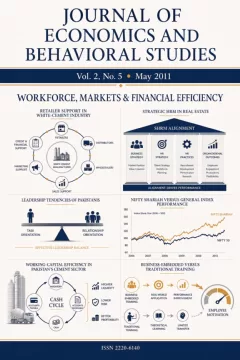
Service industry is now focusing more and more on providing valuable training opportunities to its employees in order to improve the quality of its services and benchmarking them as its competitive advantage. This research has attempted to understand the effects of the Business Embedded Training Model and the Traditional Training Model on employees’ job motivation. A sample of 80 organizations and 1000 respondents was taken and Group t-Test and Log Linear Logit techniques were used to evaluate that which training model is preferred over the other by the service industry and which training model has more positive effects on employees’ job motivation. The study revealed that Business Embedded Training Model has more positive effects on employees’ motivation than the Traditional Training Model.
Keywords
References
- Aragón-Sánchez, A., Barba-Aragón, I. and Sanz-Valle, R. (2003). Effects of Training on Business Results, International Journal of Human Resource Management , 14(6): 956-980. DOI: https://doi.org/10.1080/0958519032000106164
- Baird, L. & Meshoulam, I. (1988). Managing Two Fits of Strategic Human Resource Management. Academy of Management Review . 13(1): 116-128. DOI: https://doi.org/10.2307/258359
- Bodimer, J. (2009). Use Training and Development to Motivate Staff. Accessed January 11, 2011 from http://humanresources.about.com/od/coachingmentorin1/a/trainmotivation_2.htm.
- Brown. J. (2002). Training Need Assessment is a must for developing an effective training program. Public Personnel Management, 31(4): 569- 578. DOI: https://doi.org/10.1177/009102600203100412
- Carr, F., W. (1999). Designing an effective Training Evaluation Process. Accessed February 01, 2011 from http://www.ispi.org/pdf/suggestedReading/Carr.pdf.
- Cauwenbergh, V., A. & Cool, K. (2000). Strategic Management in a New Framework. Strategic Management Journal , 3: 245-265. DOI: https://doi.org/10.1002/smj.4250030306
- Dwyer, M., B. (2002). Training Strategies for the Twenty-First Century: Using Recent Research on Learning to Enhance Training. Innovation in Education and Teaching International, 39(4): 265-270. DOI: https://doi.org/10.1080/13558000210161115
- Gratton, L., Hailey, V., H., Stiles, P. & Truss, C. (1999). Strategic Human Resource Management. Oxford: Oxford University Press. DOI: https://doi.org/10.1093/acprof:oso/9780198782049.001.0001
- Guerrero, S., Sire, B. (2001). Motivation to train from the workers' perspective: example of French companies. The International Journal of Human Resource Management, 12(6): 988–1004. DOI: https://doi.org/10.1080/713769684
- Lewis, P. (1997). A framework for research into training and development. The International Journal of Training and Development , 3: 18-26.
- Lovas, B. & Ghoshal, S. (2000). Strategy as Guided Evolution. Strategic Management Journal , 21(9): 875-896. DOI: https://doi.org/10.1002/1097-0266(200009)21:9<875::AID-SMJ126>3.0.CO;2-P
- Martin, A. (1999). Employee Training and Development: The Success of Your Business depends upon it, Accessed January 11, 2011 from http://www.lgt-cpa.com/resources/articles/TrainingTrends.
- Mathieu, J. E., Tannenbaum, I., S., Salas, E. (1992). Influences of Individual and Situational Characteristics on Measures of Training Effectiveness. The Academy of Management Journal , 35: 828-847. DOI: https://doi.org/10.2307/256317
- McDougall, M. & Beattie, S., R. (1998). The Missing Link? Understanding the relationship between individual and organizational learning. International Journal of Training and Development , 2(4): 288-299. DOI: https://doi.org/10.1111/1468-2419.00055
- Miller, S. (2008). Measuring Training Evaluation Effectiveness, Accessed January 11, 2011 from www.EzineArticles.com, http://ezinearticles.com/?Measuring-Training-Evaluation Effectiveness &id =1075085.
- Mcintosh, S. S. (1995). Training & Development . Farmington Hills, MI: Gale Group Inc.
- Milliman, J., Glinow, V. A. M. & Nathan, M. (1991). Organizational Life Cycles and Strategic International Human Resource Management in Multinational Companies: Implications for Congruence Theory. The Academy of Management Review , 16: 318-339. DOI: https://doi.org/10.2307/258864
- Noe, R. (1996). A guide to Training & Development, 4th Edition. Ohio: McGraw-Hill Companies Inc.
- Rajan, S. (2004). How to structure a training program, Accessed January 14, 2011 from http://www.itpeopleindia.com/20040329/management1.shtml#
- Rouda, H., R. & Kusy, E., M. (1996). High Performance Training, Accessed January 14, 2011 from http://www.alumni.caltech.edu/~rouda/T6/1997_HPT.html.
- Simon, H.A. (1993), Strategy and Organizational Evolution. Strategic Management Journal , 14 (Special Issue): 131-142. DOI: https://doi.org/10.1002/smj.4250141011
- Turkiewicz, L., C., Massey, K., T. & Brown, G., R., Jr. (1998). Motivation in Public and Private Organizations: A Comparative Study. Public Productivity & Management Review , 2: 36-45.
- Valle, R., M., F., Romero, M., P. & Dolan, L., S. (2000). Business Strategy, Work Processes and Human Resource Training: Are They Congruent? The Journal of Organizational Behavior , 21: 222-226. DOI: https://doi.org/10.1002/(SICI)1099-1379(200005)21:3<283::AID-JOB16>3.0.CO;2-C
- Vemić, J. (2007) Employee Training & Development and the Learning Organization. Journal of Economics and Organization, 4: 16-23.
- Wells, B., J., Layne, H.. B. & Allen, D. (1991). Management Development Training and Learning Styles. Public Productivity & Management Review , 14: 167-176. DOI: https://doi.org/10.2307/3380956
Downloads
Full-text downloads recorded for this article, by month.
No downloads have been recorded for this article yet. Figures appear here once readers begin downloading the full text.
How to Cite
Share this article
License
Author (s) should affirm that the material has not been published previously. It has not been submitted and it is not under consideration by any other journal. At the same time author (s) need to execute a publication permission agreement to assume the responsibility of the submitted content and any omissions and errors therein. After submission of revised paper in the light of suggestions of the reviewers, the editorial team edits and formats manuscripts to bring uniformity and standardization in published material.
This work will be licensed under Creative Commons Attribution 4.0 International (CC BY 4.0) and under condition of the license, users are free to read, copy, remix, transform, redistribute, download, print, search or link to the full texts of articles and even build upon their work as long as they credit the author for the original work. Moreover, as per journal policy author (s) hold and retain copyrights without any restrictions.
Keywords
Section
Published
Submissions
Have research to publish? Journal of Economics and Behavioral Studies welcomes submissions.
Make a Submission