Abstract
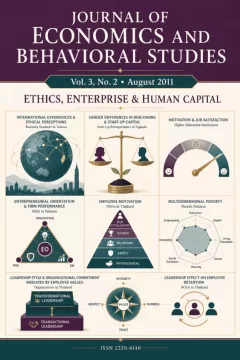
This study examines the affect of leadership on the retention of employees in NGOs. Four Thai NGOs representing a variety of organizational types were selected as a case study: the Paveenahongsakul Foundation, the Duang Prateep Foundation, the Potektueng Foundation, and the Chaipattana Foundation. They all work largely in the field of social and community development, with specific interests varying from: literacy, education, health, child and women welfare, environment, advocacy, animal welfare, volunteer promotion, etc. All of these NGOs are large enough to require skilled employees and an executive staff that is concerned about retaining these employees. This research aims to understand and critique the success factors for employee retention and examine if these factors hold true against the broad diversity of NGOs. In particular this study focuses on how leadership, which maintains the mission and vision of the NGO, impacts employee retention and what effect employee changeover has on maintaining mission and vision.
Keywords
References
- Andriof, J., Waddock, S., Husted, B. S. & Rahman, S. (2002). Unfolding Stakeholder Thinking: Greenleaf Publishing, Sheffield.
- Brundage, H., & Koziel, M. (2010). Retaining top talent still a requirement for firms: focus on people now to keep turnover costs down when the economy improves. Journal of Accountancy , 209 (5), 3844.
- Davids, I., Theron, F., & Maphunye K. J. (2009). Participatory Development in South Africa. A Development Management in South Africa. A Development Management Perspective. (2nd ed.). Van Schaik Publishers, Pretoria.
- Ebrahim, A. (2003). NGOs and Organizational Change: Discourse, Reporting and Learning. U.K.: Cambridge University Press.
- Frooman, J. (1999). Stakeholder Influence Strategies. The Academy of Management Review 24(2), 191– 205.
- Goodstein, J. & Wicks, A. (2007).Corporate and Stakeholder Responsibility. Making Business Ethics a TwoWay Conversation. Business Ethics Quarterly 17, 375–398.
- Hardy, B. (2007).Leadership in NGO's: is it all that different than the for-profit sector. Gale, Cengage Learning.
- House, R. J. & Dessler, G. (1974). The path-goal theory of leadership: Some post hoc and a priori tests’, in JG Hunt & LL Larson (eds.), Contingency approaches to leadership, Southern Illinois University Press, Carbondale.
- Schermerhorn, R. J. (2006). Management (6th ed): Printed in The United States of America.
- Kennedy School of Government. (1998).Placement Report: 1998. Unpublished report. Harvard University.
- Moss, K. R. (1997). Power Failure in Management Circuits. Harvard Business Review , 47, 65-75.
- Ruggie, J. (2004). Reconstituting the Global Public Domain-Issues, Actors, and Practices‘, European Journal of International Relations 10(4), 499-531.
- Sogge, D., Biekart, K. & Saxby, J. (1996). Compassion & Calculation: The Business of Private Foreign Aid. Pluto: London.
- Sridhar M. K. and Manasa, N. (2008). NGOs in India- Uniqueness and Critical Success Factors, Results of an FGD. The Journal of Business Perspective, 12, 45-51.
- Whetten, A. D. & Cameron, K. S. (1991). Developing management skills. 2nd ed .New York: HarperCollins
Downloads
No downloads have been recorded for this article yet. Figures appear here once readers begin downloading the full text.
How to Cite
Share this article
License
Author (s) should affirm that the material has not been published previously. It has not been submitted and it is not under consideration by any other journal. At the same time author (s) need to execute a publication permission agreement to assume the responsibility of the submitted content and any omissions and errors therein. After submission of revised paper in the light of suggestions of the reviewers, the editorial team edits and formats manuscripts to bring uniformity and standardization in published material.
This work will be licensed under Creative Commons Attribution 4.0 International (CC BY 4.0) and under condition of the license, users are free to read, copy, remix, transform, redistribute, download, print, search or link to the full texts of articles and even build upon their work as long as they credit the author for the original work. Moreover, as per journal policy author (s) hold and retain copyrights without any restrictions.
Keywords
Section
Published
Submissions
Have research to publish? Journal of Economics and Behavioral Studies welcomes submissions.
Make a Submission