Abstract
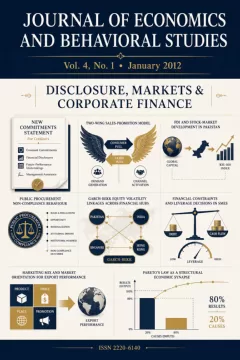
Sales promotion is an important and frequently used marketing tool to influence the consumers’ purchase intentions directly. This research study introduces a two-wing model of sales promotion to show the comparative impact of different formats and benefit levels of instant price discounts and next off purchase promotions on the consumer perceptions and purchase intentions of the promoted products. The uniqueness of this model is that it separately tests the impact of different types and formats of instant price discounts and next off purchase promotions on the consumers’ overall perceptions and purchase intentions of the products under sale. The empirical testing of this model reveals some important findings that can help marketers to develop result oriented sales promotion techniques in Asian markets. Since, this model has been tested in an Asian context only. To know its multi-cultural application it needs to be tested in diverse cultural contexts.
Keywords
- Instant Price Discounts Search this journal for Instant Price Discounts (opens in a new tab)
- Next off Purchase Search this journal for Next off Purchase (opens in a new tab)
- Precise Price Claims Search this journal for Precise Price Claims (opens in a new tab)
- Tensile Price Claims Search this journal for Tensile Price Claims (opens in a new tab)
References
- Alford, B. L. & Biswas, A. (2002). The effects of discount level, price consciousness and sale proneness on consumers price perception and behavioral intention. Journal of Business Research, 55, 775– 783.
- Alvarez, B. A. & Casielles, R. V. (2005). Consumer evaluations of sales promotion: the effect on brand choice. European Journal of Marketing, 39(½), 54-70.
- Ansari, S. (2011). The affect of sales promotion on consumer interest to purchase in IKCO automotive company. Journal of Knowledge Management, Economics and Information Technology, 4, 1-17.
- Arora, R. (2011). Bundling or unbundling frequently purchased products: a mixed method approach. Journal of consumer marketing , 28(1), 67-75.
- Baruch, Y. & Holtom, B. C. (2008). Survey response rate levels and trends in organizational research. Human Relations, 61(8), 1139–1160.
- Biswas, A. & Burton, S. (1993). Consumer perceptions of tensile price claims in advertisements: An assessment of claim types across different discount levels. Journal of the Academy of Marketing Science, 21(3), 217-229.
- Blattberg, R. C. & Neslin, S. A. (1990). Safes promotion: Concepts, methods, and strategies . Englewood Cliffs, New Jersey, Prendce Hall.
- Businessdictionary.com (2011). Purchase intentions. Available at http://www.businessdictionary.com /definition/purchase-intention.html (accessed on 25, July 2011).
- Chandon, P., Wansink, B. & Laurent, G. (2000). A Benefit Congruency Framework of Sales Promotion Effectiveness. Journal of Marketing, 64, 65–81.
- Chatterjee, P. (2007). Advertised versus unexpected next purchase coupons: consumer satisfaction, perceptions of value, and fairness. Journal of Product & Brand Management , 16(1), 59–69.
- Choi, S., Ge, X. & Messinger, P. R. (2010). Consumer perceptions of ambiguous price promotions: Scratch and save promotions versus tensile price claims. Journal of Product & Brand Management , 19(7), 477486.
- Choi, S. & Kim, M. (2007). The effectiveness of scratch and save promotions: the moderating roles of price consciousness and expected savings. Journal of Product & Brand Management. 16(7), 469–480.
- Coakes, S. J. & Steed, L. G. (2003). SPSS analysis without anguish: version 11.0 for windows . Australia: John Wiley & Sons Inc.
- Coker, K. K., Pillai, D. & Balasubramanian, S. K. (2010). Delay discounting rewards from consumer sales promotions. Journal of Product & Brand Management , 19(7), 487–495.
- CouponInfoNow.com (2010). Coupon use raises 27 percent drives redemption to 3.3 billion in 2009. Immar Inc., available at: www.couponinfonow.com/coupons (accessed July 12, 2011).
- Dhar, S. K., Gonzalez-Vallejo, C. & Soman, D. (1999). Modeling the effects of advertised price claims: tensile versus precise claims? Marketing Science , 18(2), 154-77.
- Field, A. (2000). Discovering statistics using SPSS for windows. London: Sage.
- Fishbein, M. & Ajzen, I. (1975). Belief, attitude, intention, and behavior . Reading, MA. Addison-Wesley.
- Gamliel, E. & Herstein, R. (2011). To save or to lose: does framing price promotion affect consumers’ purchase intentions? Journal of Consumer Marketing, 28(2), 152–158.
- Gendall, P., Hoek, J., Pope, T. & Young, K. (2006). Pricing strategy & practice Message: Framing effects on price discounting. Journal of Product & Brand Management, 15(7), 458-465.
- Goldsmith, K. & Amir, O. (2010). Can Uncertainty Improve Promotions? Journal ofMarketing Research, XLVII, 1070 –1077.
- Keller, K. L. (2007). Strategic brand management: Building, measuring, and managing brand equity ( 3rd ed) . Harlow; Upper Saddle River, N.J.: Prentice Hall,
- Kim, H. M. & Kramer, T. (2006). Pay 80% versus get 20% off”: The effect of novel discount presentation on consumers deals perceptions. Market Letters , 17, 311–321.
- Kotler, P. & Keller, K. L. (2006). Marketing management (12th ed). Upper Saddle River, New Jersey, USA: Pearson Education, Inc.
- Kotler, P., Keller, K. L., Koshy, A. & Jha, M. (2009). Marketing management. A South Asian perspective (13th ed). New Delhi: Pearson, Prentice Hall.
- Krishna, A., Briesch, R., Lehmann, D. R. & Yuan, H. (2002). A meta-analysis of the impact of price presentation on perceived savings. Journal of Retailing, 78, 101–118.
- Laroche, M., Pons, F., Zgolli, N. & Kim, C. (2001). Consumer’s use of price promotions: a model and its potential moderators. Journal of Retailing and Consumer Services, 8, 251-260.
- Liao, S. L., Shen, Y. C. & Chu, C. H. (2009). The effects of sales promotion strategy, product appeal and consumer traits on reminder impulse buying behavior. International Journal of Consumer Studies, 33(3), 274-284.
- Li, S., Sun, Y. & Wang, Y. (2007 ). 50% off or buy one get one free? Frame preference as a function of consumable nature in dairy products. The Journal of Social Psychology, 147(4), 413–421.
- Licata, J. W., Biswas, A. & Krishnan, B. C. (1998). Ambiguity and exaggeration in price promotion: Perceptions of the elder and non-elder consumer. The Journal of Consumer Affairs, 32(1), 56-81.
- Lichtenstein, D. R., Burton, S. & O'Hara, B. S. (1989). Marketplace attributions and consumer evaluations of discount claims. Psychology & Marketing , 6(3), 163-172.
- Lowe, B. (2010). Consumer perceptions of extra free product promotions and discounts: the moderating role of perceived performance risk. Journal of Product & Brand Management , 19(7), 496–503.
- Lowe, B. & Barnes, B. R. (2011). Consumer perceptions of monetary and non-monetary introductory promotions for new products . Journal of Marketing Management , April in Press, Journal of Marketing Management , 27, ISSN 0267-257X.
- Low, G. S. & Mohr, J. J. (2000). Advertising vs. sales promotion: A brand management perspective. The Journal of Product and Brand Management , 9(6), 389-414.
- Nusair, K., Yoon, H. J., Naipaul, S. & Parsa, H. G. (2010). Effect of price discount frames and levels on consumers’ perceptions in low-end service industries. International Journal of Contemporary Hospitality Management, 22(6), 814-835.
- Palazon, M. & Delgado-Ballester, D. (2009). Effectiveness of price discounts and premium promotions. Psychology and Marketing , 26(12), 1108–1129.
- Palazón, M. & Delgado, E. (2009). The moderating role of price consciousness on the effectiveness of price discounts and premium promotions. Journal of Product & Brand Management, 18(4), 306–312.
- Pallant, J. (2005). SPSS survival manual: a systematic guide to data analysis using SPSS for windows (Version 12). New South Wales; Australia: Allen & Unwin,
- Raghubir, P. (1998). Coupon value: A signal for price? Journal of Marketing Research , 35, (3), 316-324.
- Raghubir, P. (2004). Coupons in context: discounting prices or decreasing profits? Journal of Retailing, 80, 1– 12.
- Schiffman, L. G. & Kanuk, L. L. (2007). Consumer behavior (9th ed). Pearson Prentice Hall.
- Simonson, I., Carmon, Z. & O’Curry, S. (1994). Experimental evidence on the negative effect of product features and sales promotions on brand choice. Marketing Science, 13(1), 23-40.
- Smith, M. F. & Sinha, I. (2000). The impact of price and extra product promotions on store preference. International Journal of Retail & Distribution Management , 28(2), 83-92.
- Tabachnick, B. G., & Fidell, L. S. (2007). Using multivariate statistics (5th ed). New York; NY, U.S. A: Pearson Education, Inc.
Downloads
No downloads have been recorded for this article yet. Figures appear here once readers begin downloading the full text.
How to Cite
Share this article
License
Copyright (c) 2012 Imran Anwar Mir, Kashif Ur Rehman (Author)

This work is licensed under a Creative Commons Attribution 4.0 International License.
Author (s) should affirm that the material has not been published previously. It has not been submitted and it is not under consideration by any other journal. At the same time author (s) need to execute a publication permission agreement to assume the responsibility of the submitted content and any omissions and errors therein. After submission of revised paper in the light of suggestions of the reviewers, the editorial team edits and formats manuscripts to bring uniformity and standardization in published material.
This work will be licensed under Creative Commons Attribution 4.0 International (CC BY 4.0) and under condition of the license, users are free to read, copy, remix, transform, redistribute, download, print, search or link to the full texts of articles and even build upon their work as long as they credit the author for the original work. Moreover, as per journal policy author (s) hold and retain copyrights without any restrictions.
Keywords
- Instant Price Discounts Search this journal for Instant Price Discounts (opens in a new tab)
- Next off Purchase Search this journal for Next off Purchase (opens in a new tab)
- Precise Price Claims Search this journal for Precise Price Claims (opens in a new tab)
- Tensile Price Claims Search this journal for Tensile Price Claims (opens in a new tab)
Section
Published
Submissions
Have research to publish? Journal of Economics and Behavioral Studies welcomes submissions.
Make a Submission