Abstract
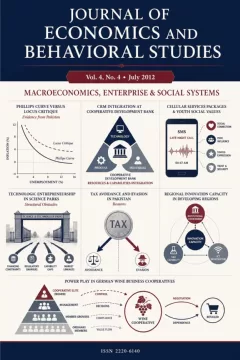
Youth plays a significant role in building of the nation and in the development of a country. Their adoption, aspiration, and objective lead towards change in social value of a culture. Ongoing study investigates the impact of telecom cellular services packages like late night call & unlimited Short Messaging Service (SMS) on the social values of Pakistani youth. In today’s competitive environment cellular companies are mainly targeting youth through their advertisements and would like the youth to get indulge in these activities in order to increase their sales but the point is up to what extent youth showing receptiveness and emotional attachment to these packages. Study was conducted in capital city of Pakistan i.e. Islamabad, mainly considering three famous universities; Iqra University, Bahria University & Foundation University with the sample of 250 respondents; convenient sampling technique is used & results are measured using multiple regression test. Major findings concluded that cellular advertisements of unlimited Short Messaging Service (SMS) and late night call packages have a negative impact on youth but youth is still willing to accept these advertisements as they are negatively attached to the advertisement and use of these packages.
Keywords
- Advertisements Search this journal for Advertisements (opens in a new tab)
- Late Night Call Packages Search this journal for Late Night Call Packages (opens in a new tab)
- SMS Search this journal for SMS (opens in a new tab)
- Social Values Search this journal for Social Values (opens in a new tab)
- Cellular Services Search this journal for Cellular Services (opens in a new tab)
- Youth Search this journal for Youth (opens in a new tab)
References
- Aaker, D. A. & Stayman, D. M. (1992). Implementing the concept of transformational advertising. Psychology and Marketing , 9(3), 237-253.
- Balaji T. S., Landers, B., Kates, J. & Moritz, B. (2005). A carrier’s perspective on creating a mobile multimedia service. Communications of the ACM, 48(7), 49–53.
- Balasubramanian, S., Peterson, A. R. & Jarvenpaa, L. S. (2002). Exploring the Implications of M-commerce for Markets and Marketing. Journal of the Academy of Marketing Science , 30(4), 348-361.
- Barwise, P. & Strong, C. (2002). Permission-based mobile advertising. Journal of Interactive Marketing, 1 6(1), 14–24.
- Bhatti, B. (2008). Competitive Trends, Education, Mobile Content, Mobile Phones, Mobile Trends, Privacy, Social Networks, Telecommunications’. ( http://telecompk.net/2008/12/16/late-night-callingpackages-and-pakistani-youth-2/).
- Brierly, S. (1995). The Advertising Hand book , London: Rout ledge.
- Bulter, D. D. & Abernethy, A. M. (1994). Information consumers seek from advertisements: are there differences between goods and services? Journal of Professional Services Marketing , 10(2), 75-92.
- Bateson, J. E. G. (1979). Why we need service marketing, In Ferrell, O.C., Brown. S.W. and Lamb, C.W. (Eds), Conceptual and Theoretical Developments in Marketing, American Marketing Association, Chicago, IL.
- Cutler, B. D. & Javalgi, R. G. (1993). Analysis of print ad features: services versus products. Journal of Advertising Research , 33(2), 62-9.
- Clements, I. & Buczkiewicz, M. (1993). Approaches to Peer-led Health Education: A Guide for Youth Workers, Health Education Authority, London.
- Cronin, J. J., Brady, M. K. & Hult, G. T. (2000). Assessing the effects of quality, value, and customer satisfaction
- on consumer behavioral intentions in service environments. Journal of Retailing , 76(2), 193-219.
- Cooper, D. R. & Schindler, P. S. (2003). Business Research Methods. 8th Edition. New York: McGraw-Hill Irwin.
- Dahringer, L. D. (1991). Marketing services internationally: barriers and management Strategies. Journal of Services Marketing, 5(3), 5-17.
- Dyer, G. (1995). Advertising as Communication , 6th Ed, and London: Rout ledge.
- De Pelsmacker, P., Geuens, M. & Anckaert, P. (2002). Media context and advertising effectiveness: the role of
- context appreciation and context–ad similarity. Journal of Advertising , 31(3), 25–37.
- Epstein, J. (1998). Youth Culture: Identity in a Postmodern World, Blackwell.
- Fox, K. (2001). Evolution, alienation and gossip: The role of mobile telecommunications in the 21st century. Social Issues Research Centre. ( http://www.sirc.org/publik/gossip.shtml).
- Furlong, A. & Cartmel, F. (1997). Young People and Social Change. Routledge .
- Green, N., Harper, R. H. R., Murtagh, G. & Cooper, G. (2001). Configuring the mobile user: Sociological and Industry views. Personal & Ubiquitous Computing, 5(2), 146-156.
- Goggin, S., Gerard, A. & Christina, S. (2005). Mobile message services and communications policy. Prometheus , 23(2), 181-193.
- Goldman, R. (1992). Reading Ads Socially , London: Rout ledge.
- Henley Management College. (2003). People discover the joy of text. Summit (no. 8) ( http://www.henleymc.ac.uk/henleymc03.nsf/files/SummitIssue8.pdf/$FILE/SummitIssue8.pdf).
- Hair, J. F., Anderson, R. E., Tatham, R. L. & Black, W. C. (1998). Multivariate Data Analysis, Fifth edition, Prentice-Hall International, Inc.
- Hulme, M. (2003). Me, my phone and I’. Michael Hulme. ( http://www.michaelhulme.co.uk/papers.html).
- Ijaz, O. (2008). Competitive Trends, Marketing, Mobile Companies, Mobile Trends, Mobilink, Pakistan, Telenor, Ufone, Warid, Zong’. ( http://telecompk.net/2008/12/15/late-night-calling-packages-andpakistani-youth-1/).
- Kothani, V. (1988). Strategic dimensions of global marketing of services. Journal of Professional Services Marketing , 3(3/4), 209-29.
- Lasen, A. (2005). History repeating? A comparison of the launch, uses of fixed and mobile phones, In Mobile world: Past, present and future, ed. L. Hamill and A. Lasen, 29-60.
- Lasen, A. (2004). Affective technologies – Emotions and mobile phones ( http://www.vodafone.com/flash/receiver/11/articles/pdf/11_03.pdf).
- McDougall, H. G. & Levesque, T. (2000). Customer satisfaction with services: putting perceived value into the equation. Journal of Services Marketing , 14(5), 392-410.
- Morris, M. G. & Venkatesh, V. (2000). Age differences in technology adoption decisions: implications for a changing work force. Personnel Psychology , 53(2), 375-403.
- Panis, P., Morphis, N., Felt, E., Reufenheuser, B., Bohm, A., Nitz, J. & Saarlo, P. (2002). Mobile Commerce Service Scenarios and Related Business Models, Proceedings of the 1st International Conference on Mobile Business, Athens-Greece, 8-9 July.
- Paine, L. S. (1996). Moral thinking in management. Business Ethics Quarterly , 6(4).
- Swaminathan, V., Zinkhan, G. M. & Reddy, S. K. (1996). The evolution and antecedents of Transformational advertising: a conceptual model. Advances in Consumer Research , 23, 49-55.
- Saliba, A. J., Beresford, M. A., Ivanovich, M. & Fitzpatrick, P. (2005). User-perceived quality of service in wireless data networks. Personal and Ubiquitous Computing , 9, 413–422.
- Tsalgatidou, A. & Pitoura, E. (2001). Business models and transactions in mobile electronic commerce: requirements and properties. Computer Networks , 37(2), 221-236.
- Vincent, J. (2005). Emotional attachment to mobile phones, In Thumb culture, the meaning of mobile phones in society, ed. P. Glotz, S. Bertschi, and C. Locke, 95-104.
- Vincent, J. (2006). Emotional attachment and mobile phones. In Thumb culture: the meaning of mobile phones for society, ed. S. Bertschi and P. Glotz, 117-22, Transcript Verlag/Transaction US.
- Venkatesh, V., Morris, M. G. & Ackerman, P. L. (2000). A longitudinal field investigation of gender differences in individual technology adoption decision-making processes. Organizational Behavior and Human Decision Processes , 83(1), 33-60.
- Uma, S. (2000). Research Methods for Business: A Skill-Building Approach. Third Edition, John Wiley & Sons, Inc. New York, USA.
- Wu, J. (2000). Performance analysis of QoS-based voice/data CDMA systems. Wireless Personal Communications , 13, 223–236.
- Zeithaml, V. A. (1988). Consumer perceptions of price, quality, and value: a means-end model and synthesis of evidence. Journal of Marketing , 52(3), 31-46.
Downloads
No downloads have been recorded for this article yet. Figures appear here once readers begin downloading the full text.
How to Cite
Share this article
License
Copyright (c) 2012 Syed Saad Hussain Shah, Sidra Waris, Jabran Aziz, Ahsan Raza Jaffari, Maira Fatima, Wasiq Ejaz, Syed Kamran Sherazi, Kashif Ur Rehman (Author)

This work is licensed under a Creative Commons Attribution 4.0 International License.
Author (s) should affirm that the material has not been published previously. It has not been submitted and it is not under consideration by any other journal. At the same time author (s) need to execute a publication permission agreement to assume the responsibility of the submitted content and any omissions and errors therein. After submission of revised paper in the light of suggestions of the reviewers, the editorial team edits and formats manuscripts to bring uniformity and standardization in published material.
This work will be licensed under Creative Commons Attribution 4.0 International (CC BY 4.0) and under condition of the license, users are free to read, copy, remix, transform, redistribute, download, print, search or link to the full texts of articles and even build upon their work as long as they credit the author for the original work. Moreover, as per journal policy author (s) hold and retain copyrights without any restrictions.
Keywords
- Advertisements Search this journal for Advertisements (opens in a new tab)
- Late Night Call Packages Search this journal for Late Night Call Packages (opens in a new tab)
- SMS Search this journal for SMS (opens in a new tab)
- Social Values Search this journal for Social Values (opens in a new tab)
- Cellular Services Search this journal for Cellular Services (opens in a new tab)
- Youth Search this journal for Youth (opens in a new tab)
Section
Published
Submissions
Have research to publish? Journal of Economics and Behavioral Studies welcomes submissions.
Make a Submission