Abstract
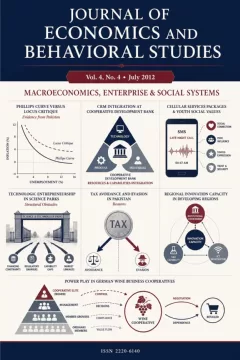
Due to the pyramidal-hierarchical structure of supply chain networks power is an essential part of them and the fact that it is very often unequally distributed among the participants is quite obvious, which might represent great difficulties for member-owned enterprise coops. By clarifying the concept of power and identifying its five different sources, we were able to build hypotheses of how power affects cooperation and coordination – the two main elements of chain management in wine business. The first aim of our research is to elaborate on the question of power. Furthermore, we will construct some hypotheses regarding the use of power as a chain management instrument. Our second aim is to apply our general findings to the wine production chain, analysing the power play between cooperatives and retailers, and between cooperatives and their members. Due to the explorative nature of our study, we based the elaboration of our second aim on oral interviews, which were conducted in 2009, as well as in 2010, at five major international food and beverage fairs (twice ProWein, Anuga, and twice Fruit Logistica) in Germany. In addition, we conducted a comprehensive review of the Lebensmittelzeitung – the leading German food and beverage newspaper – for the last five years. Discussing our hypotheses in the context of the German wine sector, in which cooperatives are still of high importance, we were able to show that power is a very useful tool for managing strictlycoordinated chains. However, depending on which source the power originates from, its effect may be completely different.
Keywords
References
- Bachmann, R. (2001). Trust, Power and Control in Trans-Organizational Relations. Organization Studies , 22(2), 337-365.
- Bacharach, P. & Baratz, M. (1962). The two faces of power. American Political Science Review , 56, 947-952. Bacharach, S. B., & Lawler, E. J. (1980). Power and politics in organizations . San Francisco: Jossey-Bass.
- Benton, W. C. & Maloni, M. (2005). The influence of power driven buyer/seller relationships on supply chain satisfaction. Journal of Operations Management , 23(1), 1-22.
- Bierstedt, R. (1950). An analysis of social power. American Sociological Review , 15, 730-738.
- Blau, P. (1964). Exchange and Power in Social Life. New York: John Wiley, 117.
- Brown, J. R., Lusch, R. F. & Nicholson, C. Y. (1995). Power and Relationship Commitment: Their Impact on Marketing Channel Member Performance. Journal of Retailing , 71(4), 363-392.
- Caldwell, N. (2003). The Treatment of Power in Supply Chains: Power, Method and Ontology, 12th International IPSERA Conference, Budapest, 501-512.
- Cant, M., Strydom, C. J. W., Jooste, C. J. & du-Plessis, P. J. (2009). Marketing Management. Edition 5, Juta and Company Limited.
- Cartwright, D. (1965). Influence, leadership and control, In: J. G. March (Ed.), Handbook of organizations. Chicago: Rand McNally, 1-47.
- Chung, S. A. & Kim, G. M. (2003). Performance effects of partnership between manufacturers and suppliers for new product development: the supplier’s standpoint. Research Policy , 32(4), 587603.
- Clegg, S., Courpasson, D. & Phillips, N. (2006). Power and organizations, SAGE Publication series.
- Cook, M. L. (1995). The Future of U.S. Agricultural Cooperatives: A Neo-Institutional Approach. American Journal of Agricultural Economics , 77, 1153-1159.
- Corsten, D. & Kumar, N. (2005). Do suppliers benefit from collaborative relationships with large retailers? An empirical investigation of Efficient Consumer Response adoption. Journal of Marketing , 69(3), 80-94.
- Cox, A. (2001). Understanding Buyer and Supplier Power: A Framework for Procurement and Supply Competence. Journal of Supply Chain Management , 37, 8.
- Cox, A., Ireland, P., Lonsdale, C. H., Sanderson, J. & Watson, G. (2002). Supply Chains, Markets and Power. Mapping buyer and supplier power regimes. Routledge studies in Business Organization and Networks.
- Cox A. (2003). Supply Chains, Markets and Power: Mapping Buyer and Supplier Power Regimes, NetLibrary, Inc, Routledge.
- Craig, D. R. & Gabler, W. K. (1963). The competitive struggle for market control, In: Readings in Marketing (Westing, J.E., Ed.). Englewood Cliffs, New Jersey: Prentice Hall.
- Crook, T. R. & Combs, J. G. (2007). Sources and consequences of bargaining power in supply chains. Journal of Operations Management , 25(2), 546-555.
- Dahl, R. (1957). The concept of power. Behavioral Science , 2, 201-215.
- Dapiran, G. P. & Hogarth-Scott, S. (2003). Are co-operation and trust being confused with power? An analysis of food retailing in Australia and the UK. International Journal of Retail & Distribution Management , 31(5), 256-267.
- Davies, B., Black stock, K., Brown, K. & Shannon, P. (2004). Challenges in creating local agri-environmental cooperation action amongst farmers and other stakeholders, FINAL REPORT of Scottish Executive Environment and Rural Affairs Department, Aberdeen, UK.
- Dickinson, D. (2001). The carrot vs. the stick in work team motivation. Experimental Economics , 4, 107124.
- Eilers, C. & Hanf, C. H. (1999). Contracts between Farmers and Farmers – Processing Co-operatives: A Principal-Agent Approach for the Potato Starch Industry, In: Galizzi, G. and L. Venturini (eds.) Vertical Relationships and Coordination in the Food System, Heidelberg, 267-284.
- El-Ansary, A. L. & Stern, L. W. (1972). Power measurement in the distribution channel. Journal of Marketing Research , 9, 47-52.
- Etgar, M. (1976). Channel Domination and Countervailing Power in Distribution Channels. Journal of Marketing Research , 13, 254-262.
- Flynn, B. B., Zhao, X., Huo, B. & Yeung, J. H. Y. (2008). We have the power! How customer power affects supply chain relationships. Business Horizons , 51, 169-174
- Frazier, G. L. & Antia, K. D. (1995). Exchange relationships and interfirm power in channels of distribution. Journal of the Academy of Marketing Science , 23, 321-326.
- French, J. R. P. & Raven, B. (1959). The bases of social power, in: Cartwright, D. (Eds), Studies in Social Power, University of Michigan Press, Ann Arbor, MI, 150-167.
- Ganesan, Sh., George, M., Jap, S., Palmatier, R.W., Weitz, B. (2009). Supply Chain Management and Retailer Performance: Emerging Trends, Issues, and Implications for Research and Practice. Journal of Retailing , 85 (1, 2009), pp. 84-94
- Gaski, J. (1984). The Theory of Power and Conflict in Channels of Distribution. Journal of Marketing , Vol. 48, No. 3, (summer, 1984), pp. 9-29.
- Gaski, J.F. (1986). The theory of power and conflict in channels of distribution. Journal of Marketing , Vol. 48 (3), pp. 9-29.
- Giebels, E., De Dreu C.K.W. & van de Vliert, E. (1998). The alternative negotiator as the invisible third at the table: The impact of potency information. International Journal of Conflict Management , 9, pp. 5-21.
- Gulati, R. & Sytch, M. (2005). Exploring the effects of organizational interdependence on performance: the role of embeddedness and power, working paper, Kellogg School of Management, North-western University.
- Hage, J. (1972). Techniques and Problems of Theory Construction in Sociology, Wiley, New York.
- Hanf, J. & Kühl, R. (2008). Genossenschaften im Wandel der deutschen Agrar- und Ernährungswirtschaft. Berichte über Landwirtschaft , 86(1), 162-178.
- Hanf, J. & Kühl, R. (2004). Strategy focussed Supply Chain Networks, In: Bremmers, H.J., Omta, S.W.F., Trienekens, J.H and E.F.M. Wubben (eds.). Dynamics in Chain and Networks. Wageningen Academic Publishers, 104-110.
- Hanf, J. H. & Schweickert, E. (2007). How to deal with member heterogeneity – management implications. International Journal of Cooperative Management , 3, 40-48.
- Hingley, M. (2005). Power to all our friends? Learning to live with imbalance in UK supplier-retailer relationships. Industrial Marketing Management , 34(8), 848-858.
- Hoffmann, D. (2000). Winzer Genossenschaften - Mehr Marktorientierung gefordert. Weinwirtschaft , 3, 20-26.
- Hu, T. L. & Sheu, J. B. (2005). Relationships of Channel Power, Noncoercive Influencing Strategies, Climate, and Solidarity: A Real Case Study of the Taiwanese PDA Industry. Industrial Marketing Management , 34(5), 447-461.
- Hu, T. L. & Jiuh-Biing, S. (2003). A Fuzzy-based Customer Classification Method for Advanced DemandResponsive Logistical Distribution Operations. Fuzzy Sets and Systems , 139, 431-450.
- Ireland, R. D. & Webb, J. W. (2007). A multi-theoretic perspective on trust and power in strategic supply chains. Industrial Marketing Management , 3, 482–497.
- Ireland, R. D., Hitt, M. A. & Webb, J. W. (2005). Entrepreneurial alliances and networks, In: Shenkar, O., Reuer, J.J. (Eds.), Handbook of Strategic Alliances. Sage Publications, Thousand Oaks, CA, 333-352.
- Jap, S. D. & Ganesan, S. (2000). Control Mechanisms and the Relationship Life Cycle: Implications for Safeguarding Specific Investments and Developing Commitment. Journal of Marketing Research , 37(2), 227-245.
- Jarillo, J. C. (1988). On strategic networks. Strategic Management Journal , 9, 31-41.
- Kalafatis, S. P. (2000). Buyer – seller relationships along channels of distribution. Industrial Marketing Management , 31, 215-228.
- Kumar, N. (2005). The power of power in supplier-retailer relationships. Industrial Marketing Management , 34, 863-866.
- Lawler, E. J. & Yoon, J. (1996). Commitment in Exchange Relations: Test of a Theory of Relational Cohesion. American Sociological Review , 61, 89-108.
- Lazzarini, S. G., Chaddad, F. R. & Cook, M. L. (2001). Integrating supply chain and network analyses: The study of netchains. Journal on Chain and Network Science , 1, 7-22.
- Lee, K. L. & Low, G. T. (2008). The Exercise of Social Power and the Effect of Ethnicity: Evidence from Malaysian’s Industrial Companies. International Business Research , 1(2), 53-65.
- Lee, D. Y. (2001). Power, Conflict, and Satisfaction in IJV Supplier-Chinese Distributor Channels. Journal of Business Research , 52, 149-60.
- Leonidou, L. C., Talias, M. A. & Leonidou, C. N. (2008). Exercised power as a driver of trust and commitment in cross-border industrial buyer–seller relationships. Industrial Marketing Management , 37, 92-103.
- Liu, H. & Wang, Y. P. (2000). Interfirm Channel Relationships, Influence Strategies and Performance in China: An Empirical Examination, In: Culture and International Business, Kip Becker, Ed.: The Haworth Press, Inc.
- Lusch, R. F. & Brown, J. R. (1996). Interdependency, Contracting, and Relational Behavior in Marketing Channels. Journal of Marketing , 60, 19-38.
- LZ. (2009a). Fritz Keller bringt Rose. Lebensmittelzeitung, 09.04.2009:19.
- LZ. (2009b). Discounter punkten beim Wein. Lebensmittelzeitung, 07.08.2009:20.
- LZ. (2007a). Marken brauchen Zeit. Lebensmittelzeitung, 23.03.2007:38.
- LZ. (2007b). Aldi investiert in Wein. Lebensmittelzeitung, 23.03.2007:1.
- Maloni, M. J. & Benton, W. C. (2000). Power Influences in the Supply Chain. Journal of Business Logistics , 21(1), 49-73.
- Mohr, J. J., Fisher, R. J. & Nevin, J. R. (1996). Collaborative Communication in Interfirm Relationships: Moderating Effects of Integration and Control. Journal of Marketing , 60(3), 103-115.
- Payan, J. M. & McFarland, R. G. (2005). Decomposing Influence Strategies: Argument Structure and Dependence as Determinants of the Effectiveness of Influence Strategies in Gaining Channel Member Compliance. Journal of Marketing , 69, 66-79.
- Ramsay, J. (1996). Power Measurement. European Journal of Purchasing & Supply Management , 2(12), 129-143.
- Reid, R. D. & Bojanic, D. C. (2009). Hospitality Marketing Management, Edition 5, John Wiley and Sons.
- Schweickert, E. (2001). Classic und Selection. Der Oenologe , 29, 3-4.
- Schweickert, E. (2007). Unternehmensstrategien in der Weinwirtschaft im Rahmen der EUWeinmarktordnungspolitik. Dissertation, DLG-Verlag, Frankfurt, Germany.
- Sheu, J. B. & Hu, T. L. (2009). Channel power, commitment and performance toward sustainable channel relationship. Industrial Marketing Management , 38(1), 17-31.
- Sodano, V. (2006). A Power-based Approach to the Analysis of the Food System, In: International agri-food chains and networks. J. Bijman, S.W.F. Omta, J.H. Trienekens (Eds.). Wageningen, Wageningen Academic Publishers, 199-215.
- Stern, L. W. & EI-Ansary, A. I. (1992). Marketing channels, Englewood Cliffs, NJ: Prentice-Hall (4th Ed.)
- Thorelli, H. B. (1986). Networks: between markets and hierarchies. Strategic Management Journal , 7, 3751.
- Tokatli, N. (2007). Asymmetrical power relations and upgrading among suppliers of global clothing brands: Hugo Boss in Turkey. Journal of Economic Geography , 7, 67-92.
- Watson, G., Lonsdale, C., Cox, A. & Chicksand, D. (2003). Effective Demand Management in the NHS, 12th International IPSERA Conference, Budapest, 1113-1125.
- Wildemann, H. (1997). Koordination von Unternehmensnetzwerken. Zeitschrift für Betriebswirtschaft , 67(4), 417-439.
- Yaqub, M. Z. (2009). Antecedents, Consequences and Control of Opportunistic Behavior in Strategic Networks. Journal of Business & Economics Research , 7(2), 15.
- Yeung, J. H. Y., Selen, W., Zhang, M. & Huo, B. (2009). The effects of trust and coercive power on supplier integration. International Journal of Production Economics , Special Issue on Operations Strategy and Supply Chains Management, 120(1), 66-78.
- Zhao, X., Huo, B., Flynn, B. B. & Yeung, J. H. Y. (2008). The impact of power and relationship commitment on the integration between manufacturers and customers in a supply chain. Journal of Operations Management , 26, 368-388.
Downloads
No downloads have been recorded for this article yet. Figures appear here once readers begin downloading the full text.
How to Cite
Share this article
License
Copyright (c) 2012 Jon Henrich Hanf, Vera Belaya, Erik Schweickert (Author)

This work is licensed under a Creative Commons Attribution 4.0 International License.
Author (s) should affirm that the material has not been published previously. It has not been submitted and it is not under consideration by any other journal. At the same time author (s) need to execute a publication permission agreement to assume the responsibility of the submitted content and any omissions and errors therein. After submission of revised paper in the light of suggestions of the reviewers, the editorial team edits and formats manuscripts to bring uniformity and standardization in published material.
This work will be licensed under Creative Commons Attribution 4.0 International (CC BY 4.0) and under condition of the license, users are free to read, copy, remix, transform, redistribute, download, print, search or link to the full texts of articles and even build upon their work as long as they credit the author for the original work. Moreover, as per journal policy author (s) hold and retain copyrights without any restrictions.
Keywords
Section
Published
Submissions
Have research to publish? Journal of Economics and Behavioral Studies welcomes submissions.
Make a Submission