Abstract
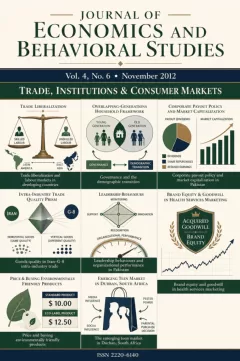
This paper reviews recent developments of the impact of trade liberalization on labor market in developing countries (henceforth DC). Many studies suggest that there is a benefit impact of trade liberalization on abandon factor of production (unskilled labor in the case of DC). However, several others works show a reversal trend in these countries such as increased in relative employment and relative’s wages of skilled labor. These later results contradict the prediction of Heckscher Ohlin Stolper-Samuelson model (HOSS) model. To reconcile theory with this empirical controversy some authors have tried to extend the traditional theory of international trade by relaxing one or more assumptions of model. The main message that can be learned about this problem is that neither empirical nor theoretical research have advanced an explanation for this puzzling. By comparing the result of the impact of trade liberalization on labor market in the Latin America and the East Asian regions, we show that differences in countries characteristics play a role to explaining this puzzling.
Keywords
References
- Acemoglu, D. (2003). Patterns of Skill Premia. Review of Economic Studies , 70, 199-230.
- Aghion, P., Robin, B., Stephen, R. & Fabrizio, Z. (2003). The Unequal Effects of Liberalization: Theory and Evidence from India. Working paper, Harvard, LSE, and IIES.
- Ahmed, S. & Zaidi, S. (2004). Trade Liberalization, Growth and Poverty Reduction the Case of Bangladesh , World Bank, Washington DC.
- Attanasio, O., Goldberg, P. & Pavcnik, N. (2004). Trade Reforms and Wage Inequality in Colombia. Journal of Development Economics, 74, 331-366.
- Arbache, J. S., Dickerson, A. & Green, F. (2004). Trade liberalization and wage in developing countries. The Economic Journal, 114(493), F73.
- Arbache, J. S. (2001). Unions and the Labor Market in Brazil, Chapter 4 in The Third Dimension of Labor Markets: Demand, Supply and Institutions in Brazil, edited by Fransisco G. Carneiro, Indermit S. Gill, Ricardo Paes de Barros; The World Bank, USA.
- Arbache, J. S. & Menezes-Filho, N. (2000). Rent sharing in Brazil: using trade liberalization as a natural experiment. Annals of the V Annual Meeting of the Latin American and Caribbean Economic Association, Rio de Janeiro,
- Aw, B. Y. & Batra, G. (1999). Wages, firm size and wage inequality: How much do exports matter? In Innovation, Industry Evolution and Employment, D.B. Audretsch and R.Thurik (eds.), Cambridge: Cambridge University Press.
- Behrman, J. R., Birdsall, N. & Szekely, M. (2000). Economic Reform and Wage Differentials in Latin America, IADB Working Paper.
- Berman, E. & Stephen, M. (2000). Skill biased technology transfer around the world. Oxford Review of Economic Policy , 16(3), 12-22.
- Beyer, H., Rojas, P. & Vergara, R. (1999). Trade liberalization and wage inequality. Journal of Development Economics , 59, 103-123.
- Bigsten, A. & Durevall, D. (2006). Openness and Wage Inequality in Kenya: 1964-2000. World Development, 34(3) , 465-480 .
- Birdsall, N., Ross, D. & Sabot, R. (1995). Inequality and growth Reconsidered: Lessons from East Asian. World Bank Economic Review, 9, 477-508.
- Bourguignon, F. & Morrisson, C. (1990). Income distribution, development and foreign trade. European Economic Review , 34, 1113-1132.
- Chen, B. L. & Hsu, M. (2001). Time-series wage differential in Taiwan: The role of international trade. Review of Development Economics , 5, 336-354.
- Currie, J. & Harrison, A. (1997). Sharing costs: the impact of trade reform on capital and labor in Marroco. Journal of Labor Economics , 15, s44-s71.
- Cragg, M, I. & Epelbaum, M. (1996). Why has wage dispersion grown in Mexico? Is it the incidence of reforms or the growing demand for skills? Journal of Development Economics, 51(1), 99-116.
- Davis, D. (1996). Trade Liberalization and Income Distribution. NBER Working Paper 5693, National Bureau of Economic Research, Cambridge, MA.
- Epifani, P. & Ganica, G. (2002). The Skill Bias of World trade. Department of Economics, MIT, Cambridge, MA.
- Esquivel, G., Jose, A. & Rodriguez, L. (2003). Technology, Trade and Wage Inequality in Mexico before and after NAFTA. Journal of Development Economics , 72, 543-565.
- Feenstra, R. C. & Gordon, H. H. (1996). Globalization, outsourcing and wage inequality. National Bureau of Economic Research Working Paper. N°5424.
- Feenstra, R. C. & Gordon, H. H. (1997). Foreign direct investments and relative wages: evidence from Mexico’s maquiladoras. Journal of International Economics , 42, 371-394.
- Feliciano, Z. M. (2001). Workers and trade liberalization: the impact of trade reforms in Mexico on wage and employment. Industrial and Labor Relation Review , 55(1), 95-115.
- Fischer, R. D. (2001). The evolution of inequality after trade liberalization. Journal of Development Economics, 66, 555-579.
- Galiani, S. & Sanguinetti, P. (2003). The impact of trade liberalization on wage inequality: Evidence from Argentina. Journal of development Economics , 72(2), 497-513.
- Goldberg, P. & Pavcnik, N. (2005). Trade, wage, and the political economy of trade protection: Evidence from the Colombian trade reforms. Journal of International Economic , 66, 75-105.
- Hanson, G. H. & Ann, H. (1999). Trade liberalization and wage inequality in Mexico. Industrial and Labor Relations Review , 52, 271-288.
- Katz, L. F. & David H. A. (1999) . Changes in the Wage Structure and Earnings Inequality. In O. Ashenfelter and D. Card (Eds.). Handbook of Labor Economics , 3 (Amsterdam: North-Holland, 1999)
- Krugman, P. R. (2000). Technology, Trade and factor prices. Journal of international Economics , 50, 51-71.
- Leamer, E. E. (1995). A trade economist’s view of US wages and globalization, in Susan Collins (ed.), Imports, Exports and the American Worker, Washington, D.C.; Brookings Institution.
- Leamer, E. E. (1998). Wage inequality from international competition and technological change: Theory and country experience. American Economic Review , 86, 309-314.
- Lee, E. & Vivarelli, M. (2006). The Social Impact of Globalization in the Developing Countries. International Labour Review , 145(3), 167-184.
- Li, W. & Bin, X. (2003). Trade, Foreign Investment and China’s Wage Inequality”, University of Florida (Working paper available online on http://bear.cba.ufl.edu/xu/) .
- Menezes-Filho, N. A. & Rodrigues, M. J. R. (2001). Openness, technology and skills: evidence from the Brazilian manufacturing. In Proceedings of the Workshop on Trade Liberalization and the Labor Market in Brazil. Brasília: UnB/IPEA .
- Milner, C. & Wright, P. (1998). Modeling Labour Market Adjustment to Trade Liberalization in an Industrializing Economy. Economic Journal , 108(447), 509-28.
- Mishra, P. & Kumar, U. (2008). Trade Liberalization and Wage Inequality: Evidence from India. Review of Development Economics , 12, 291-311.
- Pavcnik, N., Blom, A., Goldberg, P. K., & Schady, N. (2004). Trade Policy and Industry Wage Structure: Evidence from Brazil. World Bank Economic Review, 18(3), 319-344 .
- Pavcnik, N. (2003). What explain skill upgrading in less developing countries. Journal of Development Economics , 71, 311-328.
- Pissarides, C. A. (1997). Learning by trading and returns to human capital in developing countries. World Bank Economic Review , 11, 17-32.
- Rama, M. (1994). The labor market and trade reform in manufacturing. In M. Connolly, and J. de Melo (eds.), The Effects of Protectionism on a Small Country: The Case of Uruguay. World Bank Regional and Sectoral Studies, Washington, DC.
- Rattso, J. & Torvik, R. (1998). Zimbabwean Trade Liberalization: Ex-post Evaluation, Cambridge Journal of Economics , 22(3), 325-46.
- Revenga, A. (1997). Employment and wage effects of trade liberalization: the case of Mexican manufacturing. Journal of Labor Economics , 15, s20-s43.
- Robbins, D. J. (1994a). Worsening Relative Wage Dispersion in Chile during Trade Liberalization, and its Causes: is Supply at Fault? Development Discussion Papers No. 484, Harvard Institute for International Development, Harvard University.
- Robbins, D. J. (1995) . Wage dispersion and trade in Colombia: an analysis of greater Bogota: 1876-1989. Harvard University: Harvard Institute goes International Development, 1995.
- Robbins, D. (1996b). ‘HOS hits facts: facts win evidence on trade and wages in developing world’, Harvard Institute for International Development, Harvard University.
- Robbins D. J. (1996). Evidence on trade and wage in the developing world OCDE development centre technical paper N0 119 December 1996.
- Robbins, D. J. & Gindling, T. H. (1999). Trade liberalization and the relative wages for more-skilled workers in Costa Rica. Review of Development Economics , 3, 140-154.
- Robertson, R. (2000). Trade liberalization and wage inequality: Lessons from the Mexican experience. The World Economy, 23(6), 827-849.
- Slaughter, M. J. (1998). International trade and labor market outcomes: results, questions and policy options. The Economic Journal , 108(450), 1452-62.
- Spilimbergo, A., Juan, L. L. & Miguel, S. (1999). Income distribution factor endowment and trade openness. Journal of Development Economics, 59. 77-101.
- Tan, H. & Batra, G. (1997). Technology and firm size wage differentials in Colombia, Mexico and Taiwan (China). World Bank Economic Review , 11(1), 59-83.
- Te-Velde, D. W. (2003). Foreign Direct Investment and Income Inequality in Latin America. Experiences and policy implications. London: Overseas Development Institute.
- Thoening, M. & Verdier, T. (2003). A theory of defensive skill-biased innovation and globalization.” The American Economic Review , 93(3), 709-728.
- Verhoogen, E. A. (2008). Trade, quality upgrading, and wage inequality in the Mexican manufacturing sector. Quarterly Journal of Economics, 123(2), 489–530 05.
- Winter, L. A. (2000). Trade, Trade Policy, and Poverty: What Are the Links? CEPR Working Paper 2382, Centre for Economic Policy Research, London.
- Williamson, J. (1997). Globalization and inequality, Past and Present. World Bank Research Observer, 12, 117-135.
- Wood, A. (1994.). North-South trade, employment and inequality. Changing fortunes in skill-driven world. Oxford: Clarendon Press.
- Wood, A. (1995). How trade hurts unskilled workers. Journal of Economic Perspectives, 9, 57-80.
- Wood, A. (1997). Openness and wage inequality in developing countries: the Latin American challenge to East Asian conventional wisdom. The World Bank Economic Review , 11(1), 33–57.
- Wood, A. (1999). Openness and wage inequality in developing countries: the Latin American challenge to East Asian conventional wisdom. In: Baldwin, R.E., Cohen, D., Sapir, A., Venables, A. (eds . ) Market integration, regionalism and global the economy. Cambridge: Cambridge University Press, 1999.
- Xu, B. (2001). Factor bias, sector bias, and the effects of technical progress on relative wages. Journal of International Economics, 54(1), 5–25.
- Yeaples, S. (2003). Firm Heterogeneity, International trade and Wages. Department of Economics, University of Pennsylvania, Philadelphia.
- Zhu, S. C. & Trefler, D. (2005). Trade inequality in developing countries: A general equilibrium analysis. Journal of international Economics, 65, 21-48.
Downloads
No downloads have been recorded for this article yet. Figures appear here once readers begin downloading the full text.
How to Cite
Share this article
License
Copyright (c) 2012 Zouhair Mrabet, Charfeddine Lanouar (Author)

This work is licensed under a Creative Commons Attribution 4.0 International License.
Author (s) should affirm that the material has not been published previously. It has not been submitted and it is not under consideration by any other journal. At the same time author (s) need to execute a publication permission agreement to assume the responsibility of the submitted content and any omissions and errors therein. After submission of revised paper in the light of suggestions of the reviewers, the editorial team edits and formats manuscripts to bring uniformity and standardization in published material.
This work will be licensed under Creative Commons Attribution 4.0 International (CC BY 4.0) and under condition of the license, users are free to read, copy, remix, transform, redistribute, download, print, search or link to the full texts of articles and even build upon their work as long as they credit the author for the original work. Moreover, as per journal policy author (s) hold and retain copyrights without any restrictions.
Keywords
Section
Published
Submissions
Have research to publish? Journal of Economics and Behavioral Studies welcomes submissions.
Make a Submission