Abstract
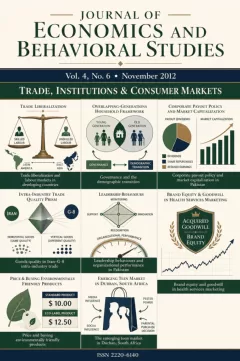
The growing importance of brand equity is widely recognized by researchers and business strategists alike. As such, creative new ways to capture the value of this intangible asset must be devised and tested. The current study uses acquired goodwill as a surrogate indicator of brand equity and looks at the importance of brand equity for firms in the health services industry by measuring the impact of acquired goodwill on stockholder returns. The findings indicate that acquired goodwill and stockholder returns appear to be significantly and positively related to each other. In addition, firms that have higher than average amounts of goodwill relative to total assets differ significantly in terms of stockholder returns than those that have relatively little investment in goodwill. Finally, the study indicates that the impact of goodwill on investor returns is highest for firms operating in one specific industry sub-sector, the market for home health services.
Keywords
- Goodwill Search this journal for Goodwill (opens in a new tab)
- Holding Period Returns Search this journal for Holding Period Returns (opens in a new tab)
- Brand Equity Search this journal for Brand Equity (opens in a new tab)
- Health Services Search this journal for Health Services (opens in a new tab)
References
- Aaker, D. A. (1991). Managing Brand Equity. Capitalizing on the Value of a Brand Name. New York: Free Press.
- Aaker, D. A. & Jacobson, R. (1994). The Financial Information Content of Perceived Quality. Journal of Marketing Research , 31(3), 191-201.
- Bashe, G. & Hicks, N. J. (2000). Branding Health Services: Defining Yourself in the Marketplace. Aspen Publishers, Inc: Gaithersburg, Maryland.
- Berry, L. L. & Seltman, K. D. (2007). Building a Strong Services Brand: Lessons from Mayo Clinic. Business Horizons , 50(3), 199-209.
- Catlett, G. R. & Olson, N. O. (1968). Accounting Research Study No. 10: Accounting for Goodwill. New York, NY: American Institute of Certified Public Accountants.
- Ding, Y., Richard, J. & Stolowy, H. (2008). Towards an Understanding of the Phases of Goodwill Accounting in Four Western Capitalist Countries: From Stakeholder Model to Shareholder Model. Accounting, Organizations, and Society , 33(7-8), 718-755.
- Eng, L. L. & Keh, H.T. (2007). The Effects of Advertising and Brand Value on Future Operating and Market Performance. Journal of Advertising , 36(4), 91-101.
- FASB. (2001). Statement of Financial Accounting Standards (SFAS) No. 142: Goodwill and Other Intangible Assets. Norwalk, CT: Financial Accounting Standards Board.
- Ferguson, R. J., Paulin, M. & Leiriao, E. (2006). Loyalty and Positive Word-of-Mouth: Patients and Hospital Personnel as Advocates of a Customer-Centric Health care Organization. Health Marketing Quarterly , 23(3), 59-77.
- Gonzalez, F. C. (2010). Jumping the Curve: How Do Angel Investors Invest? Business World , 5, S2-10.
- Gray, B. J. (2006). Benchmarking Services Branding Practices. Journal of Marketing Management , 22(7-8), 717-758.
- Haxthausen, O. (2009). Valuing Brands and Brand Investments: Key Learnings and Future Expectations. Journal of Brand Management , 17(1), 18-25.
- James, H. S. & Rassekh, F. (2000). Smith, Friedman, and Self-Interest in Ethical Society. Business Ethics Quarterly , 10(3), 659-674.
- Jerold, L. & Richards, K. (2005). Goodwill. American Journal of Orthodontics and Dentofacial Orthopedics , 127(3), 389-392.
- Keller, K. L. (2003). Strategic Brand Management: Building, Measuring, and Managing Brand Equity, 2nd ed. Upper Saddle River, NJ: Prentice Hall.
- Keller, K. L. & Lehmann, D. R. (2009). Assessing Long-Term Brand Potential. Journal of Brand Management , 17(1), 6-17.
- Leone, R. P., Rao, V. R., Keller, K. L., Luo, A. M., McAlister, L. & Srivastava, R. K. (2006). Linking Brand Equity to Customer Equity. Journal of Service Research , 9(2), 125-138.
- Madden, T. J., Fehle, F. & Fournier, S. (2006). Brands Matter: An Empirical Demonstration of the Creation of Shareholder Value Through Branding. Journal of the Academy of Marketing Science , 34(2), 224-235.
- Mikkelson, W. H. & Ruback, R. S. (1985). An Empirical Analysis of the Interfirm Equity Investment Process. Journal of Financial Economics, 14(4), 523-553.
- Petersen, J. A., McAlister, L., Reibstein, D. J., Winer, R. S., Kumar, V. & Atkinson, G. (2009). Choosing the Right Metrics to Maximize Profitability and Shareholder Value. Journal of Retailing , 85(1), 95-111.
- Shapiro, S. S. & Wilk, M. B. (1965). An Analysis of Variance Test for Normality (Complete Samples). Biometrika , 52(3-4), 591-611.
- Thornton, C. & Brown, J. D. (2009). Employer Demand for Health Services Researchers in the Year 2020. Health Services Research , 44(6), 2242-2254.
- Trufelman, L. (2007). Blame CMO Turnover on Metrics Mania. Advertising Age , 78(25), 21.
- Villanueva, J., Yoo, S. & Hanssens, D. M. (2008). The Impact of Marketing-Induced Versus Word-of-Mouth Customer Acquisition on Customer Equity Growth. Journal of Marketing Research, 45(1), 48-59.
Downloads
No downloads have been recorded for this article yet. Figures appear here once readers begin downloading the full text.
How to Cite
Share this article
License
Copyright (c) 2012 Richard A. Heiens, Robert T. Leach, Leanne C. McGrath (Author)

This work is licensed under a Creative Commons Attribution 4.0 International License.
Author (s) should affirm that the material has not been published previously. It has not been submitted and it is not under consideration by any other journal. At the same time author (s) need to execute a publication permission agreement to assume the responsibility of the submitted content and any omissions and errors therein. After submission of revised paper in the light of suggestions of the reviewers, the editorial team edits and formats manuscripts to bring uniformity and standardization in published material.
This work will be licensed under Creative Commons Attribution 4.0 International (CC BY 4.0) and under condition of the license, users are free to read, copy, remix, transform, redistribute, download, print, search or link to the full texts of articles and even build upon their work as long as they credit the author for the original work. Moreover, as per journal policy author (s) hold and retain copyrights without any restrictions.
Keywords
- Goodwill Search this journal for Goodwill (opens in a new tab)
- Holding Period Returns Search this journal for Holding Period Returns (opens in a new tab)
- Brand Equity Search this journal for Brand Equity (opens in a new tab)
- Health Services Search this journal for Health Services (opens in a new tab)
Section
Published
Submissions
Have research to publish? Journal of Economics and Behavioral Studies welcomes submissions.
Make a Submission