Abstract
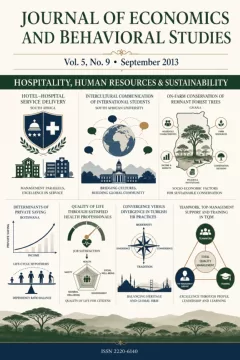
The South African concept of Provincial Hospitals in South Africa is characterised by the fact that it is managed by the state and its structure, operations and location were predominantly influenced by its historical record and to a large extent the challenges experienced with its management is directly linked to the problems of the past. This specifically has to do with the dire lack of essential resources from financial aligned resources to health care expertise. The stand- off here is against the desperate need for basic health care services from the many millions that have been previously disadvantaged. The ability to close this gap lies in the heart of efficient, effective and economical management of the provincial hospitals. The management of hotels and its link to the management of hospitals becomes significant within this context as essential elements such as hospitality and hospitality practice may be embraced within the management of health care services within South Africa. The paper explores the strong theoretical base of hospitality within hotels and its relevance to hospitals which is premised on service delivery the roots of which are fixed on the efficiencies of management practice. A theoretical model will be explored in respect of its application to the management of provincial hospitals in South Africa. This is further enhanced by a parallel study of a provincial hospital in South Africa which would incorporate amongst other an analysis of its socio-economic and legislative environments.
Keywords
References
- Abbott, P. & Lewry, S. (1999). Front Office: Procedures, Social Skills, Yield and Management. Oxford: Butterworth-Heinemann.
- Bardi, J. A. (2011). Hotel Front Office Management . 4th ed . Hoboken, N.J.: John Wiley & Sons.
- Berger, F. & Brownwell, J. 2009. Organizational Behavior for the Hospitality Industry. Upper Saddle River, N.J.: Pearson Prentice Hall.
- Chetty, K. (2009). RK Khan Hospital [online]. Available at: http://www.kznhealth.gov.za/rkkhanhospital.htm [Accessed 28 November 2009].
- David, J. (2005). Textbook of Hotel Management . New Delhi: Anmol Publications.
- Dix, C. & Baird, C. (1998). Front Office Operations. Harlow, Essex: Longman.
- Du-Toit, D., Knipe, A., Van-Niekerk, D., Van-der-Walt, G. & Doyle, M. (2002). Service Excellence in Governance. Sandown: Heinemann Publishers.
- Ford, C. & Heaton, C. P. (2000). Managing the Guest Experience in Hospitality. Albany, N.Y.: Delmar/Thomson Learning.
- Fottler, M. D., Ford, R. C., Roberts, V., Ford, E. W. & Spears, J. D. (2000). Creating a healing environment: The importance of the service setting in the New Consumer-Oriented Healthcare System [online]. Journal of Healthcare Management, 45(2), 91-106.
- Ive, J. (2000). Achieving Excellence in Guest Service. Melbourne: Hospitality Press.
- Jones, P. & Lockwood, A. (1989). The Management of Hotel Operations. London: Cassell Educational.
- Kandampully, J. A. (2007). Services Management: The New Paradigm of Hospitality. Upper Saddle River, N.J.: Pearson Prentice Hall.
- Keiser, J. R. (1979). Principles and Practice of Management in the Hospitality Industry . Boston: CBI Publishing.
- Melamed, Z. (2005). The struggle continues [online]. Available at: http://www.chatsworthlive.co.za/articles.php?step=2&id=11 [Accessed 3 March 2010].
- Mullins, L. J. (2001). Hospitality Management and Organisational Behaviour . Harlow, Essex: Longman.
- Mullins, L. J. (1999). Management and Organizational Behavior . London: Pitman Publishing.
- Mullins, L. J. (1995). Hospitality Management: A Human Resources Approach. Harlow, Essex: Longman.
- Olsen, M. D., Teare, R. & Gummesson, E. (1996). Service Quality in Hospitality Organizations. London: Cassell.
- Pienaar, J. & Willemse, S. A. (2008). Burnout, engagement, coping and general health of service employees in the hospitality industry [online]. Tourism Management , 29(6), 1053-1063.
- Price, B. & Jaffe, D. (2008). The Best Service is No Service. San Francisco: Jossey-Bass.
- Severt, D., Aiello, T., Elswick, S. & Cyr, C. (2008). Hospitality in Hospitals? International Journal of Contemporary Hospitality Management, 20(6), 664-678.
- Singh, P. K. (2006). Express Hospitality. Hospitals turn to Hospitality. Available at: http://www.expresshospitality.com/20060215/market01.shtml [Accessed 21 September 2011].
- Soumya, V. (2001). RKHS: Making way for hospitality in hospitals. Available at: http://www.expresshealthcaremgmt.com/20010915/insignia2.htm [Accessed 22 March 2008].
- South African Government Information: Health. (2008). Available at: http://www.info.gov.za/aboutsa/health.htm[Accessed 10 May 2009].
- Srinivasan, A. V. (2008). Managing a Modern Hospital. Los Angeles, Calif.: Response Books.
- Van der Walt, G. & Du Toit, D. F. P. (1999). Managing for excellence in the public sector . 2nd ed. Kenwyn: Juta.
- Walker, J. R. & Miller, J. E. (2010). Supervision in the Hospitality Industry, Leading Human Resources. Hoboken, N.J.: John Wiley & Sons.
- Williams, J. A. & Uysal, M. (2003). Current Issues and Development in Hospitality and Tourism Satisfaction. Binghamton, N.Y.: Haworth Hospitality Press. UNSTRUCTURED INTERVIEWS
- Chetty, K. (2010). Interviewed by A. Deen. RK Khan Hospital, Durban, 30 March
Downloads
No downloads have been recorded for this article yet. Figures appear here once readers begin downloading the full text.
How to Cite
Share this article
License
Copyright (c) 2013 A. Deen, R. Balkaran (Author)

This work is licensed under a Creative Commons Attribution 4.0 International License.
Author (s) should affirm that the material has not been published previously. It has not been submitted and it is not under consideration by any other journal. At the same time author (s) need to execute a publication permission agreement to assume the responsibility of the submitted content and any omissions and errors therein. After submission of revised paper in the light of suggestions of the reviewers, the editorial team edits and formats manuscripts to bring uniformity and standardization in published material.
This work will be licensed under Creative Commons Attribution 4.0 International (CC BY 4.0) and under condition of the license, users are free to read, copy, remix, transform, redistribute, download, print, search or link to the full texts of articles and even build upon their work as long as they credit the author for the original work. Moreover, as per journal policy author (s) hold and retain copyrights without any restrictions.
Keywords
Section
Published
Submissions
Have research to publish? Journal of Economics and Behavioral Studies welcomes submissions.
Make a Submission