Abstract
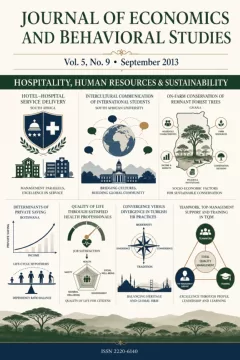
As a result of increasing competition, organizations have realised the importance of its human capital in bringing about continuous improvement in quality in order to secure increased customer satisfaction and loyalty as well as sustainable development. Strategic approaches frequently, though not always successfully, adopted in a TQM environment include teamwork, management support and training. Hence, this study aims to assess managerial perceptions of the importance of teamwork, continuous top management support and training in bringing about TQM. Biographical influences on these managerial perceptions are also assessed. A sample of 202 managers (middle, senior, top) was drawn using a stratified random sampling technique. Data was collected using a pre-coded, selfdeveloped questionnaire whose psychometric properties were assessed using Factor Analysis and Cronbach’s Coefficient Alpha respectively. Data was analyzed using descriptive and inferential statistics. The findings reflect that in this organization, the focus in bringing about total quality management is on continuous top management support, followed by continuous training and learning and lastly, teams and teamwork. These dimensions also significantly inter-correlate with each other. Biographical influences were also noted in terms of position, qualifications and gender. Based on the results, recommendations are presented for enhancing team performance, managerial support and training in efforts to bring about TQM.
Keywords
- Teams and Teamwork Search this journal for Teams and Teamwork (opens in a new tab)
- Managerial Support Search this journal for Managerial Support (opens in a new tab)
- Training and Learning Search this journal for Training and Learning (opens in a new tab)
- Total Quality Management Search this journal for Total Quality Management (opens in a new tab)
References
- Ali, M. & Shastri, R. K. (2010). Implementation of total Quality Management in Higher Education. Asian Journal of Business Management , 2(1), 9-16.
- Bank, J. (2000). The Essence of Total Quality Management (2nd Edition), Europe: Prentice Hall.
- Boiney, L. G. (2001). Gender Impacts Virtual Work Teams. Graziadio Business Review , 4(4), 1-5.
- Borrow, J. (1993). Does total quality management equal organizational learning? Quality Progress, 26(7), 39-43.
- Brewster, C., Carey, L., Dowling, P., Grobler, P., Holland, P. & Warnich, S. (2003). Contemporary issues in human resource management: gaining a competitive advantage, Cape Town: Oxford University Press Southern Africa.
- Brown, P. (1999). Client-based management qualifications: A case of win-win? Journal of Management Development , 18(4), 350-361.
- Callanan, G. A. (2004). What would Machiavelli think? An overview of the leadership challenges in teambased structures. Team Performance Management, 10(3-4), 77-83.
- Daily, B. F. & Bishop, J. W. (2003). TQM workforce factors and employee involvement: the pivotal role of teamwork. Journal of Managerial Issues , 15(4), 1-12.
- Dale, B. G. (2003). Managing Quality (4th Edition), United Kingdom: Blackwell Publishing Ltd.
- Dale, B. G., van der Wiele, T. & van Iwaarden, J. (2007). Managing Quality (5th Edition), USA: Blackwell Publishing.
- Evans, J. R. (2005). Total Quality: Management, Organization, and Strategy (4th Edition), Canada: Thomson South-Western.
- Evans, J. R. & Lindsay, W. M. (2005). The Management and Control of Quality (6th Edition), Singapore: Thomson South-Western.
- Fincham, R. & Rhodes, P. (2005). Principles of Organizational Behaviour (4th Edition), Oxford: Oxford University Press.
- Foster, S. T. (2004). Managing Quality: An Integrative Approach (2nd Edition), Singapore: Pearson Prentice Hall.
- French, R., Rayner, C., Rees, G. & Rumbles, S. (2008). Organizational Behaviour, England: John Wiley & Sons.
- Gomez-Mejia, L. R., Balkin, D. B. & Cardy, R. L. (2004). Managing Human Resources (4th Edition), New Jersey: Prentice Hall,
- Grandzol, J. R. & Gershon, M. (1997). Which TQM practices really matter: An empirical investigation. Quality Management Journal , 4(4), 43-59.
- Hoogendoorn, S., Oosterbeek, H. & van Praag, M. (2013). The Impact of Gender Diversity on the Performance of Business Teams: Evidence from a Field Experiment. Management Science , Articles in Advance , 1, 1-15.
- Irani, Z., Beskese, A. & Love, P. E. D. (2004). Total quality management and corporate culture: constructs of organisational excellence. Elsevier , Technovation , 24, 643-650.
- Keighley, T. (1993). Creating an empowered organization. Training and Development in Australia , 2, 6- 11.
- Kelemen, M. L. (2003). Managing Quality: Managerial and Critical Perspectives, London: Sage Publications.
- Kinnich, M. (2002). Improving Management Effectiveness: Human Resource Tools. Effective People Management: HR Tools. Mark Kinnich & Associates.
- Kirkman, B. L., Tesluk, P. E. & Rosen, B. (2004). The Impact of Demographic Heterogeneity and Team Leader-Team Member Demographic Fit on Team Empowerment and Effectiveness. Eastern Academy of Management , 3, 334-368.
- Knouse, S. B. (2007). Building task cohesion to bring teams together. Quality Progress , 40(3), 49-53.
- Kontoghiorghes, C. (2003). Examining the Association between Quality and Productivity Performance in a Service Organization. ASQ Publications, Quality Management Journal , 10(1), 1-3.
- Maddox, J. E. (2009). The Influence of Top Management Support on TQM Indicators of Defect Reduction and Profitability, Capella University.
- Martinez-Lorente, A. R., Dewhurst, F. & Dale, B. G. (1999). TQM and Business Innovation. European Journal of Innovative Management, 2(1), 12-19.
- Maughan, G. R. & Anderson, T. (2005). Linking TQM Culture to Traditional Learning Theories. Journal of Industrial Technology , 21(4), 2-7.
- Mealiea, L. & Baltazar, R. (2005). A Strategic Guide for Building Effective Teams. Public Personnel Management , 34(2), 141-161.
- Mustafa, E. M. A. & Talib Bon, A. (2012). Role of top management leadership and commitment in total quality management in service organization in Malaysia: A review and conceptual framework. Elixir Human Resource Management , 51, 11029-11033.
- Noe, R. A., Hollenbeck, J. R., Gerhart, B. & Wright, P. M. (2008). Human Resource Management: Gaining a Competitive Advantage, Boston: McGraw-Hill Irwin.
- Oakland, J. (1995). Total Quality Management, Oxford: Butterworth Heinemann Ltd.
- Patel, S. G. (2013). TQM in Higher Education Institutions (HEIs). International Journal for Research in Education , 2(2), 79-83.
- Pool, S. W. (2000). The learning organization: motivating employees by integrating TQM philosophy in a supportive organizational culture. Leadership and Organization Development Journal , 21(8), 373378.
- Psychogios, A. G. & Priporas, C. V. (2007). Understanding Total Quality Management in Context: Qualitative Research on Managers’ Awareness of TQM Aspects in the Greek Service Industry. The Qualitative Report , 12(1), 40-66.
- Quinn, R. E., Faerman, S. R., Thompson, M. P. & McGrath, M. R. (2003). Becoming a Master Manager: A Competency Framework (3rd Edition), New York: John Wiley & Sons.
- Ribière, V. M. & Khorramshahgol, R. (2004). Integrating Total Quality Management and Knowledge Management. Journal of Management Systems , 16(1), 39-54.
- Rogelberg, S. G. & Rumery, S. M. (1996). Gender diversity, team decision quality, time on task, and interpersonal cohesion. Small Group Research , 27(1), 79-90.
- Salas, E. & Rosen, M. A. (2013). Building high reliability teams: progress and some reflections on teamwork training. Quality and Safety in Health Care , 22, 369-373.
- Scully, J. P. (1993). A point of view: Actions speak louder than buzzwords. National Productivity Review (NLP) , 4, 453-456.
- Schultz, H., Bagraim, J., Potgieter, T., Viedge, C. & Werner, A. (2003). Organisational behaviour: A contemporary South African Perspective, Pretoria: Van Schaik Publishers.
- Sekaran, U. (2003). Research Methods for Business: A Skill Building Approach (4th Edition), United States of America: John Wiley & Sons, Inc.
- Shahraki, A., Konarizadeh, M., Paghaleh, M. J. & Zarei, M. (2011). HRM effects on TQM. Business Management Dynamics , 1(3), 1-12.
- The Irish Times, Business 2000. (2007/8). Total Quality Management . Bus Eireann (11th Edition), Retrieved from the World Wide Web on 15 July 2013: http://www.buseireann.ie
- Thamizhmanii, S. & Hasan, S. (2010). A review on an employee empowerment in TQM practice . Journal of Achievements in Materials and Manufacturing Engineering , 39(2), 204-210.
- Winmark, K. & ReedSmith, L. (2011). Gender Balancing: It’s Good Business. A guide to making diversity in leadership happens. Winmark: Networks, Research, Development and Reed Smith: The business of relationships, 1-40.
- Workplace Gender Equality Agency. (2013). The business case for gender equality. Retrieved from the World Wide Web on 15 July 2013: http://www.wgea.gov.au, 1-9.
- Yang, B. (2003). Toward a holistic theory of knowledge and adult learning. Human Resource Development Review , 2(2), 106-129.
- Yen, H. J., Krumwiede, D. W. & Sheu, C. (2002). A cross-cultural comparison of top management personality for TQM implementation. Total Quality Management , 13(3), 335-346.
- Yousaf, N. (2006). Top Management Commitment for TQM – A Process Model. Pakistan’s 10th International Convention on Quality Improvement, November 27-28, Lahore, Pakistan.
Downloads
No downloads have been recorded for this article yet. Figures appear here once readers begin downloading the full text.
How to Cite
Share this article
License
Copyright (c) 2013 Sanjana Brijball Parumasur, Patsy Govender (Author)

This work is licensed under a Creative Commons Attribution 4.0 International License.
Author (s) should affirm that the material has not been published previously. It has not been submitted and it is not under consideration by any other journal. At the same time author (s) need to execute a publication permission agreement to assume the responsibility of the submitted content and any omissions and errors therein. After submission of revised paper in the light of suggestions of the reviewers, the editorial team edits and formats manuscripts to bring uniformity and standardization in published material.
This work will be licensed under Creative Commons Attribution 4.0 International (CC BY 4.0) and under condition of the license, users are free to read, copy, remix, transform, redistribute, download, print, search or link to the full texts of articles and even build upon their work as long as they credit the author for the original work. Moreover, as per journal policy author (s) hold and retain copyrights without any restrictions.
Keywords
- Teams and Teamwork Search this journal for Teams and Teamwork (opens in a new tab)
- Managerial Support Search this journal for Managerial Support (opens in a new tab)
- Training and Learning Search this journal for Training and Learning (opens in a new tab)
- Total Quality Management Search this journal for Total Quality Management (opens in a new tab)
Section
Published
Submissions
Have research to publish? Journal of Economics and Behavioral Studies welcomes submissions.
Make a Submission