Abstract
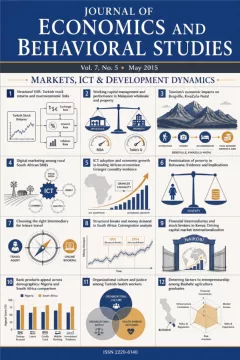
Financial intermediaries continue to play a big role in the internationalization of capital markets. In Kenya all transactions in the Nairobi Securities Exchange must be carried out by an authorized stock broker. This study covered the stockbrokers and their role in the internationalization of capital markets within Kenya. The study adopted a descriptive survey. Population of interest comprised of 19 stockbrokerage firms licensed to operate at the Nairobi Securities Exchange (NSE). The study findings indicate that stock brokers contribute to the internationalization of capital markets through their roles in facilitating cross-listing, offshoring and foreign investor by aiding in sourcing for investment opportunities, provision of relevant information and transaction facilitation. Study findings further reveals that the government issues, lack of awareness and knowledge on innovative strategies, adequate financial resources, availability of adequate infrastructure and trading costs affects stock brokers role in the internationalization of capital markets. The study recommends that the government and policy makers should direct efforts towards addressing the various bottlenecks that hinder the effectiveness of the stock brokers in the internationalization of capital markets in Kenya. Further, towards realizing efficiency and effectiveness these firms need to embrace technology and innovation.
Keywords
- Stock Brokers Search this journal for Stock Brokers (opens in a new tab)
- Capital Markets Search this journal for Capital Markets (opens in a new tab)
- Internationalization Search this journal for Internationalization (opens in a new tab)
- Cross-Listing Search this journal for Cross-Listing (opens in a new tab)
- Foreign Investment Search this journal for Foreign Investment (opens in a new tab)
- Off-Shoring Search this journal for Off-Shoring (opens in a new tab)
References
- Ahmed, A. (2011). International Financial Integration, Investment, and Economic Performance in SubSaharan African Countries. Global Economy Journal , 11(4), 1-26.
- Äijö, M. (2001). Stock brokers role in capital market internationalization. Internalization Theory and Practice , 23(3), 11–27.
- Beck, T. & Fuchs, M. (2004). Structural Issues in the Kenyan Financial System: Improving Competition and Access. California, USA: World Bank, Development Research Group, Finance Team.
- Benito, G., Petersen, B. &Welch, L. (2009). Towards more realistic conceptualisations of foreign operation modes. Journal of International Business Studies , 40(9), 1455-1470.
- Bluhm, D. J., Harman, W., Lee, W. & Mitchell, T. (2011). Qualitative Research in Management: A Decade of Progress. Journal of Management Studies , 48, 1866-1891.
- Borsboom, D. (2005). Measuring the mind. Conceptual issues in contemporary psychometrics. Cambridge: Cambridge University Press.
- Chen, H., Hsu, C. & Caskey, D. (2013). Internationalization of Taiwanese manufacturing firms: The evolution of subsidiary mandates and capabilities. Asian Business & Management , 12(1), 37-60.
- Chen, P. & Wu, S. (2013). On international stock market co-movements and macroeconomic risks. Applied Economics Letters , 20(10), 978-982.
- Chen, T. & Yhen, P. (2011). Taiwanese Foreign Direct Investment: The Risks of De-Industrialization. Journal of Industry Studies , 2(1), 57-68.
- Cooper, D. & Schindler, P. (2003). Business Research Methods (8th edition). USA:McGraw-Hill.
- Cronbach, L. (1951). Coefficient alpha and the internal structure of tests. Psychometrika , 16, 297–334.
- Dunning, J. & McKaig-Berliner, A. (2002). The geographical sources of competitiveness: the professional business service industry. Transnational Corporations , 11(3), 1-38.
- Fernhaber, S. & Li, D. (2013). International exposure through network relationships: Implications for new venture internationalization. Journal of Business Venturing , 28(2), 316-334.
- Fonfara, K. (2011). A typology of company behaviour in the internationalisation process (a network approach). Poznan University of Economics Review , 11(2), 5-25.
- Groves, G. & Valsamakis, V. (1998). Supplier-customer relationships and company performance. The International Journal of Logistics Management, 9 (2), 51-63.
- Hsu, W., Chen, H. & Cheng, C. (2013). Internationalization and firm performance of SMEs: The moderating effect of CEO attributes. Journal of World Business , 48(1), 1-12.
- Johanson, G. & Vahlne, M. (2012). Foreign Direct Investment: The Risks of De-Industrialization, in Journal of Industry Studies , 2(1), 57-68.
- Johanson, J. & Vahlne, J. (1977). The Internationalization Process of the Firm A Model of Knowledge Development and Increasing Foreign Market Commitments. Journal of International Business Studies , 8(1), 23-32.
- Kahiya, E. (2013). Export barriers and path to internationalization: A comparison of conventional enterprises and international new ventures. Journal of International Entrepreneurship , 11(1), 3-29.
- Ketchen, G. & Hult, T. (2006). Bridging organization theory and supply chain management: The case of best value supply chains. Journal of Operations Management , 25(2), 573-580.
- Kubo, K. (2006). The Degree of Competition in the Thai Banking Industry before and after the East Asian Crisis, Institute of Developing Economies, Discussion Paper No. 56.
- Mugwe, D. (2012). NSE Investors Gain Sh290bn as Foreigners Lift Share Prices. Business Daily. Issue No. 1428.
- Oesterle, M., Richta, H. & Fisch, J. (2013). The influence of ownership structure on internationalization. International Business Review , 22(1), 187-201.
- Ozawa, T. (1992). Foreign Direct Investment and Economic Development. Transnational Corporations , 1(1) 27-54
- Peng, M. (2004). Identifying the big question in international business research. Journal of International Business Studies , 35(2), 99-108.
- Rienda, L., Claver, E. & Quer, D. (2013). The internationalisation of Indian multinationals: determinants of expansion through acquisitions. Journal of the Asia Pacific Economy , 18(1), 115-132.
- Śliwiński, R. (2012). Internationalization strategies of Polish fast growing enterprises. Poznan University of Economics Review , 12(1), 17-39.
- Sparrow, P., Farndale, E. & Scullion, H. (2013). An empirical study of the role of the corporate HR function in global talent management in professional and financial service firms in the global financial crisis. International Journal of Human Resource Management , 24(9), 1777-1798.
- Sun, N. (2009). International Investment and International Trade in the Product Cycle. Quarterly Journal of Economics , 80, 190-207.
- Trąpczyński, P. & Wrona, T. (2013). From going international to being international - strategies for international competitiveness. Poznan University of Economics Review , 13(1), 89-114.
- Wrona, T. & Gunnesch, M. (2012). On the role of theory in qualitative research, TUHH-Working Paper, Hamburg.
- Xue, Q., Zheng, Q. & Lund, D. (2013). The Internationalization of Service Firms in China: A Comparative Analysis with Manufacturing Firms. Thunderbird International Business Review , 55(2), 137-151.
- Yin, R. (2009). Case study research: design and methods, Sage Publications, Thousand Oaks, CA.
Downloads
No downloads have been recorded for this article yet. Figures appear here once readers begin downloading the full text.
How to Cite
Share this article
License
Copyright (c) 2015 Robert Arasa, Monicah Mwaniki, Prudensia Kaihula (Author)

This work is licensed under a Creative Commons Attribution 4.0 International License.
Author (s) should affirm that the material has not been published previously. It has not been submitted and it is not under consideration by any other journal. At the same time author (s) need to execute a publication permission agreement to assume the responsibility of the submitted content and any omissions and errors therein. After submission of revised paper in the light of suggestions of the reviewers, the editorial team edits and formats manuscripts to bring uniformity and standardization in published material.
This work will be licensed under Creative Commons Attribution 4.0 International (CC BY 4.0) and under condition of the license, users are free to read, copy, remix, transform, redistribute, download, print, search or link to the full texts of articles and even build upon their work as long as they credit the author for the original work. Moreover, as per journal policy author (s) hold and retain copyrights without any restrictions.
Keywords
- Stock Brokers Search this journal for Stock Brokers (opens in a new tab)
- Capital Markets Search this journal for Capital Markets (opens in a new tab)
- Internationalization Search this journal for Internationalization (opens in a new tab)
- Cross-Listing Search this journal for Cross-Listing (opens in a new tab)
- Foreign Investment Search this journal for Foreign Investment (opens in a new tab)
- Off-Shoring Search this journal for Off-Shoring (opens in a new tab)
Section
Published
Submissions
Have research to publish? Journal of Economics and Behavioral Studies welcomes submissions.
Make a Submission