Abstract
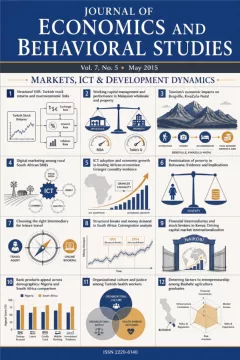
The purpose of this research was to study deterring factors to entrepreneurship among graduates of agriculture and natural resources. A survey approach was used in this research. The statistical population included ninety eight graduates of agriculture and natural resources who are working in private or governmental business units in the province of Bushehr, Iran. A questionnaire was developed to interview the subjects of the study of which the validity and reliability were estimated based on the opinions of a panel of experts and Cronbach’s alpha coefficient respectively. The results indicated that among personality factors, low self-confidence and low spirit of independence were the most important deterring factors to entrepreneurship. The results also revealed that a weak relation between university and business environment, insufficient practical and theoretical education, high risk of investment in the agriculture, and legal and administrative restrictions were the most important environmentally deterring factors. Based on this research finding, male graduates had a higher spirit of opportunity recognition and independence than female graduates.
Keywords
References
- Arzeni, S. (2004). Entrepreneurship: a catalyst for urban regeneration: Retrieved April 16 2015, from: http://www.iaabd.org/2009_iaabd_proceedings/track7m.pdf
- Atieno, R. (2009). Linkages, access to finance and the performance of small-scale enterprises in Kenya. Journal of accounting and business research , 3(1), 33-48.
- Awongbenle, A. C. & Iwuamadi, K. C. (2010). Youth unemployment: entrepreneurship development program as an intervention mechanism. African journal of business management , 14(6), 831-835.
- Benzing, C., Chu, H. M. & Kara, O. (2009). Entrepreneurs in Turkey: a factor analysis of motivations, success factors and problems. Journal of small business management , 47(1), 58-91.
- Bitzenis, A. & Nito, E. (2005). Obstacles to entrepreneurship in a transition business environment: the case of Albania. Journal of small business and enterprise development , 12(4), 564-578.
- Bjerke, B. (2007). Understanding entrepreneurship. USA: Edward Elgar Publishing, Inc.
- Bygrave, W. & Zacharakis, A. (2011). Entrepreneurship . Second edition, USA: John Wiley & Sons.
- Chigunta, F. (2002). Youth entrepreneurship: meeting the key policy challenges: Retrieved April 14 2015, from: http://www.bg.entrep.ta
- Chu, H. M., Benzing, C. & McGee, C. (2007). Ghanaian and Kenyan entrepreneurs: A comparative analysis of their motivations, success characteristics, and problems. Journal of developmental entrepreneurship , 12(3), 295-322.
- Collins, L., Hannon, P. D. & Smith, A. (2004).Enacting entrepreneurial intent: the gaps between students' needs and higher education capability. Education & training , 46(8/9), 454-468.
- Coulter, M. (2001). Entrepreneurship in Action, Upper Saddle River, NJ: Prentice Hall.
- Davidsson, P. (2003). The domain of entrepreneurship research: some suggestions. In cognitive approaches to entrepreneurship, J Katz and D Shepherd (eds.),pp. 315–372 , Cambridge, MA: Elsevier Science.
- Dunn, C. (2004). Background of nascent entrepreneurs: Retrieved April 15 2015, from: www.sbaer.uca.edu/research/icsb/2004/Papers%20pdf/010.pdf.
- Dzisi, S. (2014). Youth entrepreneurship: investigating obstacles to youth enterprise creation and development. International journal of economics, commerce and management , 2(7), 1-21.
- Fatoki, O.O. (2010). Graduate entrepreneurial intention in South Africa: motivations and obstacles. International journal of business and management , 5(9), 87-98.
- Fatoki, O. O. & Chindoga, L. (2011).An investigation into the obstacles to youth entrepreneurship in South Africa. International business research , 4(2), 161-169.
- Fayolle, A. (2007). Entrepreneurship and new value creation: the dynamic of the entrepreneurial process. New York: Cambridge University Press.
- Global business school network. (2013). Education, employment and entrepreneurship: a snapshot of the global jobs challenges: Retrieved Jun 13 2015, from: http://c.ymcdn.com/sites/www.gbsnonline.org/resource/collection
- Gurrieri, A. R., Lorizio, M. & Stramaglia, A. (2014). Entrepreneurship networks in Italy: The role of agriculture and services. London: Springer.
- Herrington, M. & Wood, T. (2007). Global Entrepreneurship Monitor: South African Report: Retrieved April 16 2015, from: http://www.gemconsortium.org/files.aspx?Ca_ID=126.
- Herrington, M., Kew, J. & Kew, P. (2009). Global Entrepreneurship Monitor, South African report: Retrieved April 16 2015, from: http://www.gbs.nct.ac.za/gbswebb/userfiles/gemsouthafrica2000pdf
- Iskandarini, A. (2014). The impact of entrepreneurial barrier toward entrepreneurial intention for decreasing unemployment through community empowerment. Procedia - social and behavioral sciences , 115, 166-174.
- Jafarnejad, A., Abbaszadeh, M. A., Ebrahimi, M. & Abtahi, S. M. (2013).Analysis of barriers to entrepreneurship in Small and Medium-sized Enterprises (SMEs). International journal of academic research in economics and management sciences , 2(4), 207-216.
- Jamali, D. (2009). Constraints and opportunities facing women entrepreneurs in developing countries: A relational perspective. Gender in management: an international journal , 24(4), 232-251.
- Kazela, N. (2009). The roadmap of youth entrepreneurship: Retrieved April 10 2015, from: http://www.wcf2009.org/program
- Klapper, L., Laeven, L. & Rajan, R. (2006). Entry regulation as a barrier to entrepreneurship. Journal of financial economics , 82, 591-629.
- Kozan, M. K., Oksoyand, D. & Ozsoy, O. (2006). Growth plans of small business in Turkey: individual and environmental influences. Journal of small business management , 4(11), 114-129.
- Kuratko, D. F. & Hodgettsm, R. M. (2004). Entrepreneurship: Theory, Process, Practice , 6th edition, Stanford, CT: Thomson South-Western.
- Kvedaraite, N. (2014). Reasons and obstacles to starting a business: experience of students of Lithuanian higher education institutions. Management , 19(1), 1-16.
- Lamei, B. (2002). Developing and training entrepreneurship in Iran: barriers and solutions. Ministry of Labor & Social Affairs, Institute of Labor & Social Security , 1(45), 26-32.
- Lougui, M. (2010). Identifying obstacles encountered by Swedish entrepreneurs? Evidences from the startline, Master´s thesis in economics of innovation and growth, School of architecture and the built environments, Royal institute of technology, Sweden.
- Macculloch, F. (2001). Government administrative burdens on SMEs in East Africa: reviewing issues and actions. Economic affairs , 21(2), 10-16.
- Mehrez, A. (2014). A study of barriers to entrepreneurship in emerging economies: the case of Qatar. In proceedings of 29th international business research conference, Australia, Sydney.
- Moy, J., Luk, V., Sheehan, B. & Sammapan, N. (2001). A comparative study on the perceptions of university business students in Hong Kong and Thailand: Why do they become entrepreneurs: Retrieved April 10 2015, from: http://net2.hkbu.edu.hk/~ied/publications/wp/WP200102.pdf
- Ooi, Y. K. & Ahmad, S. (2012). A study among university students in business start-ups in Malaysia: Motivations and obstacles to become entrepreneurs. International journal of business and social science , 3(19), 181-192.
- Owusu-Ansah, W. & Poku, K. (2012).Entrepreneurship education, a panacea to graduate unemployment in Ghana? International journal of humanities and social science , 2(15), 211-220.
- Ozsoy, O., Oksoyand, D. & Kozan, K. (2001).The characteristics of Turkish entrepreneurs and their enterprises. Long Island, New York: College of Business, Alfred University.
- Papulova, Z. &Makros, M. (2007).Importance of managerial skills and knowledge in management for small entrepreneurs. E-leader , 1, 1-8.
- Pretorius, M. & Shaw, G. (2004).Business plan in bank-decision making when financing new ventures in South Africa. South African journal of economics and management science , 7(2), 221-242.
- Rwigema, H. &Venter, R. (2004). Advanced entrepreneurship (3rd Ed.) Cape Town: Oxford University Press.
- Ryan, C. (2003). Program priorities 2003-2006 youth enterprise development, Strategic Paper by the Common Wealth Secretariat, London. Common Wealth Secretariat.
- Sandhu, M. S., Sidique, S. F. & Riaz, S. (2011). Entrepreneurship barriers and entrepreneurial inclination among Malaysian postgraduate students. International journal of entrepreneurial behavior & research , 17(4), 428 – 449.
- Sarani, V., Shahpasand, M. R. & Savari, M. (2013). Analysis of barriers to entrepreneurship among the rural women in Divan-Darreh city using by grounded theory. International research journal of applied and basic sciences , 4(5), 1302-1308.
- Sarri, K. & Trihopoulou, A. (2005). Female entrepreneurs' personal characteristics and motivation: a review of the Greek situation. Women in management review , 20(1), 24-36.
- Sathiabama, K. (2010). Rural women empowerment and entrepreneurship development: Retrieved April 10 2015, from: http://www.microfinancegateway.org/ga
- Setiawan, J. L. (2014). Examining entrepreneurial self-efficacy among students. Procedia - social and behavioral sciences , 115, 235-242.
- Shambare, R. (2013). Barriers to student entrepreneurship in South Africa. Journal of economics and behavioral studies , 5(7), 449-459.
- Sherazi, S. K., Iqbal, M. Z., Asif, M., Rehmanand, K. & Hussain Shah, S. S. (2013). Obstacles to small and medium enterprises in Pakistan: Principal component analysis approach. Middle-East journal of scientific research , 13(10), 1325-1334.
- Turker, D. & Selcuk, S. S. (2009). Which factors affect entrepreneurial intention of university students? Journal of European industrial training , 33(2), 142-159.
- Veciana, J. M., Aponte, M. & Urbano, D. (2005). University students' attitudes towards entrepreneurship: A two countries comparison. International entrepreneurship and management journal , 1, 165-182.
- Weber, R. (2012). Evaluating entrepreneurship education. Germany: Springer Gabler.
- Worthington, I. & Britton, C. (2006). The business environment . Fifth edition, Prentice Hall.
- Zhuplev, A. & Shtykhno, D. (2009). Motivations and obstacles for small business entrepreneurship in Russia: fifteen years in transition. Journal of East-West business , 15(1), 25–49.
Downloads
No downloads have been recorded for this article yet. Figures appear here once readers begin downloading the full text.
How to Cite
Share this article
License
Copyright (c) 2015 Yousef Hedjazi, Masoud Rezaei (Author)

This work is licensed under a Creative Commons Attribution 4.0 International License.
Author (s) should affirm that the material has not been published previously. It has not been submitted and it is not under consideration by any other journal. At the same time author (s) need to execute a publication permission agreement to assume the responsibility of the submitted content and any omissions and errors therein. After submission of revised paper in the light of suggestions of the reviewers, the editorial team edits and formats manuscripts to bring uniformity and standardization in published material.
This work will be licensed under Creative Commons Attribution 4.0 International (CC BY 4.0) and under condition of the license, users are free to read, copy, remix, transform, redistribute, download, print, search or link to the full texts of articles and even build upon their work as long as they credit the author for the original work. Moreover, as per journal policy author (s) hold and retain copyrights without any restrictions.
Keywords
Section
Published
Submissions
Have research to publish? Journal of Economics and Behavioral Studies welcomes submissions.
Make a Submission