Abstract
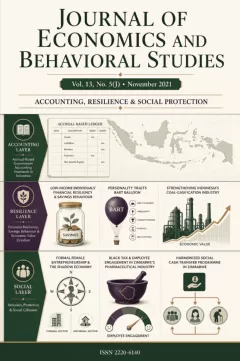
The purpose of this research is to analyze Indonesia's coal-gasification industry policy. This research needs to map the undeveloped coal-gasification industry. In fact, the coal-gasification industry can increase the economic value of coal, increase local income, absorb the labor force, and reduce pollution. It also has some strategic roles in national fiscal revenue and foreign exchange reserves and is of great significance to regional development. The research methods used are quantitative and qualitative. The results of this study indicate that government needs to provide some financial incentives for the coal-gasification industries, especially for pioneer companies for having coal-gasification works, and ensure that policies taken will be able to encourage economic growth and investment in Indonesia’s coal-gasification industry. To support investment in the coal-gasification industry, it is necessary to formulate policies and rules to provide a sign for its implementation.
Keywords
References
- Anjar, W. A., Hayadi, B. H., Subekti, P., Sudrajat, D., Wikansari, R., Bhawika, G. W. & Surya, S. (2019, August). Forecasting the Export and Import Volume of Crude Oil, Oil Products and Gas Using ANN. In Journal of Physics: Conference Series , 1255(1), 012016.
- Alin, H., Budy P. & Resosudarmo. (2004). Tingkat Ekstraksi Optimal Minyak Bumi Indonesia: Aplikasi Model Optimasi Dinamik. Jurnal Ekonomi dan Pembangunan Indonesia, 01,11-34.
- Antara, M. (2009). Dampak Pengeluaran Pemerintah dan Wisatawan Serta Investasi Swasta Terhadap Kinerja Perekonomian Bali: Suatu Simulasi Model Accounting Matrix, 1-23.
- Amir, H. (2013). Economic Impact Analysis of the Indonesia Mineral-Export Tax Policy: A CGE Approach. The International Journal of Economic Policy Studies, 8, 1-22.
- Abidin, M. & Zainul. (2014). Rasionalitas dan Evaluasi Penetapan Bea Keluar Dalam Rangka Mendukung Kebijakan Pengelolaan Mineral. Jurnal Bina Praja, 6(2), 129–142.
- Badan, G. (2018). Potensi Mineral dan Batubara Indonesia. Bandung, 1-9.
- Boadway, R. & Frank, F. (1993). The Taxation of Natural Resources. Principles and Policy Issues. The World Bank, 1-72.
- BP Statistical Review of World Energy. (2016). Outlook 2016. London, 36.
- BPS (Indonesian National Statistical Office). (2016). Documentation for the Indonesian Social Accounting Matrix (SAM), 1-720.
- Deon, A. & Julius, C. A. (2019). Indonesia’s Coals Dynamics: Toward a Just Energy Transition. Institute for Essential Services Reform (IESR) Jakarta. Indonesia First Edition, 1-48.
- Directorate General of Budget, Ministry of Finance of Indonesia. (2020). List of Natural Resources Revenue, Mineral and Coal, 1-327.
- Cleeve, E. (2008). How Effective Are Fiscal Incentives to Attract FDI to Sub-Saharan Africa? Journal of Developing Areas, 42(1), 135-153.
- Ekonomi.bisnis.com. (2020). Kamus Ekonomi: Apa itu Insentif Fiskal. Downloaded July 25, 2020 from https://ekonomi.bisnis.com/read/20130823/9/158344/kamus-ekonomi-apa-arti-insentif-fiskal
- Fei, M. (2016). Underground Coal Gasification (UCG): A New Trend of Supply-Side Economics of Fossil Fuels. Natural Gas Industry B , 3(4), 312-322.
- Fowowe, B. (2013). Do Fiscal Incentives Promote Investment? Empirical Evidence from Nigeria. The Journal of Developing Areas, 47(2), 17-35.
- Indonesian Ministry of Energy and Mineral Resources, Directorate General of Mineral and Coal. (2019). Mineral and Coal Downstream Program, 1-40.
- Kontan. (2020). PT BA Pastikan Investasi Gasifikasi Batubara Ditanggung Mitra. Di akses tanggal 29 April 2021, dari https://industri.kontan.co.id/news/bukit-asam-ptba-pastikan-investasi-proyekgasifikasi-batubara-ditanggung-mitra.
- Lembaga Penyelidikan Ekonomi dan Masyarakat Fakultas Ekonomi Universitas Indonesia (LPEM). (2006). Kebijakan Pungutan Ekspor batu Bara, Laporan Akhir, LPEM FE UI, 1-68.
- Marques, C. & Antonio. (2019). Is there a resource curse phenomenon for natural gas? Evidence from countries with abundant natural gas. Resources Policy, (63), 1-1.
- Media Industri Kemenperin. (2016). Wujudkan Hilirisasi Industri Berbasis Sumber Daya Alam, 1-66.
- Ministry of Energy and Mineral Resources Republic of Indonesia. (2017). Handbook of Energy & Economic Statistics of Indonesia, 38.
- Mousley, P., Babalola, A. & Espina C. (2009). Building the Enterprise Sector for Employment and Growth: Some Policy Options, in World Bank: Nigeria Employment and Growth Study. Washington D.C.: World Bank, 1-304.
- Nuryadi. (2014). Cost Benefit Analysis Antara Pembelian Alat Ct-Scan dengan Alat Laser Dioda Photocoagulator di Rumah Sakit Daerah Balung Jember. Jurnal Ikesma, 10, 49–58.
- Price, P. J. (2014). Effectiveness of Financial Incentives for Carbon Capture and Storage. Ieaghg.org. Bluewave Resources, LLC McLean, Virginia, USA, 1-14.
- Pupuk Indonesia. (2018). Kajian Internal Rate of Return tahun, 1-774.
- Salman, F. (2017). Cost and Benefit Analysis of RSPO Certification (Case Study in PT BCA Oil Palm Plantation in Papua). Indonesian Journal of Business and Entrepreneurship, 3(3), 219-228.
- Suthichaimethee, P. (2018). A Relation of Causal Factors in the Economic, Social, and Environmental Aspects Affecting the Implementation of Sustainability Policy in Thailand: Enriching the path Analysis Based on a GMM Model. Journal Resources, 7(4), 87.
- United Nations Hanbooks. (2017). Taxation of the Extractive Industries by Developing Countries, United Nations, New York, 1-491.
- Wang, D. (2017). Energy price slump and policy response in the coal-chemical industry district: A case study of Ordos with a system dynamics model. Journal Energy Policy, (104), 325-339.
- Zhou, K., Taigang L. & Lifeng, Z. (2015). Industry 4.0: Towards future industrial opportunities and challenges. In Fuzzy Systems and Knowledge Discovery (FSKD), IEEE 12th International Conference, 2147-2152.
- Zulfiandri. (2017). Transaction Cost and Benefit-Cost on Vertical Integration of Cacao Small Scale Agroindustry Value Chain. Journal of Management and Agribusiness, 14, 187-197.
Downloads
No downloads have been recorded for this article yet. Figures appear here once readers begin downloading the full text.
How to Cite
Share this article
License
Copyright (c) 2021 Ragimun Abdullah, Haula Rosdiana, Milla Sepliana Setyowati (Author)

This work is licensed under a Creative Commons Attribution 4.0 International License.
Author (s) should affirm that the material has not been published previously. It has not been submitted and it is not under consideration by any other journal. At the same time author (s) need to execute a publication permission agreement to assume the responsibility of the submitted content and any omissions and errors therein. After submission of revised paper in the light of suggestions of the reviewers, the editorial team edits and formats manuscripts to bring uniformity and standardization in published material.
This work will be licensed under Creative Commons Attribution 4.0 International (CC BY 4.0) and under condition of the license, users are free to read, copy, remix, transform, redistribute, download, print, search or link to the full texts of articles and even build upon their work as long as they credit the author for the original work. Moreover, as per journal policy author (s) hold and retain copyrights without any restrictions.
Keywords
Section
Published
Submissions
Have research to publish? Journal of Economics and Behavioral Studies welcomes submissions.
Make a Submission