Abstract
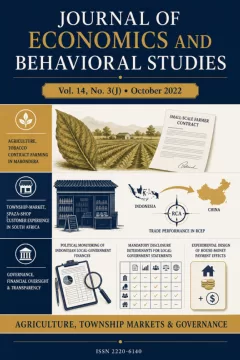
This study aims to map out Indonesia's export performance, the competitiveness of its commodities, and the position of some of Indonesia's flagship commodities in China. The research method used in this study is the Revealed Comparative Advantage (RCA) and the Constant Market Share Analysis (CMSA). The data is from the Indonesia Central Statistics Agency (BPS) and UN Comtrade for 4-digit HS products. The finding from this study indicates that Indonesia's trade balance with China for the last three years (2018-2020) has widened the deficit. Intense negotiations with China are necessary to open up trade access to overcome the trade deficit. The Government is encouraged to launch the development of flagship products with high market values, such as chemicals, machinery, electricity, and textiles. In addition, the national downstream program for mineral and metal products is encouraged to do more robust plans, including considering attracting new industrial investment from China.
Keywords
References
- ADB. (2022). The Regional Comprehensive Economic Partnership Agreement: A New Paradigm in Asian Regional Cooperation? Available at: https://www.adb.org/sites/default/files/publication/792516/rcep-agreement-new-paradigm-asian-cooperation.pdf.
- Balassa, B. A. (1989). Comparative Advantage, Trade Policy and Economic Development. New York: Harvester Wheatsheaf.
- Cakra, G. A. & Munandar, J. M. (2020). Competitiveness Analysis of Indonesian Bulk Black Tea Commodity in Global Market: Case Study in Russia, Jurnal Manajemen dan Organisasi (JMO), 11(1), 57–70.
- Clarissa, S. & Gandara, D. (2020). Kerja Sama Regional Comprehensive Economic Partnership, in Perkembangan Ekonomi Keuangan dan Kerja Sama Internasional. IV. Jakarta: Bank Indonesia, 49–72.
- Ferrantino, M. J., Maliszewska, M. & Taran, S. (2019). Actual and Potential Trade Agreements in the Asia-Pacific, Actual and Potential Trade Agreements in the Asia-Pacific. DOI: 10.1596/33549.
- Hasanah, R. S. (2020). Mapping Indonesia’s Competitiveness and Specialization with Its Major Trading Partners, Bappenas Working Papers. Jakarta. doi: 10.47266/bwp.v3i1.59.
- Kawai, M. & Wignaraja, G. (2013). Policy challenges posed by Asian FTAs, Asian Pathways. Available at: https://www.asiapathways-adbi.org/2013/05/policy-challenges-posed-by-asian-ftas/.
- Kemendag. (2015). Laporan Akhir Analisis Potensi dan Manfaat Rantai Nilai Kawasan Regional Comprehensive Economic Partnership Bagi Indonesia. Available at: http://bppp.kemendag.go.id/media_content/2017/08/Analisis_Potensi_Rantai_Nilai_Kawasan_RCEP_Bagi_Indonesia.pdf.
- Moenardy, D. F. et al. (2020). Indonesia’s Strategy in Facing the Regional Comprehensive Economic Partnership (RCEP), PalArch’s Journal of Archaeology of Egypt/Egyptology, 17(10), 1164–1177.
- Ragimun et al. (no date). Trade Performance Members Of RCEP. Available at: https://fiskal.kemenkeu.go.id/kajian/2022/06/30/2446-trade-performance-members-of-rcep.
- Romarina, A. (2016). Economic Resilience Pada Industri Kreatif Guna Menghadapi Globalisasi Dalam Rangka Ketahanan Nasional, Jurnal Ilmu Sosial, 15(1), 35–52.
- Suwarno, et al. (2012). Keunggulan Kompetitif dan Penawaran Ekspor Tuna Indonesia di Pasar Internasional: Constant Market Share Analysis, Jurnal Ekonomi dan Kebijakan Pembangunan, 1(2), 120–43. Available at: https://www.neliti.com/publications/228260/keunggulan-kompetitif-dan-penawaran-ekspor-tuna-indonesia-di-pasar-internasional.
- Syadullah, M. & Ardiansyah. (2014). Regional Comprehensive Economic Partnership.
- Tambunan, T. & Wijanarko. (2000). Perdagangan Internasional Dan Neraca Pembayaran: Teori dan Temuan Empiris. Jakarta: LP3ES.
- Tsurayya, N. (2013). The Impact of Trade Liberalisation on Technical Efficiency of Indonesia Manufacturing Firms, Jurnal Ekonomi dan Pembangunan Indonesia, 14(1), 8–108.
- Ulfah, M. & Felianty, T. A. (2017). Analysis of Competitiveness and the Impact Prediction of Indonesia’s Participation in Regional Comprehensive Economic Partnership (RCEP)’, in Asia Pacific Business and Economics Conference. Available at: ui.ac.id.
- Verico, K. (2020). The Weighted Composite Index Analysis of Indonesia’s Bilateral Economic Agreements’, Journal of Asia-Pacific Studies (Waseda University), (38), 121–136.
Downloads
No downloads have been recorded for this article yet. Figures appear here once readers begin downloading the full text.
How to Cite
Share this article
License
Copyright (c) 2022 Ragimun, Mutaqin, R. Nurhidayat, Akhmad Yasin (Author)

This work is licensed under a Creative Commons Attribution 4.0 International License.
Author (s) should affirm that the material has not been published previously. It has not been submitted and it is not under consideration by any other journal. At the same time author (s) need to execute a publication permission agreement to assume the responsibility of the submitted content and any omissions and errors therein. After submission of revised paper in the light of suggestions of the reviewers, the editorial team edits and formats manuscripts to bring uniformity and standardization in published material.
This work will be licensed under Creative Commons Attribution 4.0 International (CC BY 4.0) and under condition of the license, users are free to read, copy, remix, transform, redistribute, download, print, search or link to the full texts of articles and even build upon their work as long as they credit the author for the original work. Moreover, as per journal policy author (s) hold and retain copyrights without any restrictions.
Keywords
Section
Published
Submissions
Have research to publish? Journal of Economics and Behavioral Studies welcomes submissions.
Make a Submission