Articles 11–20 of 21

  • Article 11 in this issue

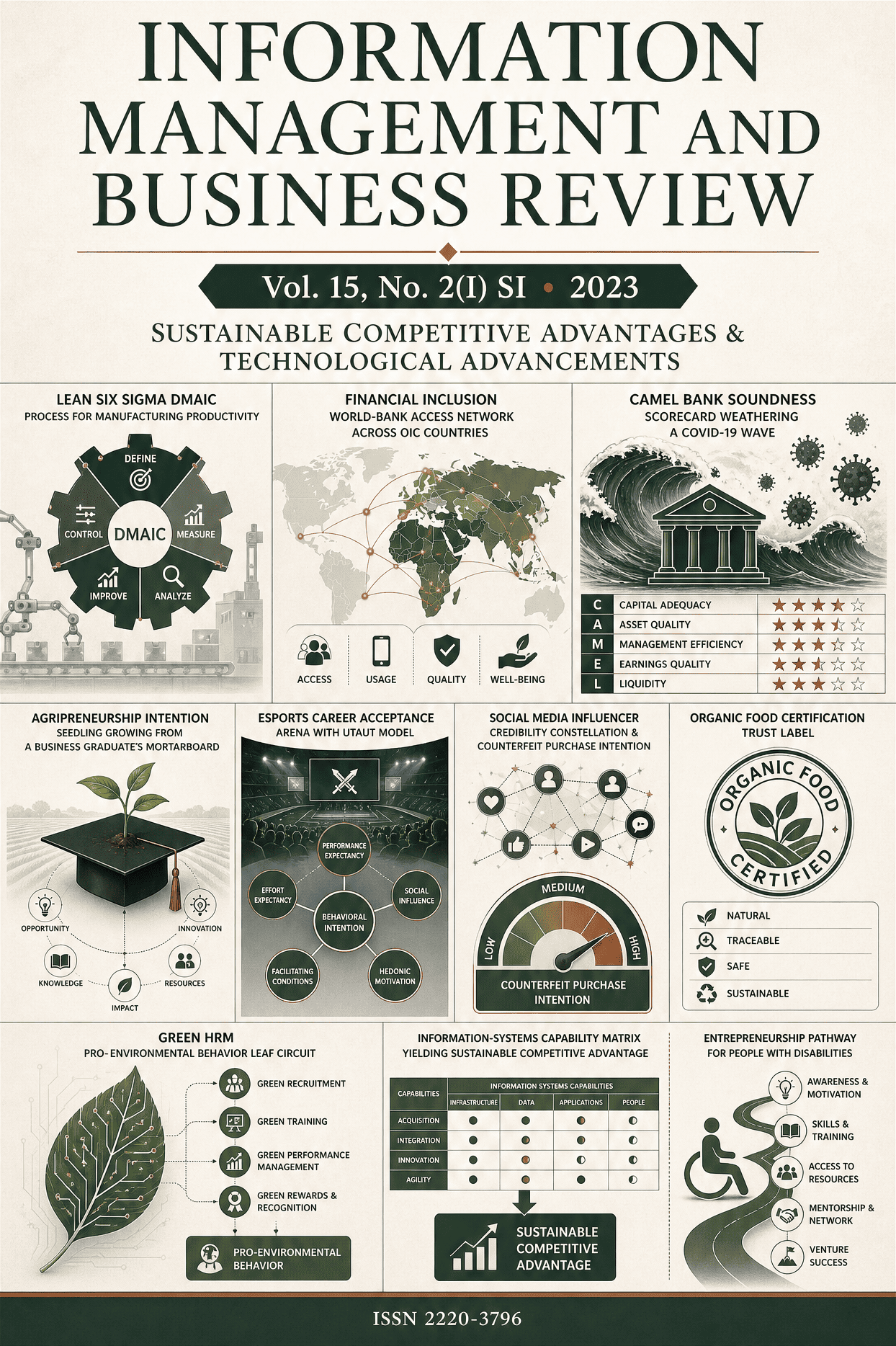
    Investigating the Factors Influencing Students’ Acceptance of Esports as a Career Choice

    • Author: Mahiah Said, Ammar Azfar Azli, Shahnaz Shafiza Sabri

    Esports is a digital entertainment and gained its popularity due to technological advancements, technology accessibility and elite competition. Esports is recognized as a formal industry and a form of occupation and led to higher career opportunities. In 2019, more than 11,000 job vacancies were advertised and are projected to reach more than 22,500 jobs in 2020. This study investigates the relationship between Performance Expectancy (PE), Effort Expectancy (EE), Social Influence (SI) & Facilitating Conditions (FC), towards esports Career Choice Intention (CCI) among 365 private university students. The regression analysis shows that PE, EE, SI and FC have a significant impact on CCI. The independent variables indicate that the five factors significantly predict CCI - F (5, 359) = 40.562, p<0.001. And the R2 result of 0.603 postulated that the model explains 60.3% of the variance in CCI. The research on esports as a career choice intention is few and limits the number of referencing. Possible future research on the key success factors of esports companies could illustrate the industry's career progression. Alternatively, industry players should look at the allocation of budgeting and resources, and its relationship with attitude towards esports.

    Pages 109-115

    PDF - Investigating the Factors Influencing Students’ Acceptance of Esports as a Career Choice (opens in a new tab)
  • Article 12 in this issue

    The Effects of Foreign Labor towards Labor Productivity in Construction Industries

    • Author: Saffiah Mohammad Nor, Geetha Subramaniam, Zahariah Sahudin

    The focus of this study is the demand for foreign labor in the construction industry. While labor productivity contributes significantly to the economic growth of the country but the trend has decreased over recent years. Hence, this paper aims to identify whether the increase in the labor force or other factor inputs contributes significantly to the labor capacity of construction projects in Malaysia. Results show the relationship between labor and other factors related to employment productivity in the construction industry of Malaysia from the year of 1986 to 2020. Factor inputs consist of variables such as capital, local labor, and foreign labor. The research objective is to identify the effects of labor force and other factor inputs on labor productivity. This study employs the Cobb-Douglas production function. The findings show that there is a significant relationship whereby the financial assets have a significant relationship, whilst the local and foreign workforce has a negative relationship in terms of their impact on labor productivity. These findings provide some scientific evidence for improving the project performance of the construction industry in Malaysia. It will be useful in identifying which factor inputs have a huge impact on construction labor productivity.

    Pages 116-127

    PDF - The Effects of Foreign Labor towards Labor Productivity in Construction Industries (opens in a new tab)
  • Article 13 in this issue

    The Effect of Social Media Influencers on Fashion Counterfeit Purchase Intention among Young Generation

    • Author: Tamil Selvi Renganathan, Goi Mei Teh

    This study aims to examine the effect of social media influencers on fashion counterfeit purchase intention among the young generation. Social Media Influencer (SMI) has been a dominant marketing trend and businesses heavily invest in SMIs to carry out promotional activities. However, the dimensions of SMI have not been examined widely on fashion counterfeit purchase intention among the young generation. A total of six dimensions of SMI namely, inspiring, technical skills, enjoyability, similarity, informativeness and credibility were used for this study. Data was collected from 389 young generations via online techniques. The findings show that technical skills and informativeness significantly influence counterfeit purchase intention among the young generation. The findings of the study are useful for policymakers to control social media influencers.

    Pages 128-143

    PDF - The Effect of Social Media Influencers on Fashion Counterfeit Purchase Intention among Young Generation (opens in a new tab)
  • Article 14 in this issue

    An Application of Lean Principle in a Call Center at Sarawak

    • Author: Zalina Salmah Abdul Wahed, Azilah Anis, Azimah Daud

    Customer follow-ups or repeat calls are common in a call center primarily due to unresolved cases that turn into aging cases. Different case category presents different complexity with different outcome which this case study demonstrates. The present study thus proposes the Lean principle to be applied in the workflow to analyze each process activity in an attempt to find the root cause of the aging cases that do not conform to the established time function mapping. Five respondents were chosen amongst the call center personnel for a semi-structured interview enabling them to express themselves freely within the context of the dilemma they are facing. The respondents share the same desire to receive timely answers or information to maintain customer satisfaction levels. The Lean principle enables this case study to formulate a recommendation that ties in with Lean true nature for continuous improvement.

    Pages 144-151

    PDF - An Application of Lean Principle in a Call Center at Sarawak (opens in a new tab)
  • Article 15 in this issue

    4th Industry Revolution Digital Marketing Adoption Challenges in SMEs and its Effect on Customer Responsiveness

    • Author: Shee Mun Yong

    The 4th industrial revolution of cyber-physical technologies (4IR) intersecting digital technologies and entrepreneurship serves as an external stimulus in fostering a new method of venture creation transforming customers’ purchasing and consuming behavior. Whilst large corporations are taking the lead in leveraging on 4IR digital marketing (DM) for their marketing strategy, studies have shown that small and medium enterprises (SMEs) are lacking behind. This study explores the conundrum using an exploratory sequential mixed method. Semi-structured interviews were carried out on a sample size of ten SME participants selected using non-probability purposive sampling and determined through attaining thematic saturation of discursive patterns. Scale development for quantitative instruments was performed using SPSS statistical software v22. A quantitative study was carried out on a sample size of 153 SME respondents. Analysis was undertaken using SPSS supported by paired-samples T-test. Kuskal-Wallis H test and Spearman’s rho correlation test due to the nonparametric nature of data distribution. The outcome reveals that although SMEs are increasingly reliant on DM for their marketing strategy, most of these SMEs are only willing to invest in building low-level DM capability citing a lack of financial budget, inadequate technology infrastructure to support such setup, cyber security issues and lack of DM knowledge. Financial budget and technology infrastructure are considered the most critical concerns by SMEs with low and moderate DM adoption. However, these concerns are less pronounced in SMEs with high DM adoption. Finally, the weak but significant correlation between SMEs’ DM adoption and customer responsiveness infers the significant role of 4IR technology as an enabler of digital marketing strategy that also depends on other critical contributing factors such as price and quality.

    Pages 152-172

    PDF - 4th Industry Revolution Digital Marketing Adoption Challenges in SMEs and its Effect on Customer Responsiveness (opens in a new tab)
  • Article 16 in this issue

    Staff Burnout and Leadership Styles towards Job Performance during Critical Period

    • Author: Aflinda Mokhtar, Noor’ain Mohamad Yunus

    Recent pandemic of COVID-19 has heightened the need for mental and emotional health and the demands for specific types of leadership styles toward performance. The researcher believes that burnout and leadership styles are interrelated towards the job and the organization’s performance during the critical period. Hence, this study aims to investigate the relationship between staff burnout and leadership styles toward job performance during the critical Movement Control Order (MCO) period due to COVID-19 in Malaysia. A questionnaire was used as the main instrument in the data collection process. A total of 180 online surveys in the form of Google Form format were distributed among Credit Guarantee Corporation Malaysia Berhad (CGC) employees through a convenience sampling technique. Multiple regression analysis was used to investigate the relationship between determinants of staff burnout and leadership styles toward job performance. The data collected was analyzed using SmartPLS, one of the most popular software applications for Partial Least Squares Structural Equation Modelling (PLS-SEM). The result indicated a significant relationship between burnout (personal accomplishment) and leadership styles (autocratic, democratic, and laissez-faire) toward job performance. In comparison, burnout (emotional exhaustion and depersonalization) has no significant relationship with job performance. The researcher suggested that future research conduct another study with different populations of respondents by considering the larger sample size, including all levels of employees in an organization from all the companies in the same industries.

    Pages 173-185

    PDF - Staff Burnout and Leadership Styles towards Job Performance during Critical Period (opens in a new tab)
  • Article 17 in this issue

    The Utilization of CAMEL Framework in Analyzing the Financial Soundness of Commercial Banks in Malaysia: Pre and in the time of Covid 19

    • Author: Nurhuda Nizar, Ahmad Danial Zainudin, Siti Zaitun Saddam, Muhammad Ridzuan Abdul Aziz

    The COVID-19 pandemic has impacted many aspects of the economy, including commercial banking. This research aims to analyze the health of Malaysia's commercial banks before and during the COVID-19 pandemic. To accomplish this, the authors employed the CAMEL framework, widely recognized as one of the best tools for evaluating a bank's health. The study aims to comprehend the pandemic's impact on the financial health of banks during the pandemic. Secondary data was gathered from the financial statements of eight local commercial banks from 2017 to 2021. Results from this study suggest that the performance of commercial banks in Malaysia was generally stable and well-capitalized, with low non-performing loans and strong profitability before and during COVID-19. This study offers a new understanding of the effect of the pandemic on banking operations in Malaysia, a country whose financial system depends mainly on banks.

    Pages 186-196

    PDF - The Utilization of CAMEL Framework in Analyzing the Financial Soundness of Commercial Banks in Malaysia: Pre and in the time of Covid 19 (opens in a new tab)
  • Article 18 in this issue

    Disabled Entrepreneur Empowerment through Leadership Entrepreneurship Acceleration and Development League (SAYLEAD)

    • Author: Saadiah Juliana Saadun, Roslinda Alias, Muaz Mohd Norman

    People with disabilities are highly underrepresented in the labor sector and often encounter discrimination from employers. They are frequently facing challenges to secure jobs although the government has set one-percent employment of Persons with Disabilities (OKU) policy in the public sector. Additionally, many individuals with disabilities face discrimination and/or fear of becoming a burden by business owners. The Malaysian Family Empowerment AGENDA which is the Sixth Focus of the 12th Malaysia Plan (12th Plan) promotes the development of people with disabilities (OKU) in various fields, including entrepreneurship and employment to overcome these obstacles and promote empowerment and facilitate the economic independence of individuals with impairments. The Selangor Youth Community sponsored by Exco Keusahawanan and Yayasan Hasanah and strategic partnership with University Technology MARA through Disability Services Unit (DSU) created Leadership Entrepreneurship Acceleration and Development League (SAYLEAD) aims to identify gaps in the existing entrepreneurship ecosystem and build a linkage to accelerate entrepreneurs and become global champions. The model includes 3 modules inclusive of 7 stages and to name a few: entrepreneur profiling, setting up business, financial and operation management, sales and marketing, business innovation and stakeholder management. Throughout the SAYLEAD program, the focus of attention shifts from the limitations of the individual to the limitations of the context in which the person operates. In-depth case studies are offered to illustrate the process of entrepreneur empowerment and the impact of the entrepreneurship program on the lives of the entrepreneurs who have participated thus far.

    Pages 197-204

    PDF - Disabled Entrepreneur Empowerment through Leadership Entrepreneurship Acceleration and Development League (SAYLEAD) (opens in a new tab)
  • Article 19 in this issue

    Effect of Structural Break on Financial Development and Economic Growth Nexus in Middle-Income Countries in Asia: Moderating Role of Technological Advancements

    • Author: Rishan Sampath Hewage, Jaafar Pyeman, Norashida Othman

    Asian countries have experienced many financial catastrophes and pandemics in the past couple of decades. Therefore, evaluating the effect of structural breaks on economies has taken substantive attention in the empirical literature. Thus, this study aims to investigate the effect of structural breaks on the Financial Development (FD) and Economic Growth (EG) of middle-income countries in Asia. The study considered the global financial crisis of 2008 as a key structural break. The sample consisted of 24 middle-income countries while the sample period was 20 years from 2000 to 2019. Technological Advancement was considered a moderator variable that facilitate the smooth functioning of the FD and EG. Structural Break was identified using the "xtbreak" function and the effect was analyzed with panel unit root, panel homogeneity test, and short panel cointegration. The findings revealed that before the structural break, FD and moderator variables were the only significant variables but after the structural breaks, Human Capital (HC) and Private Consumption (PC) also have become significant. FD had a significant negative influence over EG before and after the structural break but the moderator variable had a positive influence. HC was not a significant factor before the structural break but has become significant after the economic downturn with a positive influence on EG. In contrast, PC shows a negative influence after the structural breaks. Hence, it guides the policymakers to decide on reducing investments for FD and direct funds to HC development and developing the technology. Moreover, they must consider making policy decisions to reduce PC too.

    Pages 205-214

    PDF - Effect of Structural Break on Financial Development and Economic Growth Nexus in Middle-Income Countries in Asia: Moderating Role of Technological Advancements (opens in a new tab)
  • Article 20 in this issue

    Breast Cancer Management Research Trends: A Bibliometric Analysis

    • Author: Nor Intan Shamimi Abdul Aziz, Mass Hareeza Ali, Ahmad Taufik Jamil, Yuhanis Ab Aziz

    Breast cancer is the most prevalent type of cancer in women and has a significant economic impact worldwide. Consequently, there is a need to analyze the disease's research trend academically to determine the breast cancer publishing trend based on a certain period of its collection properties. Bibliometric analysis is used to examine the research trend in breast cancer care through time using various data. Several tools, including the PRISMA flow diagram, Microsoft Excel for frequency analysis, Harzing's Publish or Perish for citation metrics and other pertinent analyses, and VOSviewer for image visualization and bibliometric networks, were used to study this article. Using the TITLE search strategy and the Scopus database, 3,532 articles were located. It was discovered that the trends in research publications rose steadily from one year to the next. Between 1932 and 2021, 3,532 publications will be produced with a total of 61,274 citations, which breaks down to 688.47 citations per year, 17.35 citations per cited paper, and 4.02 citations per author. The United States, Italy, and the United Kingdom have produced the most co-authored works in this discipline. Even though the annual incidence rate of breast cancer remains high, these findings appear promising for determining the most effective treatments, procedures, and management strategies. The guideline standard requires further attention at a higher level.

    Pages 215-225

    PDF - Breast Cancer Management Research Trends: A Bibliometric Analysis (opens in a new tab)